Mark [Wednesday Bible Study]
"While the Gospel of Mark is the shortest, it is the most direct; it reveals that the true Son of God is found not in our desires for power, but in the God who comes in humility to amaze us all."
On May 20, 2026, our class walked through Mark 2:27–28 and Mark 3:1–35—Jesus’ authority over Sabbath, surging crowds and the boat, the naming and mission of the Twelve, accusations and the “house divided” teaching, binding the strong man, blasphemy against the Holy Spirit, and redefining true family—while reflecting on discernment, the Church’s mission, practical wisdom in Old Testament laws, and previewing the Parable of the Sower.
This week, our study of Mark chapters 2 and 3 explored Jesus's authority to forgive, heal, and redefine righteousness as he calls a controversial tax collector and challenges the Pharisees' traditions about the Sabbath.
In our study on May 6, 2026, we explored Mark 1:14-2:12, focusing on Jesus's escalating authority over spirits, sickness, and sin, and why He often commanded silence from those He healed.
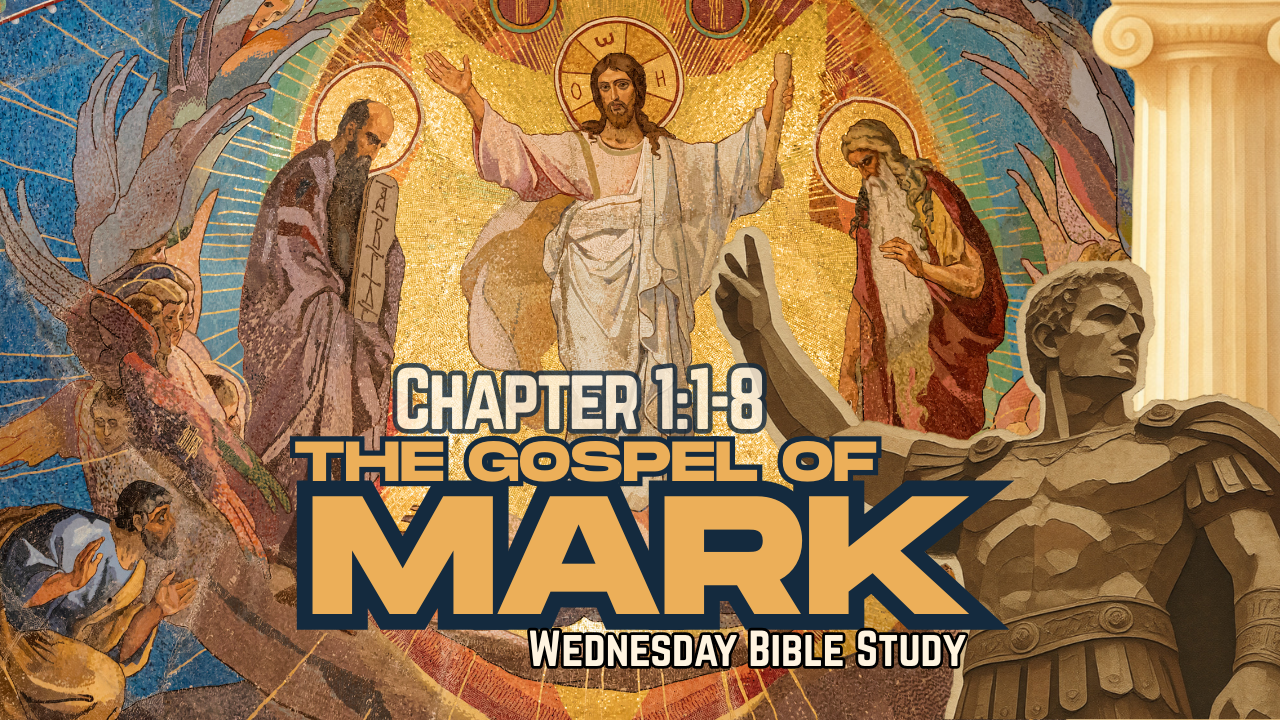
On April 29, 2026 at 6:36 PM, our class explored how reading the Gospel of Mark by recognizing patterns and echoes—especially in Mark 1:1–20—deepens understanding, highlighting John the Baptist, Jesus’ baptism and wilderness testing, the “at hand” kingdom, the call of fishermen, and the upside‑down kingship of Jesus.
A fast-moving, beginner-friendly study launched our journey through Mark 1:1–28—framing the Bible as literature from an oral tradition, exploring John the Baptist, Jesus’ baptism and temptation, the first disciples’ call, and Jesus’ authoritative teaching and exorcism.
During our Bible study on May 27, 2026, we explored Mark 4:1–34, focusing on Jesus's parables—especially the Sower—and how they reveal a deeper, hopeful message about the kingdom of God, spiritual growth, and the critical theme of truly hearing and seeing God's word to bear fruit.