

![Summer Kids Bible Club 26’ Week 2&3 [Photos]](https://images.squarespace-cdn.com/content/v1/5852f18a20099e30cd2c01dc/1782483288400-4SLNAZM3JAS5M8KOPBJA/PXL_20260624_230100754.jpg)
Summer Kids Bible Club 26’ Week 2&3 [Photos]
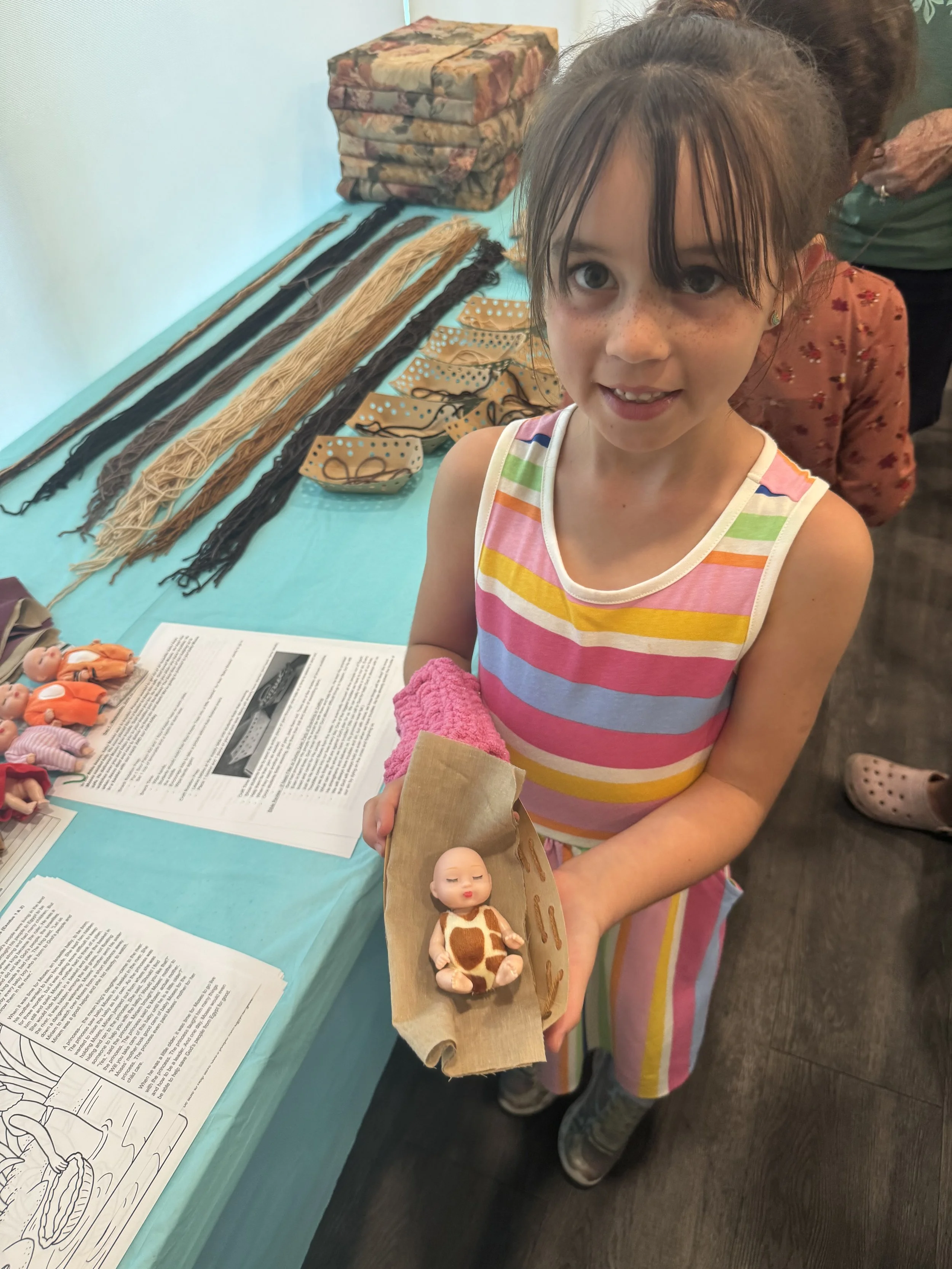
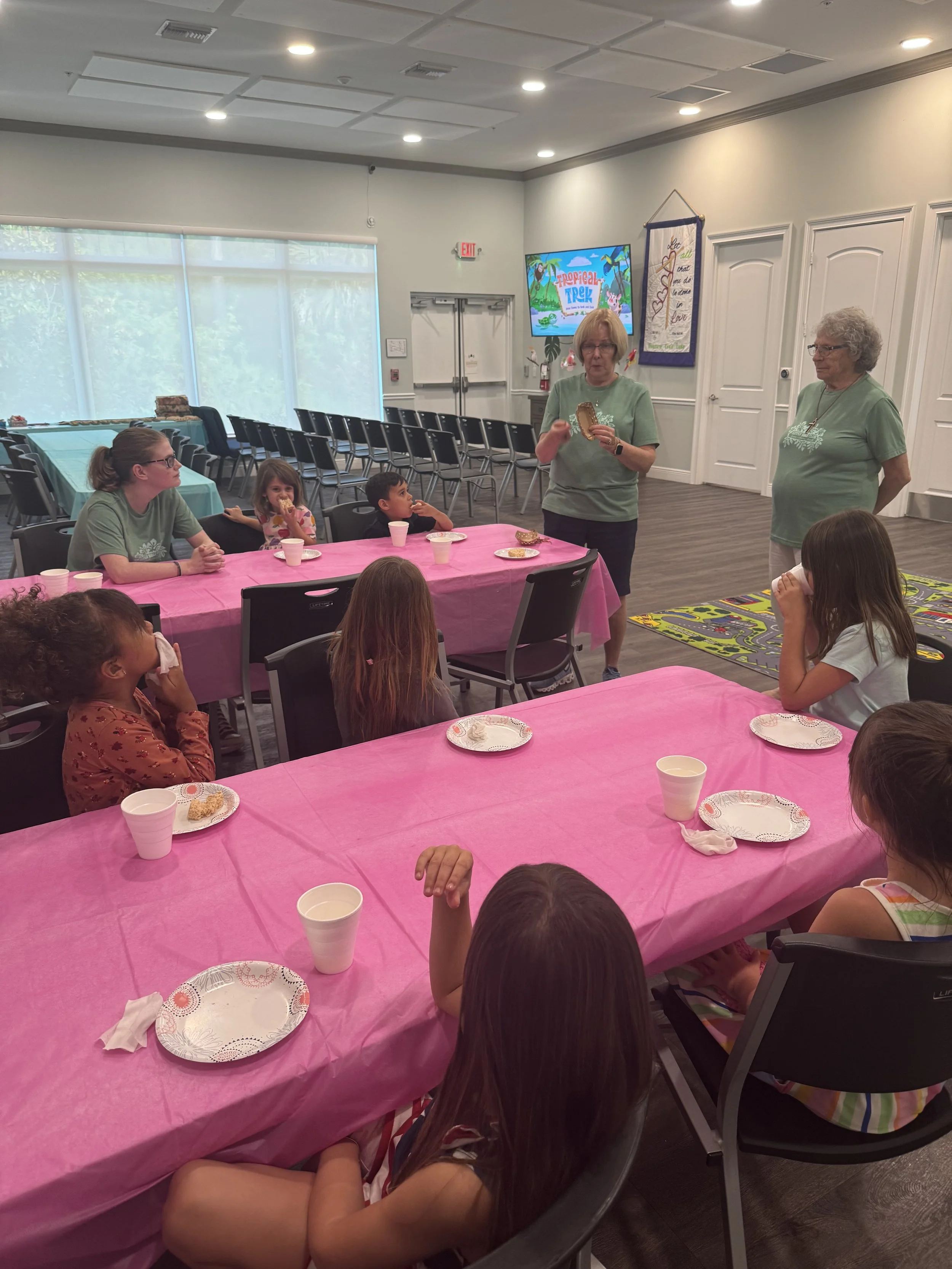
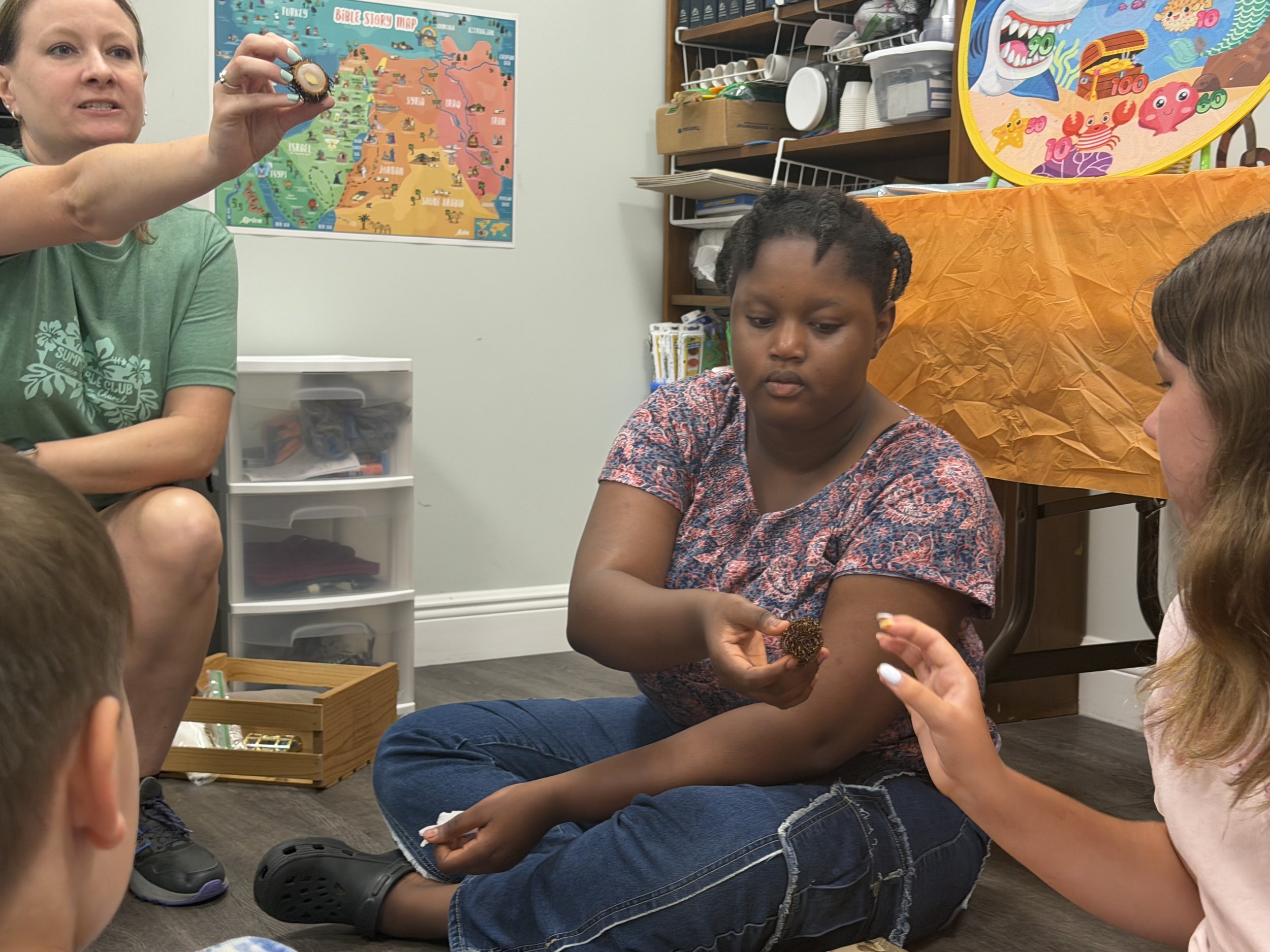
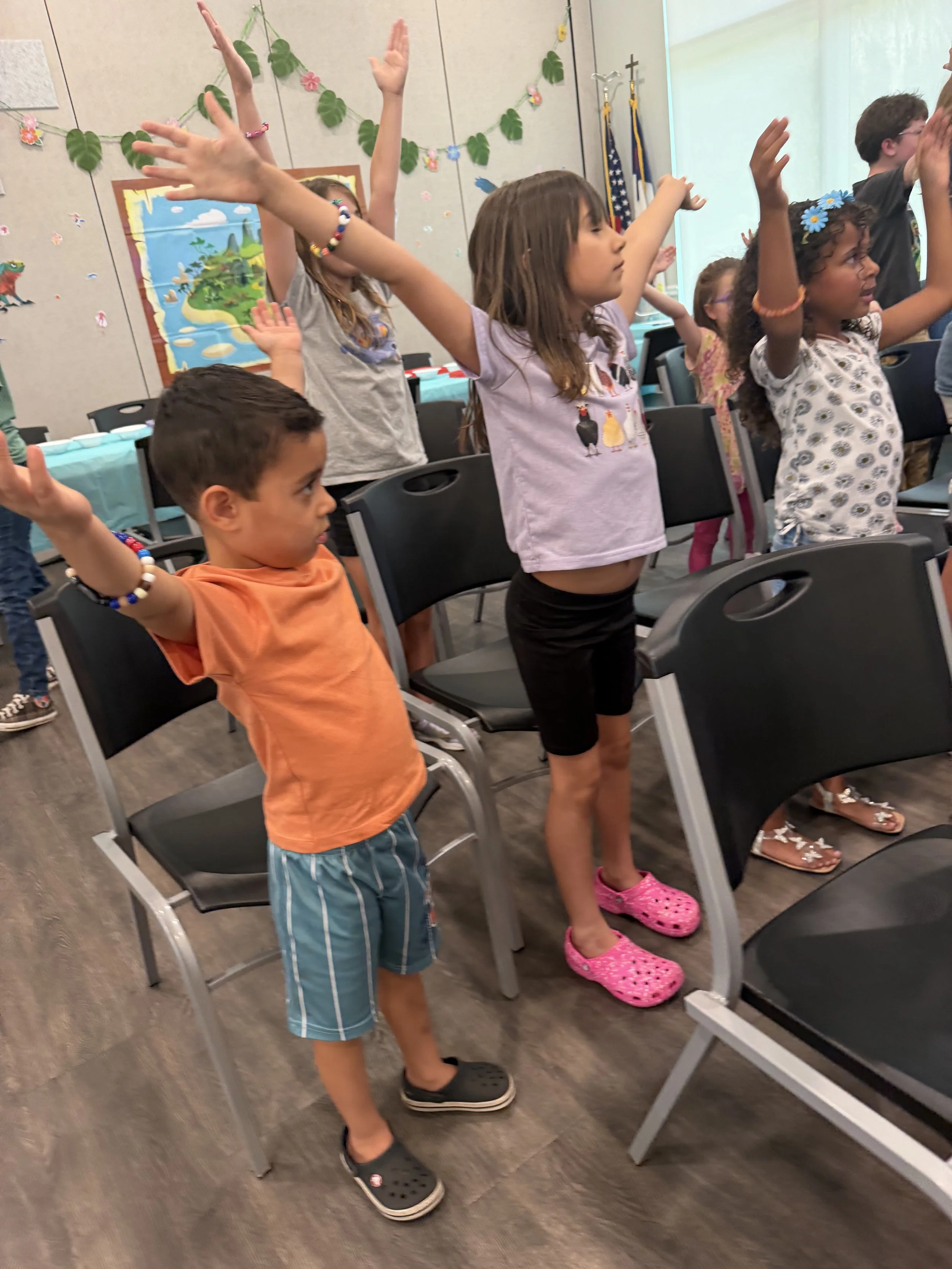
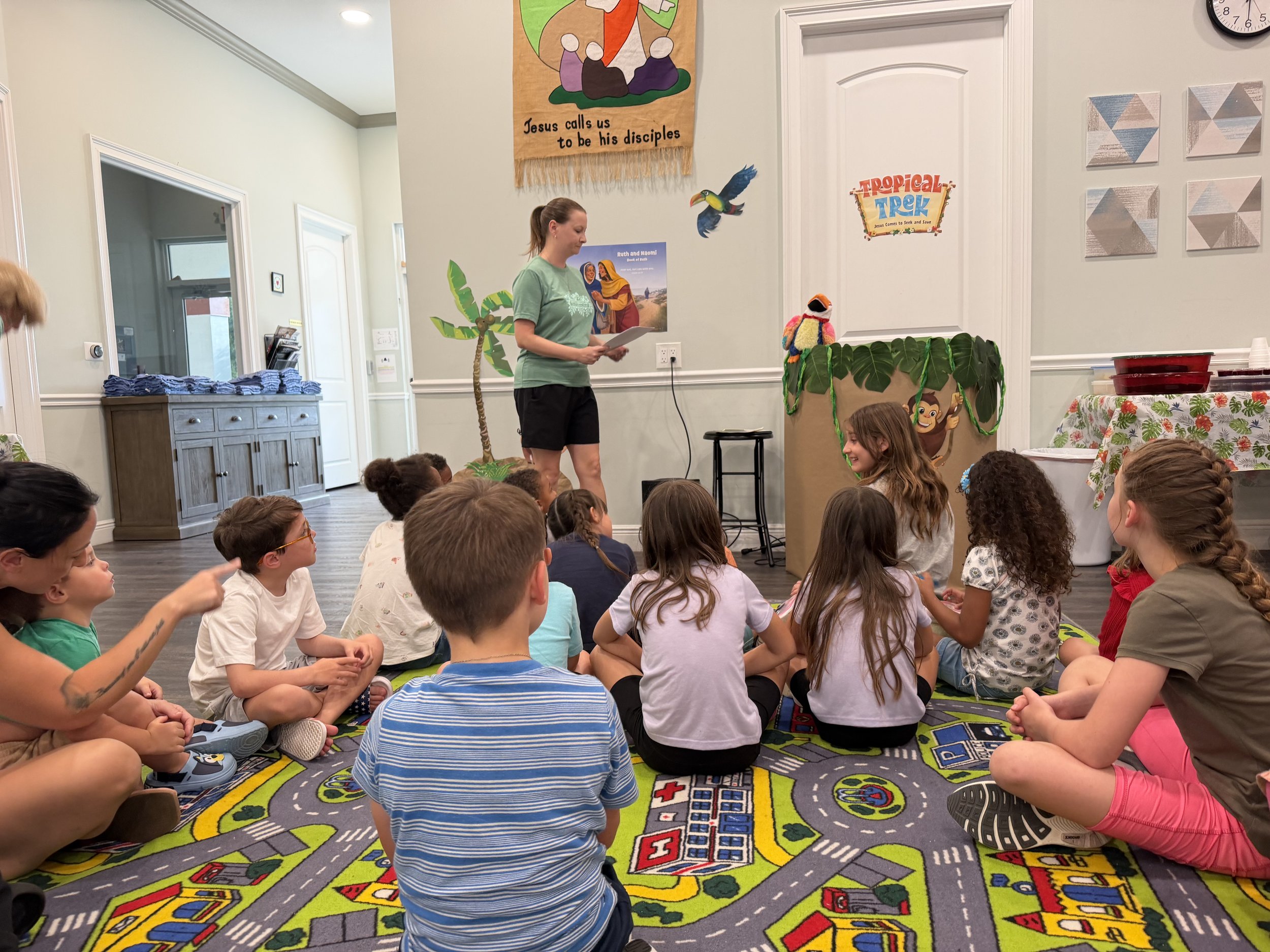
We’ve had a wonderful couple of weeks learning about baby Moses and Zacchaeus climbing the tree to see Jesus!
Summer Kids Bible Club Update: Weeks 2 & 3 🌴
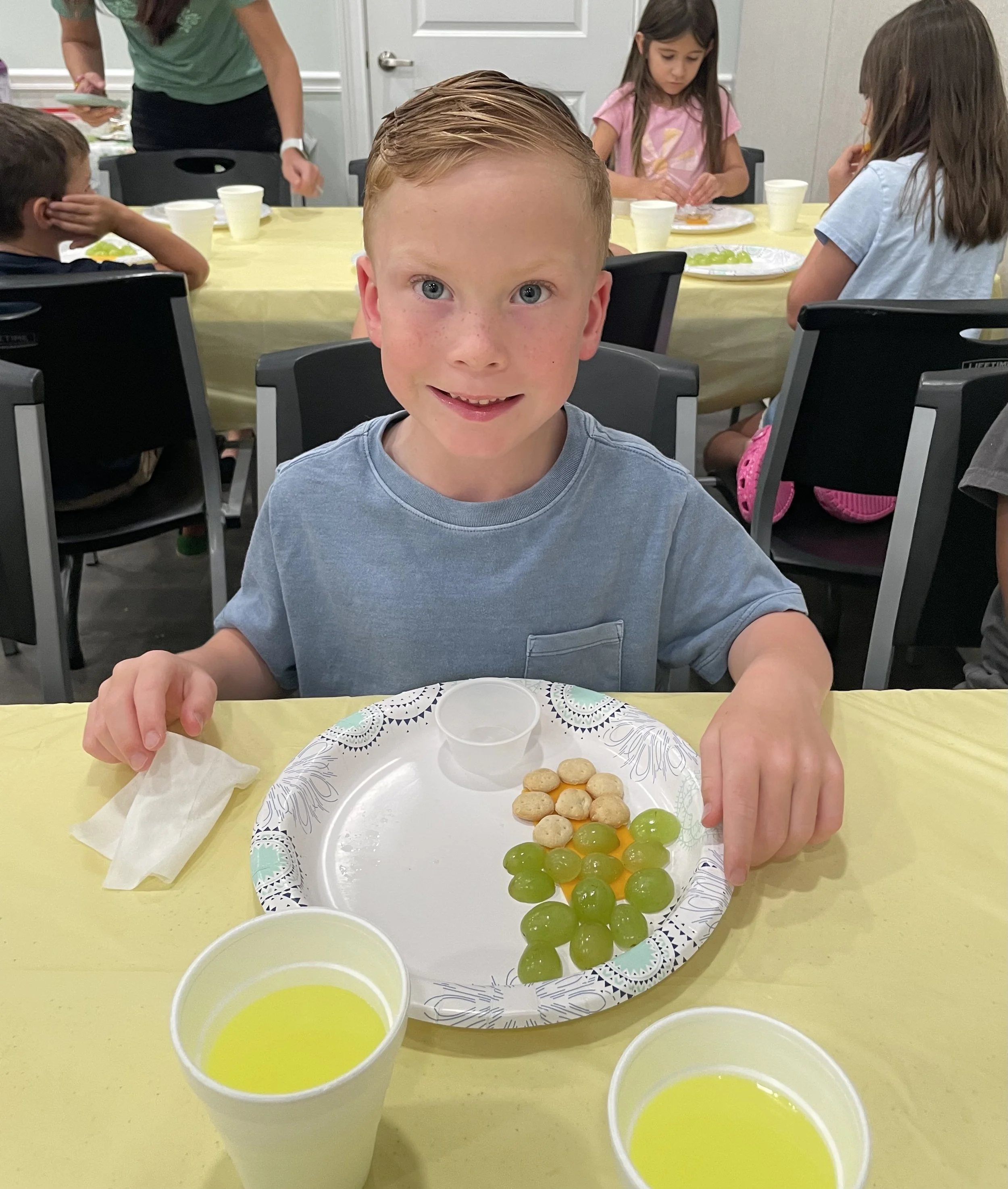
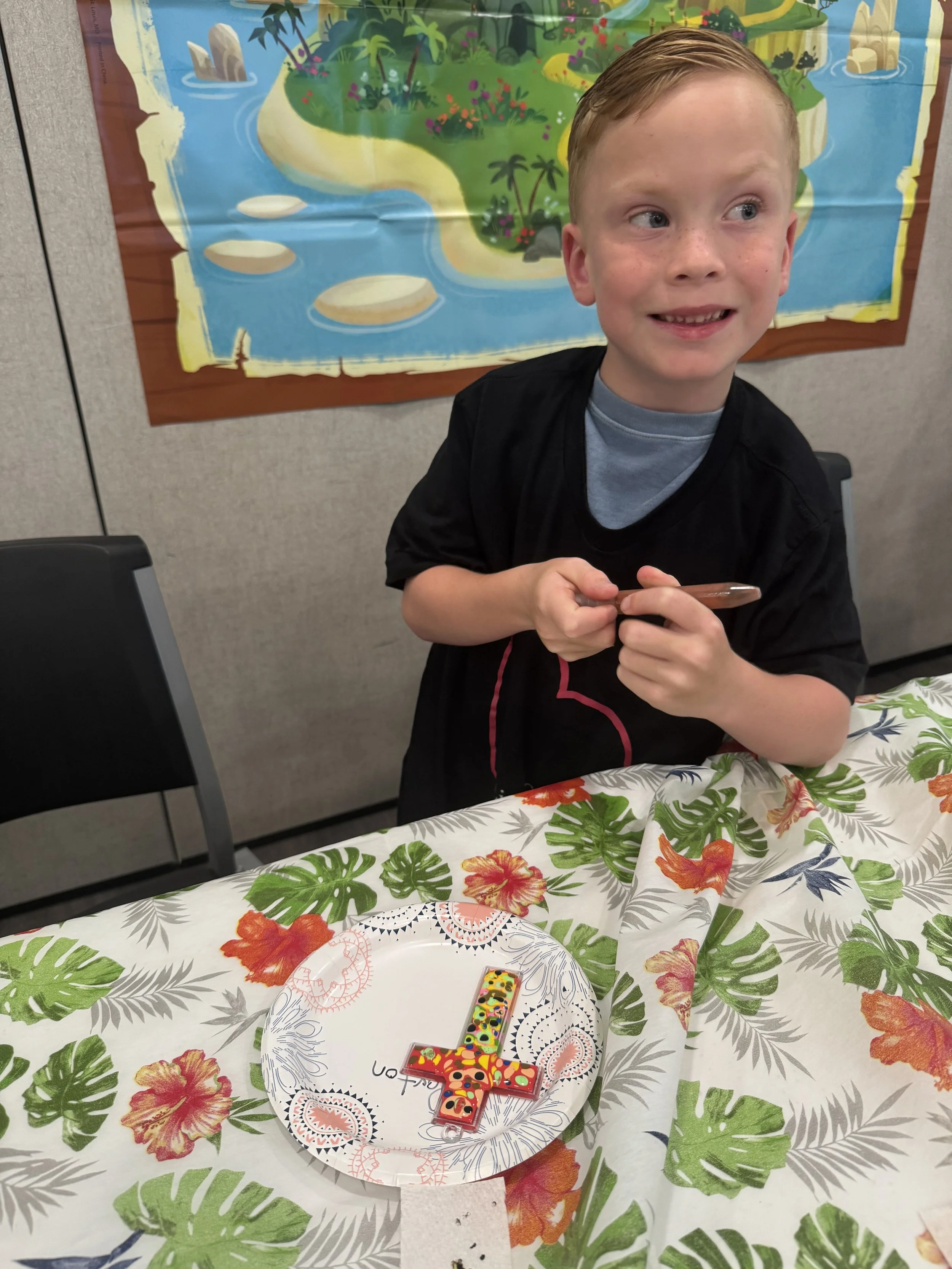
We’ve had a wonderful couple of weeks learning about baby Moses and Zacchaeus climbing the tree to see Jesus! A highlight of this year's club is our tropical fruit tasting adventure, where the kids are loving the chance to try unique, exotic fruits they've never tasted before.



































































The Great Divorce Chapters 12-13 - Thursday Bible Study
On June 18, 2026, our class explored sin’s inward curve, creation’s praise, and the redemptive power of Christ through C. S. Lewis’s imagery in The Great Divorce, discussing how unresolved grief and lust can become idolatry and how surrendering our deepest attachments leads to glorious transformation.
Great Divorce Chapters 12-13
This is our 8th class on The Book
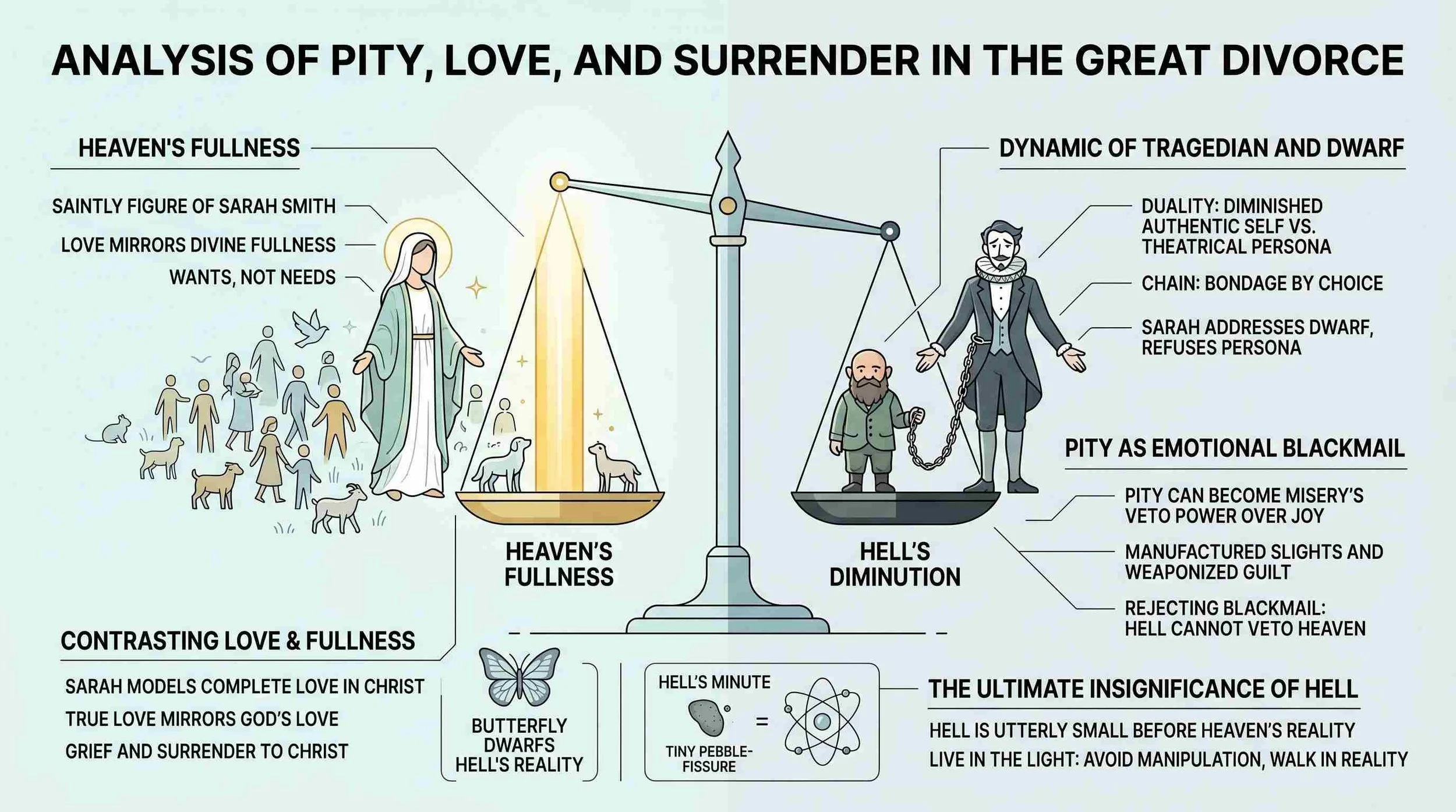
This is an AI Recap of the class.
Some things may be incorrect.
Short Summary of the Class
On June 25, 2026, our class delved into chapters 12 and 13 of C.S. Lewis's "The Great Divorce," focusing on the characters of Sarah Smith and her husband, the Dwarf/Tragedian. We discussed the contrast between Sarah's radiant, non-possessive love and her husband's manipulative self-pity, which functions as a self-forged chain reminiscent of Marley in A Christmas Carol. We explored how his behavior exemplifies "emotional blackmail" and how true, selfless love, like God's, comes from fullness, not neediness. The conversation highlighted the immense difficulty of surrendering our earthly griefs to God, the necessity of setting boundaries so that "hell cannot veto heaven," and the striking image of hell's ultimate smallness. We concluded that God’s will is not a formula but a reality to be lived, with our hope resting firmly in Christ's victory over darkness.
Detailed Class Summary
Here is a breakdown of the topics we covered during our discussion.
1) Setting the Study: Continuing The Great Divorce (Chs. 12–13)
Our discussion began by noting we were likely finishing the study of The Great Divorce and that chapters 12 and 13 are deeply intertwined. We acknowledged the difficulty of Lewis’s euphemistic, layered language, especially for newer readers, and how his interwoven poetry, while "not epic," is "quite lovely" and enhances the metaphorical narrative. The group reflected on the central question posed by the story: Is it tolerable that the woman in heaven (Sarah Smith) remains untouched by her husband's self-made misery? The consensus was that love in heaven must not be subject to manipulation from hell.
Summary: We framed the session around the connected narrative of chapters 12–13, set expectations for Lewis’s dense, poetic style, and affirmed that heaven’s love cannot be ruled by another’s self-chosen misery.
Bible Verses Mentioned: None cited in this opening frame.
Stories Mentioned: Class logistics and reading challenges.
2) Sarah Smith’s Quiet Sainthood and Expansive Love
We identified Sarah Smith as a figure of quiet, unnoticed sainthood. This resonated with a participant's childhood memory of a kind church woman who welcomed children. Cris shared a story from Texas about an unassuming youth leader whose massive funeral revealed his hidden, widespread impact, highlighting how true holiness is often humble and recognized late. We observed that Lewis’s choice of a common name, "Sarah Smith," signals that great saints are often ordinary in worldly terms. Her sainthood is expressed through expansive, non-possessive love. Her motherhood doesn't "steal" children but enlarges their capacity to love their own families more, a model of investing in people without controlling them. This love overflows to creation itself; as the text says, every beast and bird "in her became themselves," which we connected to the Franciscan tradition of care for all creatures.
Summary: We recognized Sarah Smith as a type of unnoticed, ordinary saint whose humble, non-possessive love multiplies affection, restores creation, and shapes many lives, echoing real-world experiences of hidden, impactful servants.
Bible Verses Mentioned:
Matthew 6:1–4 (giving in secret; hidden righteousness)
Matthew 23:11–12 (the greatest is the servant)
Hebrews 13:2 (hospitality to strangers)
1 Peter 5:5–6 (humility exalted by God)
1 Samuel 16:7 (God looks on the heart)
1 Corinthians 1:26–29 (God chooses the lowly)
Philippians 2:3–4 (looking to others’ interests)
1 Thessalonians 2:7–8 (gentle, sharing life)
Galatians 6:2 (bearing burdens)
Genesis 1:28; 2:15 (care for creation)
Romans 8:19–22 (creation longing for restoration)
Proverbs 12:10 (the righteous care for animals)
Stories Mentioned:
Texas youth leader’s funeral revealing wide impact.
St. Francis of Assisi’s care for animals.
Personal anecdotes about the commonness of the name "Smith."
3) Radiance and Edenic Innocence
Reading the description of Sarah Smith's appearance, we noted the question, "Is she naked? Is she clothed?" Cris connected this to the Edenic state of being "naked without shame," where one's presence is no longer about fear or concealment but about glory. Her robe and crown are as natural as lips or eyes, embodying a restored, shame-free existence in the kingdom.
Summary: Sarah’s radiance evokes Eden restored—a shame-free, glory-clothed presence that embodies life in the kingdom.
Bible Verses Mentioned:
Genesis 2:25 (naked and not ashamed)
Psalm 8:5 (crowned with glory and honor)
Revelation 19:7–8 (the bride’s fine linen—righteous acts)
Stories Mentioned: Eden imagery.
4) The Dwarf and the Tragedian: Emotional Blackmail vs. Authentic Love
We analyzed the character of Sarah’s husband, who appears as both the Dwarf (the true self) and the Tragedian (a theatrical persona). His pouting and emotional neediness were identified as a form of manipulation, which someone aptly called "emotional blackmail." This lifelong tool for control started in his childhood, where he would sulk to make his sisters feel sorry for him. The Dwarf holds the chain of this self-pity, while the Tragedian wears the collar, performing to avoid genuine engagement. Sarah addresses the Dwarf, the true self, ignoring the persona. We contrasted this manipulative "love" with the true, selfless love his wife now possesses. On page 126, she explains she is "full now," "in love itself," no longer needing him but freely wanting him to share her joy. This mirrors God’s love for us: He is already completely full but still desires a relationship.
Summary: The scene contrasts Sarah’s genuine, "full" love with her husband’s manipulative performance. We identified his behavior as "emotional blackmail"—a destructive tactic rooted in neediness that stands in opposition to the selfless, giving nature of God's love.
Bible Verses Mentioned:
Ephesians 4:22–24 (put off the old self; put on the new)
Matthew 5:37 (simple truth without theatrics)
John 1:39 (The wife's invitation to "Come and see" was compared to Jesus's invitation to His disciples).
Stories Mentioned: The story of the Tragedian's childhood manipulation of his sisters.
5) Chains We Forge: Self-Pity, Grief, and Surrender
The discussion turned to the chain the Dwarf carries, representing his self-pity. We drew a parallel to Marley's self-forged chains of greed in Charles Dickens’s A Christmas Carol. The Dwarf clings to his chain, using pity to manipulate and control, shrinking as he rejects heaven. This led to a vulnerable conversation about the difficulty of surrender, especially in the face of profound loss, like the death of a child or spouse. We acknowledged that true peace comes only through Christ, which requires surrendering what we hold tightly. Personal testimonies were shared about how faith provides comfort, knowing a loved one is with the Lord. We also noted how the pressure to grieve "perfectly" can feel like being forced to be an actor, just like the Tragedian.
Summary: Self-pity and a ledger of grievances become self-forged chains that pull us from grace. Surrendering these attachments and our deepest griefs to God is incredibly difficult but essential, and faith in Christ is the only source of true comfort and freedom.
Bible Verses Mentioned:
Galatians 5:1 (Christ sets us free; do not be entangled again)
2 Corinthians 7:10 (godly sorrow vs. worldly sorrow)
James 3:14–16 (selfish ambition breeds disorder)
1 Corinthians 13:5 (love keeps no record of wrongs)
Stories Mentioned:
Charles Dickens’s A Christmas Carol (Marley’s chains).
A woman grieving the loss of her child (referenced from another part of "The Great Divorce").
Personal stories of losing family members and finding comfort in faith.
6) Resisting Hell's Veto: Pity, Boundaries, and Coercion
We explored how the Tragedian uses pity to hold others' joy for ransom. The class noted how guilt and self-pity are used to force conformity in relationships, which was compared to historical lobotomy practices—a metaphor for coercive change rather than invited transformation. Sarah Smith establishes a firm boundary, declaring she "cannot bring hell into me." This resonated with Lewis's larger point that hell cannot be allowed to "veto heaven." True Christian service was distinguished from enabling dysfunction; enabling is not love. The Tragedian ultimately chooses his self-pity, and the Dwarf disappears, swallowed by the persona.
Summary: We defined pity as a chain the Tragedian used for emotional blackmail. Sarah’s refusal to let his misery corrupt her joy served as a powerful lesson on setting boundaries and distinguishing true love from enabling or coercion.
Bible Verses Mentioned:
Colossians 3:12–14 (compassion bound with love)
Romans 12:2 (transformation by renewal, not coercion)
Stories Mentioned:
One Flew Over the Cuckoo’s Nest (lobotomy reference).
General historical notes on lobotomy practices.
7) The Smallness of Hell and the Power of Light
The class was moved by Lewis's striking image of hell's true size. The guide reveals that the bus from hell came through a fissure in the soil "no bigger than" a blade of grass, and that "all hell is smaller than one pebble" of the earthly world. This underscored heaven’s vastness and hell’s impotence, which we connected to the biblical truth that "the darkness cannot overcome the light." Cris shared a pastoral story of comforting a grieving friend, illustrating that even a tiny light (a Bic lighter in a dark field) pierces overwhelming darkness. The takeaway was that light doesn't strain to overcome darkness; it simply shines.
Summary: Lewis’s vision portrays hell as infinitesimally small before heaven’s reality, reinforcing the biblical truth that light inevitably overcomes darkness; a pastoral story made this hope concrete.
Bible Verses Mentioned:
John 1:5 (the light shines in the darkness, and the darkness has not overcome it) — referenced conceptually.
Stories Mentioned:
Cris’s pastoral visit to a grieving friend; the "field and Bic lighter" illustration.
8) Living God's Will in Reality
Finally, we discussed Lewis’s caution against defining eternal reality, quoting from the end of p. 141: “it must be lived.” Lewis isn't focusing on universalism or predestination but on lived obedience and love. Cris emphasized a “live life” theology: we discern God’s will through faithful living and hindsight more than abstract certainty. This was illustrated with a participant's career path from chemical engineering to firefighting and the quip, “man plans and God laughs.” We concluded that perfection isn’t the requirement for our assurance, which rests solely in Jesus’ death and resurrection. The session ended with an agreement to continue with a full debrief next week.
Summary: Lewis reframes debates about eternal destiny, calling us to live reality with God. The class affirmed that God’s will is discerned through faithful living, with our ultimate confidence rooted in Christ’s finished work.
Bible Verses Mentioned (Implied/Alluded to):
Romans 8:28 (God works all things for good)
John 11:25 or 1 Corinthians 15 (Christ’s death and resurrection)
Psalm 37:23 (steps ordered by the Lord)
Stories Mentioned:
Speaker 4’s vocational journey (engineering to firefighting).
Class quip: “man plans and God laughs.”
Final Summary
Our study session on June 25, 2026, was a profound exploration of C. S. Lewis’s The Great Divorce (chapters 12–13), focusing on love, manipulation, and surrender. We dissected the character of the Tragedian, identifying his behavior as "emotional blackmail"—a toxic form of control rooted in manufactured neediness and self-pity. This was contrasted with Sarah Smith, a figure of radiant, Eden-like innocence whose ordinary name belies an extraordinary holiness expressed through expansive, non-possessive love. Her love comes from a place of fullness, modeling God's own selfless love for us. The discussion led to a vulnerable look at the difficulty of surrendering our earthly attachments and griefs, with members sharing how faith in Christ is the only true way to find peace. We were moved by Lewis’s breathtaking image of hell as a minuscule crack set against the immeasurable reality of heaven, reinforcing the gospel truth that light overcomes darkness. We concluded with Lewis’s call to live out God’s will rather than merely defining it, recognizing that our assurance rests not in our perfection but in Christ’s death and resurrection.
Main Points
Lewis’s language in The Great Divorce is dense and poetic; chapters 12–13 are tightly connected.
Sarah Smith exemplifies humble, radiant sainthood; her expansive love multiplies affection and restores creation.
Emotional manipulation, or "emotional blackmail," is a destructive tool that creates unhealthy relationships.
True love, like God’s, comes from fullness, not neediness, and gives freely.
Chains of self-pity are self-forged through manipulation and keeping ledgers of slights.
Surrendering our deepest pains and griefs to God is difficult but necessary for true peace.
We must set boundaries to prevent misery from corrupting God-given joy; hell cannot be allowed to veto heaven.
Hell is unimaginably small before heaven’s reality; light overcomes darkness.
God’s will is a reality to be lived and is often discerned in hindsight.
Our assurance rests in Jesus’ death and resurrection, not in human perfection.
Bible Scriptures Mentioned
Genesis 1:28; 2:15 — Care for creation.
Genesis 2:25 — Naked and not ashamed.
1 Samuel 16:7 — God looks at the heart.
Psalm 8:5 — Crowned with glory and honor.
Proverbs 12:10 — The righteous care for animals.
Matthew 5:37 — Let your “Yes” be yes.
Matthew 6:1–4 — Giving in secret; hidden righteousness.
Matthew 23:11–12 — The greatest is the servant.
John 1:5 — The light shines in the darkness, and the darkness has not overcome it (referenced conceptually).
John 1:39 — Referenced in the context of the invitation to "Come and see."
Romans 8:19–22 — Creation’s longing for restoration.
Romans 12:2 — Transformation by renewing the mind.
1 Corinthians 1:26–29 — God chooses the lowly.
1 Corinthians 13:5 — Love keeps no record of wrongs.
2 Corinthians 7:10 — Godly sorrow versus worldly sorrow.
Galatians 5:1 — Freedom in Christ; do not be entangled again.
Galatians 6:2 — Bearing burdens.
Ephesians 4:22–24 — Put off the old self; put on the new.
Philippians 2:3–4 — Looking to others’ interests.
Colossians 3:12–14 — Compassion bound in love.
1 Thessalonians 2:7–8 — Gentle, sharing life.
Hebrews 13:2 — Hospitality to strangers.
James 3:14–16 — Selfish ambition and disorder.
1 Peter 5:5–6 — Humility and exaltation.
Resurrection assurance (allusions to passages like John 11:25; 1 Corinthians 15).
Providence and guidance themes (conceptual allusions such as Romans 8:28; Psalm 37:23).
Stories Referenced
C. S. Lewis, The Great Divorce (chapters 12–13): The primary text, focusing on Sarah Smith, the Dwarf, and the Tragedian.
Texas story: A quiet youth leader with a large funeral due to his hidden investments in people.
St. Francis of Assisi: Referenced for his care for animals.
Charles Dickens, A Christmas Carol: Used as an analogy for self-forged chains (Marley’s chains).
One Flew Over the Cuckoo’s Nest and historical lobotomy: Used as a metaphor for coercive conformity.
Cris’s pastoral story: An illustration of light overcoming darkness using a Bic lighter in a field.
A woman grieving her child: Referenced from another part of The Great Divorce to discuss surrendering loss.
Vocational journey story: A class member's path from studying chemical engineering to becoming a firefighter.
Personal Stories: Members shared experiences of losing loved ones and finding comfort in their faith.
Class quip: “Man plans and God laughs,” highlighting God’s providence.
The Chosen Study Episode 4 - Summer Bible Club Study
Scenes from The Chosen to explore Jesus’ compassionate mission to outcasts, the meaning of the Sabbath, the power of personal transformation and testimony, childlike discipleship, and the tension between comforting mercy and costly allegiance to Christ.
The Chosen Season 1 Episode 4
This is our 3rd class on The Chosen
This is an AI Recap of the class.
Some things may be incorrect.
Short Summary of the Whole Class
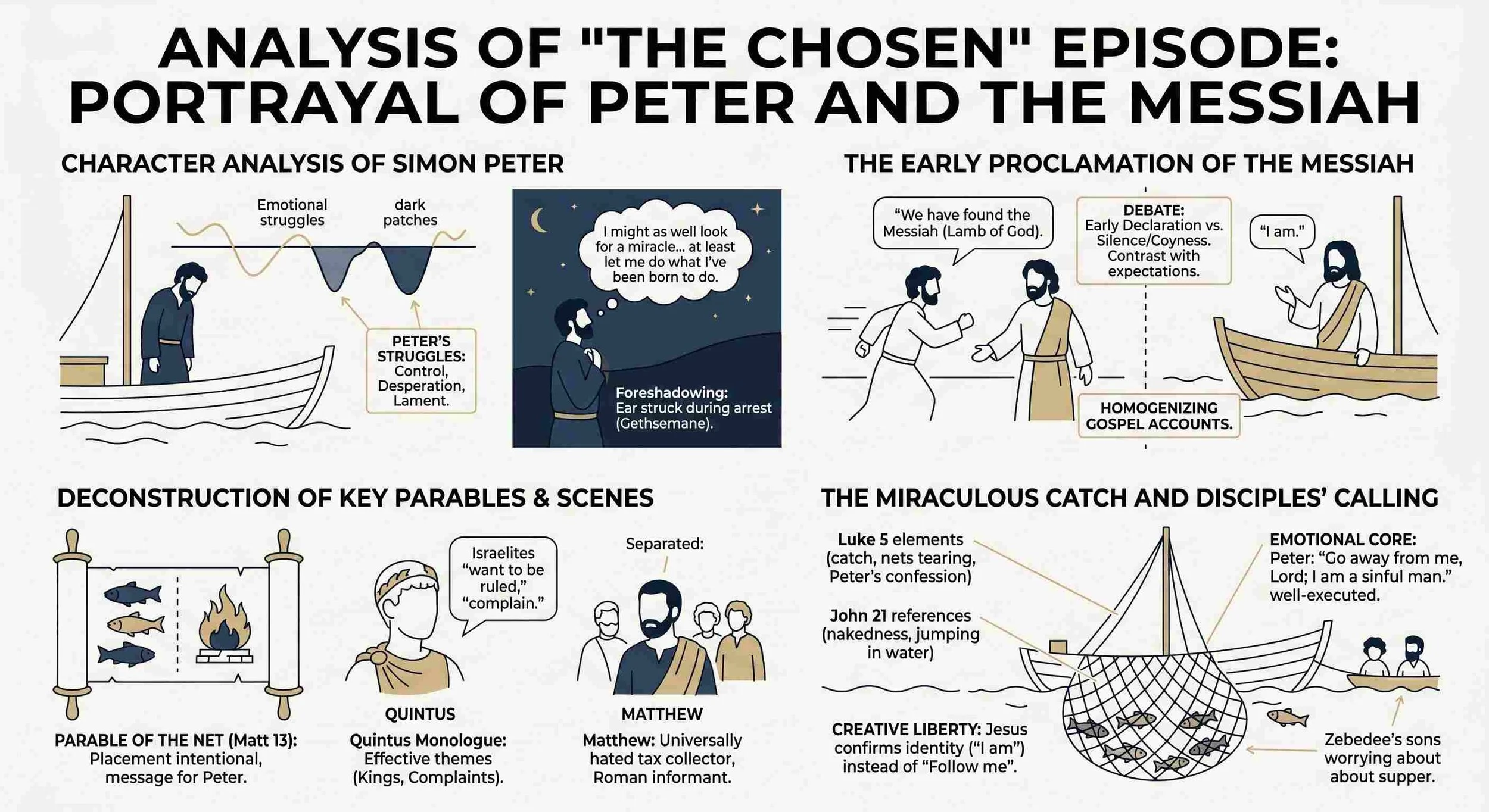
The group analyzes an episode of "The Chosen," focusing on its portrayal of Simon Peter's struggles, the early proclamation of Jesus as the Messiah, and the show's blending of various gospel accounts. Key discussion points include the creative liberties taken with scripture, the thematic representation of Israel's history through Peter's lament, and the narrative setup for future character dynamics.
Character Analysis of Simon Peter
This section covers the group's discussion on the depiction of Simon Peter, exploring his character arc within the episode. The analysis begins by highlighting Peter's emotional state, which one speaker likens to a personal "dark patch" where an individual becomes consumed with trying to control their own life and fix problems single-handedly. This is exemplified in the episode as Peter, despondent and on the verge of financial ruin, returns to fishing alone as a last resort. The group notes his desperation is captured in the thought, "I might as well look for a miracle out on the water," or simply to "at least let me do what I've been born to do."
A significant scene discussed is Peter's monologue while fishing at night, which is characterized as a lament that mirrors the historical struggles of Israel. He recounts a pattern of divine deliverance followed by suffering: enslavement in Egypt, wandering in the desert, exile in Babylon, and oppression under Rome. Cris views this lament as a positive, psalm-like form of questioning God. The discussion also identifies a key moment of foreshadowing where Peter's ear is struck during his arrest, an allusion to the Garden of Gethsemane where he will cut off the ear of the high priest's servant. This detail is seen as a clever way to show Peter's potential to become a "brute like the Romans."
The Early Proclamation of the Messiah
This section focuses on the central debate regarding the show's decision to have Jesus and his followers openly declare him as the Messiah early in the narrative. Participants noted that the show "bends full into calling him the Messiah from the very beginning," which felt odd compared to the accounts in Mark and Matthew where Jesus often commands silence about his identity. The discussion highlights the scene where Andrew runs to Simon, proclaiming he has seen the "Lamb of God," and later when Peter confesses Jesus's identity, to which Jesus explicitly confirms, "I am."
The group explores the theological and narrative implications of this creative choice. One speaker suggests this early declaration serves to contrast Jesus's true nature with the Pharisees' expectations of a messiah. Another speaker, however, argues it would have been more powerful if Jesus had remained "coy," forcing the disciples into a deeper journey of faith while still questioning "who is this man?" The conversation delves into scriptural sources, noting that John 1:40-42 does record Andrew telling Peter, "We have found the Messiah." The group concludes the show is homogenizing various gospel accounts. Additionally, Cris explains that when Peter says "Go away from me, Lord" in Luke 5, the Greek word used is "Kyrie," signifying a supreme authority or master, which supports the show's depiction of Peter's immediate recognition.
Deconstruction of Key Parables and Scenes
This section details the analysis of specific parables and scenes used in the episode, with a primary focus on Jesus's sermon from the boat. The group found the inclusion of the "parable of the net" from Matthew 13 to be an "odd" choice for this point in the story, particularly due to its severe language about separating good and bad fish and casting the latter into a "fiery furnace." The consensus was that its placement was intentional, serving as a direct message targeted at Simon Peter, who was struggling with his own path and trying to control his destiny.
The discussion also examined a monologue by the Roman official Quintus, who asserts that the Israelites are a "miserable lot" who inherently "want to be ruled" and "want an excuse to complain." Cris praised this as an effective way to highlight two major themes from the Old Testament: the Israelites' demand for a king and their history of complaining. The portrayal of Matthew as a universally hated tax collector and Roman informant was also analyzed, with the group noting the show's success in setting up the social isolation he would have faced. On a lighter note, Cris critiqued the scene of Jesus preaching, pointing out that the small number of extras did not convincingly portray the large crowd described in scripture, though acknowledging the production constraints.
The Miraculous Catch and Disciples' Calling
This section covers the climactic scene where Jesus directs the miraculous catch of fish, which is primarily based on Luke 5:1-11. The group analyzed how the show blends elements from different gospels, noting that while the tearing nets are from Luke, Peter's nakedness and jumping into the water reference the post-resurrection account in John 21. This homogenization was seen as a way to create a more cohesive and emotionally impactful narrative for the calling of the first disciples.
The emotional core of the scene, where Peter falls to his knees and says, "Go away from me, Lord; I am a sinful man," was deemed well-executed and touching. However, the creative liberty of having Jesus explicitly confirm his identity with "I am" was debated. Cris suggested the scene would have been more powerful if Jesus had simply responded with "Follow me," leaving the disciples to continue their journey of discovery. The speakers also appreciated the show's inclusion of relatable details, such as Zebedee's sons worrying about what their mother would say when they missed supper, and Zebedee's own "nice little touch" of suggesting they could escape to Egypt, referencing the Holy Family's flight.
![[Sunday] Naaman, The Mighty Leper - 2 Kings 5 - Foolish Wisdom](https://images.squarespace-cdn.com/content/v1/5852f18a20099e30cd2c01dc/1781838581516-H86L5TX0CZW62SNK9OIL/FW9a.jpg)
[Sunday] Naaman, The Mighty Leper - 2 Kings 5 - Foolish Wisdom
Naaman the mighty man of war has leprosy, but his story shows us how human pride expects a show while God brings true healing through the small, ordinary, and unimpressive things.
Naaman the mighty man of war has leprosy, but his story shows us how human pride expects a show while God brings true healing through the small, ordinary, and unimpressive things.
Questions for the Week: Naaman: The Mighty Leper.
Describe a time when your ego got in the way of God working.
Read 2 Kings 5:1-19. Naaman scoffed at the Jordan River because it wasn't impressive enough. Why does human pride struggle so much with God using simple, ordinary things (like regular water in baptism or bread and wine) to deliver His grace?
Naaman tried to buy his healing with gold and political letters. Even though we know salvation is free, in what subtle ways do we still try to "pay" God for His blessings?
When Naaman worried about having to work in a pagan environment, Elisha didn't tell him to quit his job or start a culture war; he just said, "Go in peace." How does knowing you are a secure, new creation in Christ’s resurrection free you to calmly love and serve the people in your secular workplace or neighborhood?



What Had happened at Grace this week.
![[Sunday] Psalm 2 - Richer](https://images.squarespace-cdn.com/content/v1/5852f18a20099e30cd2c01dc/1784218631473-DUSDA0KBZIGO4K6GS0XJ/richer+26+3.jpg)
![Finial Night of Bible Club 26’ [photos]](https://images.squarespace-cdn.com/content/v1/5852f18a20099e30cd2c01dc/1784230069965-TAA50AIKX6AR94C3JGW4/PXL_20260715_232145859.jpg)
![Red, White and BBQ [Photos]](https://images.squarespace-cdn.com/content/v1/5852f18a20099e30cd2c01dc/1784229609362-PXACZYO9MUNOB9HMD859/IMG_9883.jpeg)
![[Sunday] Joshua 1:9 - Richer](https://images.squarespace-cdn.com/content/v1/5852f18a20099e30cd2c01dc/1783630211466-J80H4FTFVVRMMYJ9V1G8/richer+26+2a.jpg)



![Red, White, And BBQ July 12th [Tons of Fun]](https://images.squarespace-cdn.com/content/v1/5852f18a20099e30cd2c01dc/1781874374517-KQLIDD18LRNMB4C7U8A8/Announcments+grace+%283%29.png)

Grace Driveway Work. Happening this weekend 21st.
Upcoming Driveway Closure: Sunday, Postponed due to weather
Driveway Project Update: June 20th
The Work is happening.
We may be parking next to the road.
We will be able to walk down the driveway

On Friday, May 29th, work officially began on our driveway at Grace. The crew cut out the old, damaged sections and filled the holes with fresh asphalt.
Upcoming Driveway Closure: Sunday, June 14th
The next step is sealing and restriping, which will take place starting Friday evening, June 12th, and run through the weekend. This means we will not have access to the driveway on Sunday, June 14th.

For that Sunday, we will park in the grass near our sign on Cashmere Blvd. The back door to the fellowship hall will be open for entry.
When scheduling this project, we had to choose between blocking access during the week or over the weekend. Closing the driveway during the week would have disrupted the Alzheimer’s daycare. Because it is difficult for many of those patients to walk long distances, we decided it was best to have the work affect the church over the weekend instead.





The Chosen Study Episode 2 - Summer Bible Club Study
Scenes from The Chosen to explore Jesus’ compassionate mission to outcasts, the meaning of the Sabbath, the power of personal transformation and testimony, childlike discipleship, and the tension between comforting mercy and costly allegiance to Christ.
The Chosen Season 1 Episode 2-3
This is our 1st class on The Chosen
This is an AI Recap of the class.
Some things may be incorrect.
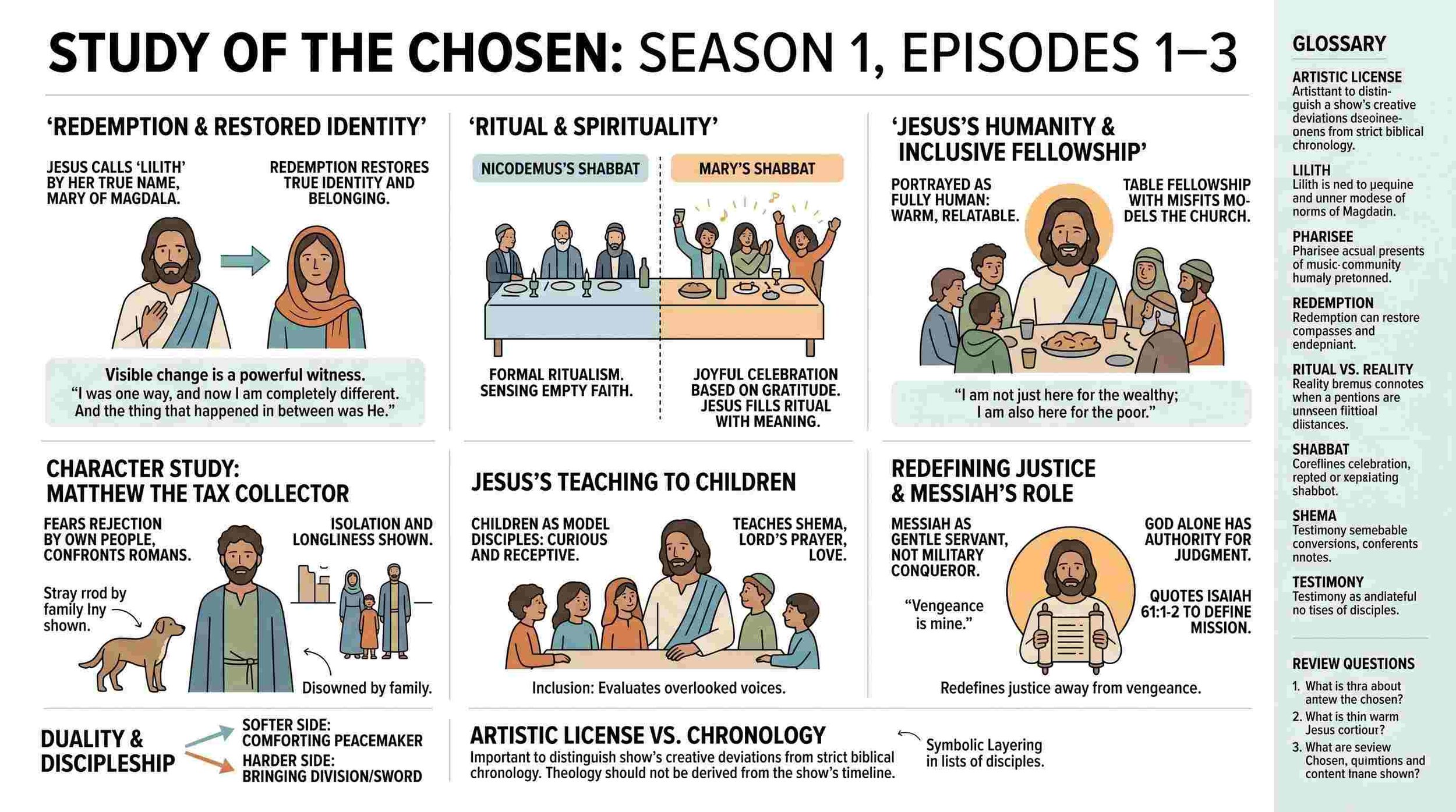
Short Summary of the Whole Class
On June 18, 2026 at 14:47:33, our Bible study examined episodes two and three of The Chosen, reflecting on Mary Magdalene’s redemption, multiple Sabbath tables, Matthew’s isolation, and Nicodemus’s crisis of faith. We discussed Isaiah 61 and the Beatitudes, the power of testimony and miracles, Jesus’s teaching of children as a model for discipleship, and the paradox of Jesus bringing peace and yet a “sword” that can divide families. We concluded with an exhortation to “give them Jesus”—presenting both His compassion for the broken and His demanding call to follow Him fully.
Section-by-Section Walkthrough with Summaries
1) The Power of Redemption and Storytelling
We revisited the end of episode one where Jesus finds Mary Magdalene, calls her by name, and redeems her. The emotional impact of this scene illustrated how narrative can communicate Jesus’s redemptive power more effectively than merely quoting verses. We noted The Chosen’s strength in crafting resonant, Jesus-centered stories, even while recognizing artistic liberties.
Summary: Mary’s redemption scene modeled Jesus-oriented storytelling, showing how narratives about His meaning and mercy can deeply move hearts.
Bible verses mentioned: Isaiah 43:1 (“I have redeemed you; I have called you by name, you are mine.”)
Stories discussed: Mary Magdalene’s deliverance (Lilith) when Jesus casts out her demons.
2) The Sabbath and Its Many Tables
Episode two centers on Shabbat, showing four Sabbath meals: Jesus with His group, Mary hosting her first Sabbath in years, Matthew eating alone with his dog, and Nicodemus at a formal dinner. We examined how each table revealed the social and spiritual realities of its participants. A key conversation was Nicodemus’s wife reflecting on beauty created amid imperfection (tapestry from the Maccabees era), raising questions about art, morality, and religious practice.
Summary: The varied Sabbath scenes highlight community, exclusion, and formality, contrasting hollow ritual with humble, grace-filled fellowship.
Bible verses mentioned: Deuteronomy 6:4 (the Shema, in the broader Sabbath context noted later); Proverbs 31 (recited by Nicodemus); references to Sabbath themes.
Stories discussed: The four Sabbath meals; Nicodemus’s wife and the tapestry (Maccabees reference).
3) The Humanity of Jesus and the Misfits
We noted Jesus’s relatable humanity—such as His playful wink after the “Nazareth” joke. Mary’s Sabbath table portrayed the awkward reintegration of someone long excluded, echoing the woman who bled for twelve years. The scene captured a community of outcasts and misfits drawn together by Jesus’s call. We also addressed the show’s artistic license (e.g., who calls Jesus “teacher” first, Mary’s early calling) and the need to distinguish narrative choices from strict biblical chronology.
Summary: Jesus’s warm humanity and His fellowship with misfits show the nature of His kingdom—welcoming the unclean and marginalized into grace-filled community.
Bible verses mentioned: Allusion to the healing narrative in the Gospels (woman with the issue of blood); general references to Jesus calling disciples.
Stories discussed: The woman who bled for twelve years; Jesus eating with tax collectors and sinners; early disciple interactions.
4) The Isolation and Character of Matthew
Matthew appears on the spectrum, explaining his rule-bound logic and fearless confrontation with Roman official Quintus. He experiences deep familial estrangement—his father says he “has no son.” A poignant scene shows Matthew buying a Sabbath meal, looking in on his family’s celebration, then returning to eat with his dog in an alley. The group connected this to the pain some feel on holidays like Father’s Day.
Summary: Matthew’s isolation and precise logic underscore the ache of estrangement and the longing for home that Jesus’s call ultimately answers.
Bible verses mentioned: None explicitly tied to Matthew’s scene here, though themes relate to Jesus calling sinners.
Stories discussed: Matthew’s life before being called; Matthew’s lonely Sabbath meal with his dog.
5) Nicodemus’s Search for Truth
Nicodemus initially believes he healed Mary but learns from her that “someone else” called her by name and said, “You are mine.” This shatters his pride and reveals the emptiness of his formal Sabbath observance, pushing him toward genuine pursuit of truth and an encounter with divine power beyond his understanding.
Summary: Nicodemus moves from pride to humility, recognizing the limits of ritual and the necessity of a true encounter with Jesus.
Bible verses mentioned: Isaiah 43:1 (echoed through Mary’s testimony); Proverbs 31 (earlier at his Sabbath table).
Stories discussed: Nicodemus’s encounter with healed Mary Magdalene.
6) A Transformed Life vs. Empty Ritual
We contrasted Mary’s heartfelt, freedom-filled Sabbath with Nicodemus’s scholarly, rote observance. Mary’s testimony—“I was one way, and now I am completely different”—captured the essence of transformation. Nicodemus’s lifeless recitation of Proverbs 31 highlighted the difference between duty and devotion.
Summary: True faith is relational and transformative, moving us from hollow performance to joyful worship born of grace.
Bible verses mentioned: Proverbs 31.
Stories discussed: Mary Magdalene’s healing and first Sabbath celebration; Nicodemus’s ritualistic Sabbath.
7) The Power of Testimony and Miracles
We affirmed that a changed life is a powerful witness. Miracles validate Jesus’s authority—“if you don’t believe me, believe the miracle.” Mary’s deliverance connects with John 9’s healed blind man: once blind, now seeing. Testimony and miracles together point to Jesus’s identity.
Summary: Personal testimony, confirmed by miracles, is compelling evidence of Jesus’s divinity and transformative power.
Bible verses mentioned: John 9 (man born blind).
Stories discussed: Jesus healing the sick and casting out demons; the blind man’s testimony.
8) Isolation and Community
Sin isolates—seen in Matthew (with his dog), Simon fishing on the Sabbath, and Nicodemus’s scholarly solitude. In contrast, Mary’s Sabbath meal models the community Jesus creates, even symbolically placing Jesus in Elijah’s seat, pointing to fulfillment and presence.
Summary: Jesus breaks isolation and builds fellowship, drawing the excluded into a new family centered on His presence.
Bible verses mentioned: Deuteronomy 6:4 (the Shema); liturgical blessings over bread and wine (Sabbath prayers).
Stories discussed: Mary hosting a communal Sabbath dinner; Simon fishing on the Sabbath.
9) Jesus and the Children: A Model for Discipleship
We discussed the episode where Jesus teaches children, showing how one must become like a child to enter the kingdom. He teaches foundational truths (the Lord’s Prayer, the Shema), reframes “eye for an eye” with God’s justice and mercy, and references David sparing Saul. The children’s quick grasp was noted: “It seems like the kids caught on quicker than the disciples did.”
Summary: Childlike humility and teachability exemplify how Jesus forms disciples—patiently revealing a kingdom of mercy over vengeance.
Bible verses mentioned: Matthew 18:3 (become like children); Matthew 6:9–13 (the Lord’s Prayer); Deuteronomy 6:4 (the Shema); Deuteronomy 32:35 (“Vengeance is mine”); background texts on “eye for an eye” (Exodus 21:24; Leviticus 24:20; Deuteronomy 19:21).
Stories discussed: Jesus teaching children; David sparing King Saul’s life.
10) Isaiah 61 and Jesus’s Mission
We read Isaiah 61:1–2: good news to the poor, binding up the brokenhearted, freedom for captives, release from darkness, the year of the Lord’s favor. This framed Jesus’s compassion for outcasts and the lowly, contrasting human retribution with God’s comforting justice.
Summary: Isaiah 61 encapsulates Jesus’s liberating mission—mercy, healing, and favor for the marginalized.
Bible verses mentioned: Isaiah 61:1–2; Romans 12:19 (“Vengeance is mine”); “eye for an eye” background (Exodus 21:24; Leviticus 24:20; Deuteronomy 19:21).
Stories discussed: Episode depictions of ministry to the poor and outcast.
11) The Tension in Jesus’s Teaching: Peace and Division
We wrestled with Jesus blessing peacemakers (Beatitudes) while also saying He brings a “sword” that can divide families (Matthew 10:34–36). Faithful discipleship may require separation from sinful influences and challenging cultural norms. The Chosen’s comfort emphasis was balanced by the cost of allegiance to Jesus.
Summary: Discipleship embraces paradox—Jesus’s peace alongside the real divisions that allegiance to Him can cause.
Bible verses mentioned: Matthew 5:3–12 (Beatitudes), especially Matthew 5:9; Matthew 10:34–36.
Stories discussed: Episode imagery of peacemaking and relational strain due to following Jesus.
12) Concluding Exhortation: “Give Them Jesus”
We closed by urging a holistic witness: present Jesus in His fullness—compassion for the broken, miracles and mercy, and a demanding call to repentance and loyal discipleship.
Summary: Our call is to give people Jesus Himself—His tender heart and His uncompromising claim on our lives.
Medium-Length Final Summary
On June 18, 2026 at 14:47:33, our Bible study used The Chosen to explore the heart of Jesus’s ministry and the nature of true discipleship. We began with Mary Magdalene’s redemption, recognizing the power of storytelling to convey Jesus’s mercy. Episode two’s Shabbat scenes contrasted hollow ritual with humble fellowship, highlighting Matthew’s isolation, Nicodemus’s emerging humility, and a table of misfits finding belonging. We affirmed that testimony and miracles together witness to Christ’s identity, while sin isolates and Jesus builds community. Jesus’s interactions with children modeled discipleship—humble, teachable, grounded in foundational truths like the Shema and the Lord’s Prayer, moving from “eye for an eye” to mercy, as seen when David spared Saul. Isaiah 61 framed His mission to the poor and brokenhearted, and the Beatitudes reminded us He blesses peacemakers, even as Matthew 10:34–36 warns that allegiance to Him can create familial division. We concluded with “give them Jesus,” committing to present both His compassionate heart for outcasts and His costly call to follow Him.
Main Points
Storytelling over dogma: narrative power communicates Jesus’s redemption deeply.
The meaning of the Sabbath: beyond ritual—community, rest, presence with God.
Jesus and the misfits: He gathers outcasts into a grace-filled community.
The pain of exclusion: Mary and Matthew embody estrangement and longing for home.
Search for truth: Nicodemus moves from prideful ritual to genuine pursuit of Jesus.
A changed life is powerful testimony; miracles validate Jesus’s authority.
Sin isolates; faith in Christ builds fellowship.
Childlike discipleship: humility and teachability are essential.
Jesus’s kingdom emphasizes mercy over vengeance.
Discipleship’s tension: peacemaking alongside divisions caused by allegiance to Jesus.
Artistic license: The Chosen reorders events for narrative aims—distinguish from literal chronology.
Exhortation: “Give them Jesus”—present His compassion and His call.
Bible Scriptures Mentioned
Isaiah 43:1
Isaiah 61:1–2
Deuteronomy 6:4 (the Shema)
Matthew 6:9–13 (the Lord’s Prayer)
Matthew 5:3–12 (Beatitudes), especially Matthew 5:9
Matthew 10:34–36
Matthew 18:3
John 9 (man born blind)
Deuteronomy 32:35 (“Vengeance is mine”)
Exodus 21:24; Leviticus 24:20; Deuteronomy 19:21 (“eye for an eye” background)
Proverbs 31
Stories and Images Discussed
Mary Magdalene’s deliverance and first Sabbath celebration
The woman who bled for twelve years and was healed
Jesus eating with tax collectors and sinners
The calling and early interactions of disciples (Thaddeus, James, Peter)
The four Sabbath meals (Jesus’s group, Mary’s table, Matthew’s lonely meal with his dog, Nicodemus’s formal dinner)
Nicodemus’s encounter with healed Mary and his ritualistic Sabbath
Matthew’s estrangement and alley meal
Simon fishing on the Sabbath
Jesus teaching children; children grasping the message quickly
David sparing King Saul’s life
Isaiah 61 imagery of mercy and liberation
Beatitudes and the tension of peace and division
The tapestry story (Maccabees reference) and art amid imperfection
The Great Divorce Chapters 11 - Thursday Bible Study
On June 18, 2026, our class explored sin’s inward curve, creation’s praise, and the redemptive power of Christ through C. S. Lewis’s imagery in The Great Divorce, discussing how unresolved grief and lust can become idolatry and how surrendering our deepest attachments leads to glorious transformation.
Great Divorce Chapters 11
This is our 7th class on The Book
This is an AI Recap of the class.
Some things may be incorrect.
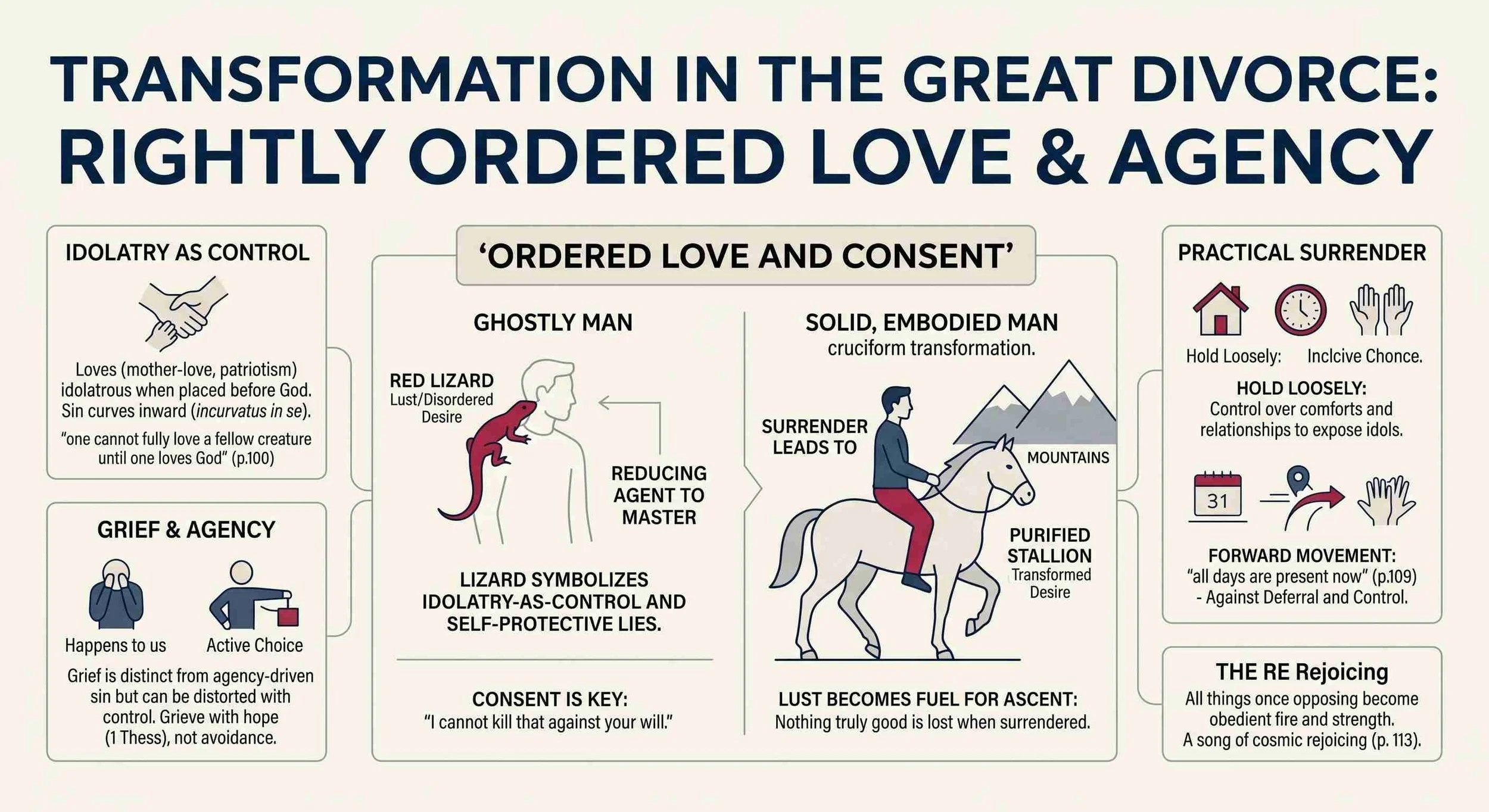
Short Summary of the Whole Class
During our Bible study session on June 18, 2026, we delved into the latter half of chapter 11 of C. S. Lewis’s The Great Divorce. The conversation centered on the difficult themes of grief, lust, and idolatry, connecting the story of a grieving mother with a man carrying a red lizard on his shoulder. We discussed Martin Luther's concept of sin as "curving inward" and how this self-absorption creates isolation. The central idea was the necessity of "letting go" and surrendering our controlling desires to God, as symbolized by the painful but liberating killing of the lizard, which ultimately transforms into a magnificent stallion. We reflected on how redeemed desire is not erased but made new and powerful, why we must hold earthly loves loosely, and how creation itself rejoices in God's redemptive work.
Section-by-Section Walkthrough
Here is a breakdown of the discussion from our class on June 18, 2026.
1. The Dangers of Misguided Love and Grief
We began by revisiting the story of the mother whose love for her deceased son has become an all-consuming, controlling force. The key quote framing our discussion was, "You cannot love a fellow creature, fully until you love God." This led to a debate about the nature of her grief. It was argued that the issue was not the grief itself, but that it had become misguided and possessive, a "deficit" of true love that would drag a loved one into misery. Her sorrow stemmed from a loss of control over her son’s life rather than simply his absence. She wanted him back to satisfy her own need to possess and manage him, turning her love into a form of idolatry. This was contrasted with the upward call of discipleship, where love relinquishes control and trusts Christ’s transforming work. We noted the Christian call is to grieve, but to do so "with hope."
Section Summary: The mother’s story illustrates that even a powerful, natural love can become corrupt when it isn’t centered on God. Her grief was less about her son’s well-being and more about her loss of control, highlighting the danger of allowing our attachments to become idols that consume us.
Bible Verses Mentioned: 1 Thessalonians 4:13, Colossians 3:1-3, Matthew 10:37-39.
Stories Mentioned: The story of the grieving mother in The Great Divorce.
2. Sin as Curving Inward: Agency, Grief, and Idolatry
A significant portion of our discussion revolved around the concept of sin as "curving inward," a theme from Luther and Augustine that creates isolation and self-focus. This was linked to the "gray town" image where people, by grasping for themselves, breed loneliness. We questioned whether grief, which often feels passive, has "agency" like active sins such as lust. The conversation shifted to how grief can become a sin when we refuse to move forward and instead use it as a tool, turning it into our entire identity. Lewis’s point is that any good thing—a mother's love, patriotism, art—can become demonic if it turns away from God. The root of all these struggles is the fundamental human sin: the desire to be God, controlling our own lives and those of others. This desire is a violation of the first commandment. We also touched on the intellectual idolatry of making certainty itself an idol, rather than trusting in Jesus.
Section Summary: Sin curves us inward, creating isolation. While grief is a natural response, it becomes sinful when we actively choose to let it define us, placing our sorrow and desire for control above God. This rebellion, making something other than God our ultimate focus, is where sin's agency lies, stemming from a desire to be our own god.
Bible Verses Mentioned: Exodus 20:3 (The Ten Commandments), Luke 14:26-27, Philippians 3:7-8, Romans 7 (thematic connection).
Stories Mentioned: The "gray town" imagery; Pete Enns's "The Sin of Certainty."
3. Letting Go: The Story of the Man and the Lizard
The discussion then moved to the second story in the chapter: the man with the chattering red lizard on his shoulder, which represents lust. This serves as a powerful metaphor for surrendering sin. The man is hesitant to let the angel kill the lizard, fearing the pain and loss of his identity. This echoes Christian discipleship: taking up the cross and dying to self to follow Jesus. The angel's statement, "I cannot kill that against your will," emphasizes that our transformation requires consent. We drew a parallel to addiction recovery, where confession—like AA’s “I am an alcoholic”—is the honest naming that opens the door to change, and the lizard’s lie, “It’ll be different this time,” mirrors the cycle of addiction.
Section Summary: The man and the lizard illustrate that sanctification requires our willing participation. True freedom begins with honest confession and courageous surrender, echoing the gospel call to die to self rather than live enslaved by sin.
Bible Verses Mentioned: Genesis 3, Luke 9:23, Romans 6:6-11, Galatians 2:20.
Stories Mentioned: The man with the red lizard; addiction and recovery narratives (AA).
4. The Crimson Grip and Transformed Desire
We explored the imagery of the angel seizing the lizard with a "crimson grip." We discussed whether "crimson" evokes Christ’s blood, cleansing, and sacrificial love, connecting it to hymns about the "crimson flow" and scriptural imagery of the Lamb who was slain. The man’s eventual permission leads to a painful "death" of the lizard, which is then resurrected into a magnificent, white stallion. The man becomes a "new-made man"—solid and whole. This symbolizes that when we surrender our twisted desires, they are not merely destroyed but are transformed into something powerful and glorious that carries us closer to Him. We noted Lewis’s contrast: lust is a “poor, weak, whispering thing” compared to the richness of true desire that arises when lust is killed and raised.
Section Summary: The "crimson" language points to Christ’s costly, purifying work. When we surrender our sin to God, it is not just destroyed but is redeemed and transformed—lizard to stallion—into a strength that propels us toward holiness.
Bible Verses Mentioned: Revelation 5:6, Revelation 19:13, Hebrews 9:14, Romans 12:1-2, 1 Corinthians 6:19-20, 2 Corinthians 5:17.
Stories Mentioned: The "crimson grip" imagery; Mary Magdalene’s line from The Chosen: “I was one thing, but now I am another.”
5. Death, Resurrection, and Creation's Song
The lizard-to-horse image illustrates the principle of death and resurrection. Cris read a passage describing how "nothing—not even the lowest—will not be raised if it submits to death." We clarified that choosing "death" (separation from God) can be final, but death in Christ leads to resurrection. This connects to Paul’s teaching: "It is sown a natural body; it is raised a spiritual body." This transformation is not just personal; Cris also read a passage describing creation itself rejoicing with a song "too large to hear," shaking with praise. This echoes the biblical theme that all creation celebrates God. The "song" speaks of mastery and rest, where what once opposed becomes "obedient fire," tying to the biblical promise to "the one who overcomes."
Section Summary: True spiritual strength emerges through death and resurrection. When disordered desires die, they are raised into powerful, holy desires. This redemptive pattern is celebrated by all of creation, which joins in a song of praise, echoing the biblical promise that those who overcome share in Christ's reign.
Bible Verses Mentioned: 1 Corinthians 15:42-44, 1 Corinthians 15:50, Luke 19:40, Revelation 2-3.
Stories Mentioned: Lewis’s lizard-to-horse transformation; Lewis’s descriptive scene of creation singing; mentions of the Narnia series.
6. Holding Gifts Loosely and Closing
We turned to practical application: hold blessings—people, possessions, ministries—loosely. We referenced Luther’s hymn "A Mighty Fortress" ("should they take our house, goods, honor, child, or spouse… they cannot win the day"), emphasizing that Christ’s victory stands even when earthly things are lost. A seminary professor’s illustration of hurricanes as "mighty winds" reframes fear, reminding us that not all loss is ultimate defeat. This applies to parenting ("If you love someone, set them free") and avoiding the temptation to clutch our homes or ministries too tightly. The call to repentance is always in the present moment. We concluded by acknowledging the chapter's depth and planned to continue with the "Sarah Smith" episode next time.
Section Summary: We applied Lewis’s insights to daily discipleship: trusting Christ’s victory, releasing our grip on people and possessions, and practicing vigilant, non-possessive love. We must act in the "now" and prepare to continue our study next session.
Bible Verses Mentioned: Psalm 46 (themes in "A Mighty Fortress").
Stories Mentioned: Luther’s hymn "A Mighty Fortress"; a seminary professor’s "mighty wind" metaphor; anecdotes about parenting and ministry; anticipation of the "Sarah Smith" episode.
Medium-Length Summary of the Class
On June 18, 2026, our Bible study traced the spiritual arc in C. S. Lewis's The Great Divorce from sin’s self-curving isolation to liberating surrender. Beginning with Luther’s insight, we connected inward-turning sin to loneliness and the “gray town” of grasping selves. We examined how even a noble emotion like a mother's love can become a "false religion" when it turns into a selfish desire for control. Reading Lewis’s vivid scene of the angel and the lizard, we confronted the fear that killing our lusts will kill us, recognizing the gospel truth that it is better to die to sin than live enslaved. The "crimson grip" led us into Scripture’s blood imagery, seeing Christ’s costly purification at the heart of transformation. We rejoiced that redeemed desire doesn’t vanish but is transfigured—lizard to stallion—carrying the new-made person toward the mountains. Practically, we emphasized holding blessings and relationships loosely, trusting Christ’s victory even when earthly things are shaken, echoing themes from Luther’s “A Mighty Fortress.” The class closed by noting the chapter’s intensity and preparing to study the “Sarah Smith” episode next.
Main Points
Sin curves us inward, producing isolation and self-absorption.
Any created thing or natural love can become a source of evil if not centered on God.
True transformation and freedom from sin require our active consent and willingness to "let go."
Discipleship involves death to self; surrender may feel like death but leads to true life.
Christ’s “crimson” work (His blood) purifies and empowers transformation.
Desire is redeemed, not erased—transformed from a weak lust into a powerful strength for the journey toward God.
Good loves become idols when absolutized; we must trust Christ over certainty and control.
True love follows Christ upward, relinquishing possessive demands and embracing transformation.
The call to repentance is always in the present moment.
Bible Scriptures Mentioned
Genesis 3: The serpent’s temptation in the Garden of Eden.
Exodus 20:3: The first commandment: no other gods before Me.
Psalm 46: Themes reflected in “A Mighty Fortress.”
1 Thessalonians 4:13: Grieving with hope.
Matthew 10:37-39: Lose your life for Christ to find it.
Luke 9:23: Take up the cross and follow Jesus.
Luke 14:26-27: Allegiance to Christ above all.
Luke 19:40: "The stones will cry out."
Romans 6:6-11: Die to sin, live to God in Christ.
Romans 12:1-2: Be transformed by the renewing of the mind.
1 Corinthians 6:19-20: Glorify God in your body.
1 Corinthians 15:42-44: "Sown a natural body, raised a spiritual body."
1 Corinthians 15:50: "Flesh and blood cannot inherit the kingdom of God."
2 Corinthians 5:17: New creation in Christ.
Galatians 2:20: Crucified with Christ; Christ lives in me.
Philippians 3:7-8: Counting all as loss for the sake of Christ.
Colossians 3:1-3: Seek the things that are above.
Hebrews 9:14: The blood of Christ purifies our conscience.
Revelation 2-3: Promises to "the one who overcomes."
Revelation 5:6: The Lamb who was slain.
Revelation 19:13: Christ’s robe dipped in blood.
Stories and References Discussed
C. S. Lewis Imagery: The grieving mother, the man with the red lizard, the "gray town," the "crimson grip," and the lizard’s transformation into a stallion.
Narnia series: Mentioned as an example of Lewis’s creativity.
The Chosen: Mary Magdalene’s testimony, “I was one thing, but now I am another.”
AA/Recovery narratives: The role of confession (“I am an alcoholic”) and long-term sobriety.
Martin Luther's hymn "A Mighty Fortress": Referenced for its theme of trusting God amid loss.
Pete Enns’s “The Sin of Certainty”: A warning against making certainty an idol.
A seminary professor's "mighty wind" illustration: A metaphor for reframing fear and loss.
Westerns and Far Side humor: Playful images of riding into the sunset.
Anticipation of the "Sarah Smith" episode: For the next class session.
![[Sunday] The Lord is My Shepherd - Psalm 23 - Foolish Wisdom](https://images.squarespace-cdn.com/content/v1/5852f18a20099e30cd2c01dc/1781221669135-RXD6QONVXVWRHXC34MS0/FW8a.jpg)
[Sunday] The Lord is My Shepherd - Psalm 23 - Foolish Wisdom
A more in depth look at the most popular psalm in the Bible, and also one that you have probably never heard discussed in a sermon.
A more in depth look at the most popular psalm in the Bible, and also one that you have probably never heard discussed in a sermon.
What Had happened at Grace this week.
![[Sunday] Matthew 2 - Richer](https://images.squarespace-cdn.com/content/v1/5852f18a20099e30cd2c01dc/1784816819405-X0EACOP9OFGLSXG0ZWFE/richer+26+4.jpg)
![Guys Night in June [Photos]](https://images.squarespace-cdn.com/content/v1/5852f18a20099e30cd2c01dc/1781220668311-KH8J8SKXE1SJXMN19XQE/20260604_180022.jpg)
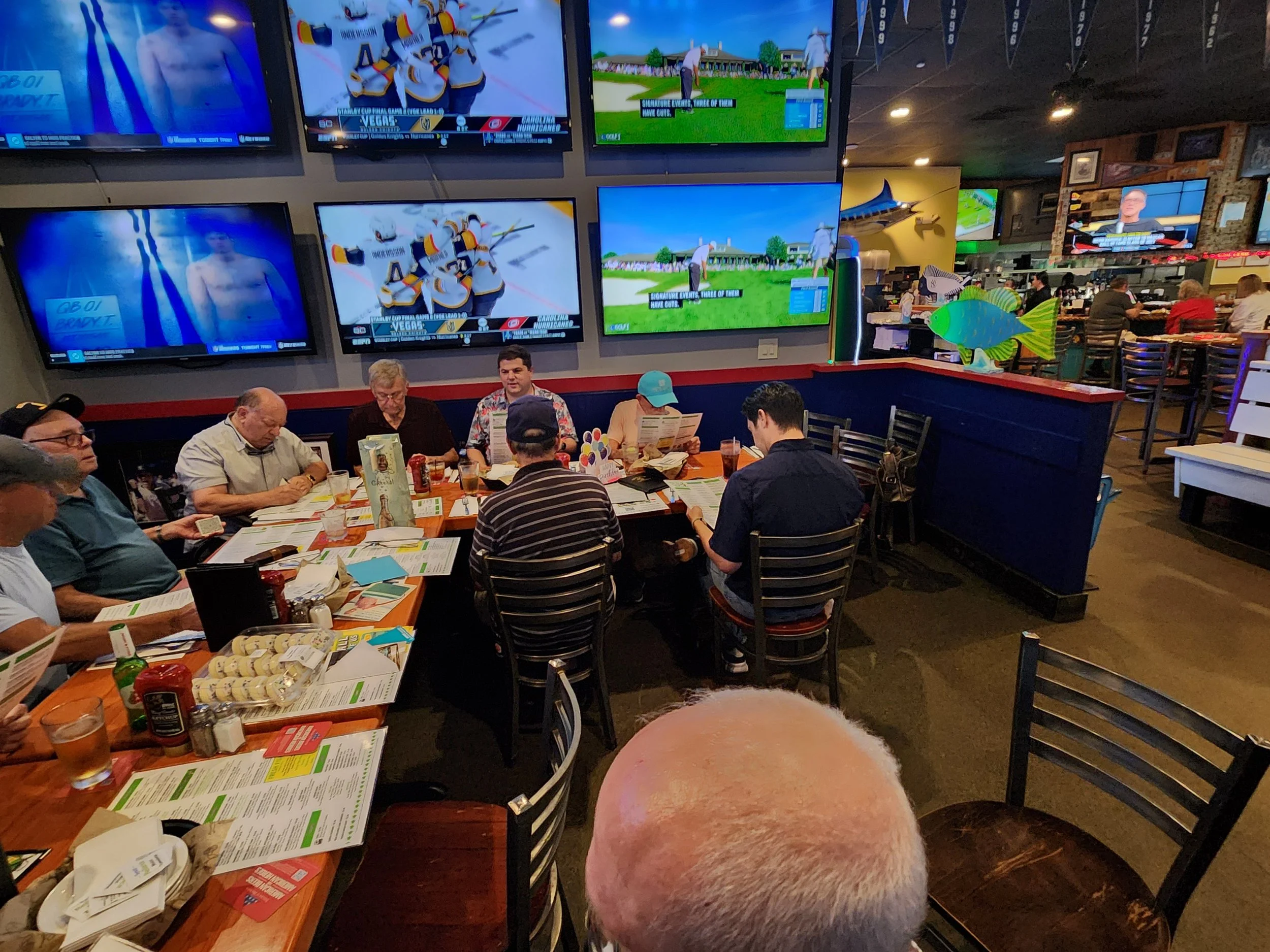
Guys Night in June [Photos]
We had a great time at guys' night at the Thirsty Turtle
Between celebrating Pastor Cris's birthday and eating plenty of wings thanks to the "Baldy" deal, we had a great time at guys' night at the Thirsty Turtle and can't wait for the next one!












![Summer Bible Club 26’ First Night [Photos]](https://images.squarespace-cdn.com/content/v1/5852f18a20099e30cd2c01dc/1781220283245-F3EU4HOWBS2HBOOXB211/IMG_8080.jpeg)
Summer Bible Club 26’ First Night [Photos]
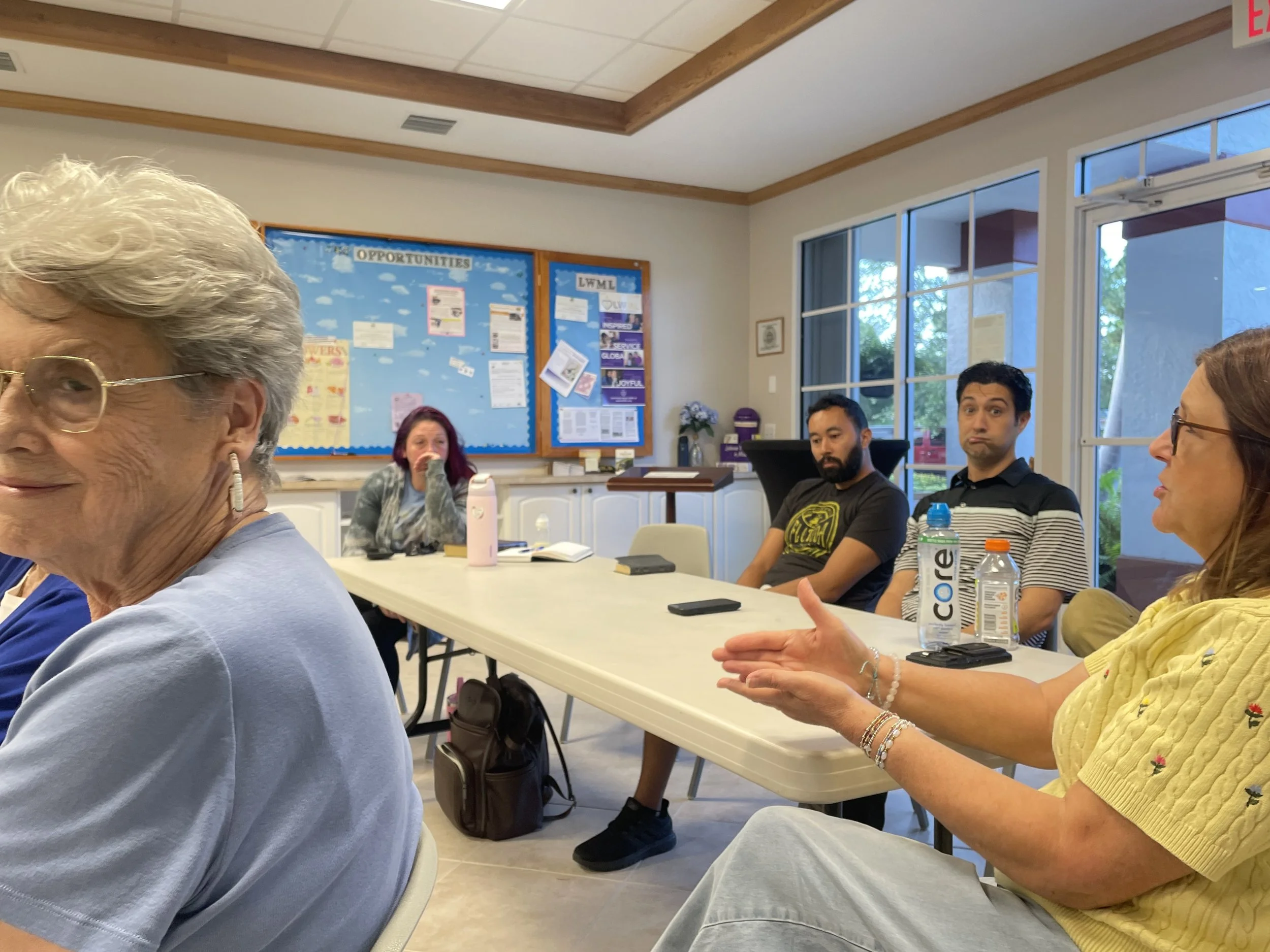
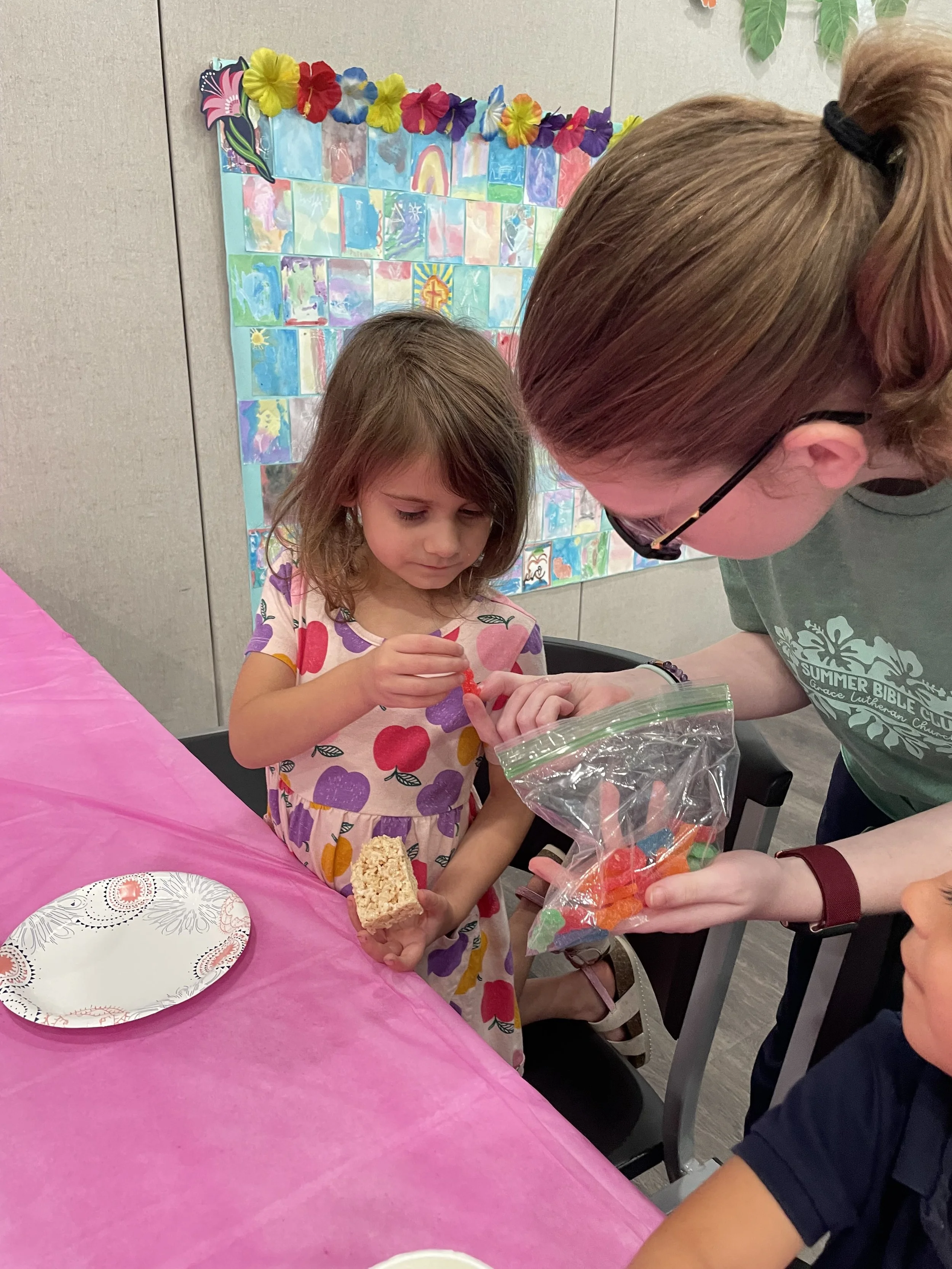
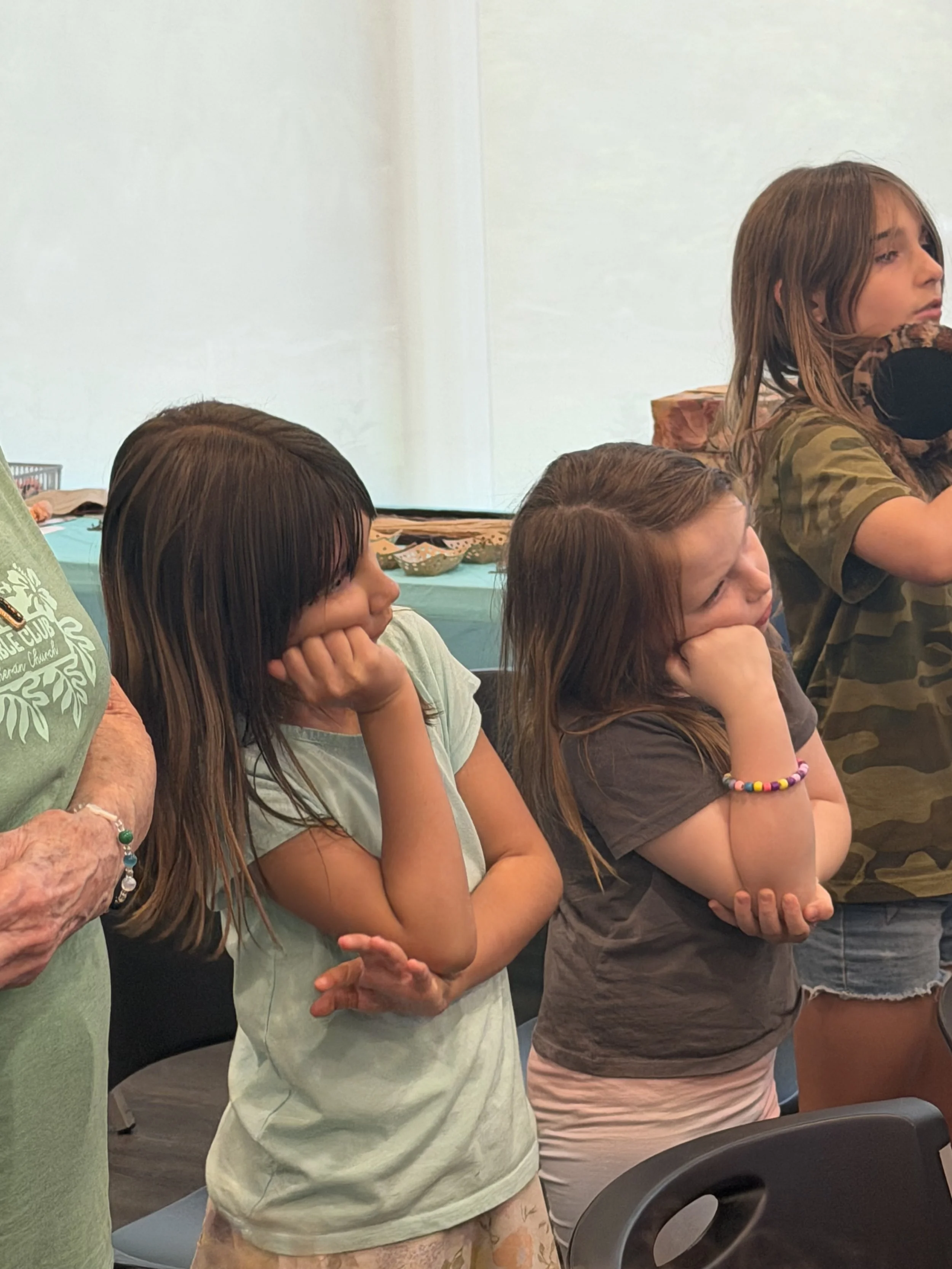
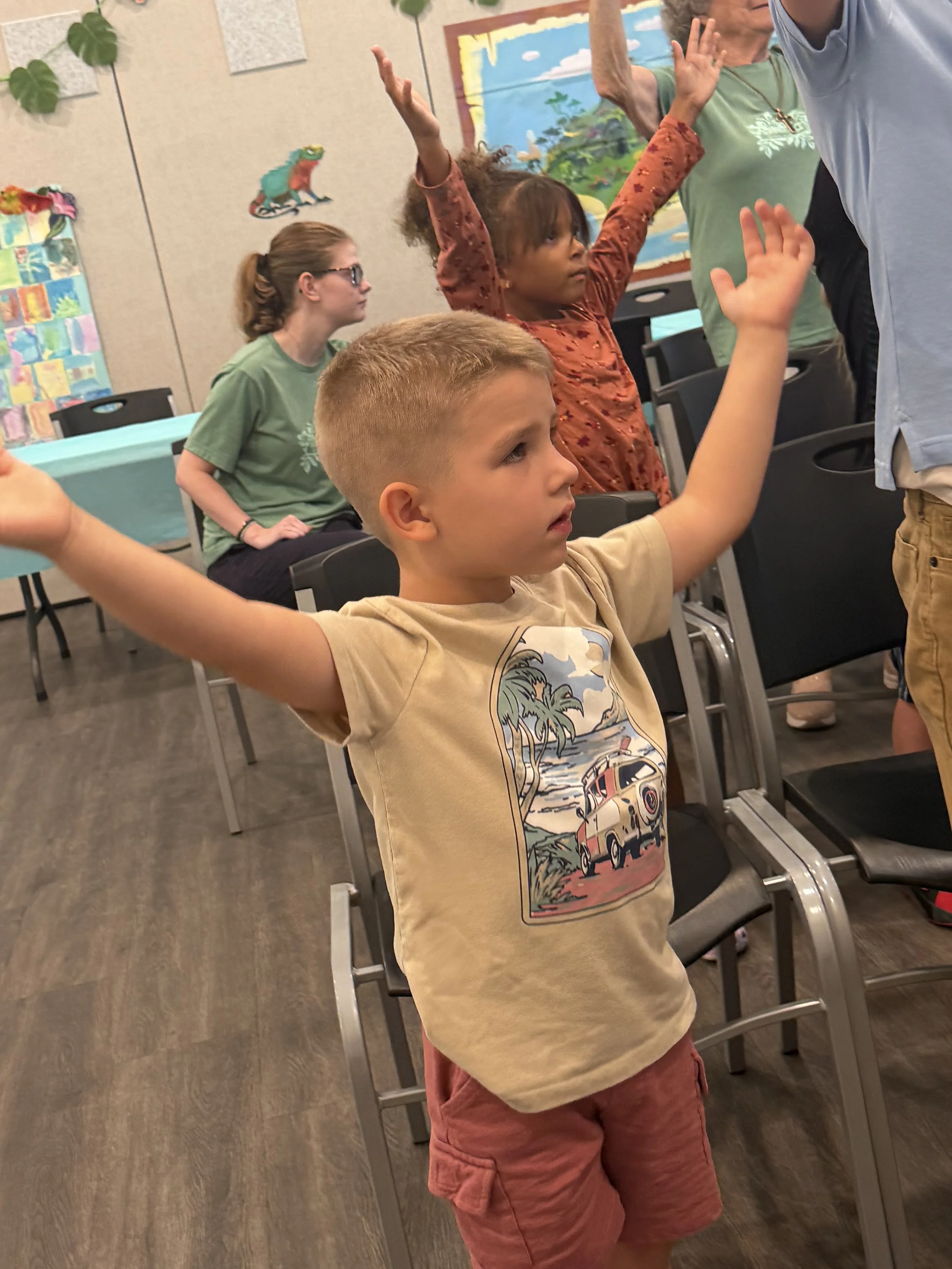
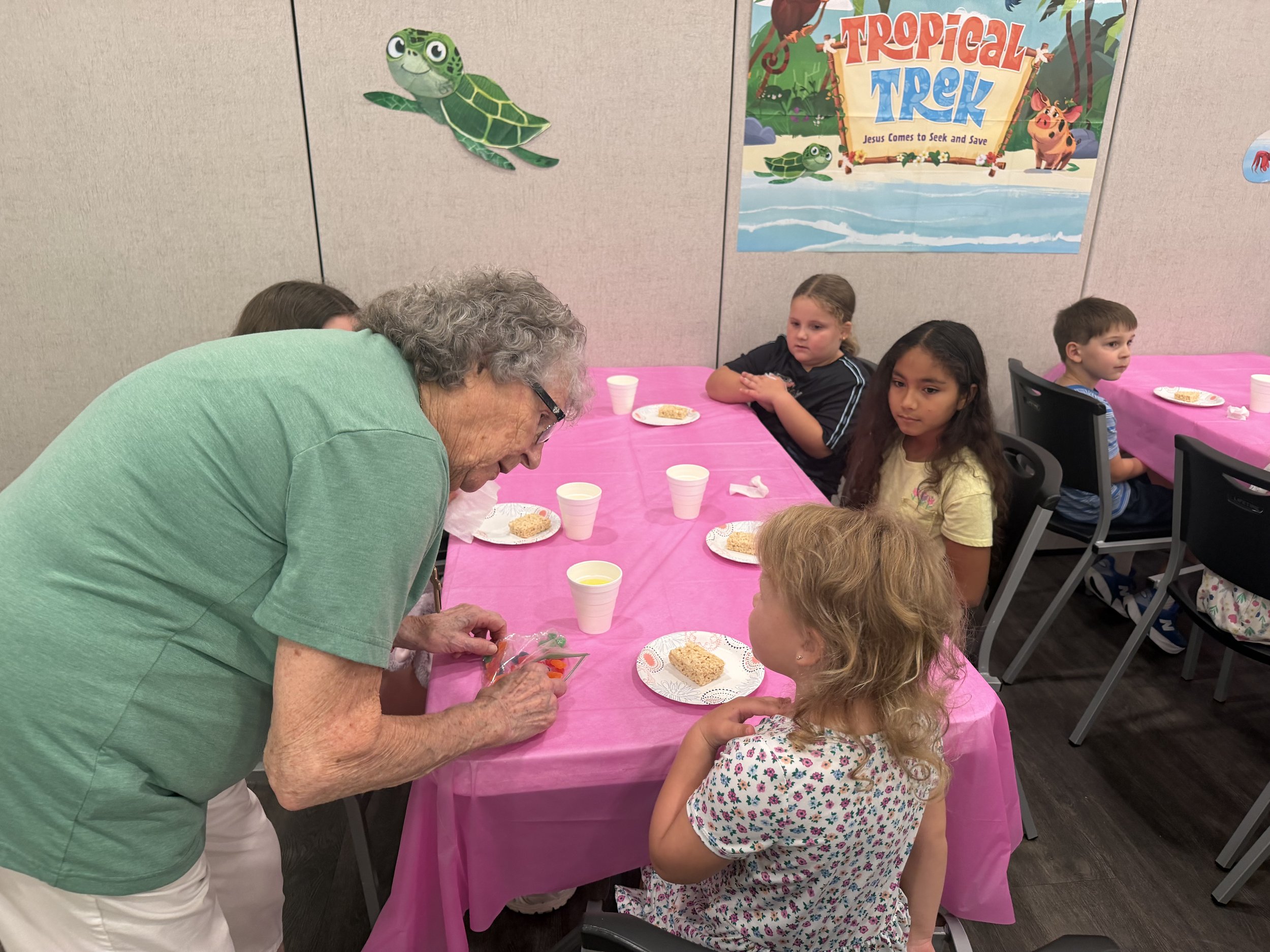
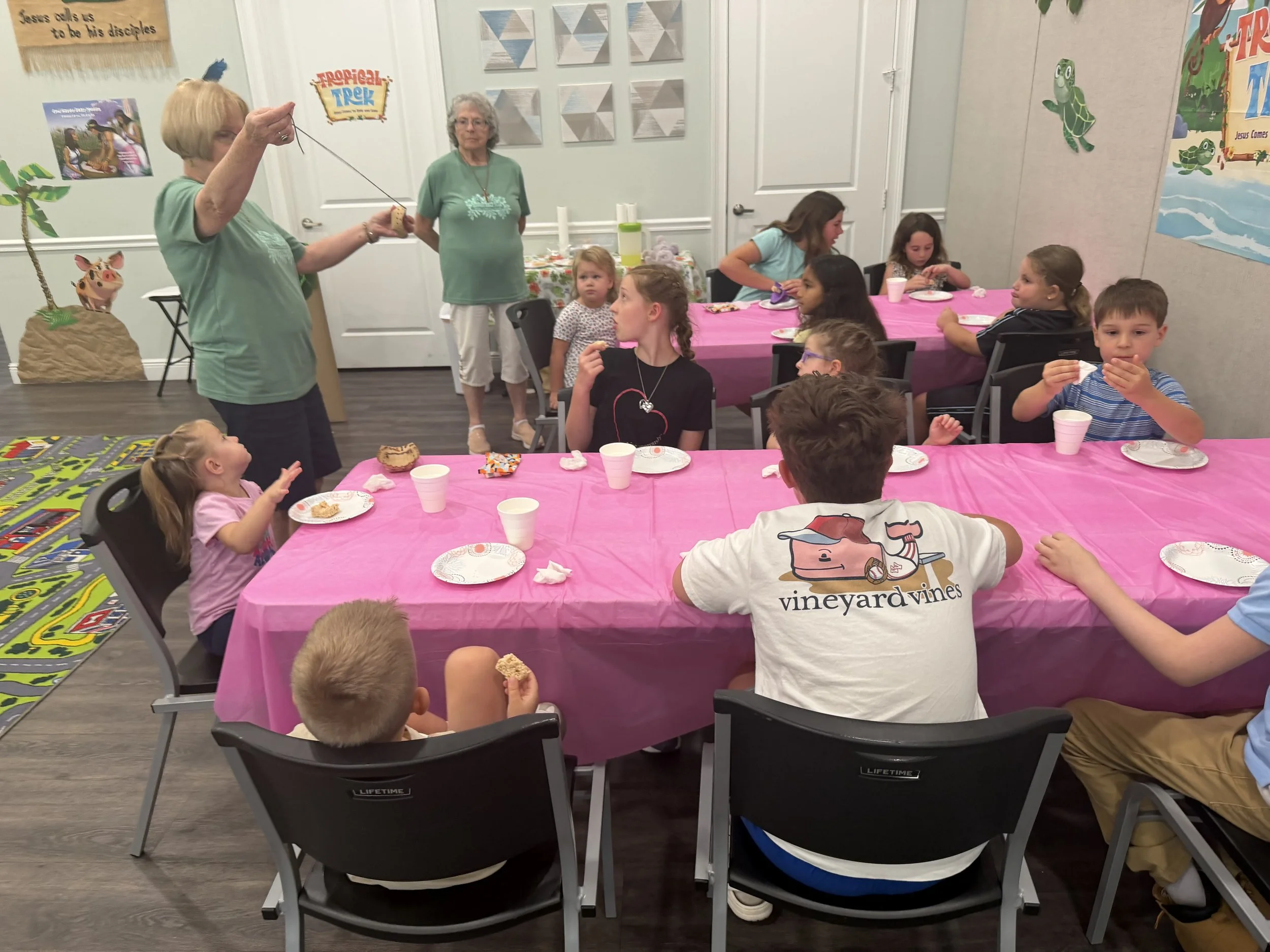
For our first night of Summer Bible Club, the kids had a blast learning about Moses through crafts, games, and their guide parrot Beacon, while the adults kicked off a great new study on The Chosen.
Summer Bible Club is officially underway, and our first night was a great success!
The kids enjoyed a wonderful lesson with their guide parrot, Beacon, learning about Moses in the basket through engaging crafts and games.
At the same time, our adult group began their new study on The Chosen. Thank you to everyone who joined us for a great kickoff!
























































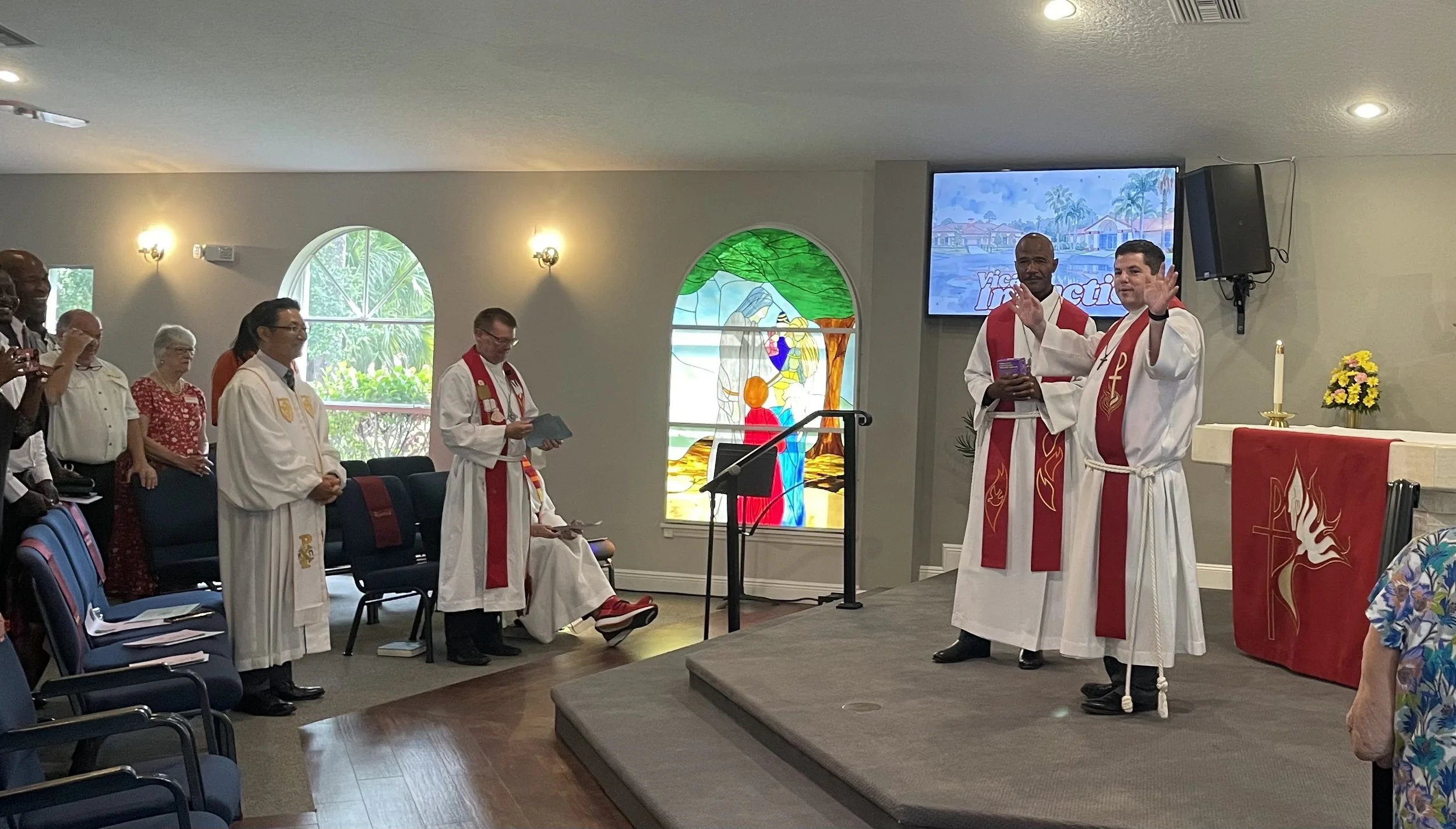
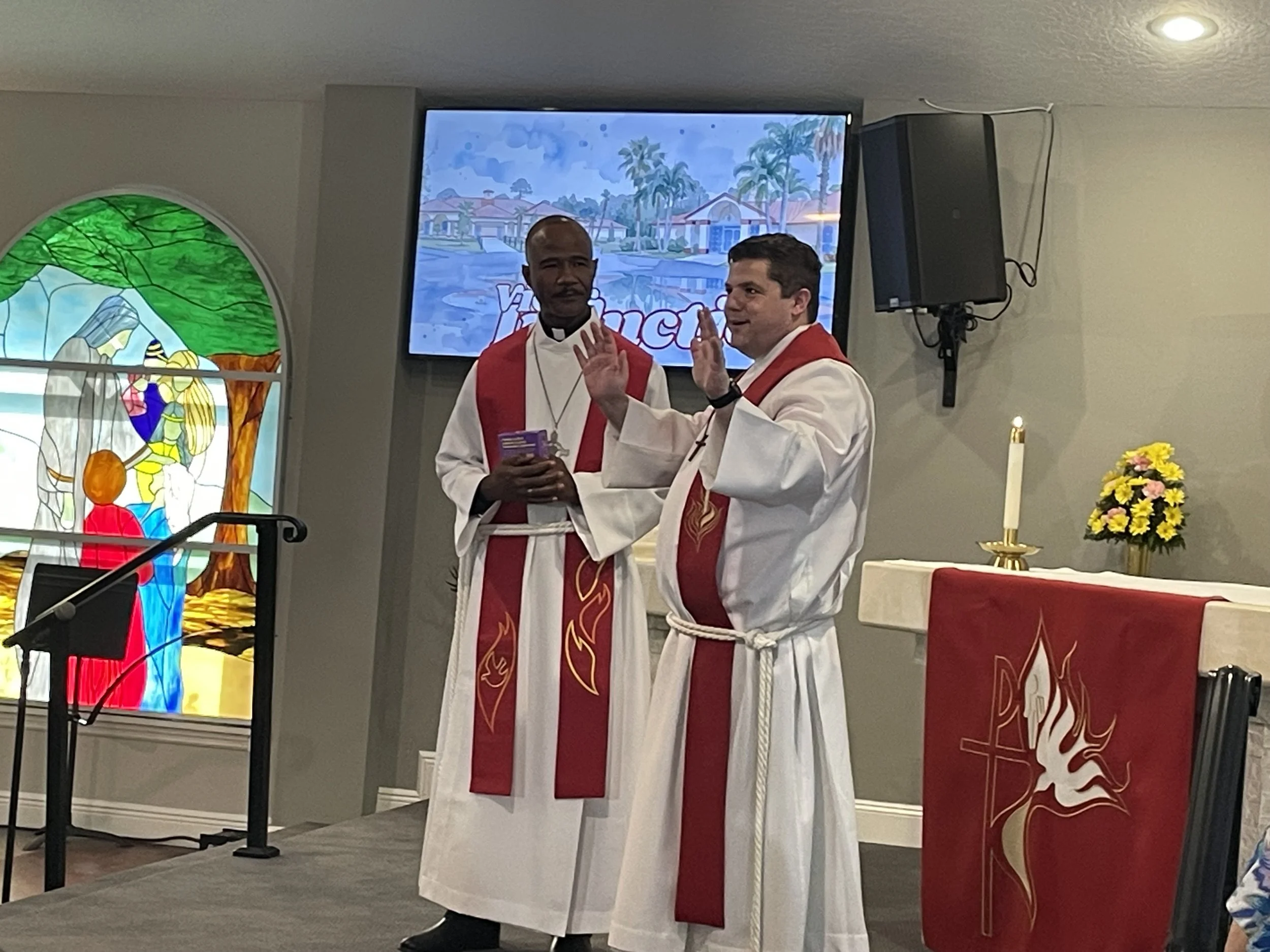
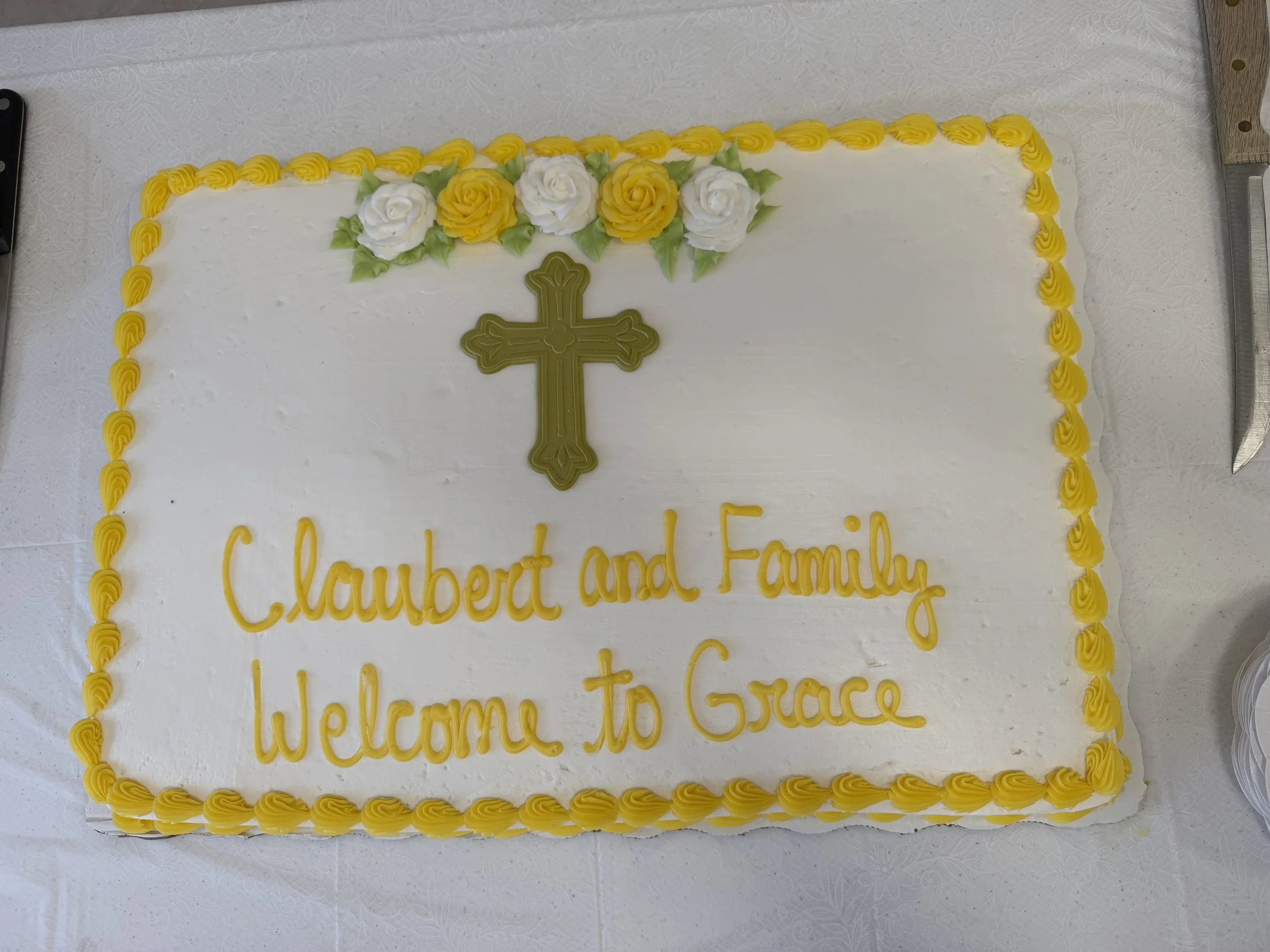
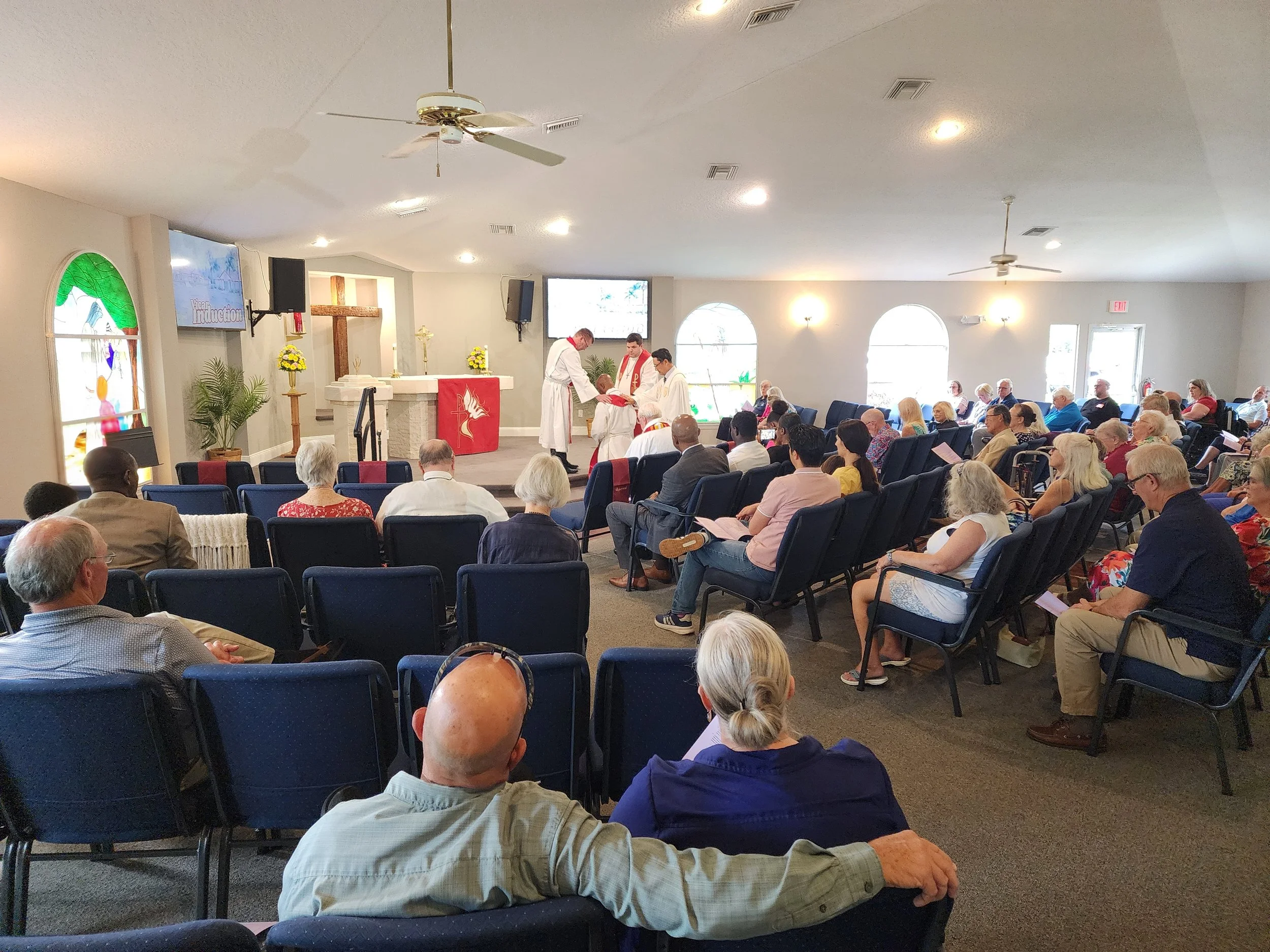
![Induction of Vicar Claubert [Photos]](https://images.squarespace-cdn.com/content/v1/5852f18a20099e30cd2c01dc/1781219264525-8YHK8SS1G2UL7RG7UVH1/20260607_165010.jpg)
Induction of Vicar Claubert [Photos]
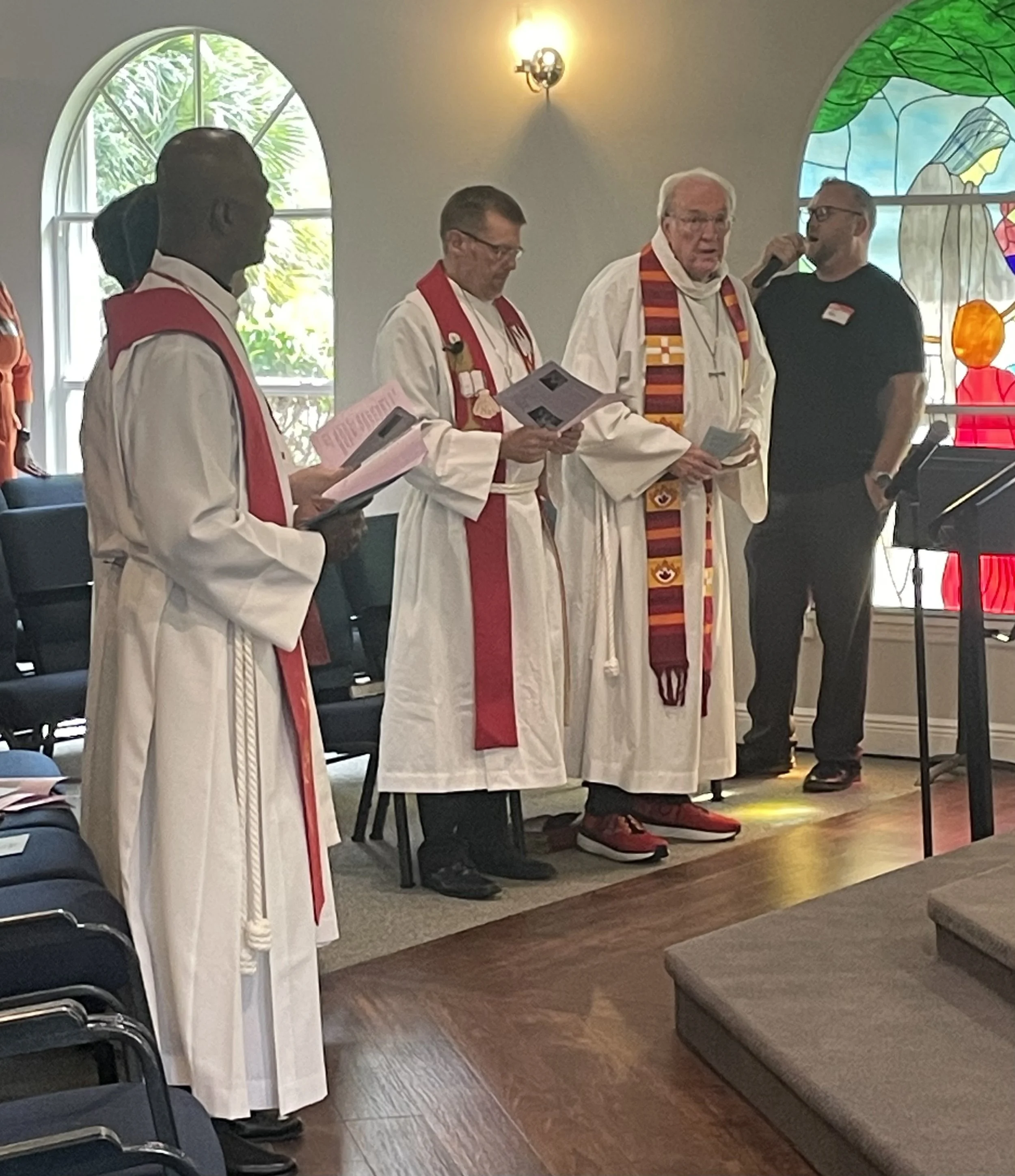
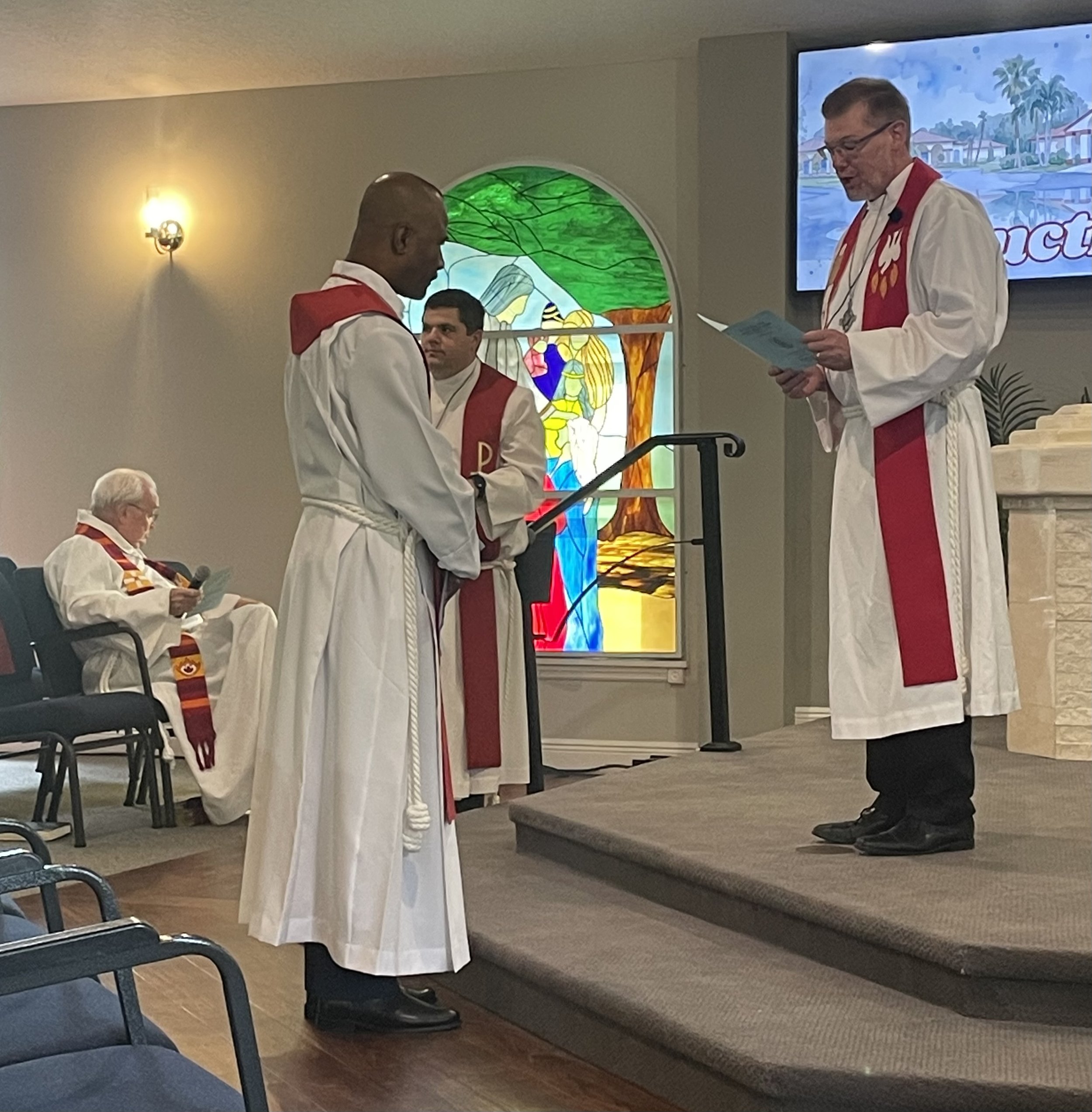
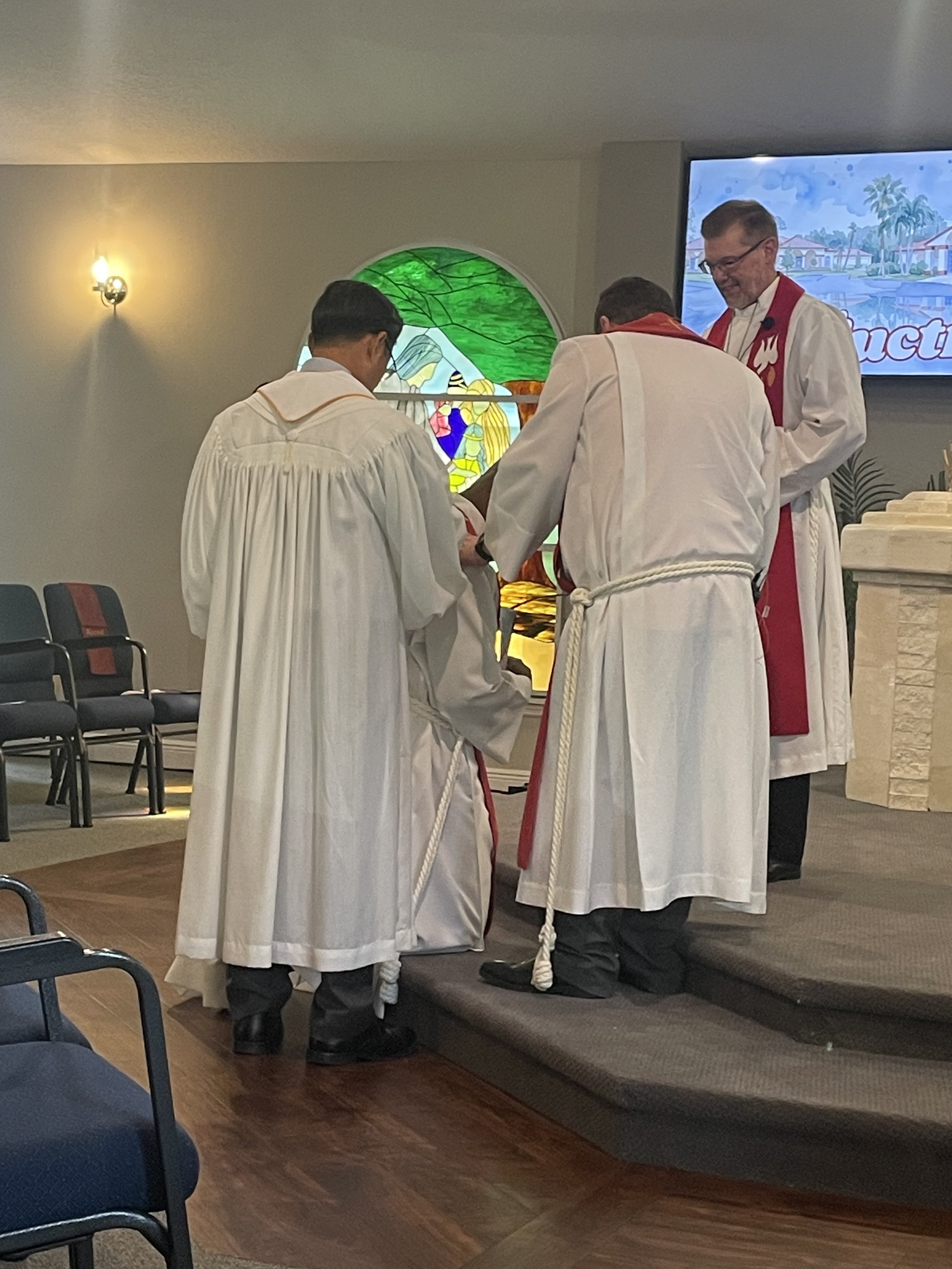
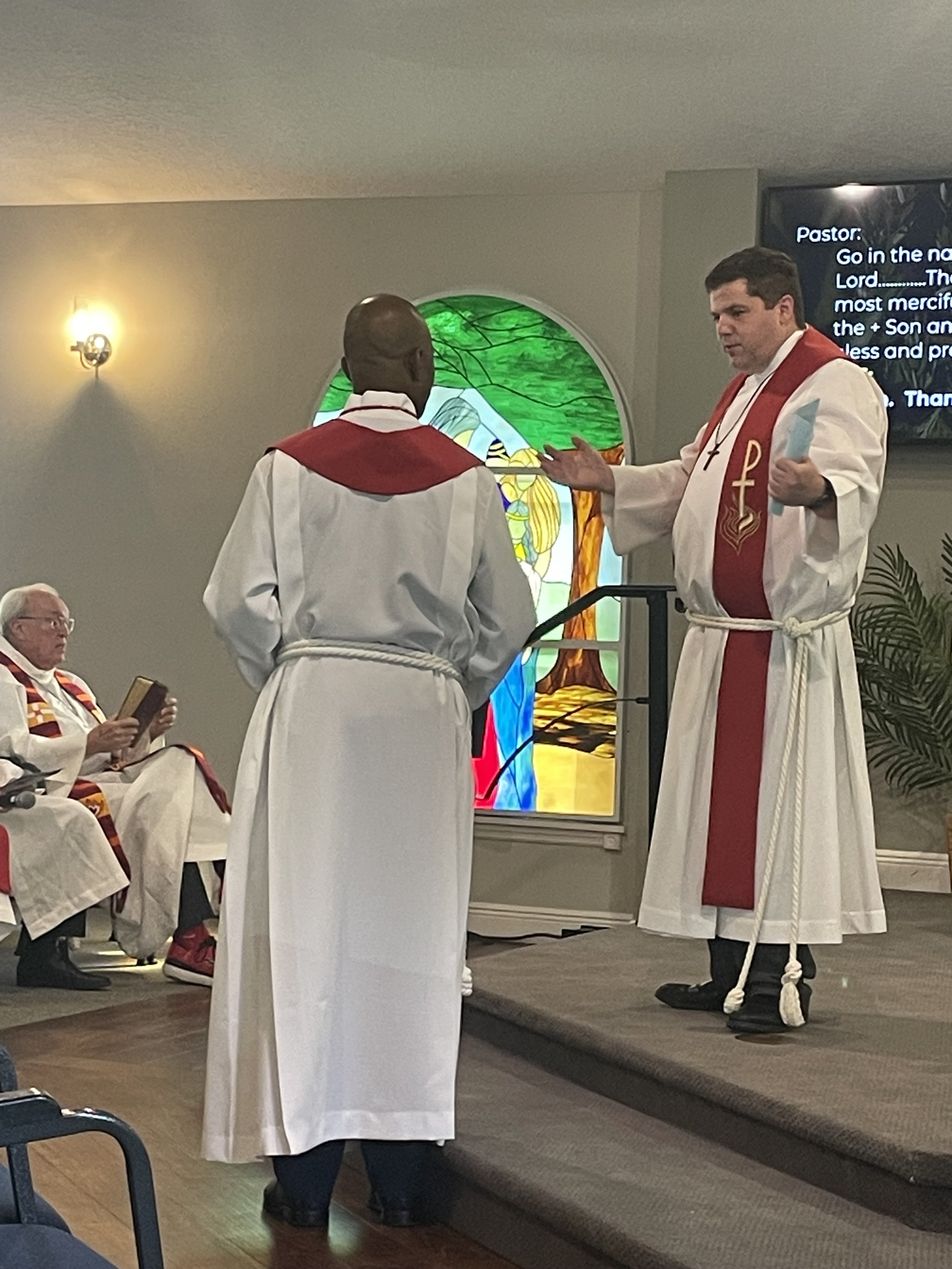
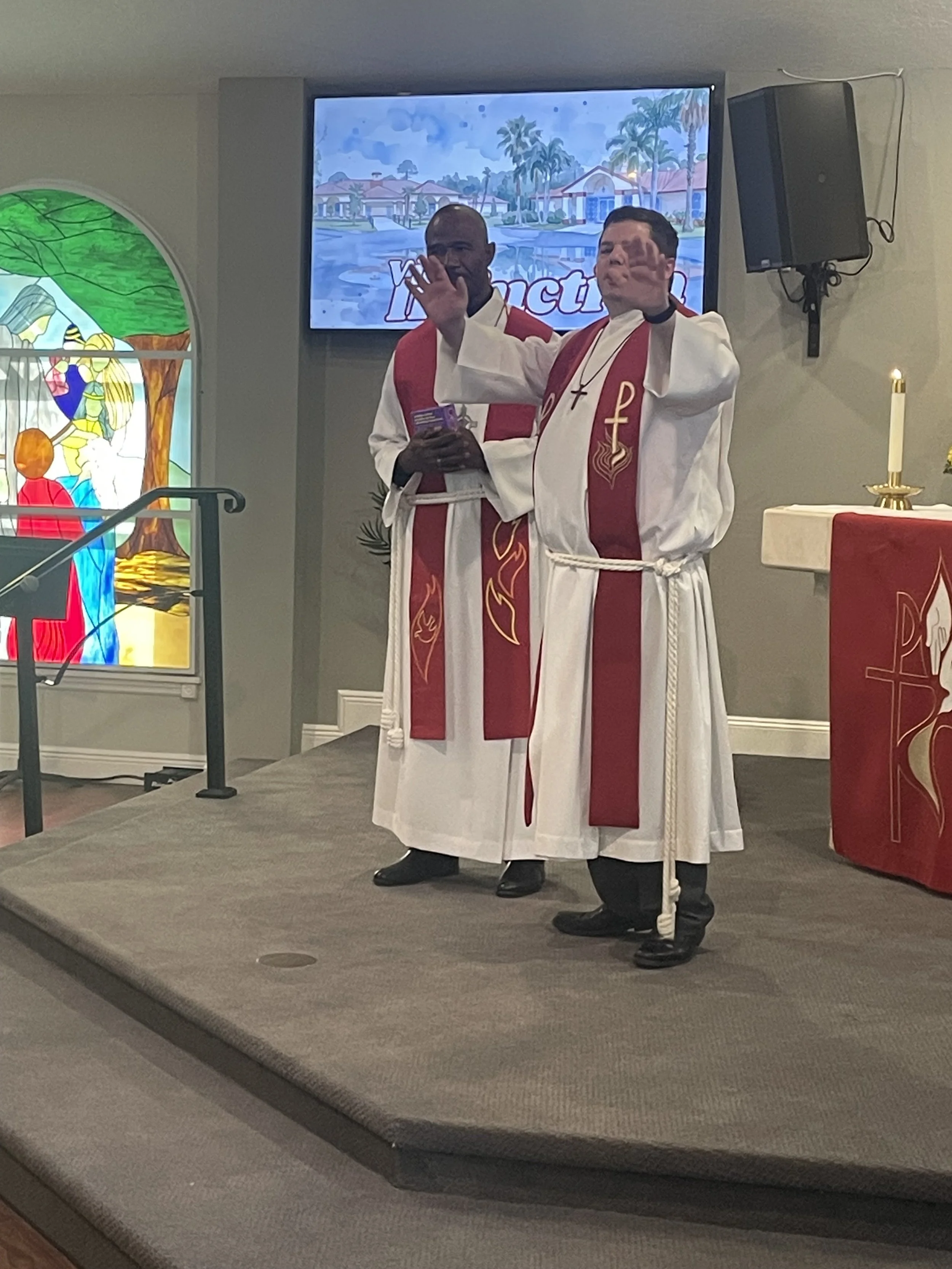
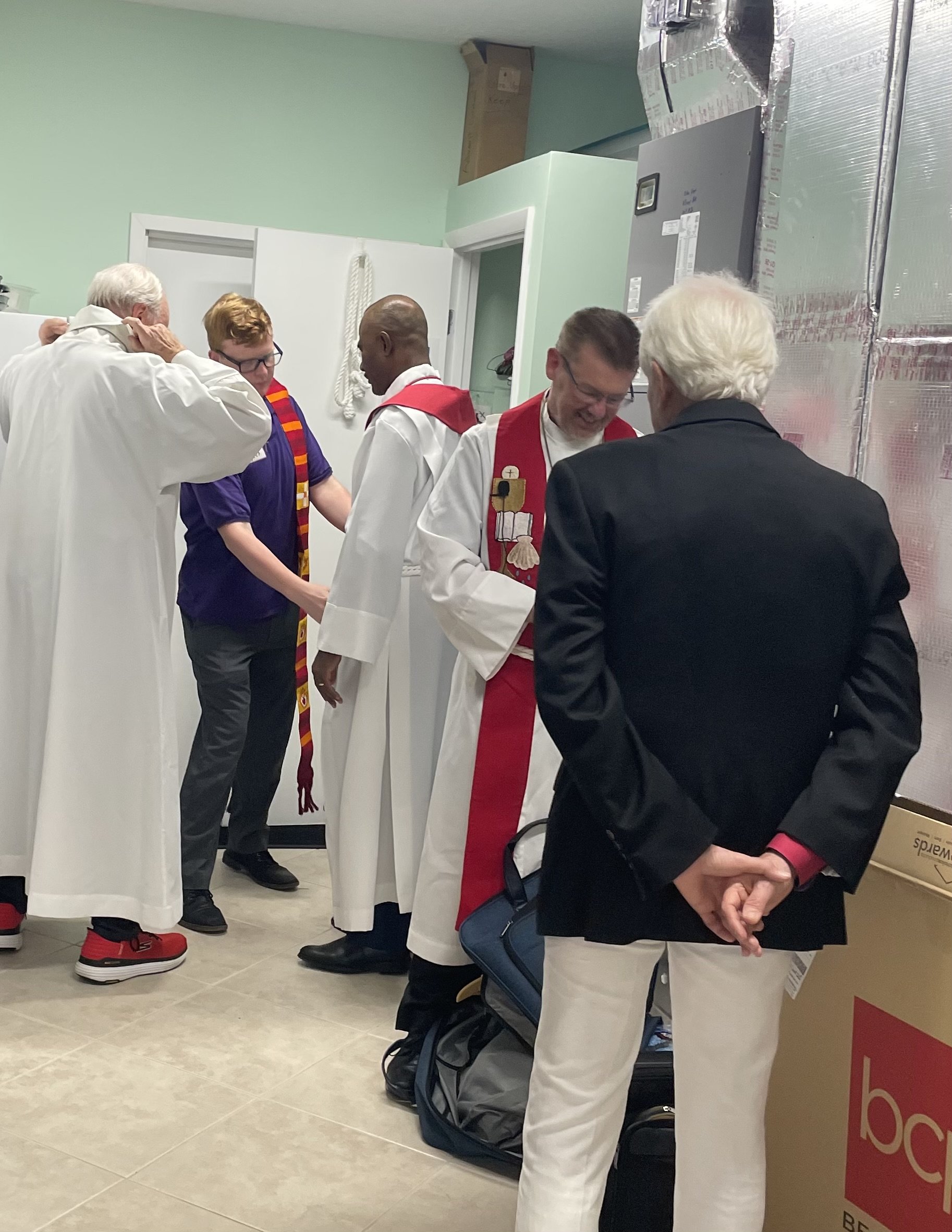
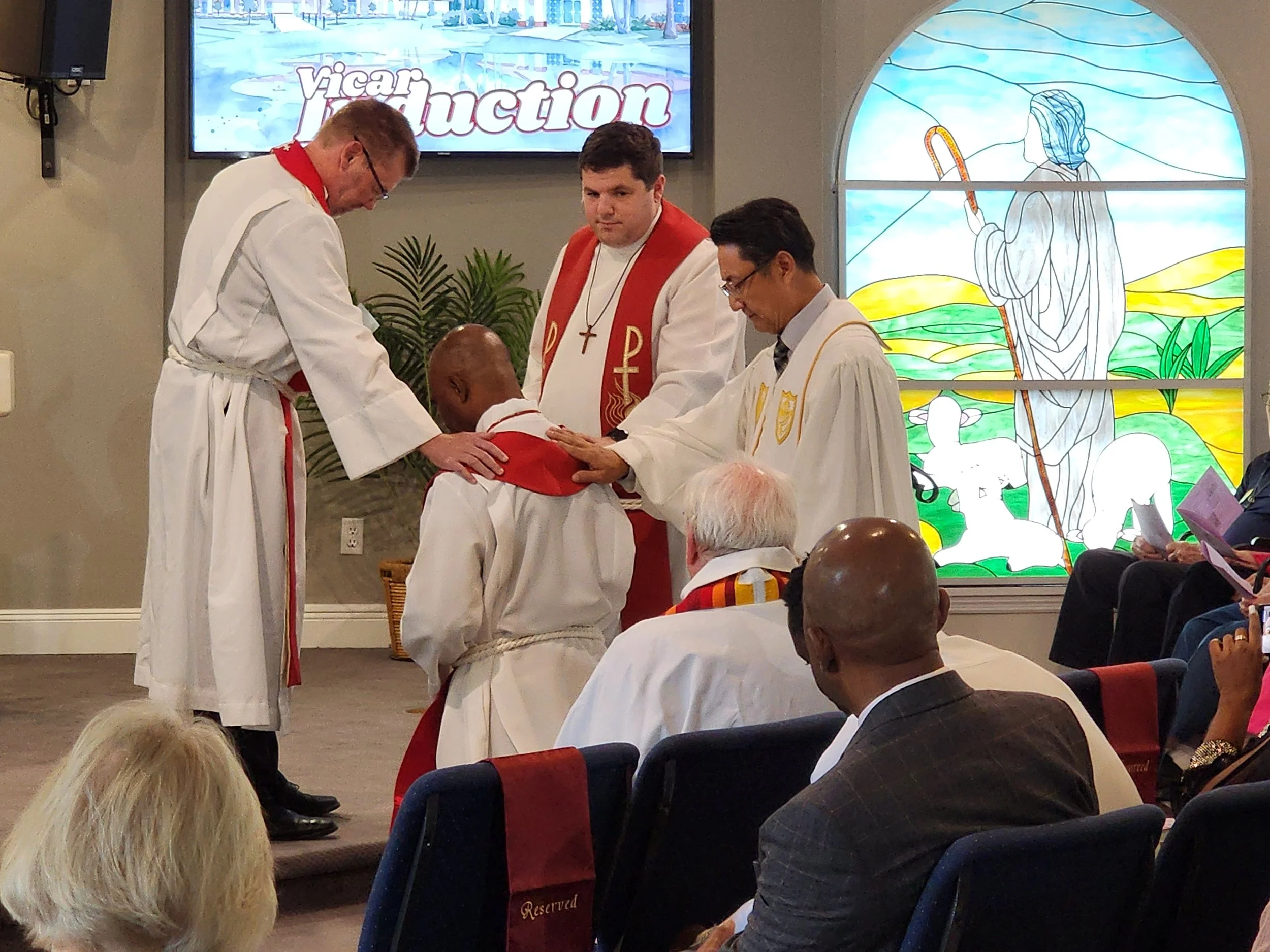
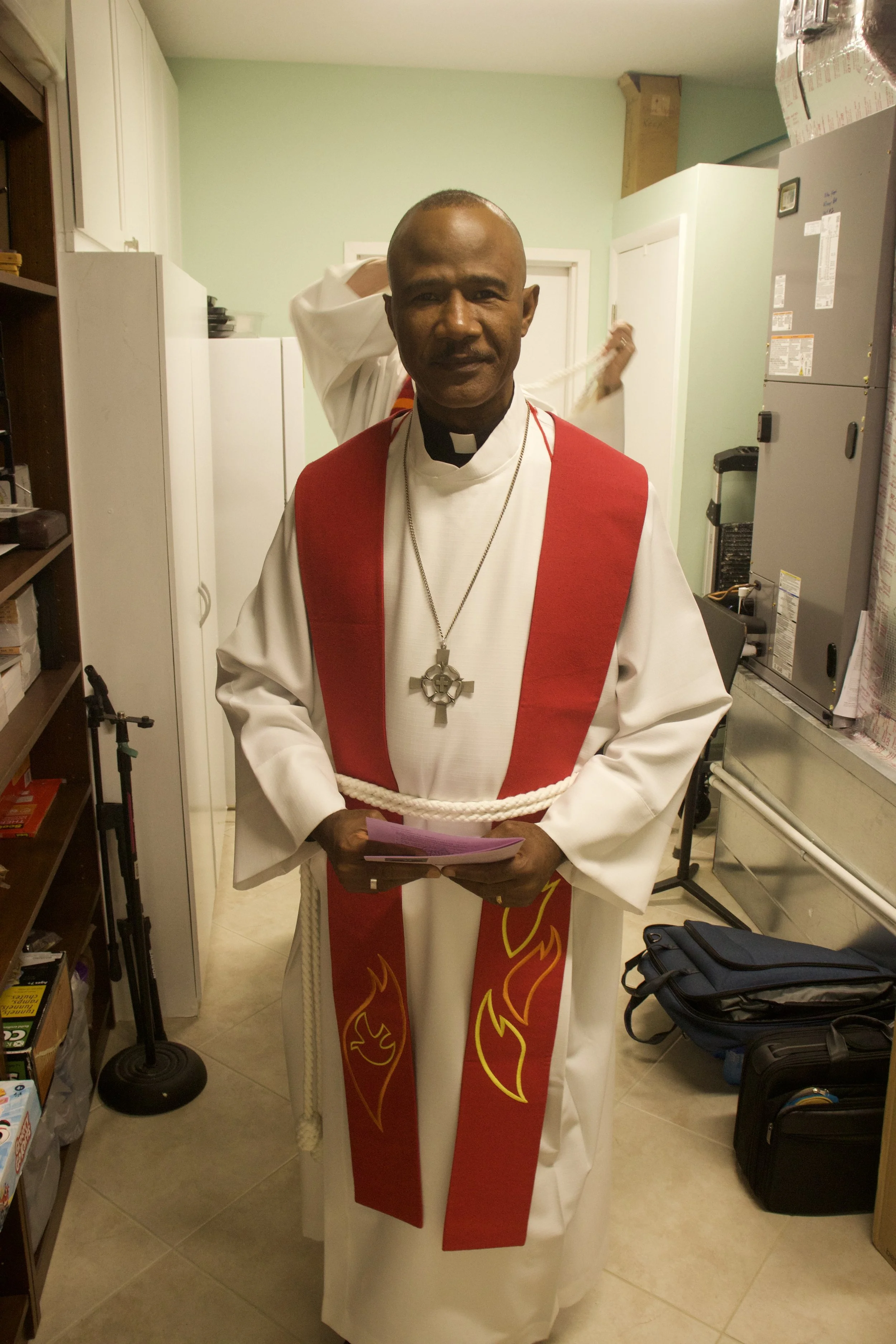
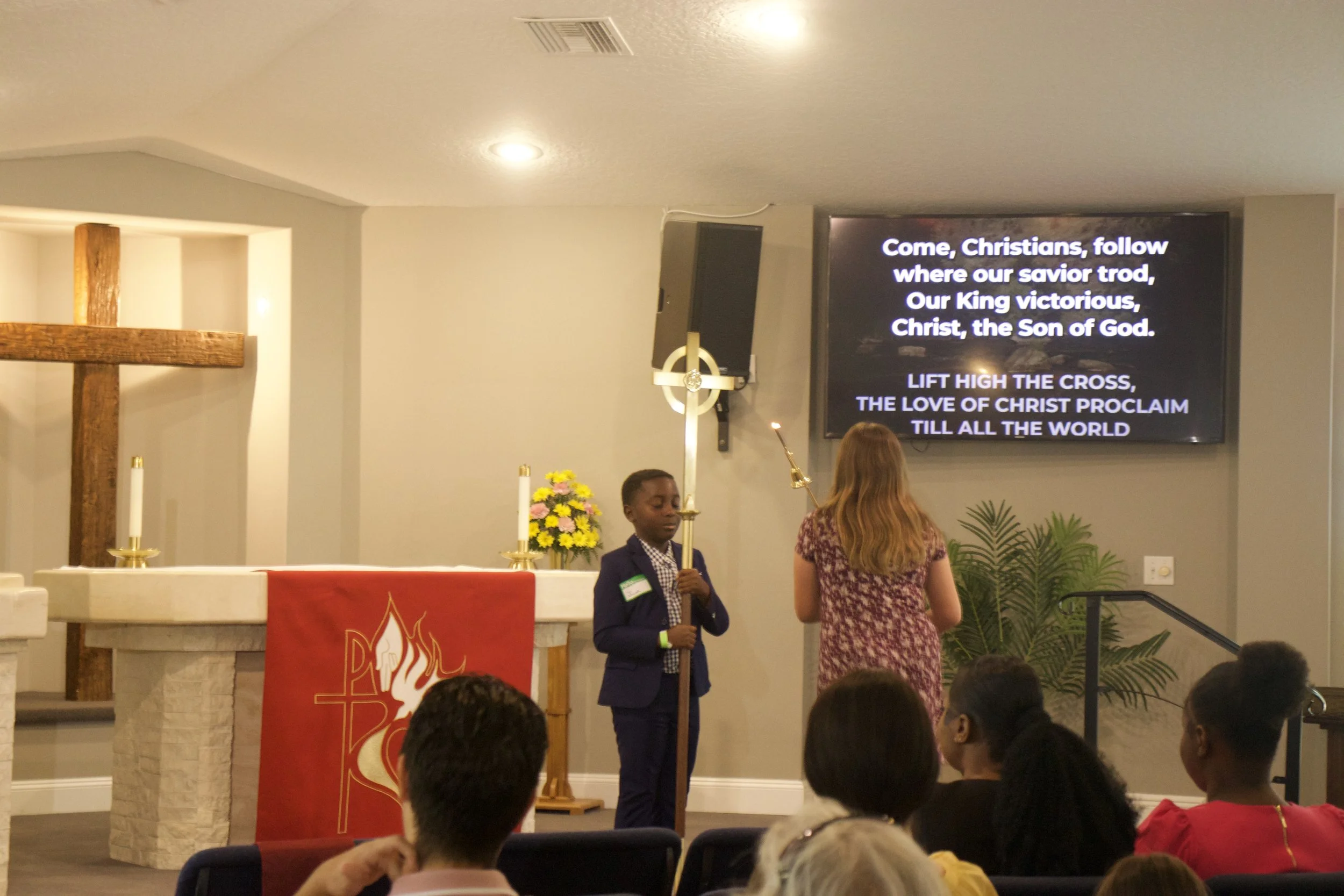
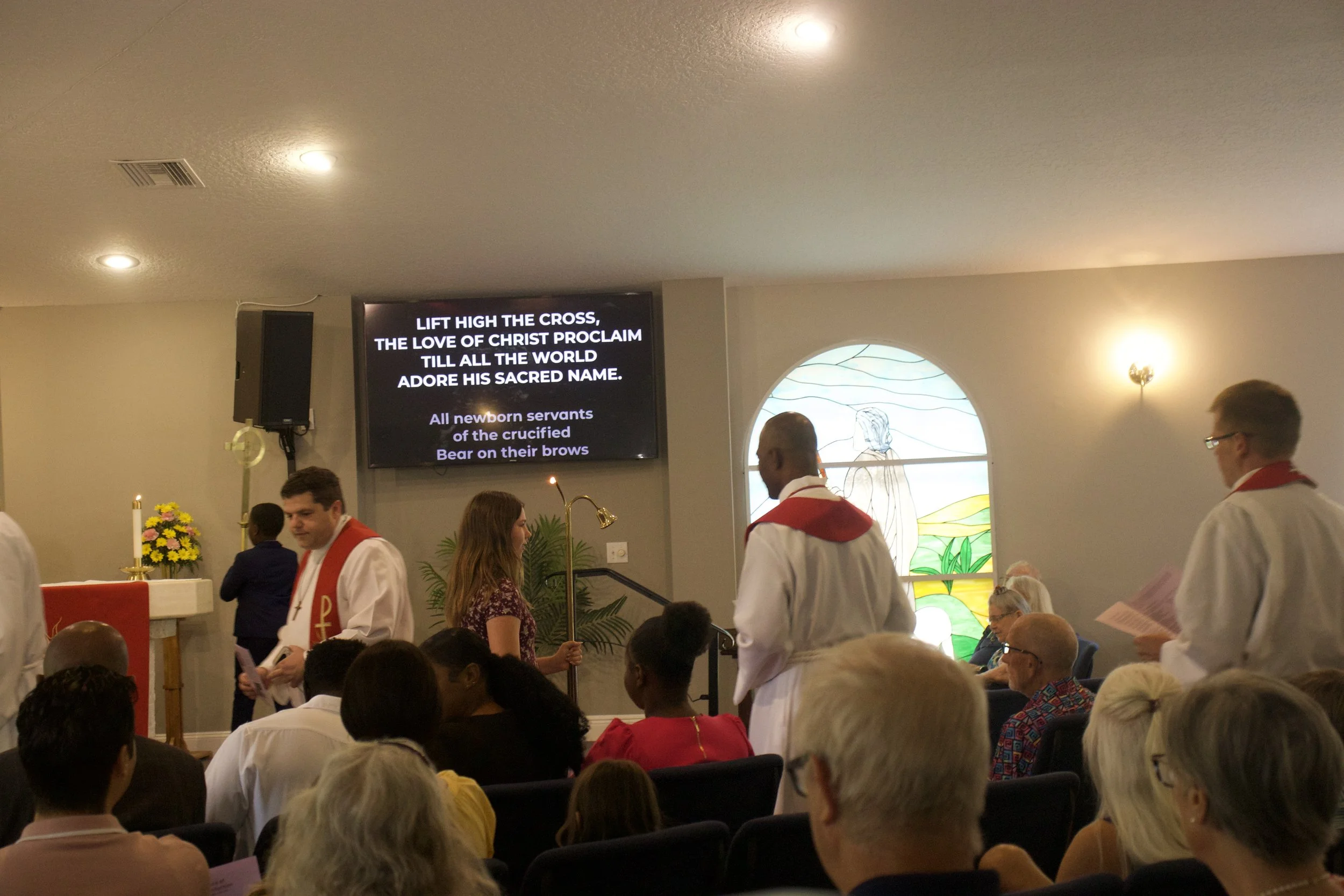
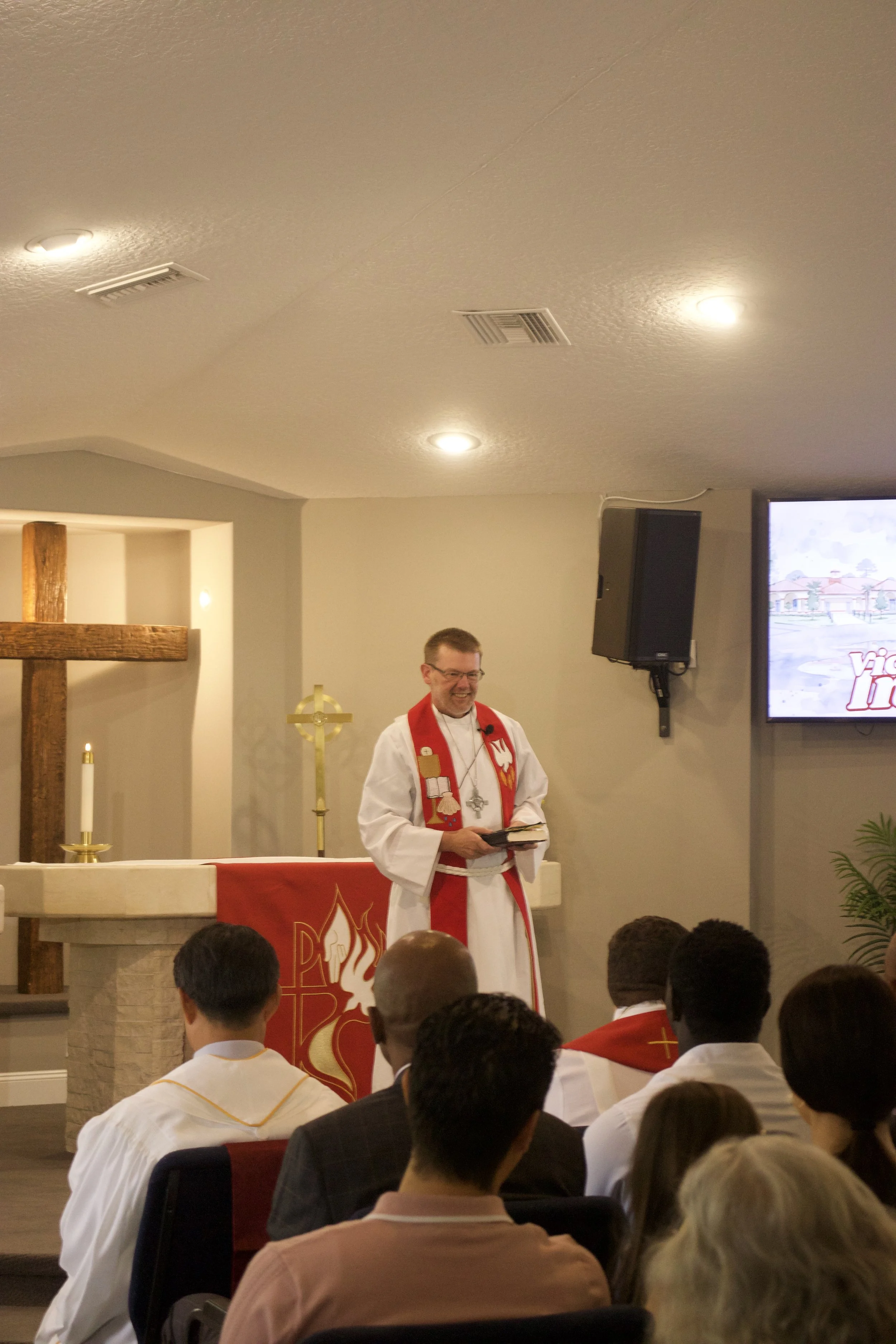
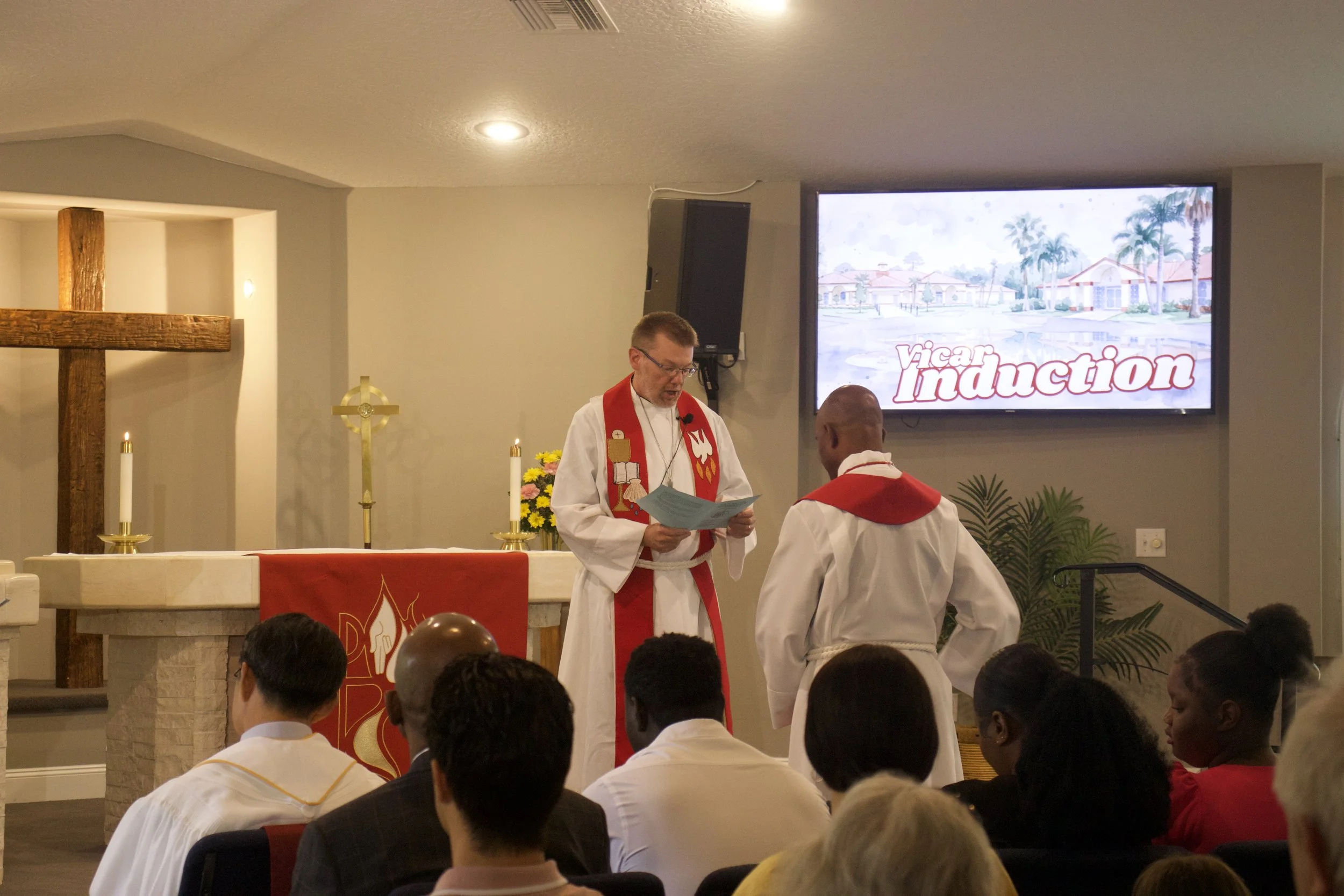
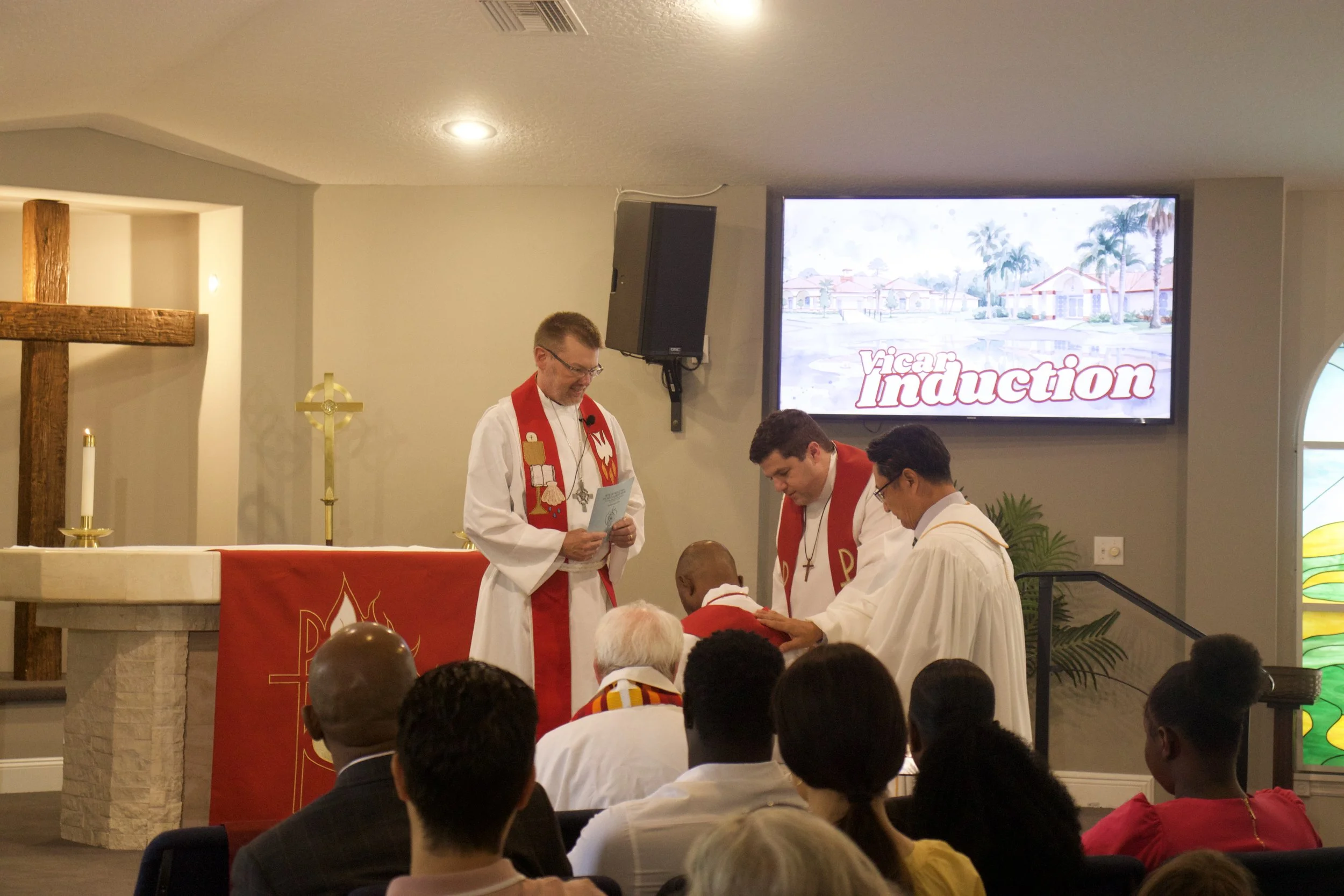
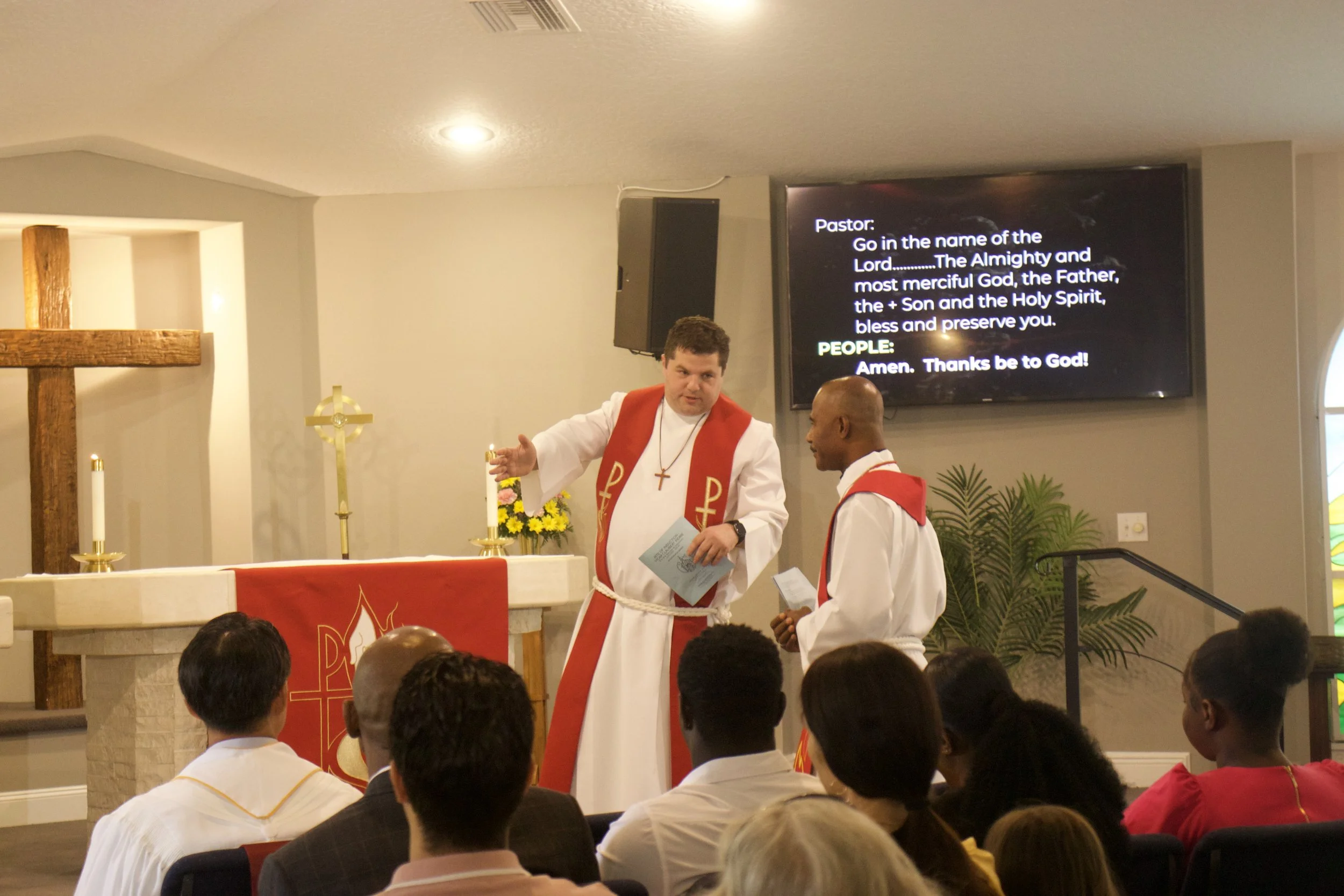
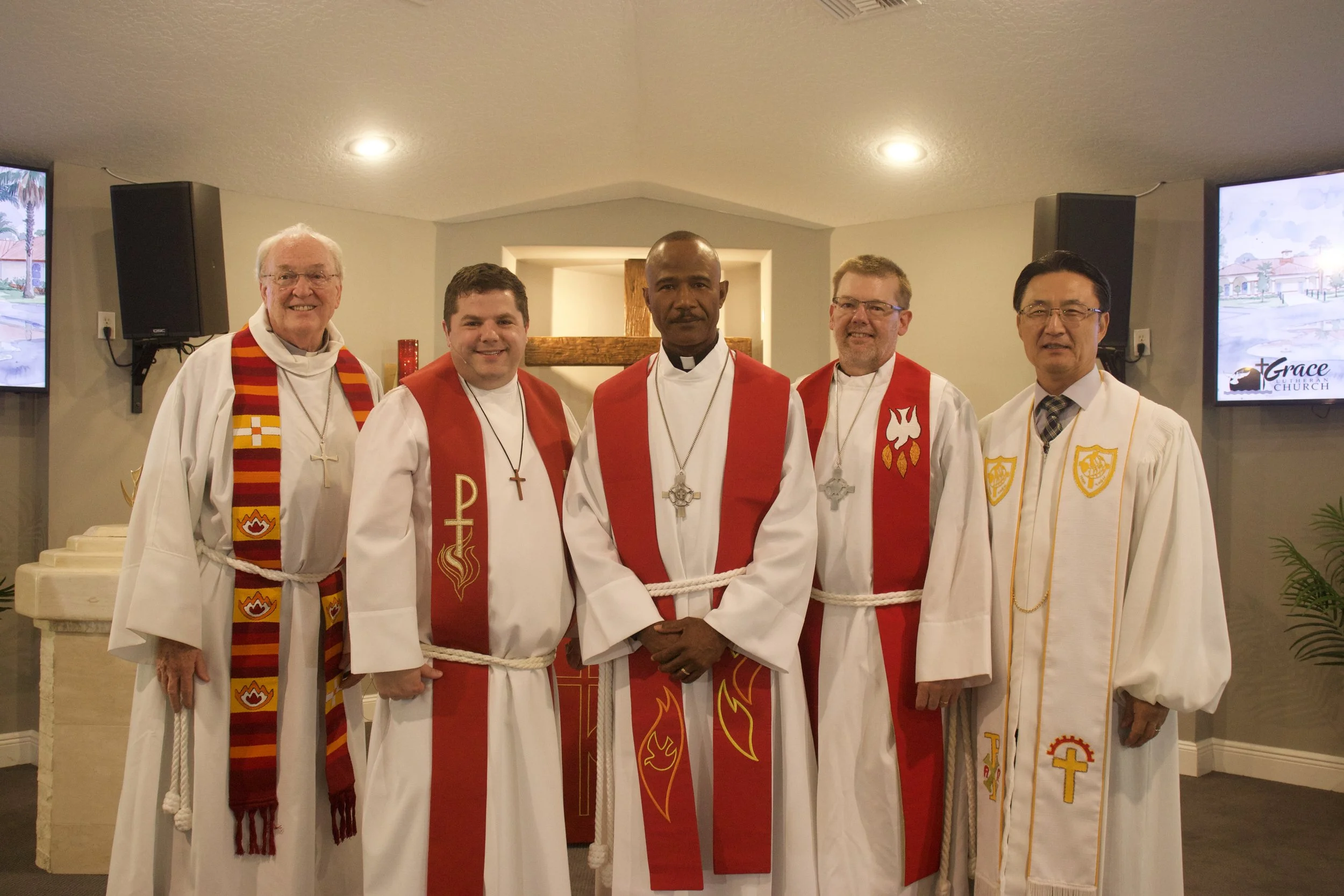
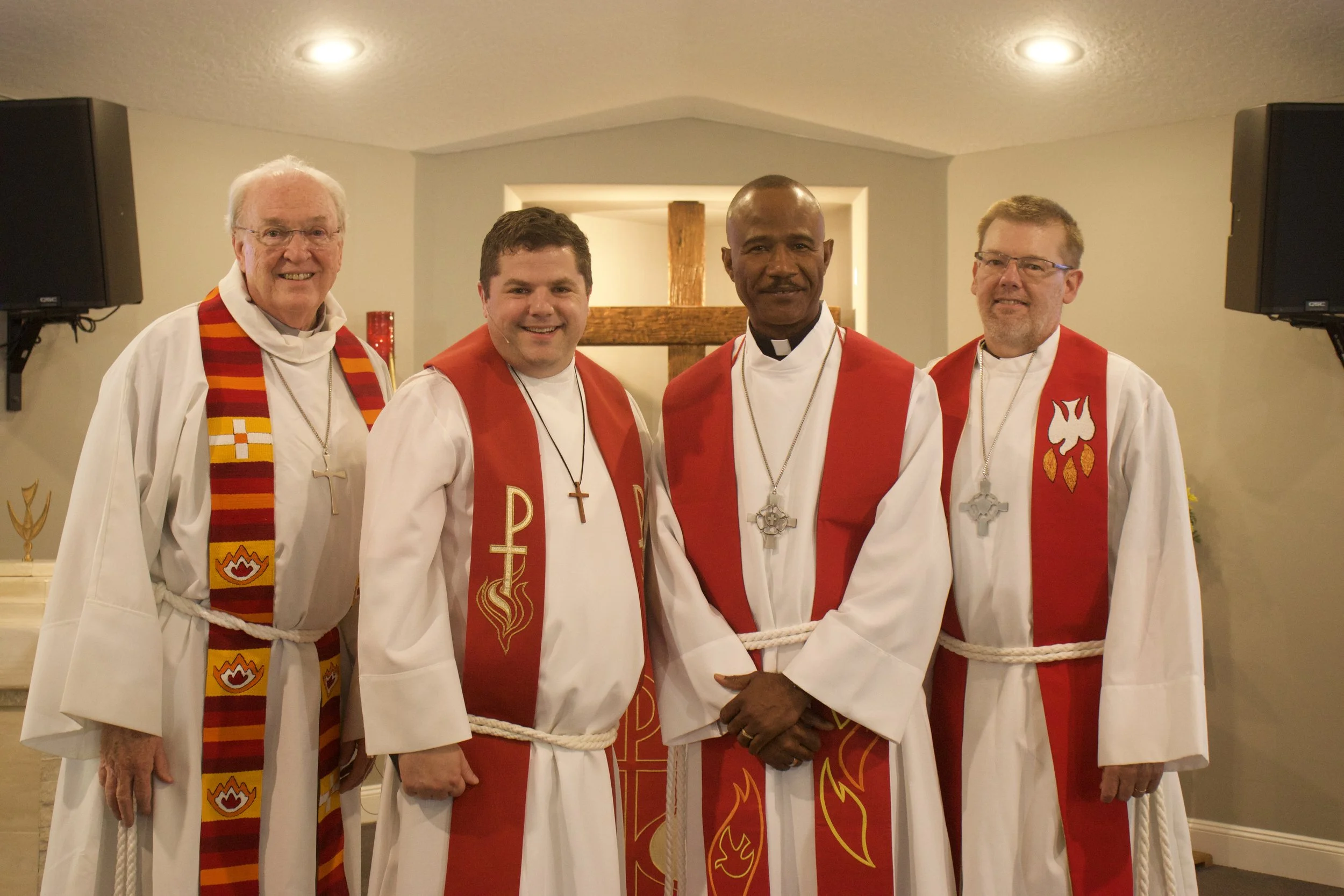
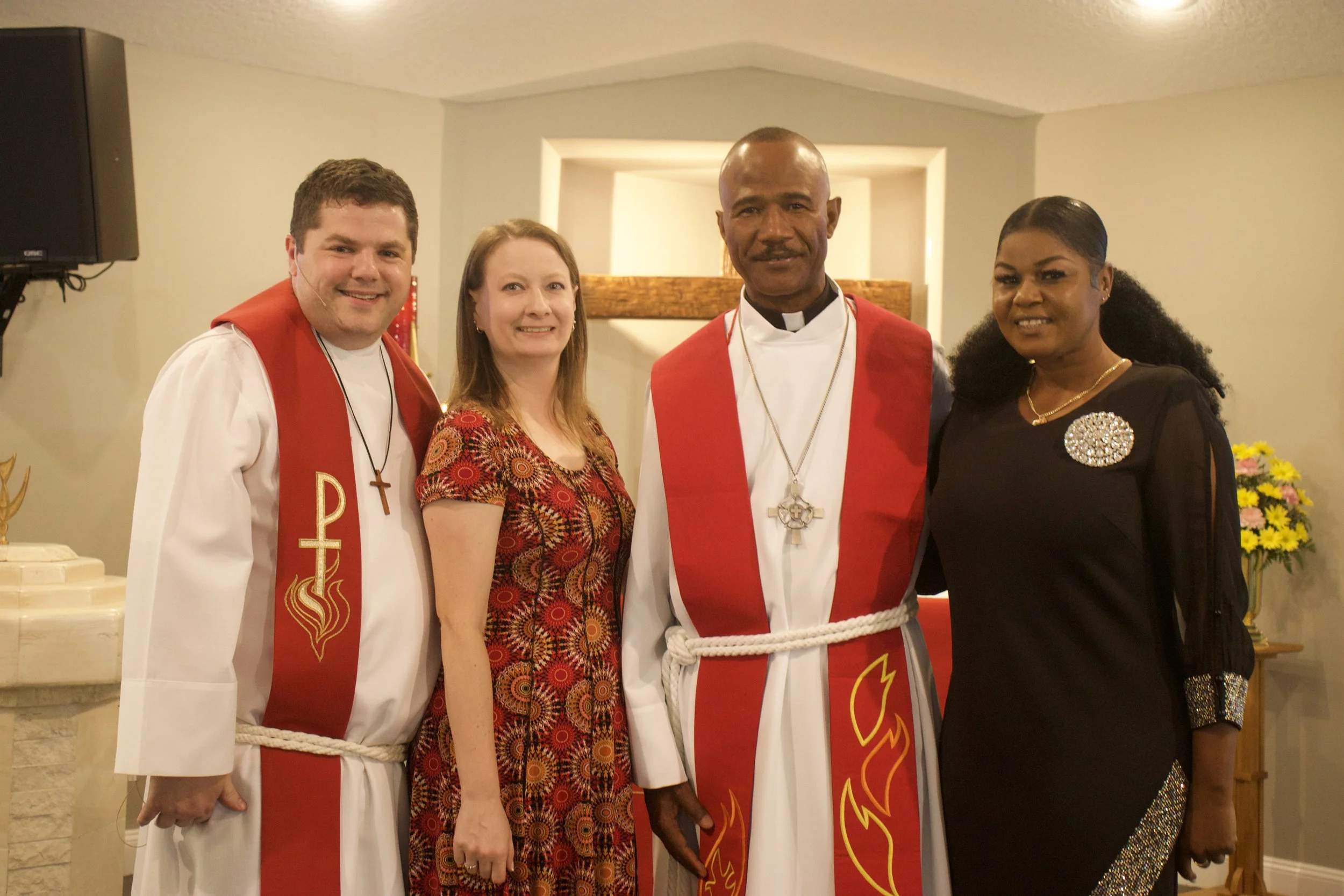
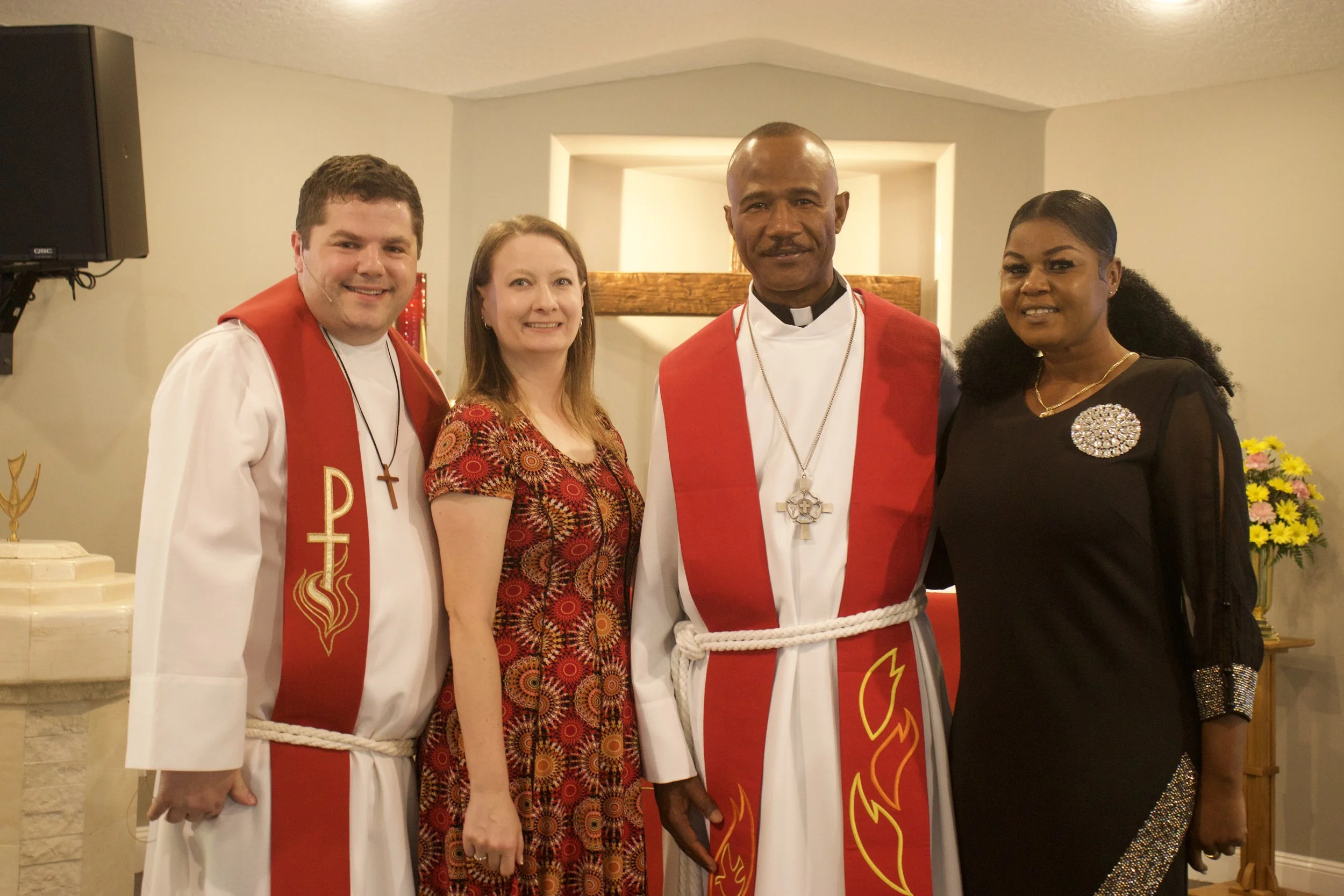
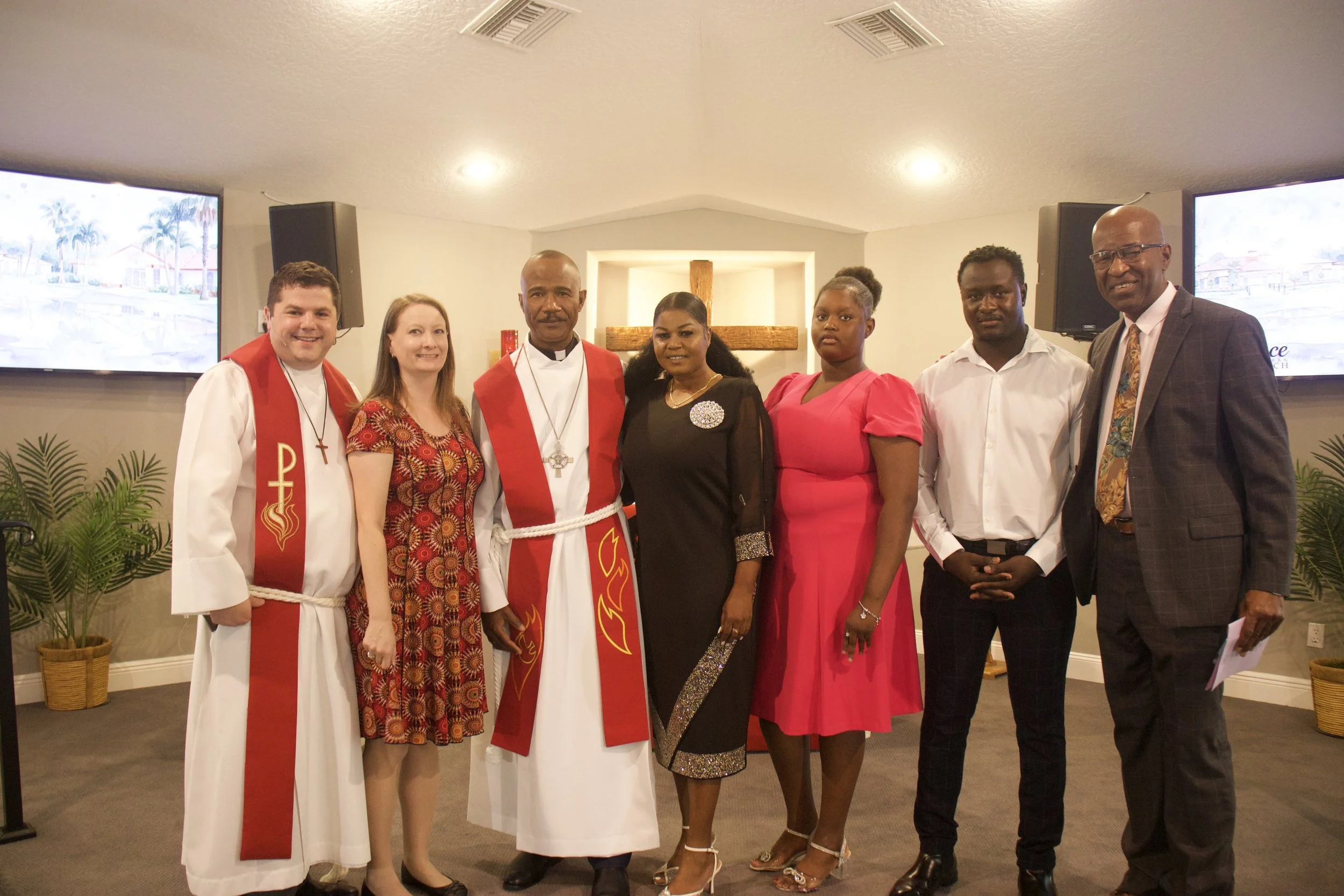
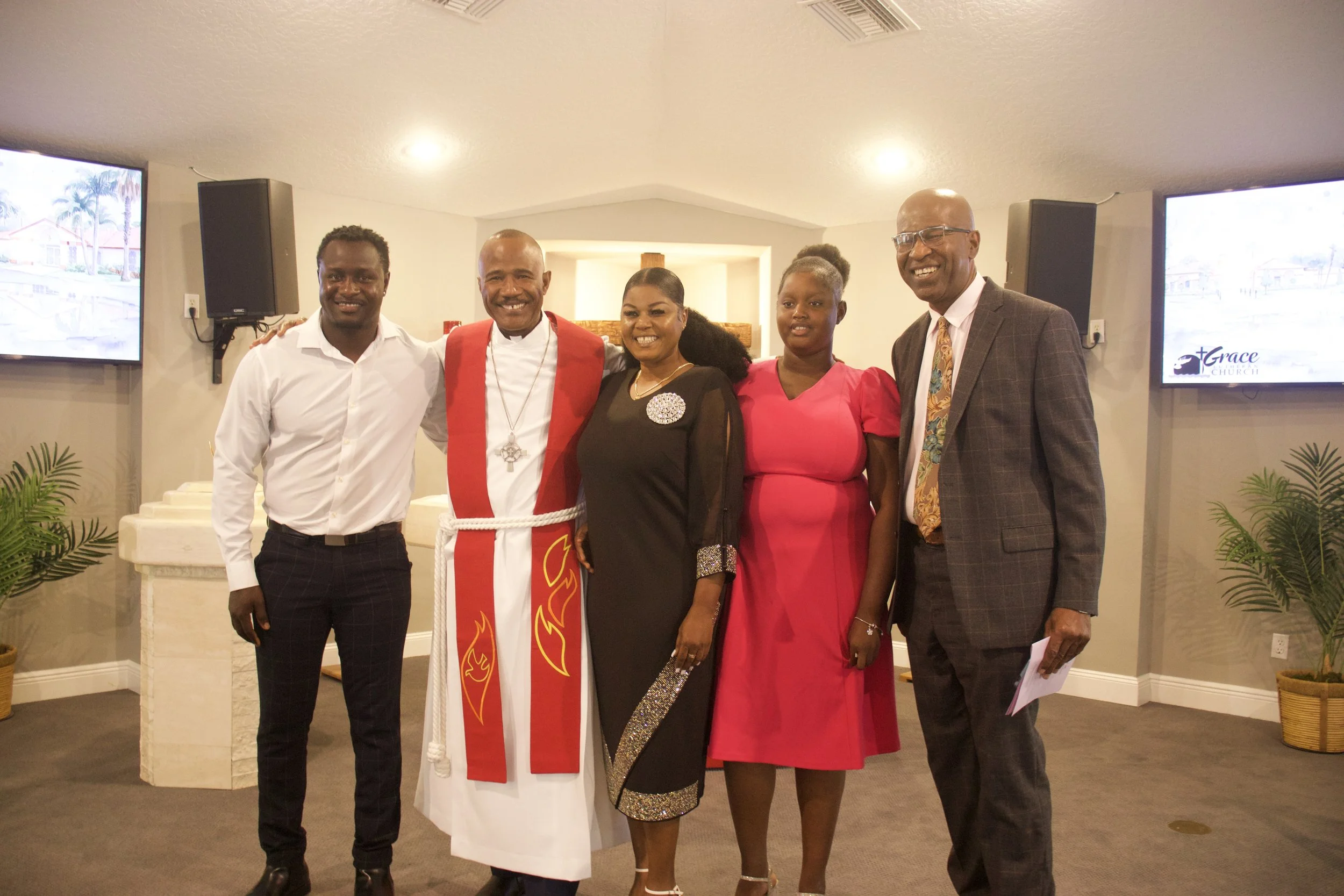
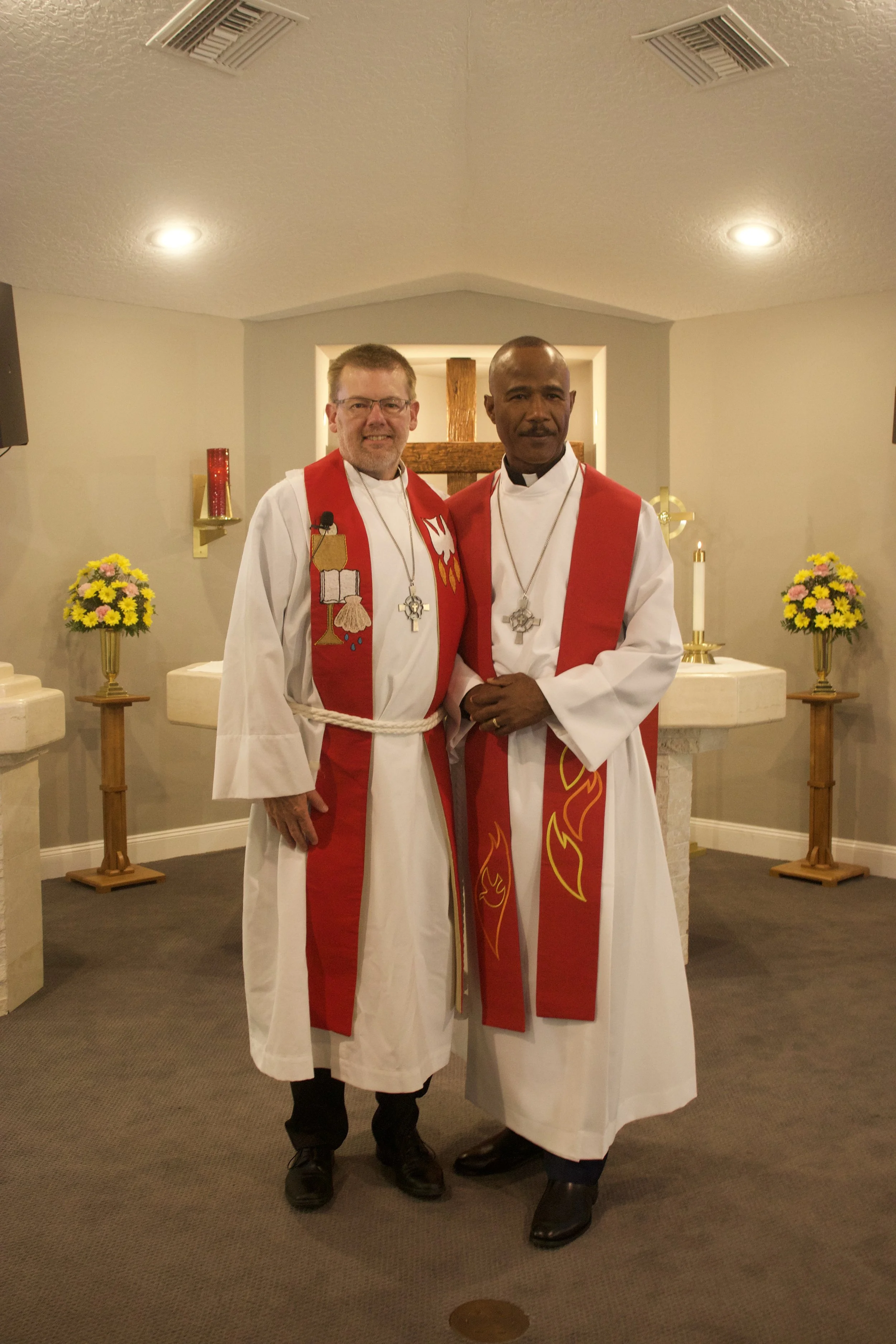
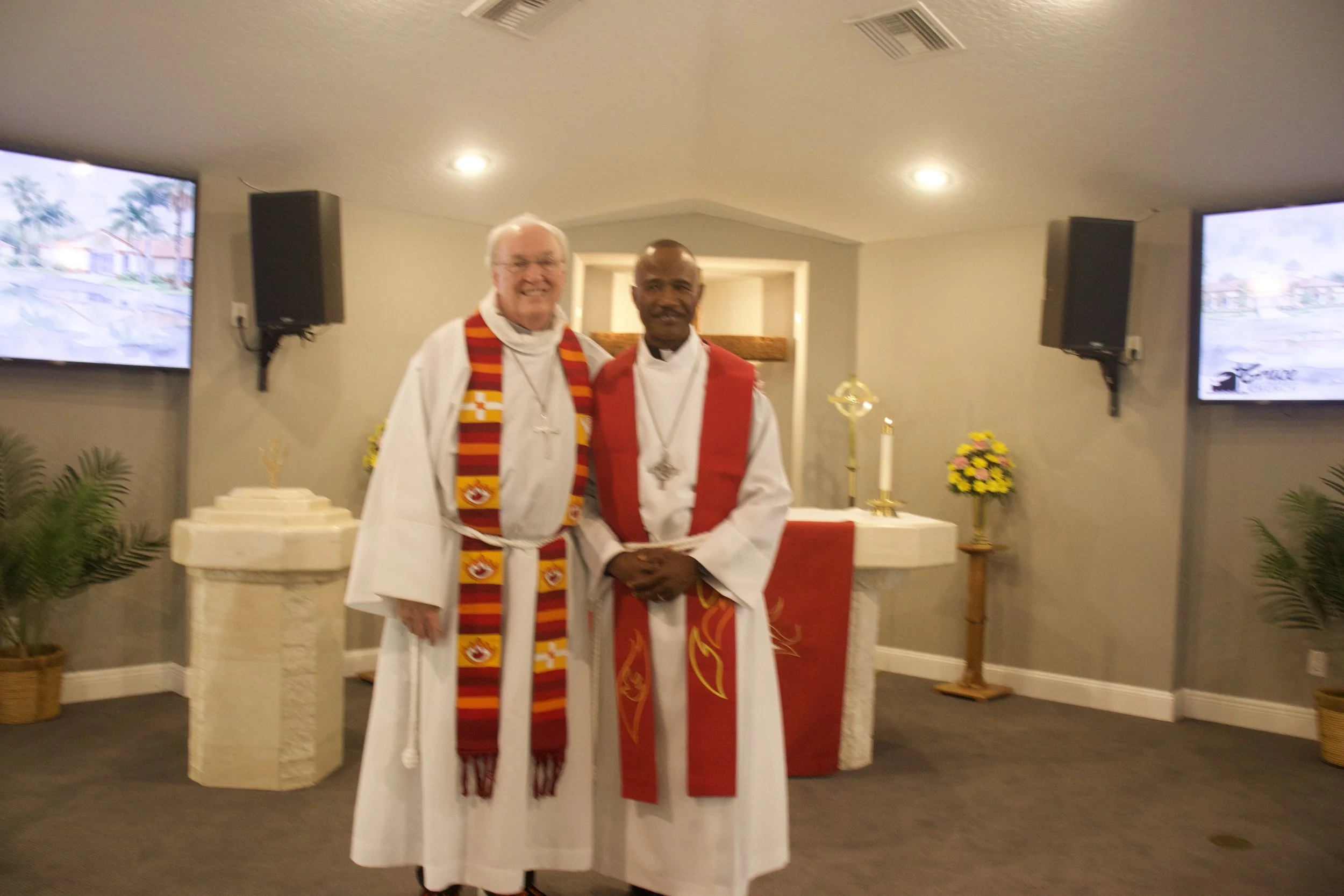
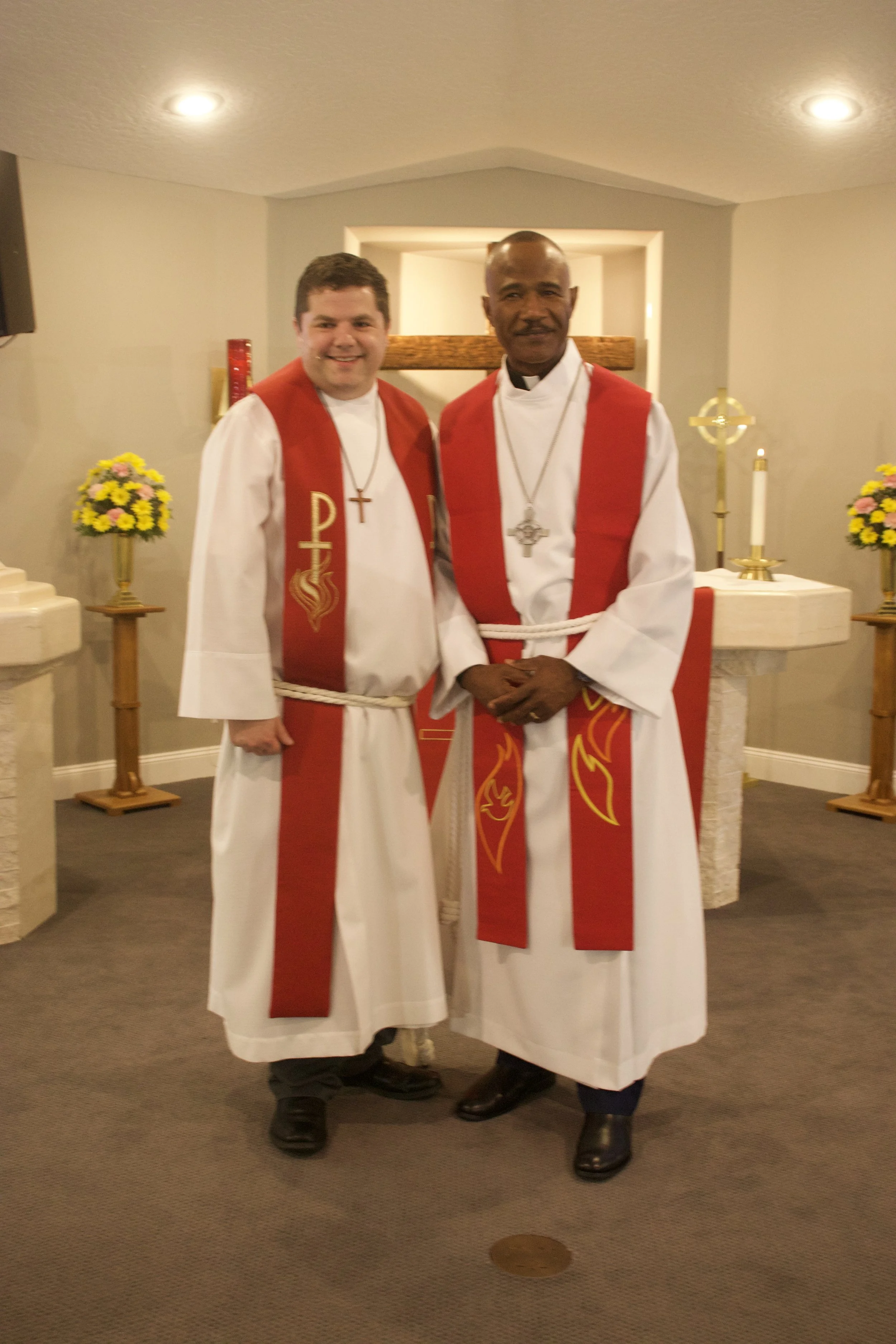
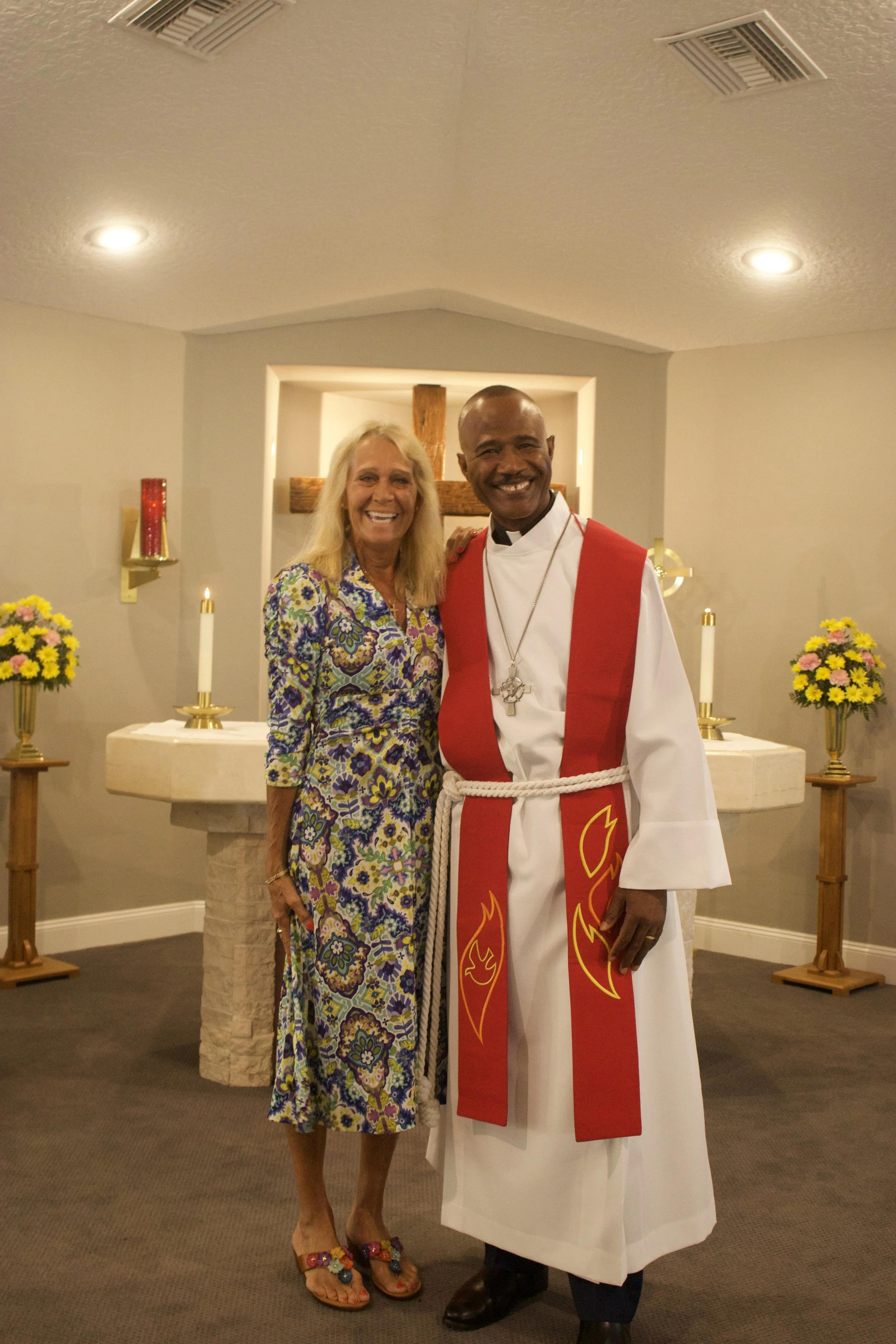
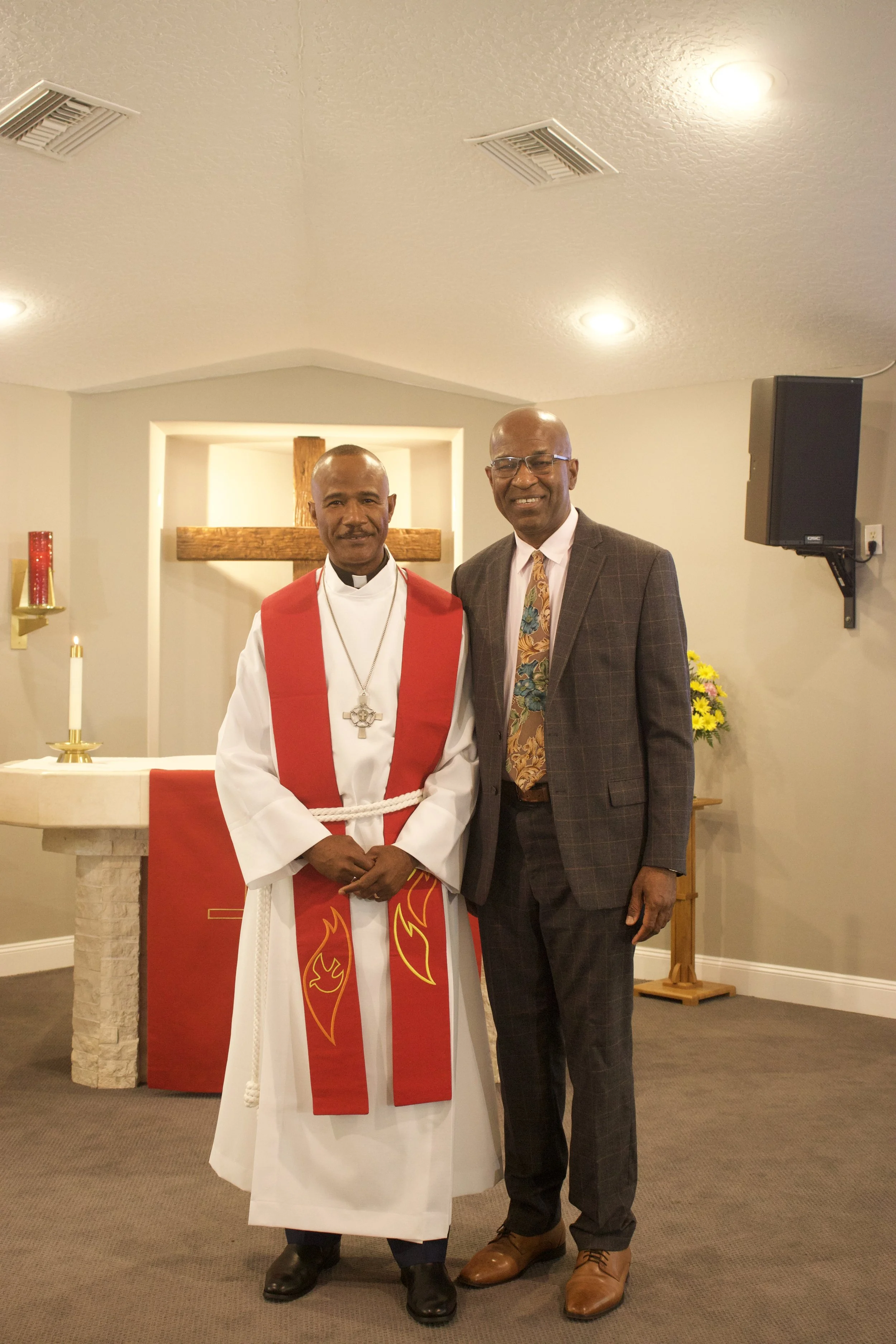
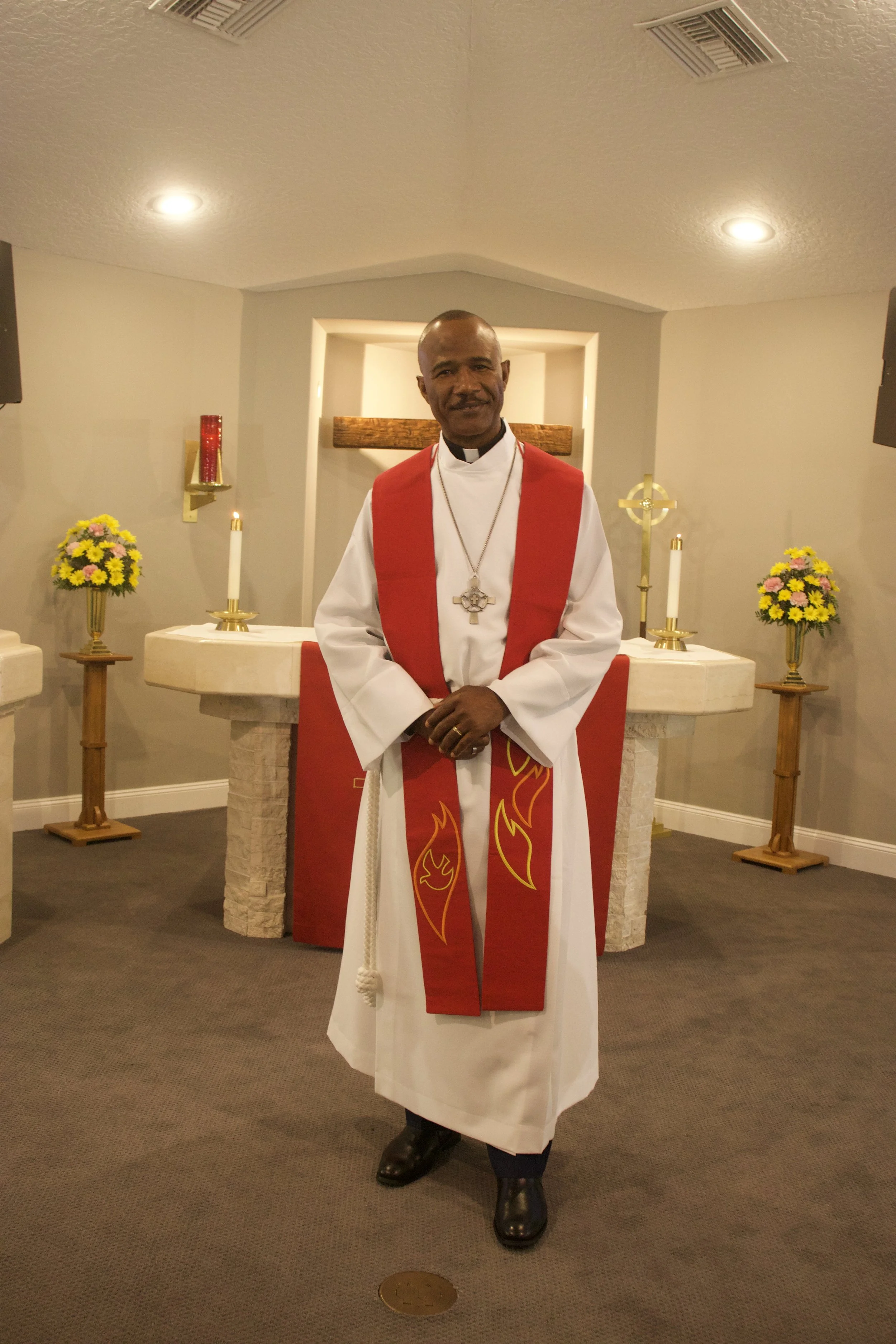
We officially inducted Vicar Claubert into service at Grace Lutheran PSL!
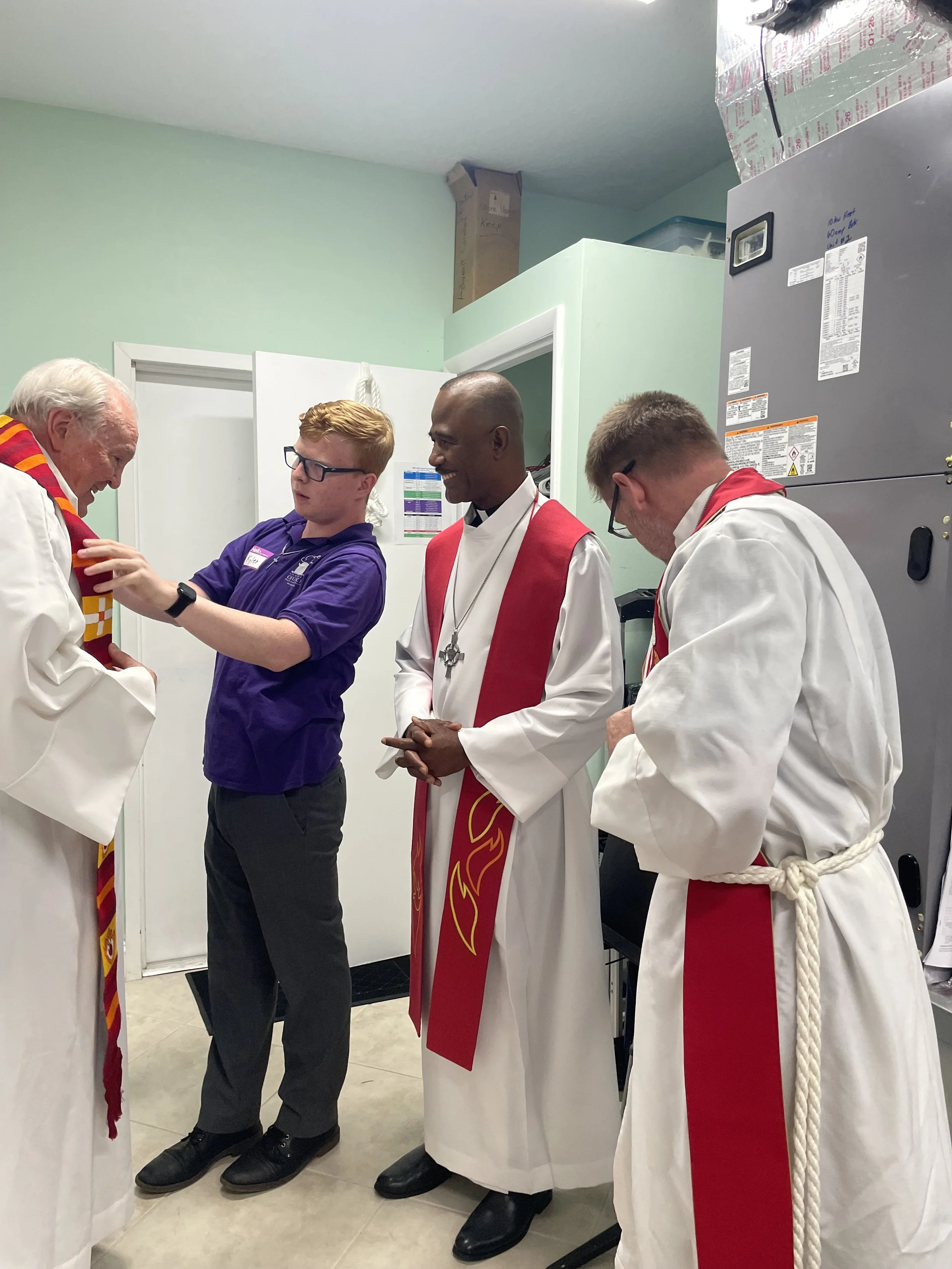
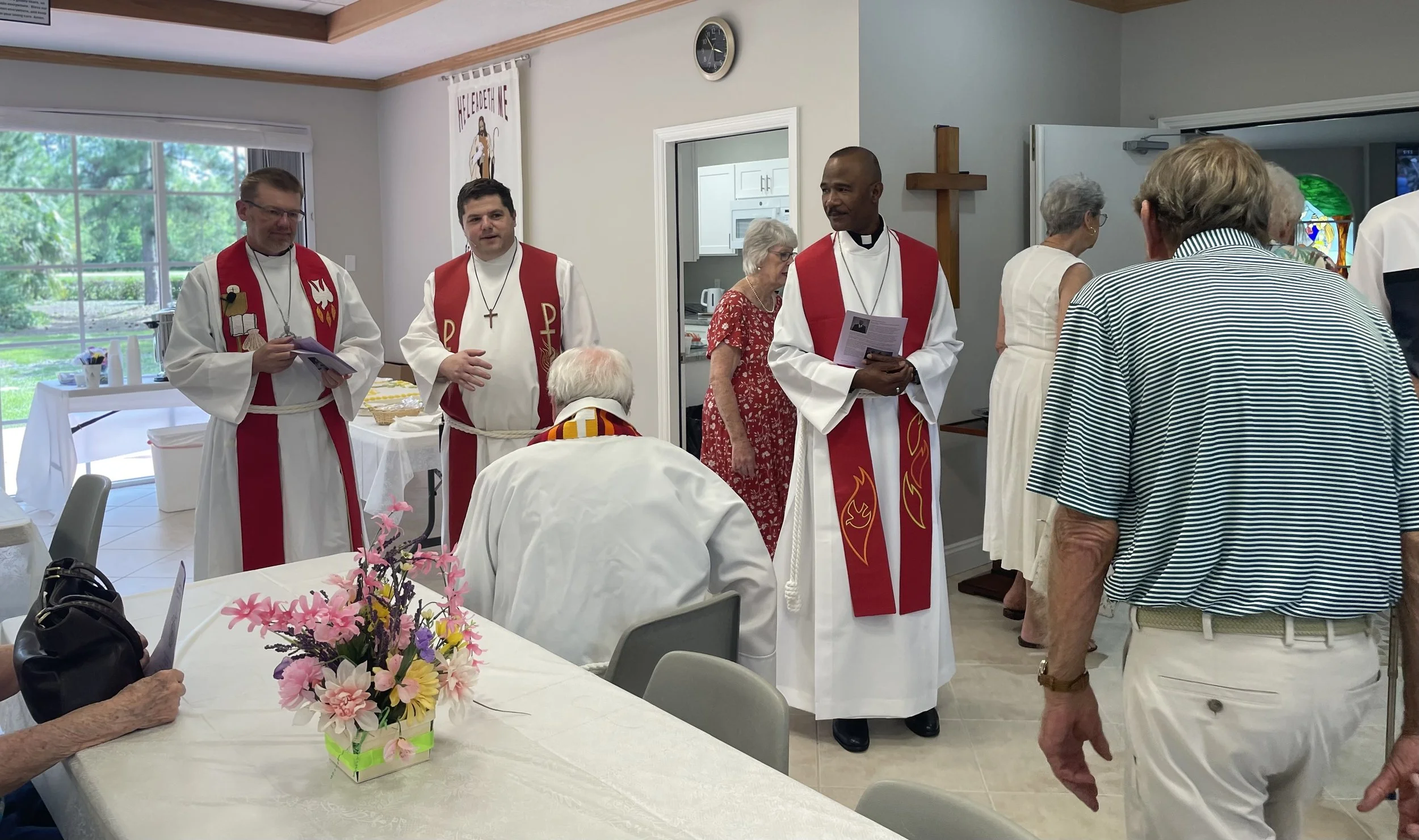
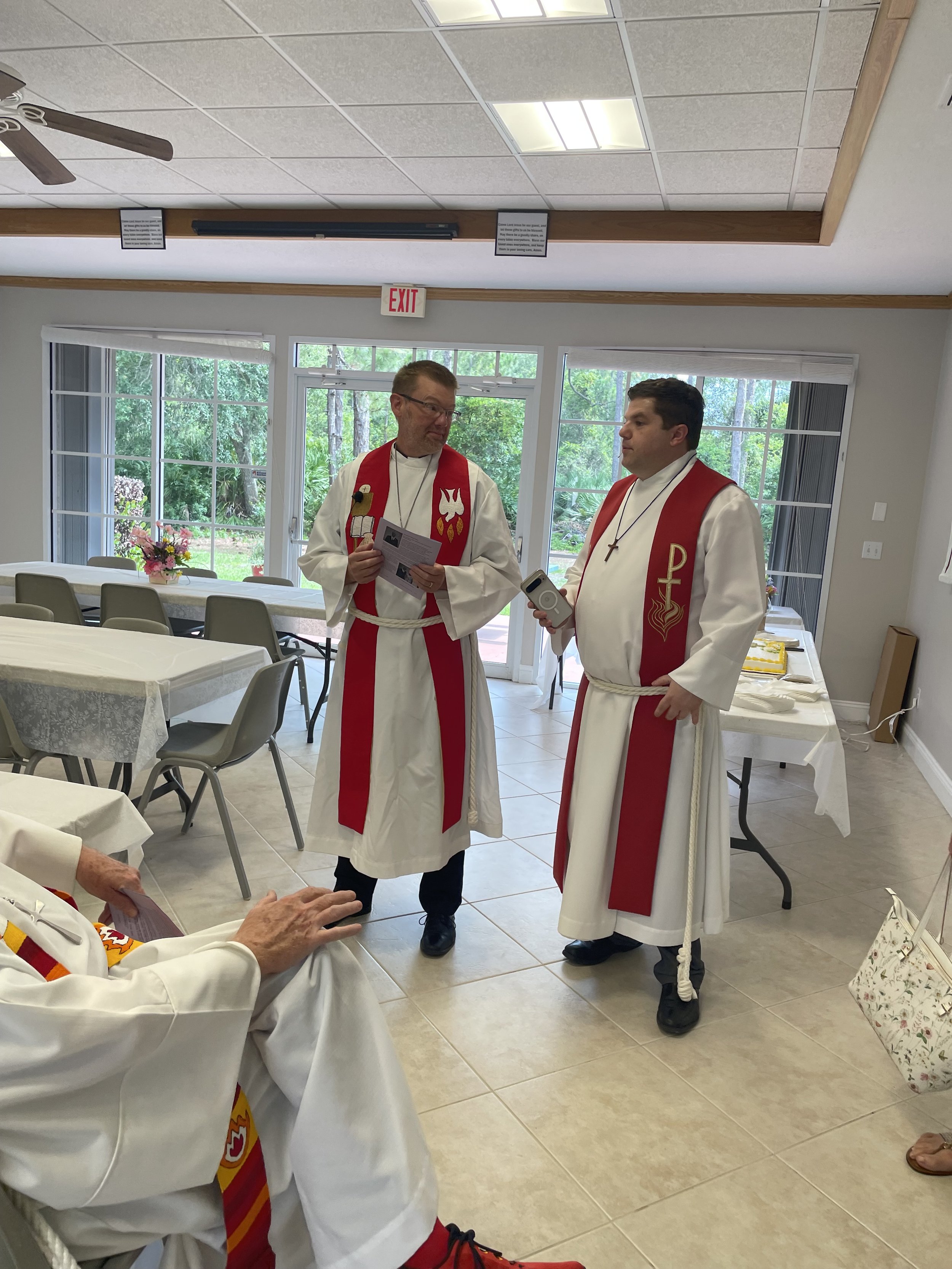
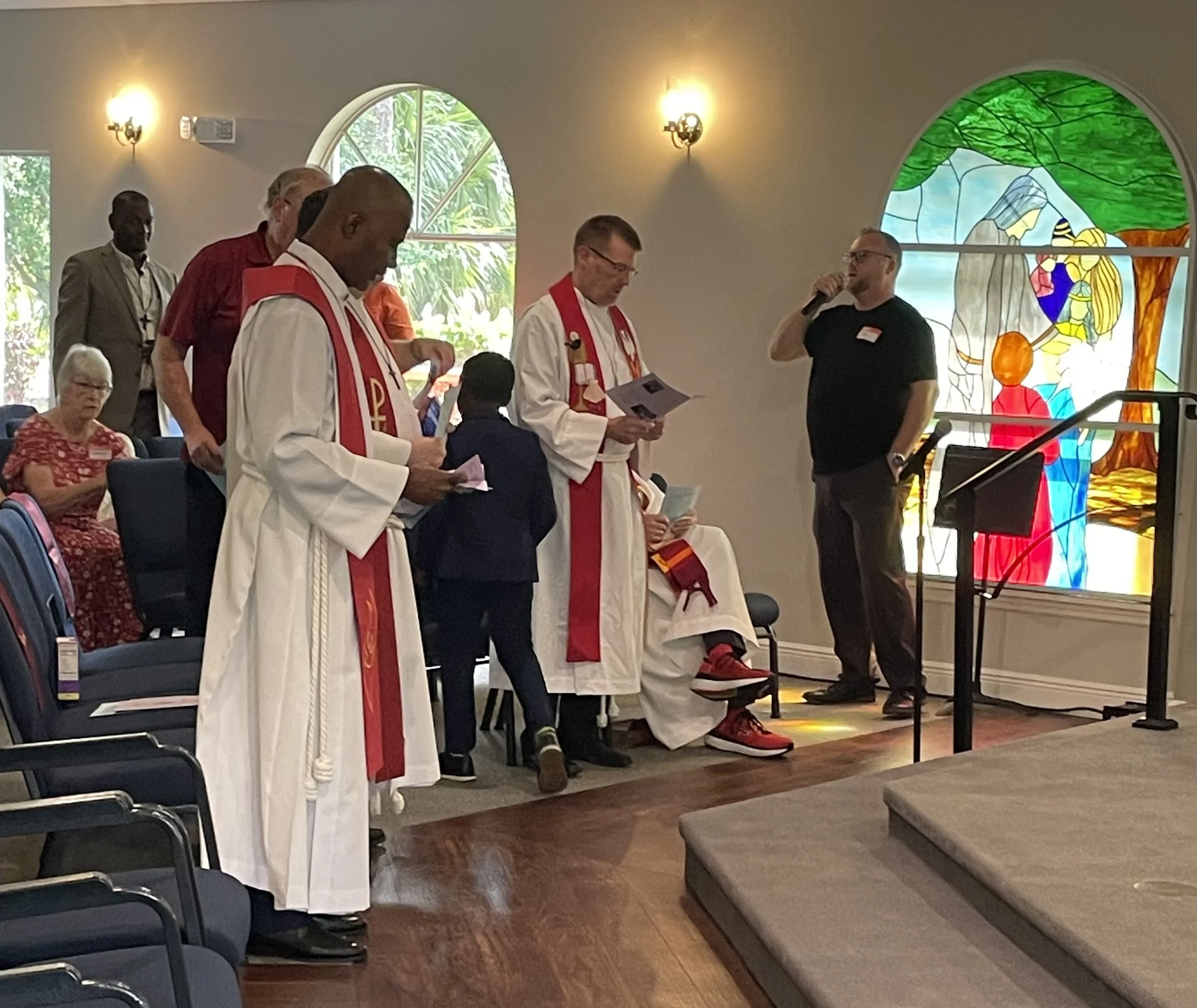
This past Sunday, June 7th, we officially inducted Vicar Claubert into service at Grace Lutheran PSL! It was a fantastic day for our community, and a huge thank you goes out to everyone who came to show their support. Also, a special shoutout to Eric from the district—you did good! 😉










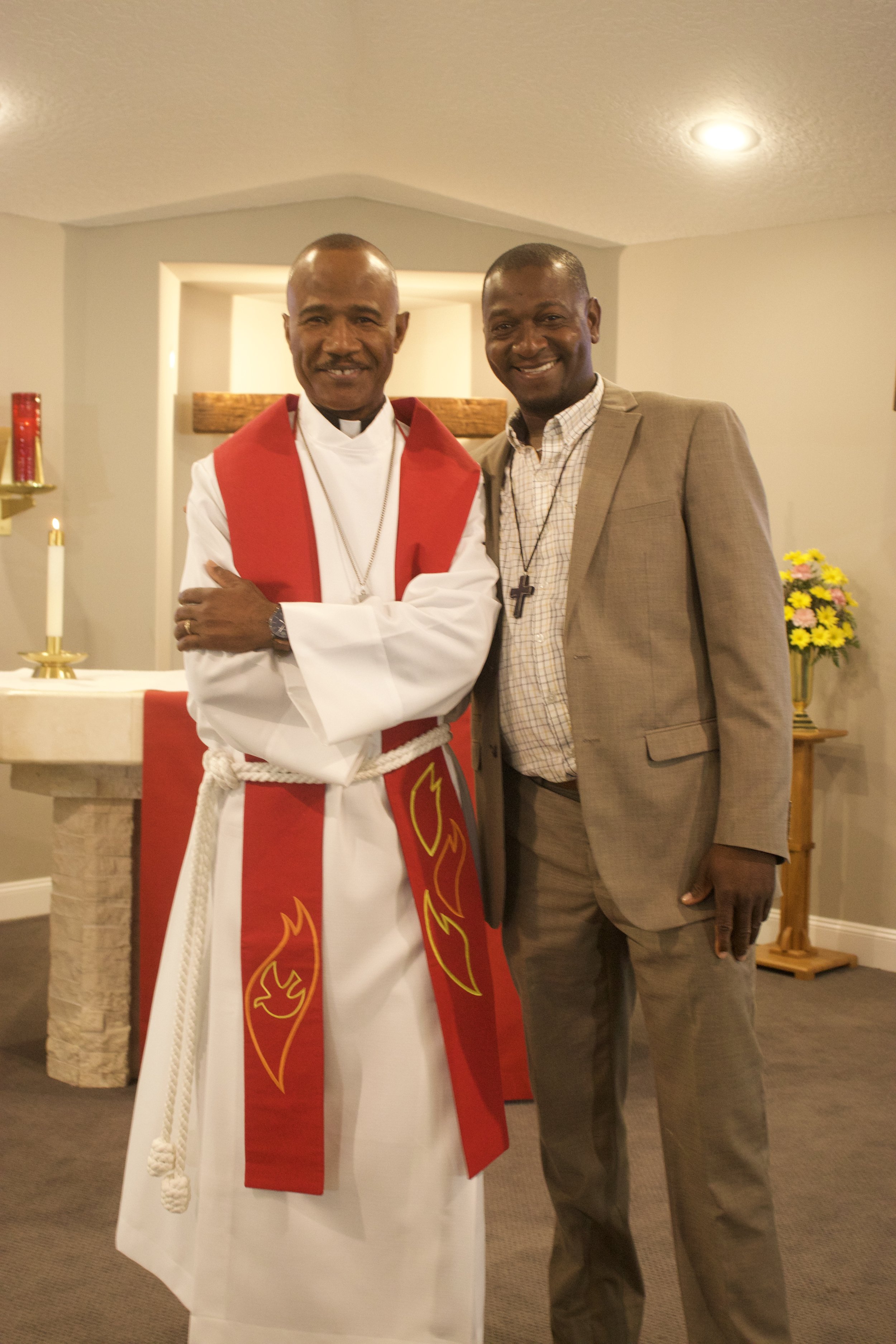
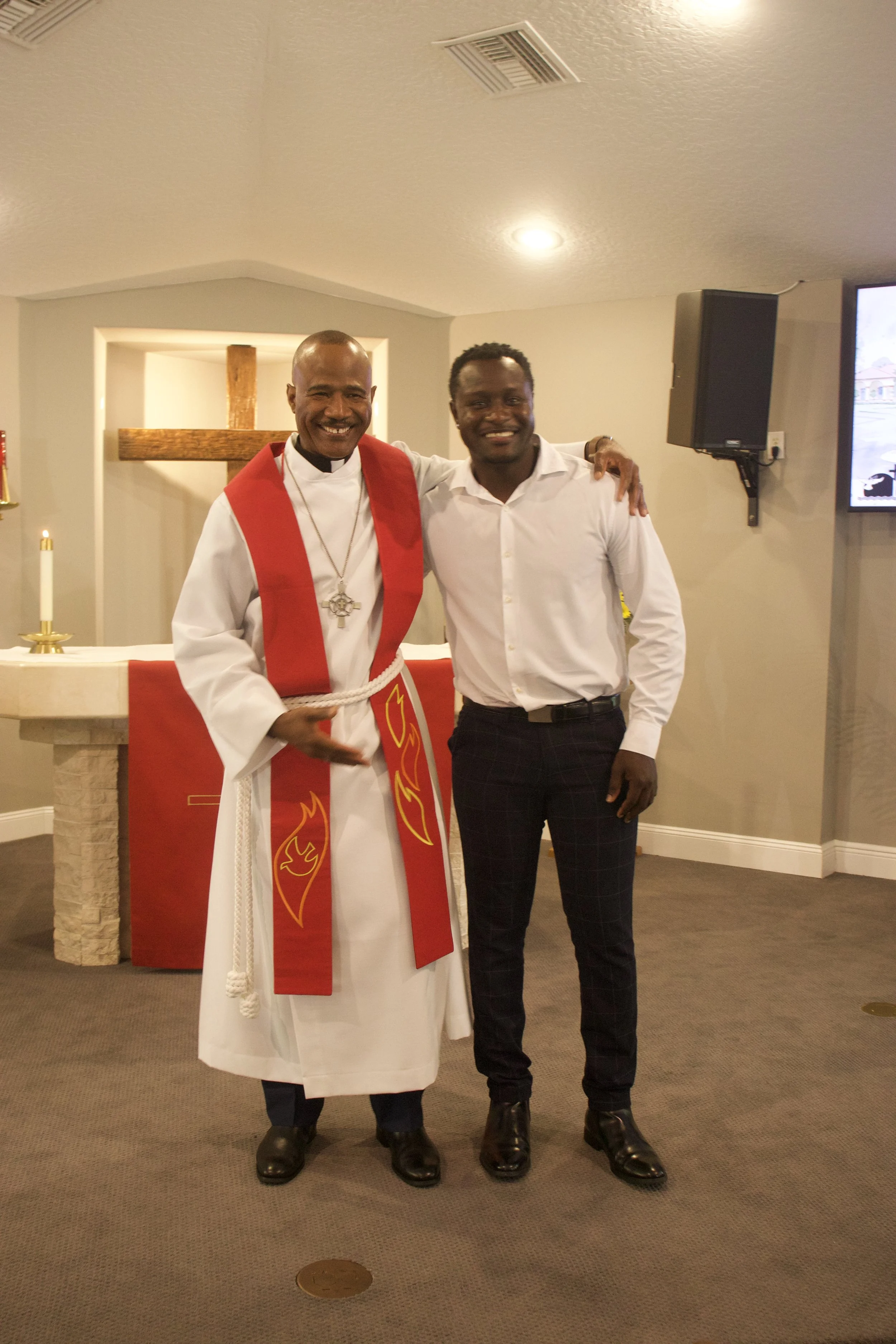





The Great Divorce Chapters 10-11 - Thursday Bible Study
On June 4, 2026, our church Bible study used C. S. Lewis’s The Great Divorce and the Lord’s Prayer to confront self-will, grumbling, and identity—asking how heaven’s life breaks into our daily choices, relationships, and walk with Christ.
Great Divorce Chapters 10-11a
This is our 6th class on The Book
This is an AI Recap of the class.
Some things may be incorrect.
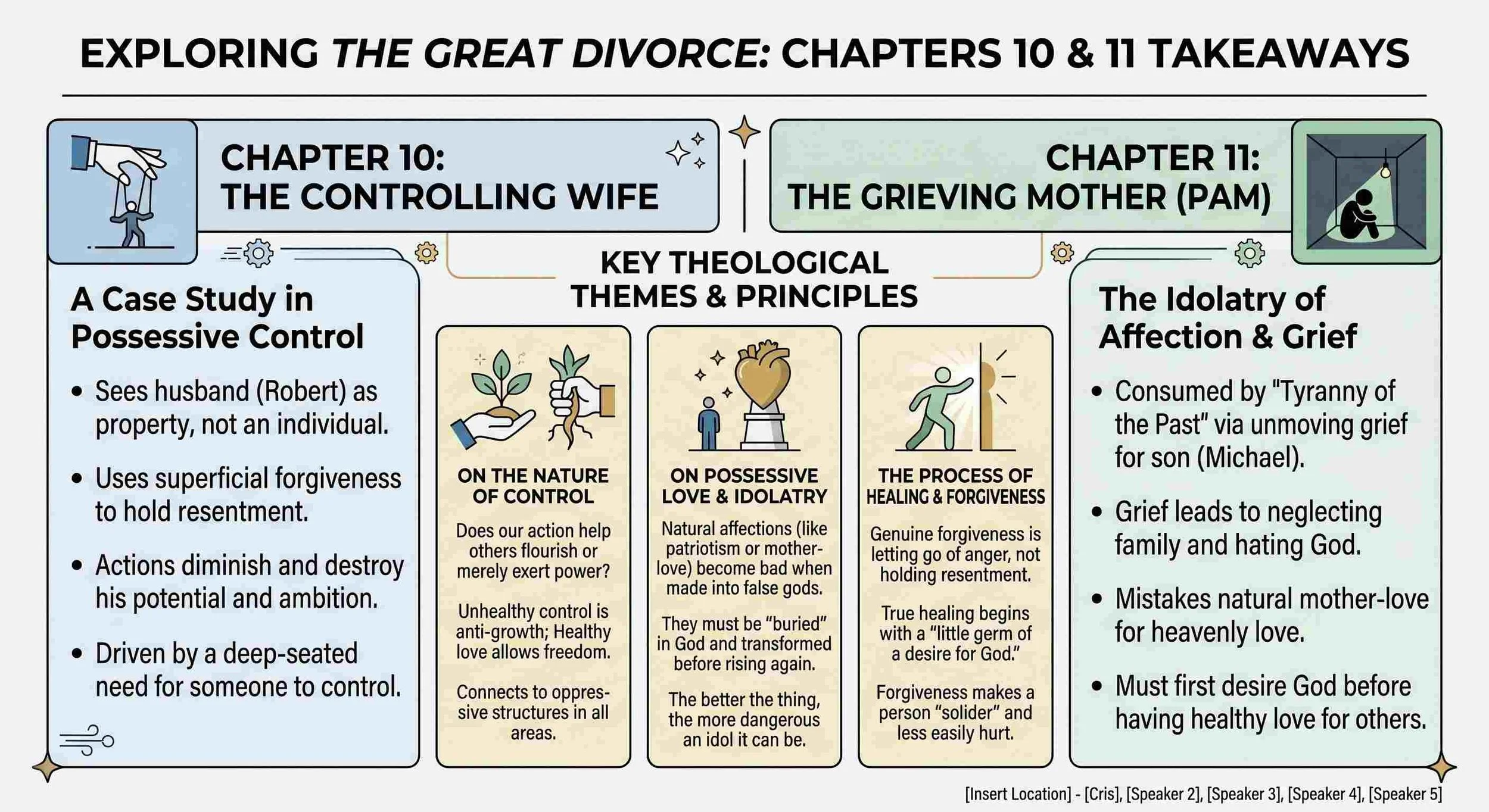
Discussion of Chapter 10: The Controlling Wife
Description:
The group analyzed the character of the controlling wife, describing her as hypocritical, depressing, critical, and self-centered.
Her identity was completely centered on managing her husband, Robert, whom she treated as property.
Her phrase, "I forgive him as a Christian," was seen as a way to hold onto resentment while appearing righteous.
The group discussed that genuine forgiveness means letting go of anger, even if one doesn't forget. An analogy was made to a sober alcoholic who turns their past struggle into a strength.
The wife's actions, such as destroying her husband's ambition, were seen as diminishing him. Her final statement, "I am so miserable. I must have someone to do things to," revealed her motivation was control, not service.
Discussion of Chapter 11: The Grieving Mother (Pam)
Description:
The discussion shifted to Pam, a mother grieving her son, Michael. Participants debated the son's age at his death.
Her grief led her to neglect her family and hate God. Her ten-year ritual of keeping her son's room unchanged was cited as an example of being consumed by the "tyranny of the past."
The group compared this "grieving ghost" to the controlling wife, noting the different approaches to handling them.
Key passages were highlighted:
"You cannot love a fellow creature fully till you love God."
"You'll become solid enough for Michael to perceive you when you learn to want someone else besides Michael."
It was emphasized that one must first exist as God's creature before being Michael's mother. The healing process begins with a "little germ of a desire for God," not using God as a means to an end.
Theological Themes: Love, Control, and Idolatry
The Nature of Control vs. Allowing Flourishing:
The group connected the theme of control to real-world examples, like parents pushing children for their own ambitions or churches clinging to traditions that prevent growth.
A parallel was drawn between the book's themes and unhealthy structures in churches, HOAs, and businesses where power and control become central. Healthy structures were described as a "taste of heaven."
The key takeaway was the need for self-honesty to determine if one's actions are about helping others flourish or simply about control, posing the question: "Are they flourishing when they are doing exactly what I told them to do?"
The Nature of Love, Loss, and Forgiveness:
The group discussed that the ghost's state might be rooted in anger at God, which prevents healing. This led to a conversation on empathy and seeing others' perspectives.
The destructive nature of possessive love was a central theme. Natural affection can be mistaken for heavenly love and must be "buried" (a theology of the cross) before it can rise again, transformed.
A key quote was discussed: "No natural feelings are high or low... They are all holy when God's hand is on the reign. They all go bad when we... make them into false gods."
A reference was made to an interview between Stephen Colbert and Anderson Cooper, highlighting the value of having loved despite the pain of grief.
Forgiveness was linked to becoming "solider," where others lose the power to hurt you.
The Idolatry of Good Things:
It was noted that good things, like mother-love or patriotism, are easier to turn into idols than more obvious passions. Demons are made from fallen archangels, not lesser things.
Examples of "good things" becoming idols included: "family-friendly" branding, unquestioning patriotism, specific forms of masculinity, and intense sports fandom amplified by betting.
Biblical References and Connections:
The discussion touched on biblical stories involving Naaman and Elisha, though participants needed to review the details. This was connected to a sermon series where Elisha repeats Elijah's actions in a gentler, more spiritual way, moving from past violence toward something new.
The group also briefly mentioned biblical structures like alphabetical psalms, symmetrical patterns in the Sermon on the Mount, and numerological codes in the Torah.
The Chosen Study Episode 1 - Summer Bible Club Study
A lively Bible study on June 10, 2026, explored The Chosen’s portrayals of Mary Magdalene, Matthew the tax collector, Peter, and Nicodemus, and how these narratives illuminate Scripture, discipleship, grace, and the humanity of Jesus.
The Chosen Season 1 Episode 1
This is our 1st class on The Chosen
This is an AI Recap of the class.
Some things may be incorrect.
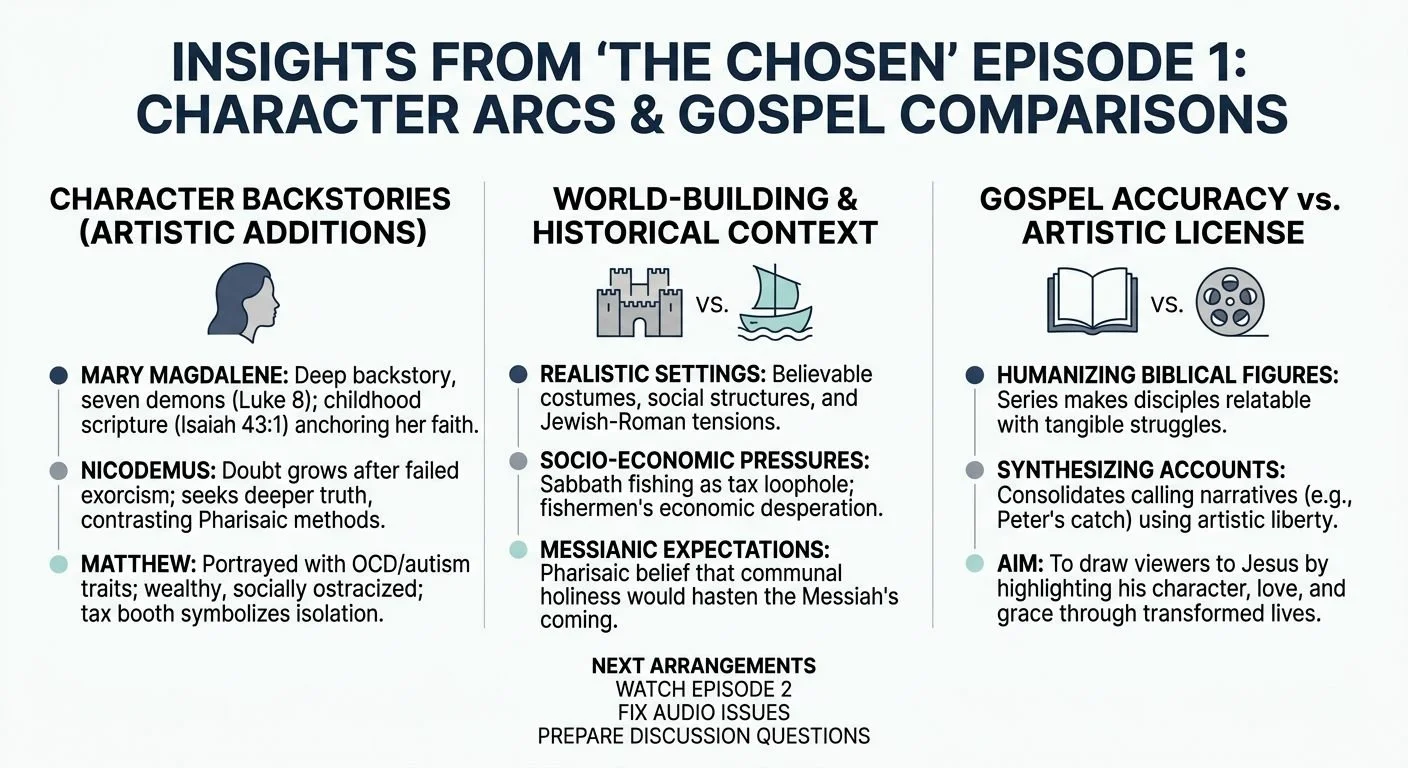
Overview and First Impressions of "The Chosen" – Episode 1
Group reactions to Episode 1 were mixed: several first-time viewers found it slow, with [Speaker 2] noting they fell asleep; fans suggested the series gains momentum by Episode 3.
A scene was discussed where a religious leader condemns Sabbath fishing, emphasizing righteousness for the Messiah’s coming, contrasted with fishermen’s economic desperation.
Character Portrayals and Arcs
Mary Magdalene:
Based on Luke 8’s note of seven demons, the show expands her backstory, depicting suicidal despair before Jesus calls her—an artistic addition not explicit in scripture.
Her father teaching her scripture (unusual for the time) empowers her portrayal; Isaiah 43:1 becomes a personal anchor, kept in a childhood doll and later quoted by Jesus, catalyzing her transformation and devotion through the crucifixion.
Nicodemus:
Drawn from the Gospel of John, his arc starts with a failed exorcism of Mary, provoking doubt in Pharisaic methods and a search for deeper truth, culminating in belief and involvement in Jesus’s burial.
Interactions with Romans highlight Jewish-Roman tension and hypocrisy, including remarks about taxing the people.
Matthew:
Presented as erudite with OCD/autism-spectrum traits, wealthy yet socially ostracized; his fortified tax booth and guard emphasize fear and public hostility.
Market scenes underscore his insecurity; Jesus dining with tax collectors and sinners reflects grace extended to the marginalized.
Peter (and Andrew):
Portrayed as beaten down and desperate, engaged in fighting and moral compromise (snitching on other fishermen to escape debt).
His animosity toward Matthew contrasts with Matthew’s transactional view of Peter as a debtor; their dynamic illustrates grace within the emerging community.
World-Building and Historical Context
Costumes, settings, and social structures were praised as more believable than older productions.
Effective details include:
Sabbath fishing as a tax-avoidance loophole.
Matthew’s fortified booth symbolizing his isolation.
Jewish-Roman tensions and taxation politics.
Messianic expectations and Pharisaic belief that communal holiness would hasten the Messiah.
Gospel Accounts and Storytelling Choices
The series uses artistic license to humanize biblical figures and synthesize elements across gospels:
Variations in the calling narratives: Luke 5’s miraculous catch preceding Peter’s call; Mark’s concise account; John’s large catch tied to the resurrection.
Production consults ministers to maintain doctrinal core while expanding context and character backstories.
Viewers debated accessibility versus accuracy; many appreciated how the show makes scripture emotionally resonant and relatable.
Portrayal of Jesus and Thematic Impact
Jesus is depicted with warmth and joy—laughing, dancing, hugging, and meeting individuals where they are—enhancing the felt experience of miracles.
The show’s aim is seen as drawing viewers to Jesus by highlighting his character, love, and beauty through transformed lives.
Technical and General Observations
Audio quality during the meeting was poor; a planned clip replay was canceled due to technical issues.
The disciples are portrayed as real, relatable people facing tangible socio-economic pressures.
![Induction of Vicar Claubert June 7th 4pm[Live Stream]](https://images.squarespace-cdn.com/content/v1/5852f18a20099e30cd2c01dc/c4f52c5f-9b29-4fff-a7c5-fb2665f1abf7/induction+26.png)
Induction of Vicar Claubert June 7th 4pm[Live Stream]
Service and Live Stream June 7th 4pm.
Join us as we induct Claubert into Port St Luice and into service at Grace Lutheran PSL.
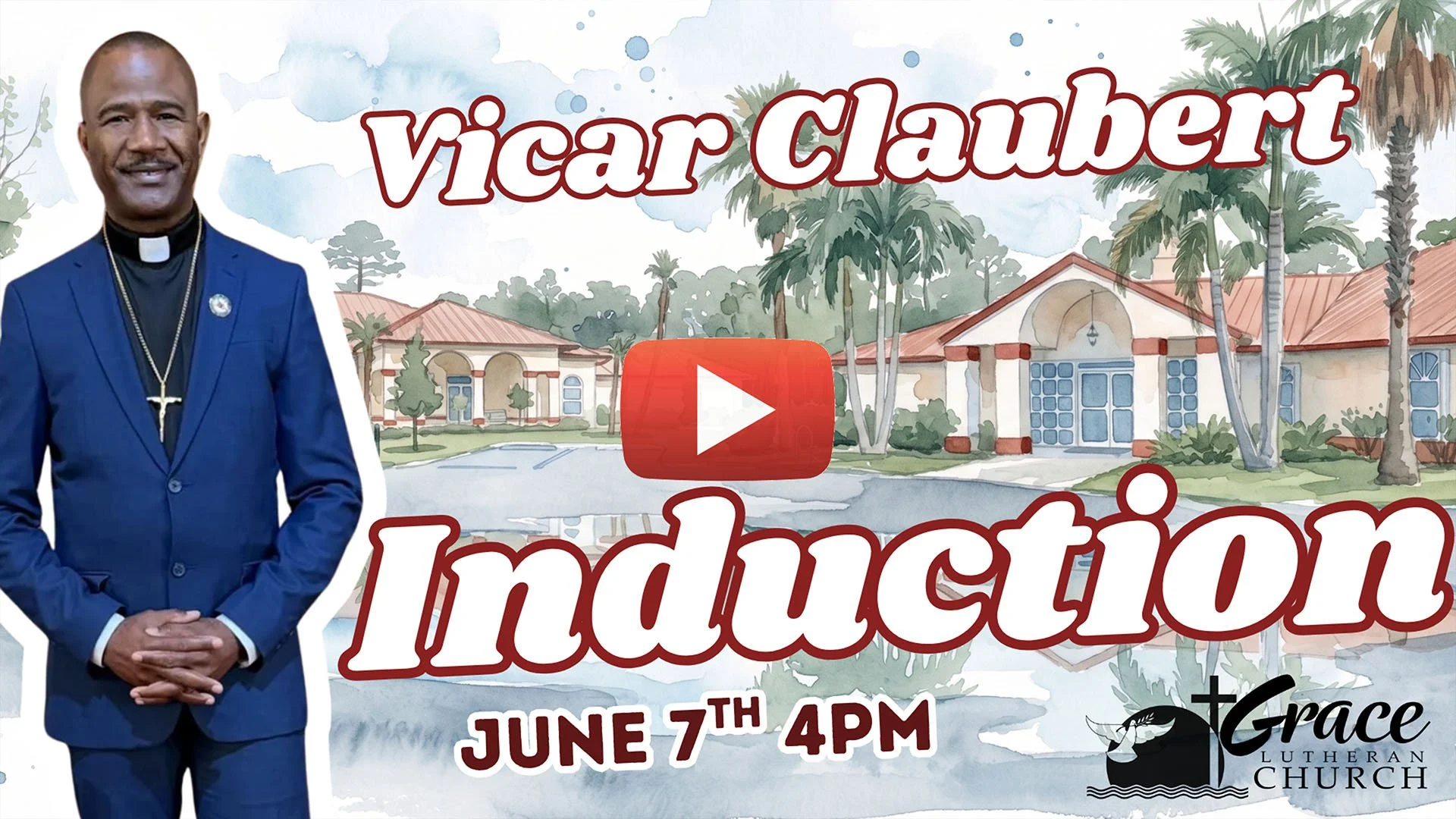
Welcome & Induction of Vicar Claubert June 7th at 4:00 PM
Join us as we warmly welcome Vicar Claubert to the Port St. Lucie community and officially induct him into service at Grace Lutheran PSL.
A dessert reception will immediately follow the ceremony.
![[Sunday] Through The Water - 2 Kings 2 - Foolish Wisdom](https://images.squarespace-cdn.com/content/v1/5852f18a20099e30cd2c01dc/1780667663134-EX5V86ZA8ERAX8JAYMIS/FW7a.jpg)
[Sunday] Through The Water - 2 Kings 2 - Foolish Wisdom
While the "glory days" of the past are tempting, Elijah passing the mantle to Elisha reminds us to put down our swords and walk forward by His Spirit.
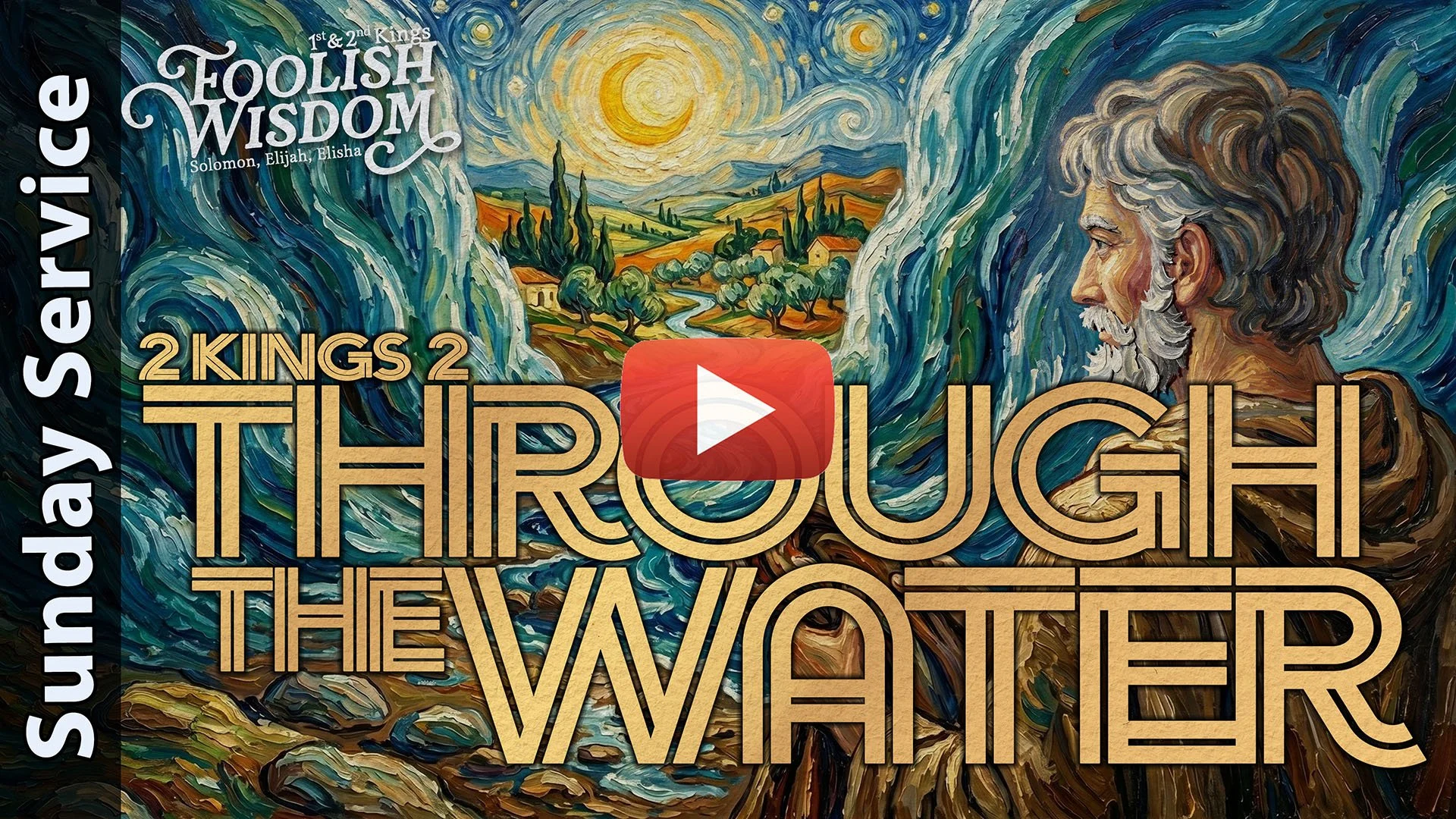
While the "glory days" of the past are tempting, Elijah passing the mantle to Elisha reminds us to put down our swords and walk forward by His Spirit.
What Had happened at Grace this week.
The Great Divorce Chapters 9b - Thursday Bible Study
On June 4, 2026, our church Bible study used C. S. Lewis’s The Great Divorce and the Lord’s Prayer to confront self-will, grumbling, and identity—asking how heaven’s life breaks into our daily choices, relationships, and walk with Christ.
Great Divorce Chapters 9b
This is our 5th class on The Book
This is an AI Recap of the class.
Some things may be incorrect.
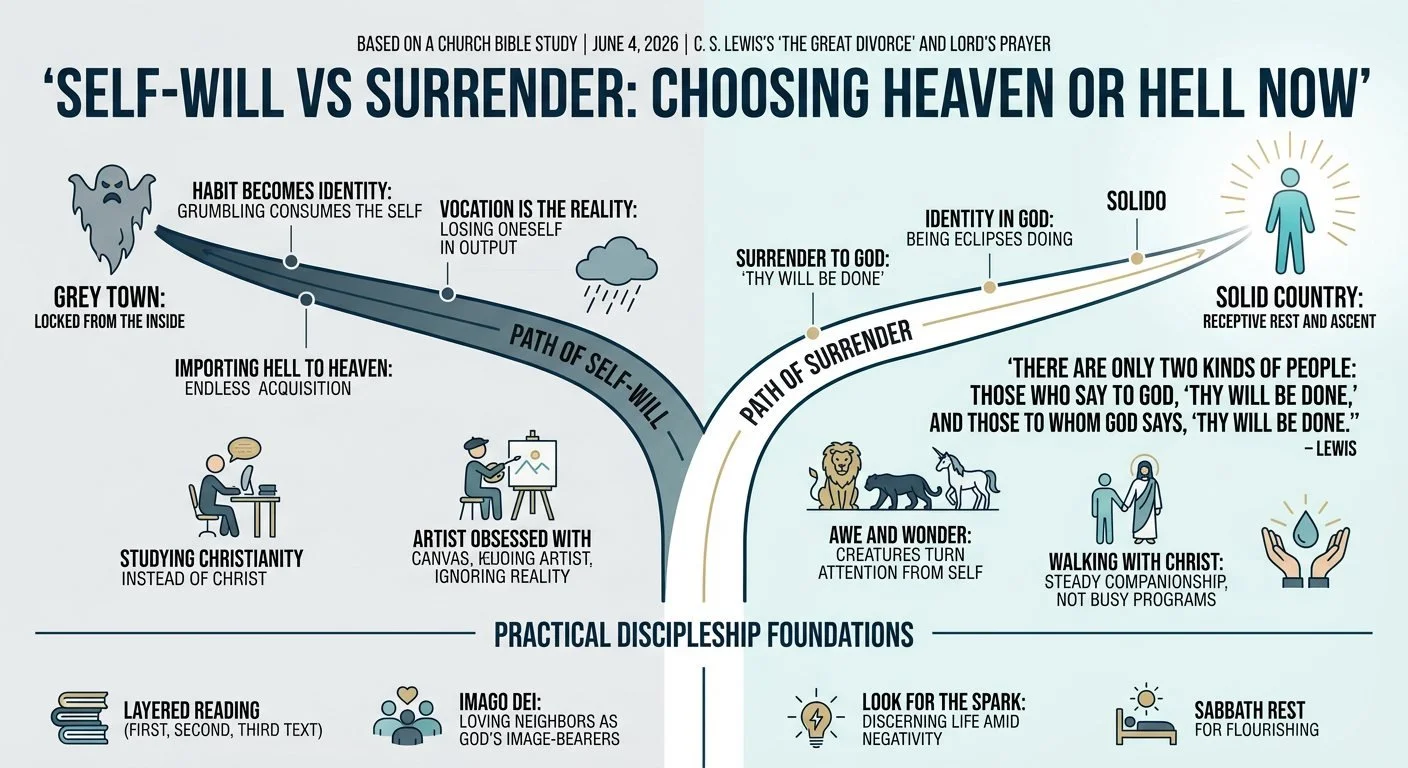
Short summary of the whole class
On June 4, 2026 at 11:01:41, we revisited chapter nine (and pages 79–84) of C. S. Lewis’s The Great Divorce, centering on the stark choice of “Thy will be done”—either to God or, finally, from God to us. We explored how heaven and hell are shaped by our present loves and habits, how grumbling can become identity, and how religious busyness can eclipse a living walk with Christ. George MacDonald’s influence on Lewis framed a discussion about the finality of choice, while Lewis’s imagery (lions, panthers, unicorns, solid people, and the painter) taught selflessness, awe, and identity in God rather than vocation. Scriptures from the Lord’s Prayer, Jesus’ table fellowship, burden-bearing, Sabbath rest, and the call to avoid grumbling grounded the conversation in practical discipleship.
Section-by-section walkthrough and summaries
1) Re-orienting in The Great Divorce: the heart of chapter nine and “Thy will be done”
What we talked about:
We located ourselves mid–chapter nine and anchored the class in Lewis’s central quote: “There are only two kinds of people in the end: Those who say to God, ‘Thy will be done,’ and to those whom God says in the end, ‘Thy will be done.’”
We framed heaven and hell as the outworking of self-will versus surrender, noting Lewis’s image that “the door to Hell is locked from the inside.”
We considered characters like the grumbling woman and the frightened ghost as case studies in our daily, formative choices.
Bible verses mentioned:
Matthew 6:9–13; Luke 11:2–4 — The Lord’s Prayer (“Your will be done, on earth as it is in heaven”).
Stories/books mentioned:
C. S. Lewis, The Great Divorce (chapter nine).
Short summary:
We grounded our study in Lewis’s core thesis: eternity flows from our will—either surrender to God or commitment to self—and that choice has real, present consequences.
2) Reading deeply: first text, second text, and intention
What we talked about:
We adopted a layered reading method: the first text (words), the second text (author’s purpose), and a third layer (underlying realities/emotions).
This approach prepared us to engage Lewis beyond narrative, attending to spiritual dynamics and intention.
Bible verses mentioned:
None directly cited.
Stories/books mentioned:
C. S. Lewis, The Great Divorce.
Short summary:
Reading with layered attention helps us discern Lewis’s purpose and the spiritual heart beneath his words.
3) The Great Divorce invites repeated, transformative reading
What we talked about:
Participants noted that rereading reveals new depths; the book’s simplicity masks profound spiritual insight.
Bible verses mentioned:
None directly cited.
Stories/books mentioned:
The Great Divorce.
Short summary:
Lewis’s work rewards rereading, continually opening fresh areas for spiritual growth.
4) “On earth as it is in heaven”: rethinking the Lord’s Prayer in daily life
What we talked about:
We challenged “fire insurance” Christianity by asking how to embody heaven’s will now.
Practical self-examination: Are we choosing hell today by refusing forgiveness, seeking control, or nursing grievances?
Bible verses mentioned:
Matthew 6:9–13; Luke 11:2–4 — The Lord’s Prayer.
Stories/books mentioned:
The Great Divorce (heaven/hell as present choices).
Short summary:
The Lord’s Prayer calls us into present obedience that mirrors heaven, not mere future escape.
5) Who eats at the table? Jesus with tax collectors and sinners
What we talked about:
We asked whether we would accept sharing heaven with people we struggle to forgive—would we remove ourselves?
This pressed our willingness to embrace God’s radical hospitality.
Bible verses mentioned:
Matthew 9:10–13; Mark 2:15–17; Luke 5:29–32 — Jesus dining with tax collectors and sinners.
Stories/books mentioned:
The Great Divorce — imagined reactions to who is “in” heaven.
Short summary:
Jesus’ table fellowship confronts our exclusionary instincts and invites us into grace toward those we resist.
6) Studying Christianity vs. loving Christ
What we talked about:
Around page 74, Lewis warns against becoming absorbed in studying Christianity while forgetting Christ Himself.
Parallels were drawn to the artist, the grumbling woman, and other ghosts whose good desires get swallowed by lesser pursuits.
Bible verses mentioned:
None directly cited.
Stories/books mentioned:
The Great Divorce, page ~74 (conversation with George MacDonald).
Short summary:
We cautioned against replacing a living love for Jesus with religious analysis or activity.
7) Walking with Christ vs. running for Christ
What we talked about:
A shared refrain: people often “run for Christ” (programs, busyness) rather than “walk with Him.”
The practical check: “How goes your walk with Christ today?”
Bible verses mentioned:
Matthew 11:28–30 — Rest in Christ (later explicitly connected).
Stories/books mentioned:
Personal wisdom shared; The Great Divorce themes of presence vs. performance.
Short summary:
Slow down to walk with Jesus; resist performance-driven religiosity.
8) Imago Dei and a simple creed of love and service
What we talked about:
A personal creed: Jesus saves people; God loves people; therefore we love and serve whom God loves.
Recognizing every person as God’s image-bearer grounds faith in tangible care.
Bible verses mentioned:
Genesis 1:26–27 — Humanity made in God’s image (alluded to).
Stories/books mentioned:
Applied in community and church life.
Short summary:
Seeing neighbors as image-bearers keeps our discipleship concrete and guards against self-will.
9) “Thy will be done” means “not my will”
What we talked about:
A pastoral reminder reframed the prayer: asking God’s will means relinquishing our own agendas.
Confronted “fire-and-brimstone” and “fire insurance” distortions of the gospel.
Bible verses mentioned:
Matthew 6:10 — “Your will be done.”
Stories/books mentioned:
The Great Divorce — surrender vs. self-will.
Short summary:
Submitting to God’s will displaces self-rule and reframes salvation as obedient trust.
10) The grumbling woman: when habit becomes identity
What we talked about:
Pages 76–77: Is she a person who grumbles, or has she become “a grumble”?
If there’s a spark under the ashes, it can be fanned back to life; if only ashes remain, they must be swept away.
We applied this to personal tendencies, church culture, and local frustrations.
Bible verses mentioned:
Philippians 2:14 — Do all things without grumbling (alluded to throughout).
Stories/books mentioned:
The Great Divorce, pages 76–77 (the grumbling woman).
Short summary:
Occasional complaint can be honest; habitual grumbling can consume us until it defines who we are.
11) Clarifying grumble vs. grumbler
What we talked about:
We distinguished constructive critique (naming issues with hope) from identity-level negativity.
Bible verses mentioned:
Philippians 2:14 — Do all things without grumbling (implicit).
Stories/books mentioned:
The Great Divorce principle applied to everyday discernment.
Short summary:
Discern the difference between situational complaint and a corrosive habit that erodes the self.
12) Everyday examples: community complaints and church assessment
What we talked about:
Local Facebook negativity, traffic and construction frustrations, and a Bethel church assessment where initial impressions of decline were corrected by discovering genuine life—“spark under the ashes.”
Bible verses mentioned:
None directly cited here.
Stories/books mentioned:
Bethel church assessment; social media examples; The Great Divorce principle.
Short summary:
Patience and deeper look can uncover embers worth fanning into flame amid dominant negativity.
13) George MacDonald’s influence and the finality of choice
What we talked about:
Lewis discovered MacDonald’s Phantastes as a teen; MacDonald shaped Lewis’s imagination and theology.
In The Great Divorce, Lewis puts his own views into MacDonald’s mouth: Lewis rejects universalism, insisting the choice for hell is final, whereas MacDonald believed hell was purgative.
Influences noted on Narnia (wardrobe motif) and Tolkien.
Bible verses mentioned:
None directly cited.
Stories/books mentioned:
George MacDonald, Phantastes; The Great Divorce (MacDonald as guide); The Chronicles of Narnia; J. R. R. Tolkien.
Short summary:
Lewis honors MacDonald while diverging theologically, using MacDonald’s character to articulate the permanence of our choices.
14) Social media, negativity, and grumbling (opening discussion of pp. 79–84)
What we talked about:
Cultural megaphones reward complaint and self-promotion; this mirrors Lewis’s “grumble” motif.
Bible verses mentioned:
Philippians 2:14 — Do all things without grumbling (anticipated).
Stories/books mentioned:
Reddit Polestar forum complaints; local restaurant posts; disengagement from social media.
Short summary:
Our mediascape amplifies grumbling, which can train hearts toward negativity rather than gratitude.
15) Unicorns, lions, and panthers—attention and awe (page 79)
What we talked about:
These creatures act like “jumper cables,” jolting ghosts out of self-preoccupation toward majesty—fear (lions/panthers) and wonder (unicorns).
Awe can break cycles of self-focus.
Bible verses mentioned:
Psalm 19:1 — Creation declares God’s glory (implicit).
Job 38–41 — God teaches through creation (implicit).
Stories/books mentioned:
The Great Divorce, page 79; Narnia-like resonance.
Short summary:
Heaven’s creatures teach by awakening fear and wonder, turning attention from self to glory.
16) Teachers in the solid country; selflessness vs. selfishness
What we talked about:
Solid people, and even creatures, function as teachers of self-giving; “rest on me” invites burden-sharing and ascent toward the mountains.
Bible verses mentioned:
Galatians 6:2 — Bear one another’s burdens.
Matthew 11:28–30 — Rest in Christ.
Stories/books mentioned:
The Great Divorce — guidance from solid people.
Short summary:
Heaven’s pedagogy trains us in selflessness and grace, moving us from isolation to shared strength.
17) Narrow views vs. totality—“teachers who return with lectures” (pp. 79–80)
What we talked about:
The temptation to reduce Jesus to maps, stats, or lectures; the hammer-and-nail metaphor cautions against single-angle faith.
Bible verses mentioned:
Colossians 1:15–20 — The fullness of Christ (implicit).
Stories/books mentioned:
The Great Divorce, pages 79–80.
Short summary:
Partial perspectives can eclipse the whole Christ; heaven invites comprehensive vision over fragmented expertise.
18) Importing hell into heaven—paving over the grasslands (page 80)
What we talked about:
Ghosts who want to asphalt heaven with Gray Town’s ethic—endless acquisition and self-will—cannot coexist with glory’s gift economy.
Bible verses mentioned:
Matthew 6:19–21 — Treasures in heaven.
Mark 8:36 — Gain the world, lose your soul.
Stories/books mentioned:
The Great Divorce, page 80; Peggy Lee’s “Is That All There Is?” as cultural critique.
Short summary:
Hell’s logic of self-assertion can’t be imported into heaven’s surrender; greed cannot pave over grace.
19) Community, service, and changing capacity to serve
What we talked about:
From volunteer fire departments to paid service; small-town neighborliness vs. modern concerns; the enduring call to serve.
Bible verses mentioned:
Luke 10:25–37 — The Good Samaritan (resonant theme).
Stories/books mentioned:
California hills fires; small-town memories; differing community cultures.
Short summary:
Contexts change, but love of neighbor remains; heaven’s selflessness critiques our drift toward comfort and self-protection.
20) The pull of complaint—venting at the “haves” (page 82)
What we talked about:
Making complaint a vocation—score-settling with “prigs and snobs”—distorts the heart.
Bible verses mentioned:
James 3:5–10 — The tongue’s power.
Philippians 2:14 — Do all things without grumbling (implicit).
Stories/books mentioned:
The Great Divorce, page 82; humorous text interruption.
Short summary:
A life organized around complaint shrinks the soul; heaven invites humility and praise instead.
21) The painter—identity beyond vocation (pages 83–84)
What we talked about:
Earthly vocations are signs pointing to Reality; in heaven, identity in God eclipses output. If we are what we do, we are nothing next to the Real.
Reflections on retirement, storm imagery, and Sabbath reoriented toward human flourishing.
Bible verses mentioned:
Mark 2:27 — The Sabbath was made for man.
Matthew 6:33 — Seek first the kingdom.
1 Corinthians 13:12 — From partial sight to face-to-face.
Psalm 90:17 — Work established by God (implicitly contrasted).
Stories/books mentioned:
The Great Divorce, pages 83–84; hurricane/wind and “glorious fire” imagery.
Short summary:
Our calling points to God but cannot carry our identity; in heaven, the Sign yields to the Reality and we rest our selves in Him.
22) Rest, zeal, and simply being
What we talked about:
Holiness isn’t achieved by zeal; readiness for heaven is receptive rest under grace.
Bible verses mentioned:
Luke 10:38–42 — Mary and Martha.
Hebrews 4:9–11 — Enter God’s rest.
Stories/books mentioned:
Recent sermon: “Why are you here?”; laying down frantic rule-keeping.
Short summary:
Heaven trains us to receive rather than strive; presence with Christ precedes performance for Christ.
Medium-length summary of the class (June 4, 2026)
On June 4, 2026, our Bible study used C. S. Lewis’s The Great Divorce to explore how the Lord’s Prayer reshapes daily discipleship. We centered on chapter nine’s thesis—either we say “Thy will be done” to God or He says it to us—framing heaven and hell as the fruit of our present loves and habits. A layered reading approach helped us attend to Lewis’s intention, while Jesus’ table fellowship confronted our readiness to share heaven with those we resist. We warned against studying Christianity while neglecting Christ, and emphasized walking with Him over running programs for Him. Affirming the imago Dei grounded a simple creed of loving whom God loves. Lewis’s “grumbling woman” pressed us to distinguish situational complaint from becoming “a grumble,” with everyday examples in social media negativity and church assessments where deeper patience found sparks of life. We traced George MacDonald’s influence and Lewis’s divergence from universalism, then turned to pages 79–84: unicorns, lions, and panthers as teachers of awe; solid people bearing burdens; the folly of importing Gray Town’s self-will into heaven; and the painter’s lesson that identity rests in God, not vocation. Scripture on rest, Sabbath, bearing burdens, and the tongue’s power framed a call to surrender self-will, practice grace, and let heaven’s life break into our present through humility, forgiveness, and steady companionship with Christ.
Main points
The core choice: “Thy will be done” to God vs. God saying it to us—self-will vs. surrender.
Heaven and hell are shaped by present loves, habits, and daily decisions.
Read spiritually with layered attention: words, purpose, and underlying realities.
The Great Divorce rewards rereading and ongoing transformation.
The Lord’s Prayer calls us to embody heaven’s will now, not treat faith as fire insurance.
Jesus’ table fellowship challenges our boundaries and invites radical grace.
Beware letting study or ministry eclipse love for Christ Himself.
Walk with Christ daily rather than merely “run” for Him.
Every person bears God’s image; love and serve whom God loves.
“Thy will be done” requires relinquishing our own agendas.
Distinguish constructive critique from becoming defined by grumbling.
Look for the spark under the ashes—in people, churches, and communities—and fan it into flame.
Heaven’s creatures and solid people teach awe, burden-bearing, and selflessness.
You cannot import hell’s acquisitive ethic into heaven’s gift economy.
Identity rests in God, not vocation or output; holiness is received in restful presence.
Bible Scriptures mentioned
Matthew 6:9–13; Luke 11:2–4 — The Lord’s Prayer (“Your will be done”).
Matthew 9:10–13; Mark 2:15–17; Luke 5:29–32 — Jesus with tax collectors and sinners.
Genesis 1:26–27 — Humanity in God’s image (imago Dei).
Philippians 2:14 — Do all things without grumbling.
Galatians 6:2 — Bear one another’s burdens.
Matthew 11:28–30 — Rest in Christ.
Colossians 1:15–20 — The fullness of Christ.
Matthew 6:19–21 — Treasures in heaven.
Mark 8:36 — Gain the world, lose your soul.
Luke 10:25–37 — The Good Samaritan.
James 3:5–10 — The tongue’s power.
Mark 2:27 — The Sabbath was made for man.
Matthew 6:33 — Seek first the kingdom.
1 Corinthians 13:12 — From partial sight to face-to-face.
Psalm 19:1 — Creation declares God’s glory.
Job 38–41 — God teaches through creation’s majesty.
Luke 10:38–42 — Mary and Martha.
Hebrews 4:9–11 — Enter God’s rest.
Stories and books referenced
C. S. Lewis, The Great Divorce:
Chapter nine — “There are only two kinds of people…”
Pages ~74 — Studying Christianity vs. loving Christ (conversation with George MacDonald).
Pages 76–77 — The grumbling woman (“becoming a grumble”).
Page 79 — Unicorns, lions, panthers as attention-getters.
Pages 79–80 — Narrow lectures vs. the totality of Christ.
Page 80 — Ghosts wanting to pave heaven’s grasslands (importing Gray Town).
Page 82 — Complaint as vocation and score-settling.
Pages 83–84 — The painter and identity beyond vocation.
George MacDonald, Phantastes — formative influence on Lewis; wardrobe motif echoed in Narnia.
The Chronicles of Narnia — influence from MacDonald’s fantasy; wardrobe concept.
J. R. R. Tolkien — influenced by MacDonald and Lewis’s fantasy lineage.
Bethel church assessment — initial reports of decline corrected by discovered signs of life (“spark under the ashes”).
Social media examples — local Facebook negativity; Reddit Polestar forum complaints; restaurant posts.
Peggy Lee’s “Is That All There Is?” — cultural critique of acquisitive futility.
Content creation date: 2026-06-04 11:01:41.
Mark Chapter 4-5 Class 7 - Wednesday Bible Study
During our Bible study on May 27, 2026, we explored Mark 4:1–34, focusing on Jesus's parables—especially the Sower—and how they reveal a deeper, hopeful message about the kingdom of God, spiritual growth, and the critical theme of truly hearing and seeing God's word to bear fruit.
Gospel of Mark Chapter 4-5
This is our 7th class on Mark
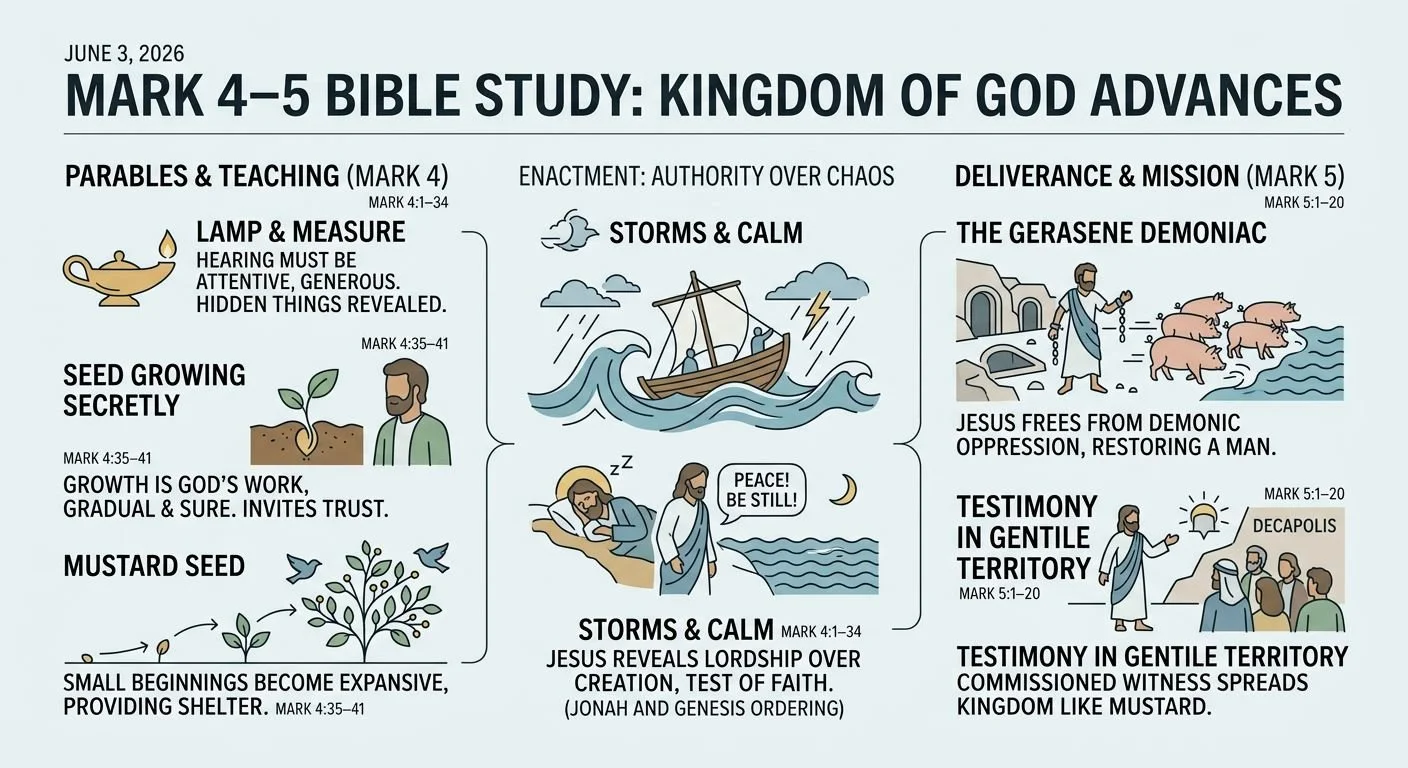
This is an AI Recap of the class.
Some things may be incorrect.
Short summary of the whole class
On June 3, 2026, we welcomed newcomers and studied Mark 4:19–5:20 (with previews of 5:21–43), revisiting the Parable of the Sower’s pastoral tension (“What if I’m bad soil?”) and connecting it to Jesus’ sayings about the lamp and the measure, the seed growing secretly, and the mustard seed. We saw these teachings enacted as Jesus calmed the storm and freed the man with “Legion,” commissioning him to witness in Gentile territory. Along the way we noted “hard” versus “soft” narrative splits, cross-referenced Isaiah, Genesis, Jonah, and Leviathan imagery, and anticipated the healing of the bleeding woman and Jairus’s daughter—concluding that God’s Kingdom advances irresistibly, turning even “bad soil” into good.
Section-by-section walkthrough
1) Setup, class method, and translations
We welcomed first-time attendees, explained our practice of reading from the NKJV dramatized audio while allowing other translations, and encouraged noting translation differences (sometimes peeking at Greek).
We framed the study of Mark with “splits”—distinguishing “hard” (new movement/scene) and “soft” (development within a theme) transitions.
We set the reading scope: Mark 4:19 through the first story of Mark 5.
Short summary of this section:
Orientation to method (NKJV focus, comparative notes), preview of Mark 4–5, and the “hard vs. soft split” lens for tracking Mark’s flow.
Bible verses mentioned:
Announced Mark 4:19–5:20 (NKJV).
Stories discussed:
None specifically expounded yet; setup for Mark 4–5.
2) Parable of the Sower revisited: “What if I’m bad soil?” (Mark 4:1–20; read 4:19–20)
We revisited last week’s topic and raised a pastoral concern: “What if I’m just bad soil?” The parable names soils without prescribing how to change soil type, which can feel unresolved.
A participant offered that faith can grow even from “cement,” emphasizing personal responsibility and resilient faith.
We recognized the tension and prepared to read onward for how Mark addresses hearing, growth, and transformation.
Short summary of this section:
We wrestled with anxiety about being “bad soil,” affirmed resilient faith, and acknowledged the parable’s limits—looking ahead to how subsequent teachings and stories speak to transformation.
Bible verses mentioned:
Mark 4:3–20 (especially 4:19–20).
Stories discussed:
Parable of the Sower.
3) Lamp under a basket and measure given (Mark 4:21–25)
“Nothing hidden… will not be revealed”; “Take heed what you hear… with the measure you use, it will be measured to you.”
We connected these sayings to the “bad soil” concern: attentive hearing and generous receptivity shape understanding. Hiddenness now doesn’t preclude future revelation—hope for anxious hearts.
Short summary of this section:
Jesus urges careful, open hearing; hidden things will come to light, and generous reception brings greater understanding.
Bible verses mentioned:
Mark 4:21–25.
Stories discussed:
Lamp under a basket; measure you use.
4) The seed growing secretly (Mark 4:26–29)
The kingdom grows “he himself does not know how,” moving from blade to full grain—God’s initiative at work beyond our control.
This encourages those worried about visible progress: growth can be real though unseen.
Short summary of this section:
The kingdom’s growth is God-driven, gradual, and sure—inviting trust when we can’t see or engineer results.
Bible verses mentioned:
Mark 4:26–29.
Stories discussed:
Parable of the growing seed.
5) The mustard seed (Mark 4:30–34)
From the smallest beginnings to a sprawling plant sheltering “birds of the air.”
We noted the expansive, even unwieldy, spread of the kingdom—small faith leading to shelter for many.
Mark notes Jesus used parables publicly and explained them privately—highlighting hearing and understanding, even amid disciples’ frequent confusion.
Short summary of this section:
The kingdom starts small but grows large enough to shelter others; Jesus tailors revelation to hearers’ capacity.
Bible verses mentioned:
Mark 4:30–34.
Stories discussed:
Mustard seed; Jesus’ use of parables and private explanations.
6) Connecting parables to the storm: structure and faith
We debated whether Jesus calming the storm is a “hard shift” or thematically continuous with the seed parables.
Conclusion: It’s connected by faith—Jesus’ question, “Why are you so afraid? Do you still have no faith?” tests whether teaching has taken root; tiny-seed faith should grow in the disciples.
Short summary of this section:
The storm narrative enacts the parable lessons: hearing must mature into trusting action; small faith is meant to grow.
Bible verses mentioned:
Mark 4:21–34 (context), Mark 4:35–41 (transition link).
Stories discussed:
Parables (lamp, growing seed, mustard seed) linked to calming the storm.
7) Calming the storm—Jesus as Lord over chaos (Mark 4:35–41)
Same day, crossing the lake; a great windstorm threatens. Jesus sleeps; the disciples panic: “Teacher, do You not care that we are perishing?”
Jesus rebukes wind and sea: “Peace! Be still!” Then: “Why are you so fearful? How is it that you have no faith?”
The class connected this to biblical chaos imagery: Genesis’ ordering of waters (tohu va-vohu), Jonah asleep in a storm, and Leviathan motifs—Jesus imposes divine order over creation.
Short summary of this section:
Teaching becomes test; Jesus reveals authority over chaos, confronting fear and calling for faith; the disciples’ awe advances revelation.
Bible verses mentioned:
Mark 4:35–41; Genesis 1:2–8; Jonah 1; Job 41; Psalm 74:14; Isaiah 27:1.
Stories discussed:
Calming the storm; Jonah in the storm; creation ordering; Leviathan imagery.
8) Crossing to the Gerasenes—deliverance in Gentile territory (Mark 5:1–20)
Arrival “on the other side”: a man living among tombs confronts Jesus; “Legion,” many demons, recognize Him as “Son of the Most High God.”
Jesus permits demons into pigs (~2,000); the herd rushes into the sea and drowns. The man is found “sitting, clothed, and in his right mind.”
Townspeople fear and plead for Jesus to leave; the delivered man begs to accompany Jesus. Instead, Jesus sends him home to testify: “Tell them what great things the Lord has done for you and how He has had compassion on you.” He proclaims in the Decapolis; “all marveled.”
We discussed purity laws, Gentile setting, economic impact, and how Jesus’ mission disrupts systems that value profit over people. We also noted a strategic “split”: while Jesus often hushes witnesses in Jewish regions, here He commissions Gentile proclamation.
Short summary of this section:
Jesus’ authority frees a tormented man; fear pushes some away, but the healed man becomes a missionary—planting mustard-seed witness in new soil.
Bible verses mentioned:
Mark 5:1–20; parallels noted: Matthew 8:28–34; Luke 8:26–39.
Stories discussed:
Gerasene/Gadarene demoniac; pigs rushing into the sea; Decapolis testimony.
9) Anticipation: unclean and death overcome (Mark 5:21–43 preview)
We previewed the woman with a 12-year hemorrhage (ceremonial impurity; Leviticus 15) and Jairus’s daughter (death as the ultimate barrier).
Thematic arc: what looks like “bad soil” (impurity, death) becomes receptive ground through Jesus’ power and the woman’s faith.
Short summary of this section:
Upcoming stories continue the pattern: Jesus meets impurity and death and brings healing and life.
Bible verses mentioned:
Mark 5:21–43 (preview); Leviticus 15; parallels Matthew 9:18–26; Luke 8:40–56.
Stories discussed:
Preview: bleeding woman; Jairus’s daughter raised.
10) Hard vs. soft splits and discipleship, understanding, and communal faith
We traced “soft” splits across sayings and parables (Mark 4:21–34) and “hard” shifts into enacted narratives (storm; Gerasenes), noting thematic continuity: hearing, faith, growth, mission.
The disciples’ partial understanding—“Who then is this?”—highlights a journey toward clarity, later empowered by the Spirit (Acts 2).
We emphasized communal faith: when personal faith is thin, the church bears one another—reflecting how the kingdom grows together.
Short summary of this section:
Mark’s structure moves from teaching to testing to mission; disciples grow from partial grasp to Spirit-shaped clarity, supported by communal faith.
Bible verses mentioned:
Mark 4:21–34; Mark 4:35–41; Mark 5:1–20; Acts 2 (implied).
Stories discussed:
Flow across parables, storm, and exorcism; early church community (conceptual).
Medium-length final summary (dated 2026-06-03 18:31:56)
On June 3, 2026, our class followed Mark’s unified arc from teaching to testing to mission. We revisited the Parable of the Sower and the pastoral worry, “What if I’m bad soil?” and then listened to Jesus’ sayings on the lamp and the measure, the seed that grows “we know not how,” and the mustard seed—learning that hearing must be attentive, growth is God’s work, and small beginnings can shelter many. The narrative moved from parables to enactment as Jesus calmed the storm, confronting fear and revealing authority over chaos with echoes of Genesis, Jonah, and Leviathan imagery. Crossing into Gentile territory, Jesus liberated the Gerasene demoniac, restoring him and commissioning him to testify—an intentional witness strategy beyond Israel that challenges economic priorities and spreads the kingdom like mustard. We previewed the healing of the bleeding woman and raising of Jairus’s daughter, seeing how Jesus overcomes impurity and death. Throughout, we tracked “soft” and “hard” splits, recognized the disciples’ partial understanding, and emphasized communal faith—arriving at the conclusion that the Kingdom advances irresistibly, turning even “bad soil” into good through Jesus’ compassionate authority.
Main points
The Parable of the Sower raises real pastoral anxiety about being “bad soil.”
Jesus’ lamp and measure sayings call for attentive, generous hearing; hidden things will be revealed.
The kingdom’s growth is God’s initiative—often unseen yet sure.
Mustard-seed beginnings become expansive and sheltering.
The storm narrative tests whether parable teaching has matured into faith; Jesus reveals authority over creation and chaos.
Deliverance in the Gerasenes shows Jesus’ power over demonic oppression, critiques profit-over-people priorities, and plants witness in Gentile territory.
Witness strategy shifts: “go tell” in Gentile regions versus frequent hush in Jewish contexts.
Upcoming healings (bleeding woman; Jairus’s daughter) reveal authority over impurity and death.
Mark’s “soft” and “hard” splits serve a continuous narrative about hearing, faith, growth, and mission.
Discipleship moves from partial understanding to Spirit-enabled clarity, sustained by communal faith.
Bible Scriptures mentioned
Mark 4:1–20 (Parable of the Sower; focus on 4:19–20)
Mark 4:21–25 (Lamp under a basket; measure you use)
Mark 4:26–29 (Seed growing secretly)
Mark 4:30–34 (Mustard seed; parables explained to disciples)
Mark 4:35–41 (Jesus calms the storm)
Mark 5:1–20 (Gerasene/Gadarene demoniac; Decapolis testimony)
Mark 5:21–43 (Preview: bleeding woman; Jairus’s daughter)
Genesis 1:2–8 (Ordering the waters; chaos to order)
Jonah 1 (Jonah asleep in the storm; awakening)
Job 41; Psalm 74:14; Isaiah 27:1 (Leviathan/sea-chaos imagery)
Leviticus 15 (Laws on ceremonial impurity)
Acts 2 (implied; Spirit’s coming)
Stories discussed
Parable of the Sower (seed on different soils)
Lamp under a basket (light meant to shine)
Seed growing secretly (mysterious, God-driven growth)
Mustard seed (small becomes expansive; shelter for many)
Jesus calming the storm (authority over wind and waves)
Jonah in the storm (sleeping, awakening, danger confronted)
Creation ordering in Genesis (God subdues the deep)
The Gerasene demoniac and “Legion” (deliverance; pigs; Decapolis witness)
Preview: the woman with a 12-year hemorrhage and Jairus’s daughter raised from the dead
Content creation date: 2026-06-03 18:31:56
![[Sunday] Why Are You Here - 1 Kings 19 - Foolish Wisdom](https://images.squarespace-cdn.com/content/v1/5852f18a20099e30cd2c01dc/1780022833293-0FAQMDQIQKRA7MFIU3HC/FW6a.jpg)
[Sunday] Why Are You Here - 1 Kings 19 - Foolish Wisdom
Burnout happens when we think it's entirely up to us to fix the world. Elijah flees into the wilderness and discovers how God meets us in our exhaustion, speaking in a still small voice, and freeing us from the pressure of having to do it all.
Burnout happens when we think it's entirely up to us to fix the world. Elijah flees into the wilderness and discovers how God meets us in our exhaustion, speaking in a still small voice, and freeing us from the pressure of having to do it all.
What Had happened at Grace this week.
Chosen Season 1 - Summer Bible Club
While the kids are having a blast at Summer Kids Bible Club, the adults will be diving into a great discussion on Season 1 of The Chosen!
While the kids are having a blast at Summer Kids Bible Club, the adults will be diving into a great discussion on Season 1 of The Chosen!
To get the most out of our time together,
please watch the assigned episodes before class.
If a particular scene stands out to you, jot down the timestamp
we’ll be pulling up clips to watch and discuss together.
Finally, don't forget to bring your Bibles!
Class Schedule.
June 10
Episode 1 - I Have Called You By Name
June 17
Episode 2 - Shabbat
Episode 3 - Jesus Loves The Little Children
June 24
Episode 4 - The Rock On Which It Is Built
July 1
Episode 5 - The Wedding Gift
July 8
Episode 6 - Indescribable Compassion
Episode 7 - Invitations
July 15
Episode 8 - I Am He
Grace Driveway Work.
Upcoming Driveway Closure: Sunday, June 14th
On Friday, May 29th, work officially began on our driveway at Grace. The crew cut out the old, damaged sections and filled the holes with fresh asphalt.
Upcoming Driveway Closure: Sunday, June 14th
The next step is sealing and restriping, which will take place starting Friday evening, June 12th, and run through the weekend. This means we will not have access to the driveway on Sunday, June 14th.
For that Sunday, we will park in the grass near our sign on Cashmere Blvd. The back door to the fellowship hall will be open for entry.
When scheduling this project, we had to choose between blocking access during the week or over the weekend. Closing the driveway during the week would have disrupted the Alzheimer’s daycare. Because it is difficult for many of those patients to walk long distances, we decided it was best to have the work affect the church over the weekend instead.
Virtually every life transforming event recorded in Scripture includes a journey, a process the people involved go through that leads to insight, transformation and new life for all willing to engage that journey. The journey always includes elements of sacrifice, worship, trust and faith. Christmas is about Jesus making the journey from heaven to earth, for the Magi it was the journey from wisdom to humility. For us, it is a journey to wonder and new life.