![[Sunday] Psalm 1 - The Man](https://images.squarespace-cdn.com/content/v1/5852f18a20099e30cd2c01dc/1776218185595-D4UW9T40IGG1I78K2UR4/The+Week+9a.jpg)
[Sunday] Psalm 1 - The Man
The Bible is full of opposites: light/dark, good/evil, life/death, and on and on. To that list we can add saint/sinner. Psalm 1 deals with both the saint and the sinner in each of us while also laying a solid foundation for the entire Psalter. It also introduces us to our Savior.
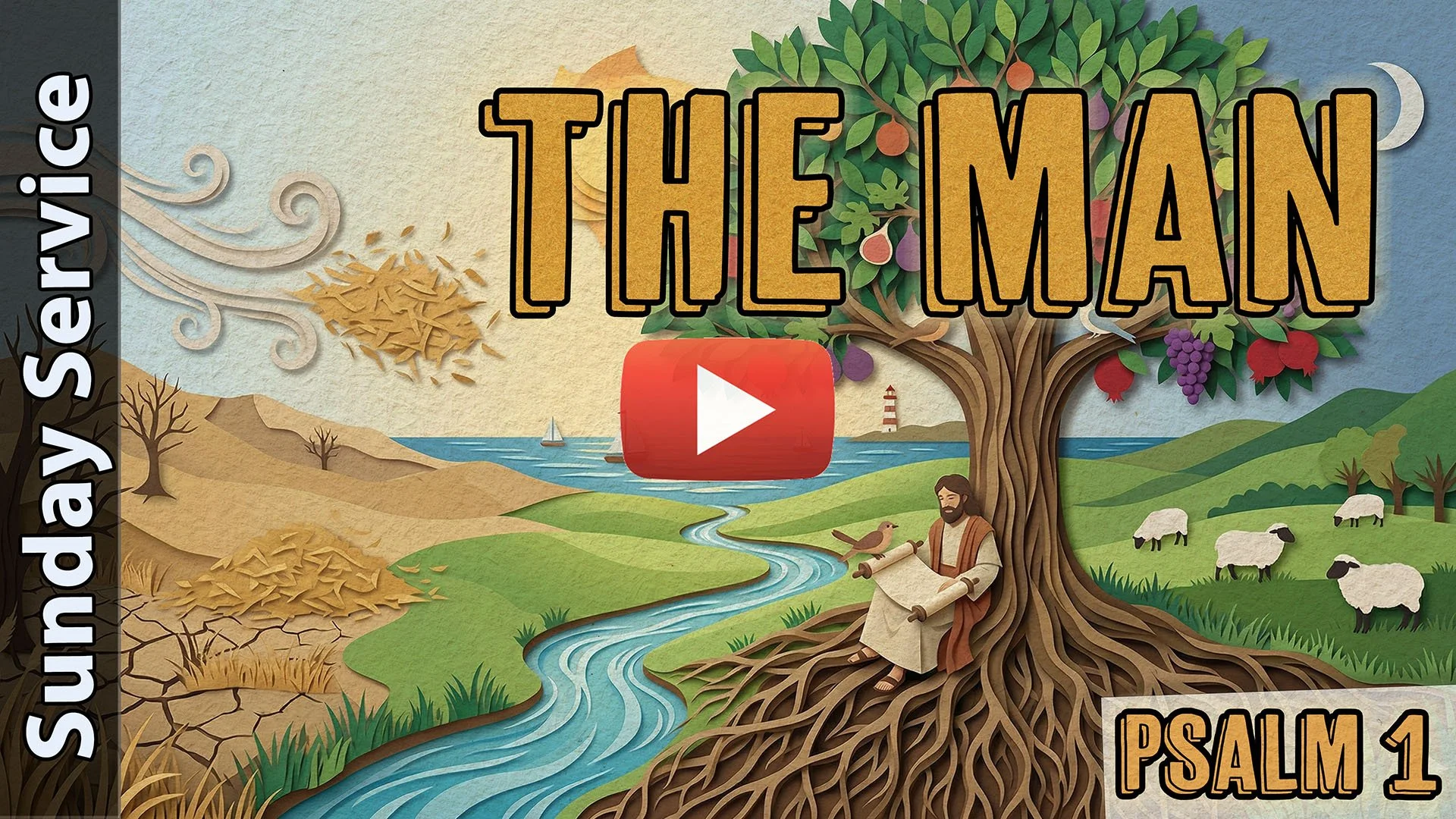
The Bible is full of opposites: light/dark, good/evil, life/death, and on and on. To that list we can add saint/sinner. Psalm 1 deals with both the saint and the sinner in each of us while also laying a solid foundation for the entire Psalter. It also introduces us to our Savior.

What Had happened at Grace this week.
![Genesis [Tuesday Bible Study] 10:00am](https://images.squarespace-cdn.com/content/v1/5852f18a20099e30cd2c01dc/a502215c-0fa5-4f83-9cbd-7605b5239368/Bible+Study+2+%2848%29.png)
![[Sunday] Treasure In The Pit - Uproot & Plant - The Book of Jeremiah Ch38](https://images.squarespace-cdn.com/content/v1/5852f18a20099e30cd2c01dc/1791510365268-D3ZBJES5THWDRRFX642V/uproot+5a.jpg)
![Grace At The FLGA President’s Equip Conference [Photos]](https://images.squarespace-cdn.com/content/v1/5852f18a20099e30cd2c01dc/1791512993810-VGZR7F6BTGBK49JQXAJP/PXL_20260930_231025258.jpg)
![[Sunday] I Will - Uproot & Plant - The Book of Jeremiah Ch31](https://images.squarespace-cdn.com/content/v1/5852f18a20099e30cd2c01dc/1790717808062-CSTXC8PAW44RX5SEXPHA/uproot+4a.jpg)
![[Sunday] Day of Infamy - Uproot & Plant - The Book of Jeremiah Ch25](https://images.squarespace-cdn.com/content/v1/5852f18a20099e30cd2c01dc/1790271043490-QRFTFU8K15UYNHMZ98NY/uproot+3a.jpg)

![[Sunday] Den of Robbers - Uproot & Plant - The Book of Jeremiah Ch7](https://images.squarespace-cdn.com/content/v1/5852f18a20099e30cd2c01dc/1789739183593-XLA06FKIUDVQKTY4AYZ9/uproot+2a.jpg)
![[Sunday] Creation Day 8 - Rest The Week](https://images.squarespace-cdn.com/content/v1/5852f18a20099e30cd2c01dc/1775766340384-5MXXACTZNMYUEFDELPA9/The+Week+8a.jpg)
[Sunday] Creation Day 8 - Rest The Week
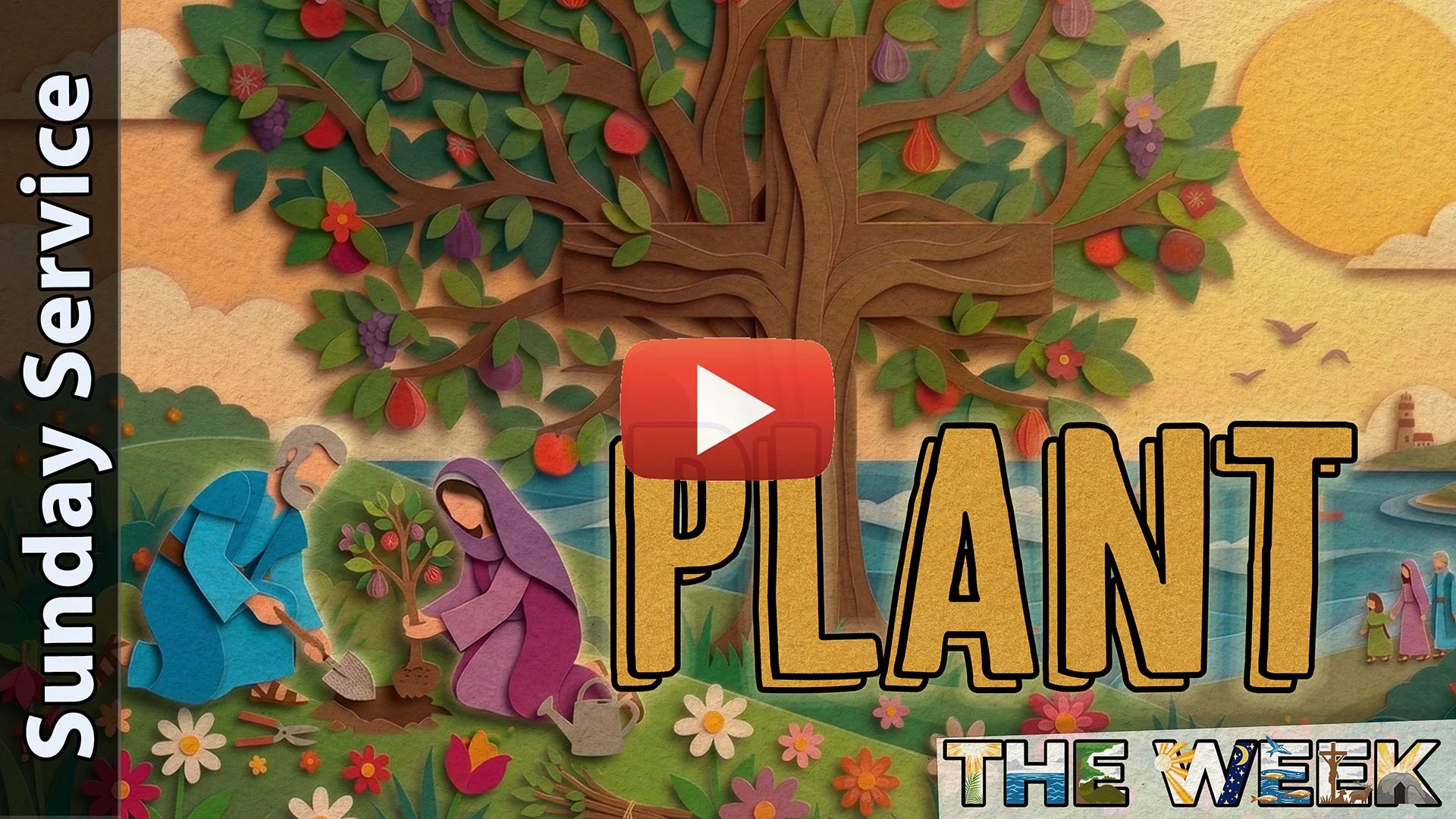
When the joy of Easter meets the chaos of daily life, we don't need to panic. Jesus, the true Creator-Gardener, has secured our future, which frees us to plant seeds of hope right in the middle of the mess.
When the joy of Easter meets the chaos of daily life, we don't need to panic. Jesus, the true Creator-Gardener, has secured our future, which frees us to plant seeds of hope right in the middle of the mess.
Questions for the Week: Creation Day 8: Plant
Read John 20:11-18. Where in your life is it currently difficult to see Jesus at work, and how does remembering He is the "Gardener" (gently cultivating and bringing life back to His creation) change your perspective?
Read Revelation 21:1-6. When the "sea" is raging (stress, illness, conflict), we are sometimes tempted to try and save ourselves by taking control, which only creates more chaos. Jesus has handled the sea and saved you by his grace. How does resting in this grace give you peace?
Read Jeremeiah 29:4-14. It’s been said by the church, sometimes attributed to Martin Luther, “Even if I knew that tomorrow the world would go to pieces, I would still plant my apple tree.” What is one specific “apple tree” you can plant for someone this week?
What Had happened at Grace this week.
![[Sunday] The Seed Sprouts - Uproot & Plant - The Book of Jeremiah Ch52](https://images.squarespace-cdn.com/content/v1/5852f18a20099e30cd2c01dc/1792092642677-KD8F9NU9SFMPONI6LCG4/uproot+6a.jpg)
![[Easter] Creation Day 7 - Rest The Week](https://images.squarespace-cdn.com/content/v1/5852f18a20099e30cd2c01dc/1775074168095-82WENI1I4DA222SDE8UE/The+Week+7a.jpg)
[Easter] Creation Day 7 - Rest The Week
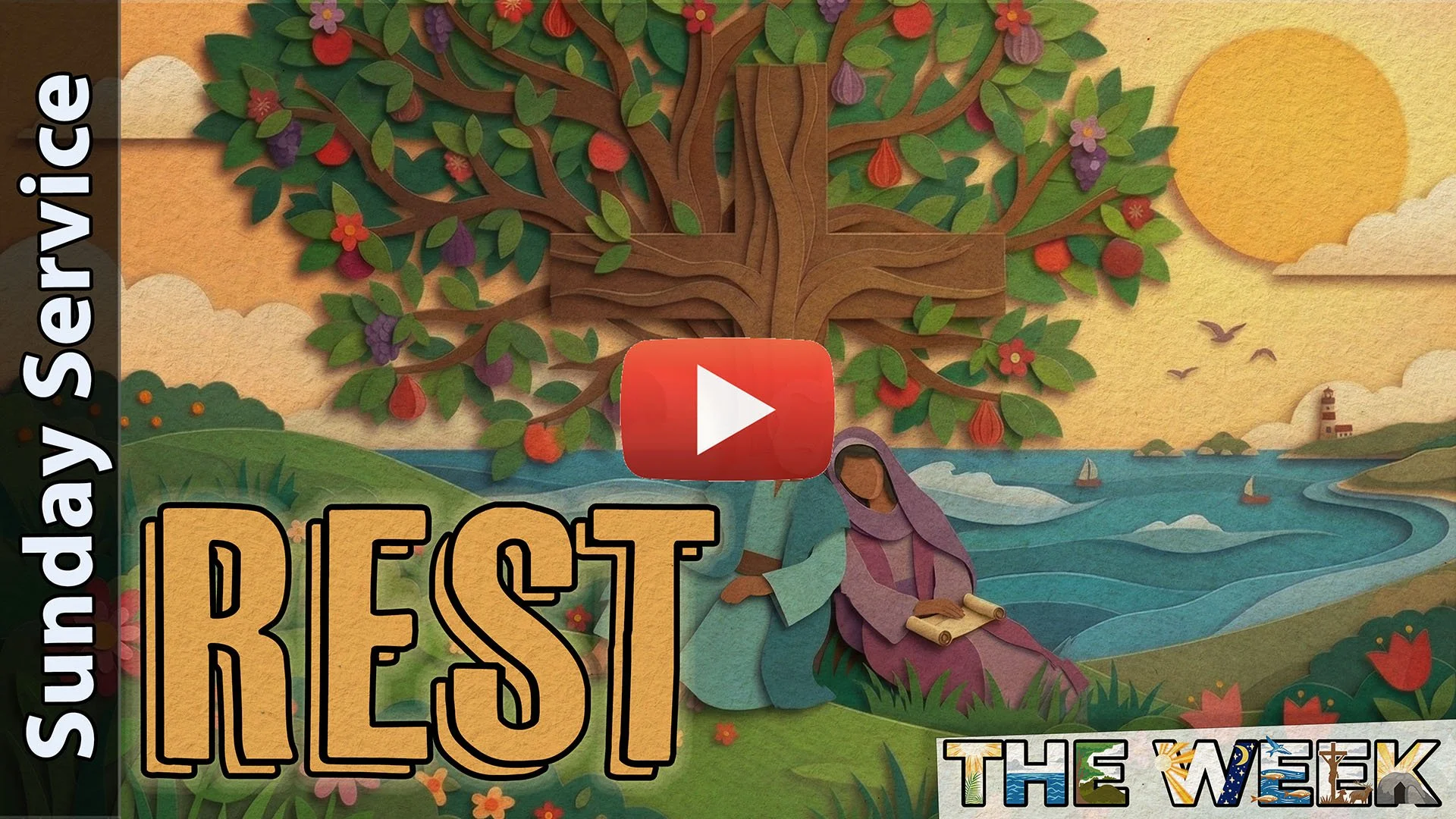
Jesus' cry of "It is finished" echoes God's seventh-day rest. Because the tomb is empty, the work of putting the world back together is complete. You can stop trying to fix your own brokenness and finally just breathe and rest.
Jesus' cry of "It is finished" echoes God's seventh-day rest. Because the tomb is empty, the work of putting the world back together is complete. You can stop trying to fix your own brokenness and rest.
Questions for the Week: The Week: Day 7 Rest
What is an "unfinished project" (literal or figurative) in your life right now that is robbing you of your peace and rest?
Read Luke 23:50-24:12. The women at the tomb were so focused on their grief and their incomplete tasks that they initially missed the miracle in front of them. The angel asked, "Why do you seek the living among the dead?" How do we sometimes act like those women, focusing only on the dark, broken parts of life instead of the hope of Jesus?
It is powerful to realize that Jesus' final cry on the cross uses the same word as God finishing the six days of creation. How does knowing that the work of your salvation is 100% "finished" change the way you view your own daily striving and spiritual performance?
The world says we can only rest when everything is fixed, but the resurrection means we can rest right in the middle of our mess. How can you practically "breathe and rest" this week, even with unresolved circumstances?
What Had happened at Grace this week.
![[Good Friday] Tohu Vavohu The Week](https://images.squarespace-cdn.com/content/v1/5852f18a20099e30cd2c01dc/1774905300678-2BEG2XM429JZK7ZSGKCI/The+Week+GFa.jpg)
[Good Friday] Tohu Vavohu The Week
in the crucifixion of our lord its as if the creation itself is rolled back to the beginning.
Good Friday
Noon & 7PM
Noon Live Stream
in the crucifixion of our lord its as if the creation itself is rolled back to the beginning.
What Had happened at Grace this week.
![[Sunday] Creation Day 6 - Image of God, The Week](https://images.squarespace-cdn.com/content/v1/5852f18a20099e30cd2c01dc/1774573315831-KRAOI22SKZR6IVVGLBW3/The+Week+6a.jpg)
[Sunday] Creation Day 6 - Image of God, The Week
We shattered God's image by trying to be our own gods. But on the cross, Jesus took our brokenness upon Himself, dying and rising to restore the true image of God within us.
We shattered God's image by trying to be our own gods. But on the cross, Jesus took our brokenness upon Himself, dying and rising to restore the true image of God within us.
Questions for the Week: The Week: Day 6 Image of God
We shatter God's image when we try to be our own gods by serving our own desires rather than reflecting His love. In what areas of your life (work, relationships, finances) are you most tempted to act as your own god?
Read Matthew 27:45-54. On Palm Sunday, Jesus said if the people were silent, the stones would cry out. On Good Friday, as the Creator died, the earth quaked, and the rocks literally split. How does viewing the crucifixion as a cosmic, creation-shaking event change the way you read the Good Friday story?
Read Genesis 1:24-31. God gave mankind dominion on Day 6, but we abused it. Jesus, the true image of God, showed that real divine dominion looks like taking the posture of a servant. How does Jesus' example on the cross challenge the world's definition of power and success?
Because of the cross and the empty tomb, Jesus has breathed His Spirit into us, restoring the image of God in us. What are practical ways you can actively reflect the restored image of God to someone in your life this week?
What Had happened at Grace this week.
Job | Lent Wednesday Services
Job | Questioning God’s Wisdom
Wednesday Lent Services
5:30 Dinner
6:30pm Service & Stream
March 25th
Click the Image to Watch Live Stream
Reading Plan
February 25th | Job Chapter 2
March 4th | Job Chapter 3
March 11th | Job Chapter 19
March 18th | Job Chapter 38
March 25th | Job Chapter 42
March 18th
Job Chapter 38
March 11th
Job Chapter 19
March 4th
Job Chapter 3
Feb 25th
Job Chapters 1-2
![[Sunday] Creation Day 5 - Washing Fish, The Week](https://images.squarespace-cdn.com/content/v1/5852f18a20099e30cd2c01dc/1773867107336-7QJMU6HUDIYD18DY4T9N/The+Week+5a.jpg)
[Sunday] Creation Day 5 - Washing Fish, The Week
God fills the chaotic seas with life and still comes in the midst of chaos to bring life and love.
-
Main Theme:
The central theme of the sermon, delivered on March 22, 2026, is that God does not run from chaos but enters into it to bring life, order, and love. Using the fifth day of creation as a framework, the speaker illustrates how God fills the chaotic seas with life (fish) and the sky above it with creatures that soar on His Spirit (birds). This act of creation is presented as a pattern for God's redemptive work, culminating in Jesus, who enters the chaos of human sin and suffering to bring forgiveness and peace.
Key Biblical Passages:
Genesis 1:20-23: This is the core text, describing the fifth day of creation. God commands the waters to "teem with living creatures" and the sky to be filled with birds. This act is seen as God speaking life directly into the chaos (symbolized by the sea).
John 13:1-5, 34-35: This passage details Jesus washing his disciples' feet during the Last Supper. Its relevance is in showing Jesus entering into a chaotic situation—knowing his betrayal and death are imminent—and responding not with power, but with servanthood and love. He uses water, the symbol of chaos, to cleanse and serve. He then commands his followers to love one another, filling the chaos with a new purpose.
John 20: The speaker references Jesus appearing to the disciples in the upper room after the resurrection. He appears with his scars (the marks of chaos) still visible and breathes peace on them, connecting to the "breath" or "spirit" that keeps the birds aloft.
Exodus 19:4: "I carried you on eagle's wings..." This verse is used to illustrate how God lifts His people above chaos. The speaker humorously clarifies that the original word likely refers to a vulture or buzzard, emphasizing the point that God uses what is present to elevate His people on the "wind of the spirit."
Main Ideas:
Creation as a Redemptive Pattern: The sermon series, "The Weak," frames the creation story as a pattern for God's salvation. It begins with darkness and chaos (the unbound sea), which God systematically orders (Day 1: light, Day 2: sky, Day 3: land).
The Sea as a Symbol of Chaos: In the ancient Hebrew mindset, the sea represented chaos, danger, and disorder. Therefore, God's actions toward the sea symbolize His power over all that is broken and fearful in the world.
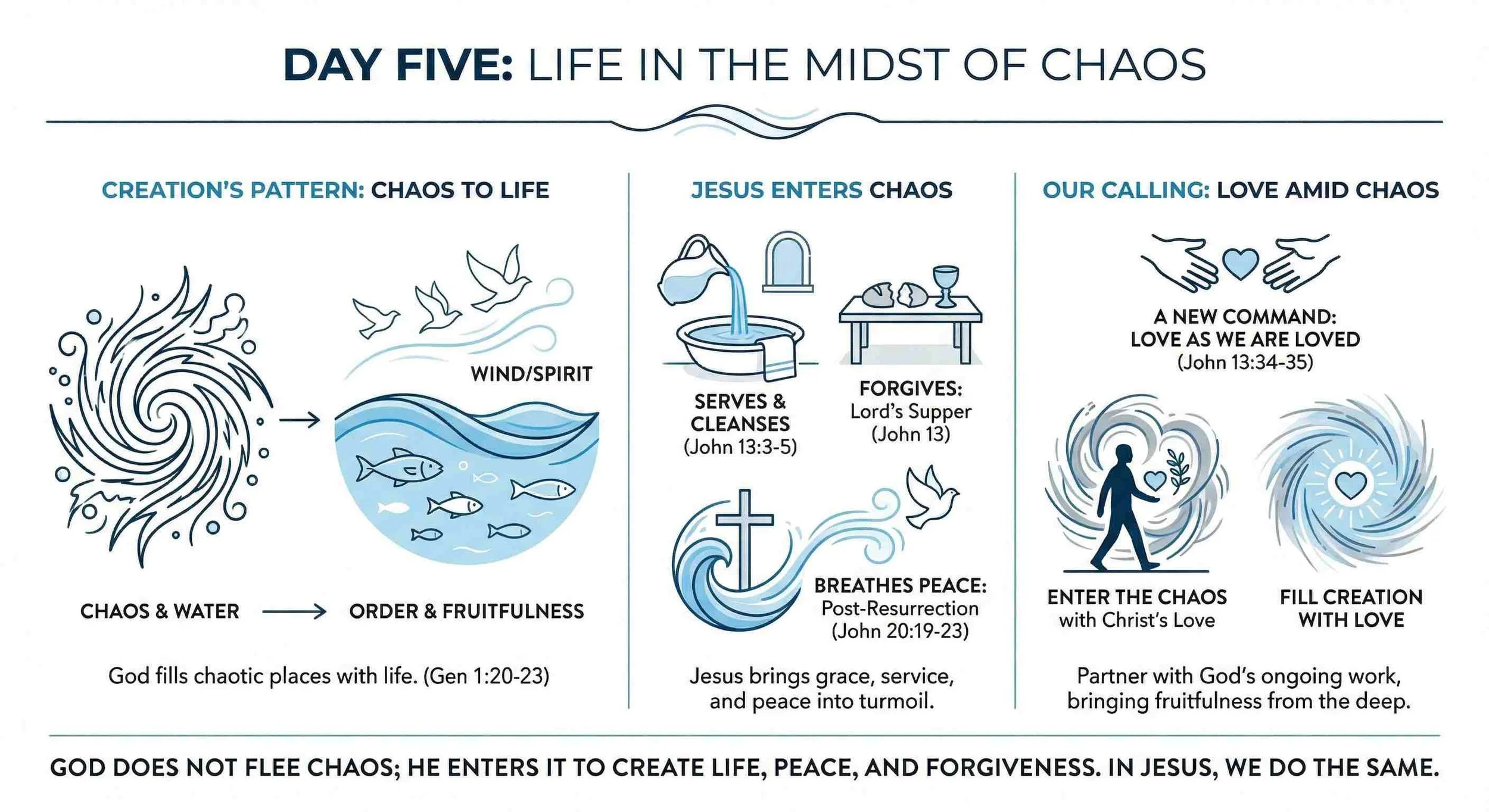
Day 5: Life in the Midst of Chaos: Unlike the first three days which bound the chaos, Day 5 shows God filling the chaos with life. He creates fish and great sea creatures within the chaotic waters, demonstrating that He works from the inside out, bringing fruitfulness even in difficult places.
Jesus Embodies the Day 5 Principle: Jesus is the ultimate example of God entering chaos. He doesn't avoid the pain and betrayal of Holy Week. Instead, He steps into it to serve, wash feet, and establish a meal of forgiveness (the Lord's Supper) right in the face of his impending death.
Two Responses to Chaos (Birds and Fish):
The Fish: Represent God speaking life into the very heart of our struggles, creating something good and fruitful where it seems impossible.
The Birds: Represent God lifting us above the churning waters of chaos, giving us peace and a new perspective as we are carried by the "wind" or "breath" of His Spirit.
Illustrations or Examples:
Avoiding Someone in Walmart: The speaker illustrates our natural human tendency to avoid chaos by describing seeing someone you're in an argument with at the store and immediately turning down another aisle (e.g., the bread aisle) to hide. This contrasts with Jesus, who moves toward the chaos.
Passover and the Red Sea: The sermon connects the Last Supper to the Passover festival, reminding the audience that Passover itself celebrates God rescuing His people from the chaos of slavery in Egypt and parting the chaotic waters of the Red Sea.
Looking Back on Life's Struggles: The speaker shares a personal reflection that while it's hard to see God's work during a chaotic time, looking back reveals how God placed life and fruitfulness within those past struggles, much like finding fish in the sea.
Call to Action/Practical Application:
The primary call to action is to emulate Jesus's response to chaos by filling it with love. Instead of running from difficult situations, we are called to enter into them with a spirit of service and forgiveness.
Receive God's Peace: Recognize that Jesus meets us in the middle of our personal chaos (anxiety, financial stress, family issues) to offer forgiveness and peace, just as He did for the disciples in the upper room.
Participate in the "Feast of Forgiveness": The Lord's Supper is presented as a tangible, physical reminder that Jesus prepares a feast for us in the presence of our enemies and offers forgiveness in the midst of our sin.
Love One Another: The new command to "love one another" is the way we continue to "fill out creation." When we face chaos in our lives and relationships, our mission is to bring love and forgiveness into that space, showing the world that we belong to Jesus. We are sent out to be agents of love in the midst of the world's deep hurts.
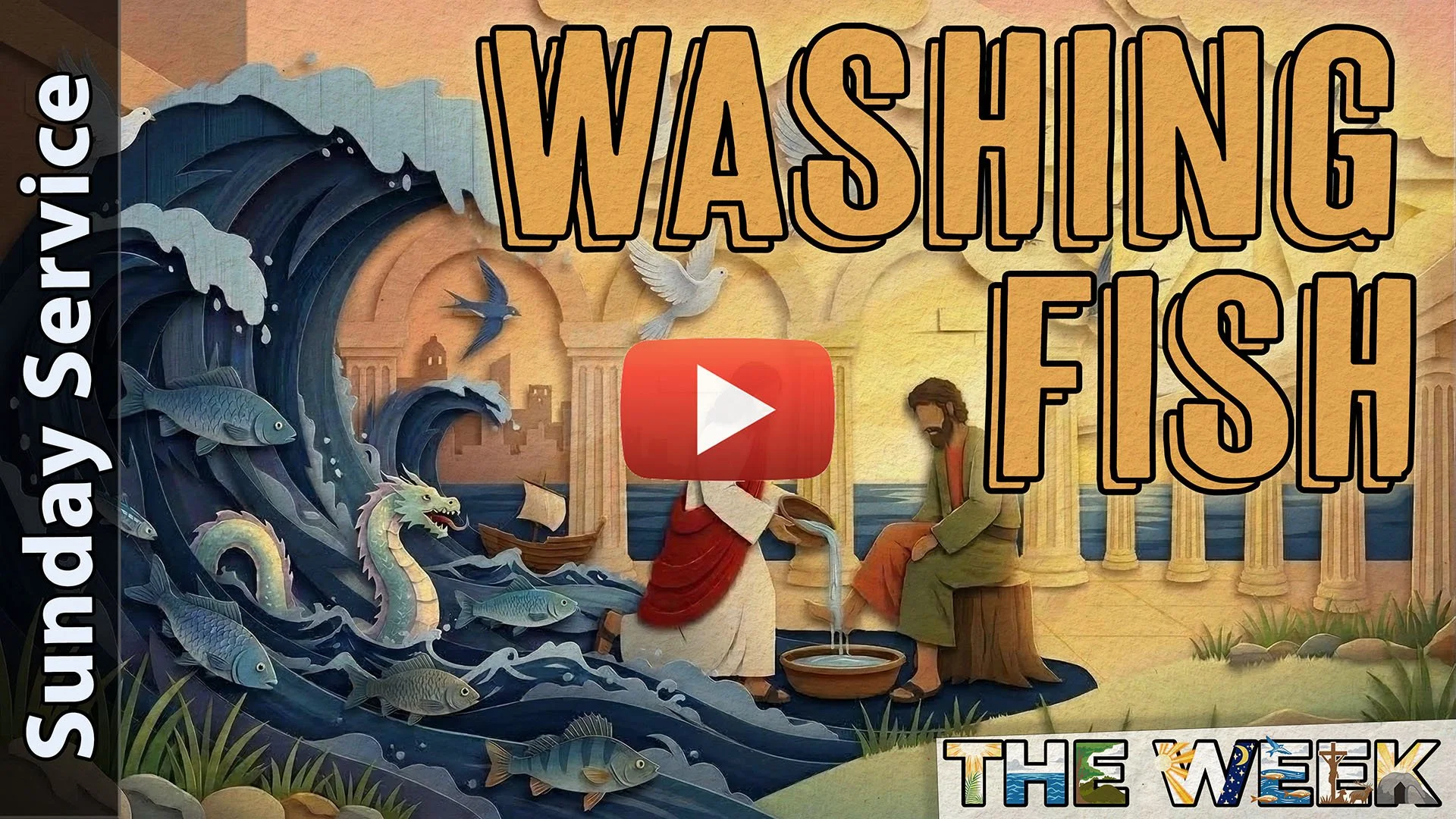
God fills the chaotic seas with life and still comes in the midst of chaos to bring life and love.
Questions for the Week: The Week: Day 5 Washing Fish
When have you assumed a situation, a ministry, or a relationship was "too messy" to get involved with, but God ended up doing something beautiful when you finally stepped in?
Read John 13:1-25. In the Upper Room, Jesus and the disciples were celebrating the Passover, specifically remembering how God rescued their ancestors by parting the chaotic waters of the Red Sea. Why is it so important for us to intentionally remember and talk about God’s past rescues when we are staring down a new wave of chaos today?
Jesus instituted the Lord's Supper, a feast of forgiveness, at the exact moment humanity was plotting to murder Him, Judas was betraying Him, and His closest friends were bickering over who was the greatest. How does Jesus' ability to offer grace before anyone even apologized challenge the way you handle grudges or conflict in your own relationships?
Jesus gives us a new commandment (to love one another). What is one practical way you can bring a sense of love into a chaotic environment (like a stressful workplace, a tense family text thread, or your neighborhood) this week?
What Had happened at Grace this week.
![[Sunday] Creation Day 4 - Day or Hour, The Week](https://images.squarespace-cdn.com/content/v1/5852f18a20099e30cd2c01dc/1773356947484-4RY25WO3W0HU61E2NMU9/The+Week+4a.jpg)
[Sunday] Creation Day 4 - Day or Hour, The Week
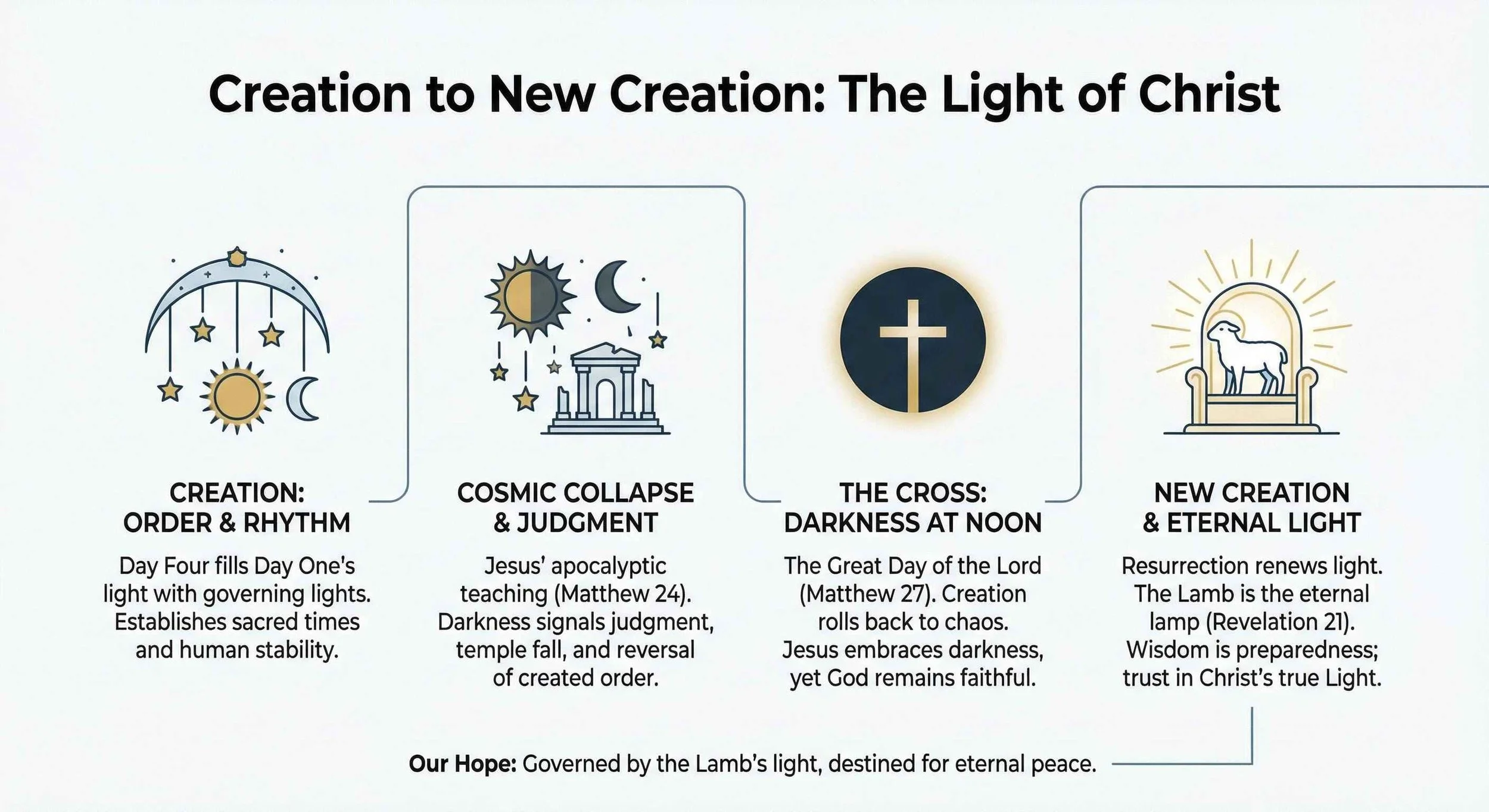
God created the Sun, Moon, and Stars on Day 4 to bring order. But the sun went dark as the Creator took our chaos. You don't have to fix your life in the dark; the Lamb is your light.
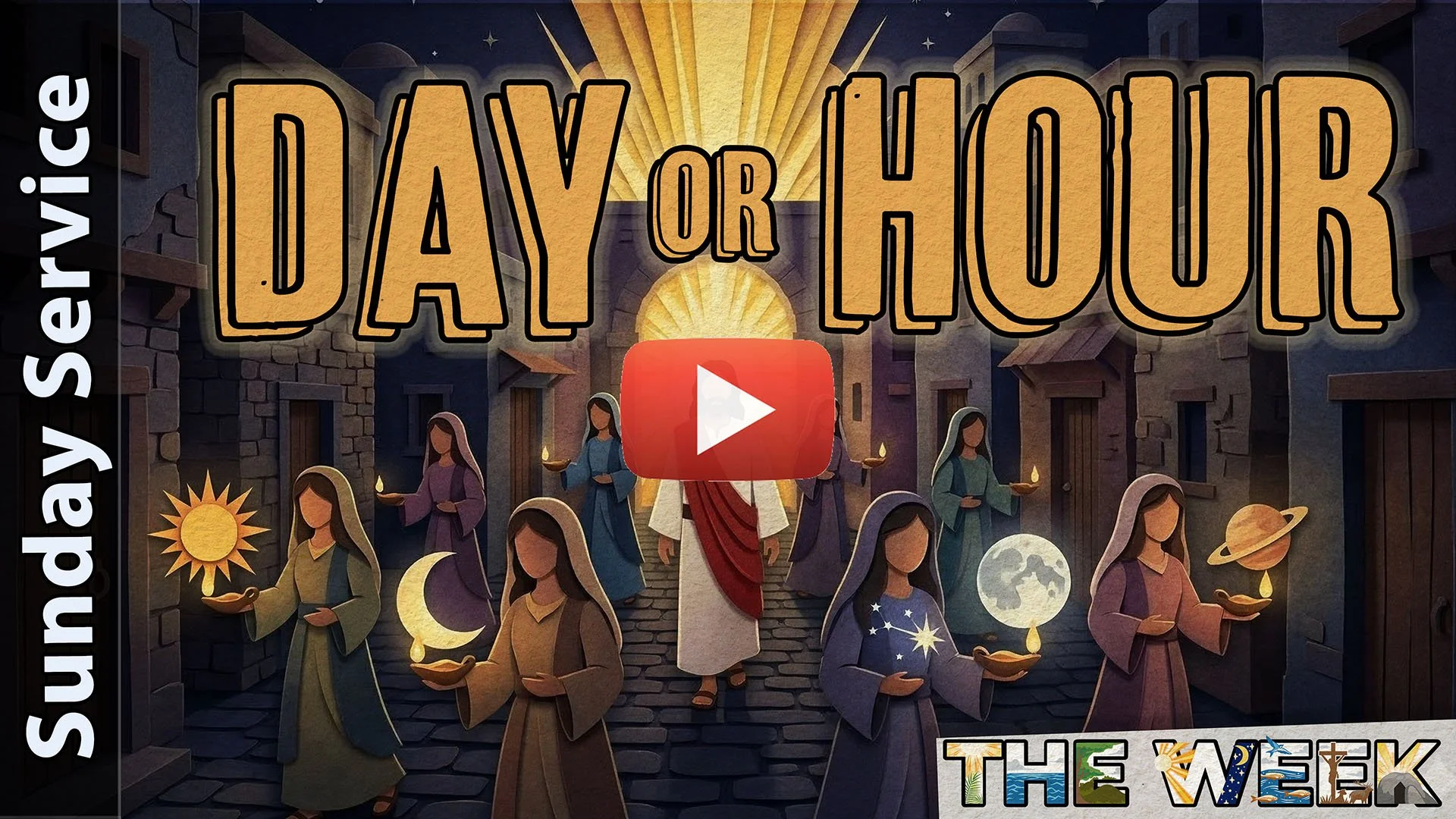
God created the Sun, Moon, and Stars on Day 4 to bring order. But the sun went dark as the Creator took our chaos. You don't have to fix your life in the dark; the Lamb is your light.
-
Sermon Series: The Week
Content Creation Date
March 15, 2026, 10:43:18
Sermon Context
Series concept: Interweaving Holy Week with the seven days of Creation to reveal God’s redemptive arc in the Old Testament and its fulfillment in Jesus.
This sermon focuses on Day Four of Creation and its resonance with Jesus’ apocalyptic teachings in Matthew 22–25, the cross, and the hope of new creation.
Opening Prayer
Gratitude for God’s goodness, holiness, and presence amid chaos and distress.
Request that the sermon reflect God’s will for His people.
Review of Previous Weeks: Days 1–3 of Creation
God’s creative acts counter the “tohu vavohu” (formless and void; wild and waste) by bringing order and life.
Connections to Holy Week:
Day 1: “Let there be light” corresponds to Jesus’ entry into dark Jerusalem on Palm Sunday.
Day 2: Separation of waters corresponds to Jesus overturning the tables, opening the temple to the blind, hurting, and outsiders.
Day 3: Emergence of dry ground and fruitfulness corresponds to the fig tree incident, revealing the danger of appearing healthy without true fruit.
Day Four of Creation: Filling the Order with Lights
Scripture: Genesis Day Four.
“And God said, ‘Let there be lights in the vault of the sky to separate the day from the night. Let them serve as signs to mark the sacred times, days, and years…’” — Highlighting cosmic order and governance by sun, moon, and stars.
Theological observation:
Days 4–6 “fill” the form placed in Days 1–3. Day Four “fills” Day One’s light with governing lights that establish order and sacred times.
These lights provide rhythm, breathability, and stability to human life.
The Question of Disorder: When Governance Breaks Down
Pastoral application:
Even small disruptions (e.g., time change) can unsettle us; how much more when cosmic order collapses?
Cultural anecdote: Floridians’ dependence on sunlight; Seattle’s low-light environment as an example of emotional impact.
Spiritual implication:
The apocalyptic teachings of Jesus in Matthew 22–25 warn of times when the cosmic order fails and chaos returns.
Jesus’ Apocalyptic Teaching: Matthew 22–25
Scripture: Matthew 24:29–31.
“Immediately after the distress of those days, the sun will be darkened, and the moon will not give its light, and the stars will fall from the sky… Then will appear the sign of the Son of Man… and he will send his angels… and they will gather his elect…”
Key points:
The language of cosmic collapse echoes the creation themes and signals profound judgment and transition.
Jesus situates Himself within the prophetic tradition, not inventing apocalyptic imagery but fulfilling it.
Prophetic Background: Amos and the Day of the Lord
Scripture: Amos 8:9–10.
“‘In that day,’ declares the Sovereign Lord, ‘I will make the sun go down at noon and darken the earth in broad daylight… I will turn your religious festivals into mourning… like mourning for an only son.’”
Interpretation:
Amos frames darkness as judgment tied to sin and rebellion. The “Day of the Lord” is a reversal of Day Four’s order—lights fail, sacred times turn to mourning.
Historical Fulfillment: The Temple and Judgment
Jesus’ fig tree teaching and mountain/temple saying:
“If you have faith… you can say to this mountain… be thrown into the sea.” Interpreted as a prophetic sign regarding the temple’s fate.
Historical note:
The destruction of the temple (c. AD 70) occurred within a generation of Jesus’ words.
For the Jewish people, this felt like cosmic darkness—the collapse of the center of worship and order.
Personal Chaos: Modern Applications
Examples:
Medical diagnoses that plunge us into fear.
Relationship trauma that reawakens pain.
Temptations:
To fight in our strength (“war paint”).
To mislabel darkness as light—especially in politicized or militarized narratives.
Pastoral Warning on Calling Darkness Light
Contemporary note:
Social media giddiness about war or temple-related geopolitics as “signals” for Jesus’ return.
Caution:
We do not know the day or hour; beware of voices that monetize apocalyptic predictions.
Do not baptize destruction as light; remain grounded in the Gospel’s true hope.
The Cross as the Great and Glorious Day of the Lord
Scripture: Matthew 27:45; Psalm 22:1 (echoed by Jesus).
“From noon until three in the afternoon darkness came over all the land.”
“My God, My God, why have You forsaken Me?”
Theological claim:
On the cross, creation “rolls back” into “tohu vavohu”—the lights fail, the clock stops.
Yet God the Father is not far from the Son. Jesus embraces chaos, dies for us, and descends into the darkness.
Resurrection: “Let There Be Lights” Again
Creation echoes:
The Spirit still hovers; the Father’s call renews the light.
Easter is the new dawn—Jesus rises as the true Light, reestablishing order and peace.
Identity and calling:
Who God is: Holy, present, sovereign over chaos, faithful to redeem.
Who you are: Beloved, carried by God’s Spirit, called to trust and be prepared.
How to live: Breathe, do not manufacture light, wait on God’s governance and grace.
Parable of the Ten Maidens: Preparedness in Darkness
Scripture: Matthew 25:1–13.
Ten maidens await the bridegroom; five wise bring oil and are ready for the delay and the night, five foolish assume perpetual daylight and are unprepared.
Clarification:
“Virgin” as a translation of “young maiden.”
Application:
Wisdom is readiness for darkness—trusting God’s provision when rhythms fail.
Foolishness is presuming endless daylight—neglecting serious engagement with faith and discipleship.
Final Hope: New Creation and the Seventh Day
Scripture: Revelation 21:22–23.
“I did not see a temple in the city, because the Lord God Almighty and the Lamb are its temple. The city does not need the sun or the moon… for the glory of God gives it light, and the Lamb is its lamp.”
Eschatological vision:
The temple is fulfilled in God and the Lamb.
Sun and moon become unnecessary—Jesus is the Light, establishing eternal order and peace.
Applications for Today
When your life feels like “tohu vavohu”:
Breathe. God’s Spirit gives breath.
Do not try to manufacture your own light or baptize darkness as light.
Prepare your faith-life for seasons of darkness—practice trust, prayer, community, and Scripture now.
Remember: Jesus took the chaos upon Himself and rose to govern your days with His peace.
Key Points
God’s creation brings ordered light into chaos; Day Four fills Day One’s light with governing lights and sacred rhythms.
Jesus’ apocalyptic teaching echoes the prophets: the Day of the Lord is a reversal of created order, revealing judgment and the need to be ready.
The cross is the great Day of the Lord: darkness at noon signifies creation’s rollback; yet God remains faithful, and resurrection renews light.
Do not call darkness light—avoid apocalyptic speculation and politicized “giddiness” over conflict; cling to the true Light, Jesus.
Wisdom is preparedness: like the five maidens with oil, cultivate a faith that can endure the night, trusting God to say again, “Let there be lights.”
Our identity and hope: We are carried by the Spirit, governed by the Lamb’s light, and destined for a new creation where Jesus Himself is our lamp.
Closing Exhortation and Prayer
Exhortation:
“Breathe; He will carry you through. Everything’s going to be okay, even when it doesn’t seem like it is. Just breathe because He will say, ‘Let there be lights.’”
Prayer:
Thanksgiving for God’s abiding presence.
Petition for readiness in darkness and trust that God will lead us through by His light.
Questions for the Week: The Week: The Week: Day 4 - Day or Hour
A one-hour time change at Daylight Savings Time throws us off. Why do you think human beings are so deeply dependent on rhythm, routine, and the "governors" of our time to feel at peace?
Read Matthew 24:29-31. Jesus warned of a time when the sun and moon would go dark, times when life feels completely chaotic and time seems to stand still. Can you share a time in your life (like a sudden phone call or crisis) when it felt like the "clocks stopped" and everything went dark?
When we hit times of darkness, our temptation is to try and "fix it" by finding or creating our own light, which often just brings more chaos. What does "manufacturing your own light" look like in your life when you are stressed or afraid?
On the cross, Jesus took the total darkness of our sin upon Himself (Matthew 27:45) so that He could be our eternal light (Revelation 21:22-27). How does knowing that Jesus has already conquered the ultimate darkness change how you handle the "dark days" in your current life?
What Had happened at Grace this week.
![[Sunday] Day 3 - Sprout, The Week](https://images.squarespace-cdn.com/content/v1/5852f18a20099e30cd2c01dc/1772739818994-46A7BUR7TZSNODJYB9WX/The+Week+3a.jpg)
[Sunday] Day 3 - Sprout, The Week
We often settle for the mere "leaves of religion" by simply going through the motions, yet the third day of Creation reveals our design to sprout and bear fruit.
We often settle for the mere "leaves of religion" by simply going through the motions, yet the third day of Creation reveals our design to sprout and bear fruit.
-
1. Notes for Your Bible
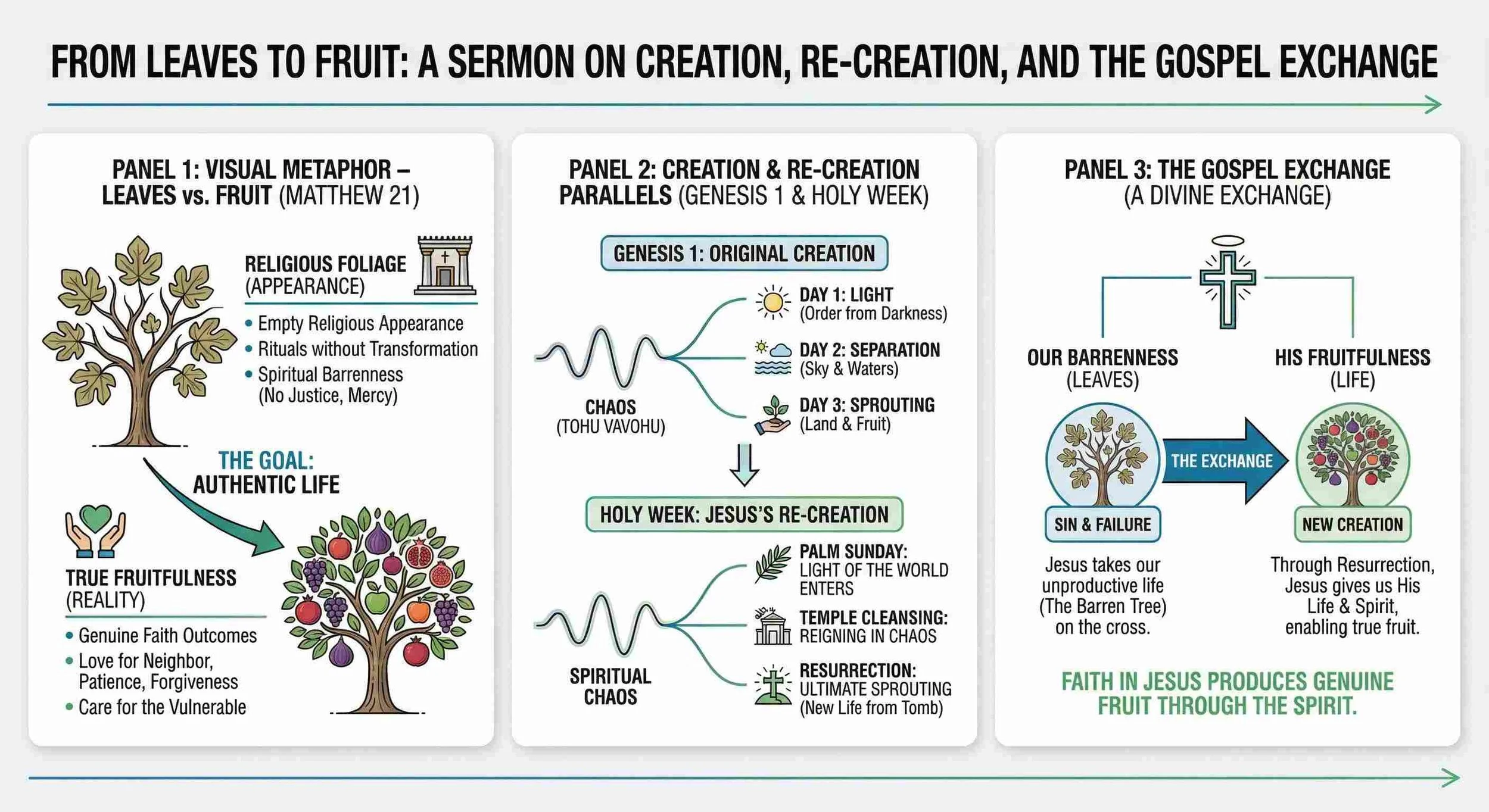
Genesis 1 (The Creation Account): The sermon extensively parallels the first three days of creation with the events of Holy Week. The speaker suggests that the authors of the Gospels, inspired by the Spirit, naturally saw the "re-creation" work of Jesus through the lens of the original creation.
Day 1 (Genesis 1:3, "Let there be light"): This is compared to Jesus, the Light of the World, entering Jerusalem on Palm Sunday. He brings light into a city that believed it was already enlightened.
Day 2 (Genesis 1:6-8, Separating the waters): This is paralleled with Jesus cleansing the temple. By driving out the merchants, Jesus "separated" the chaos from the holy space, reigning in the chaos just as God reigned in the waters to create the sky, allowing people to "breathe" again and find peace.
Day 3 (Genesis 1:9-13, Dry ground appears & vegetation sprouts): This day has two parts. First, God further reigns in the chaotic seas by making dry land appear. Second, the land is commanded to be fruitful, producing vegetation and fruit-bearing trees. This theme of "fruitfulness" becomes the central focus of the sermon.
Matthew 21:19 ("Seeing a fig tree by the road, he went up to it but found nothing on it except leaves. And he said, 'May you never bear fruit again.' And immediately the tree withered."):
Meaning: The withering of the fig tree is not an act of random anger from Jesus. It is a symbolic act. The tree, full of leaves but lacking fruit, represents the religious system of the day, particularly the temple in Jerusalem. It had the outward appearance of life and religiosity ("spiritual foliage") but was spiritually barren and not producing the "fruit" of justice, mercy, and love for neighbor.
Context: Jesus performs this act while walking from Bethany up toward the Temple Mount, making the temple the clear object of this symbolic judgment.
Matthew 21:21 ("...you can say to this mountain, ‘Go, throw yourself into the sea,’ and it will be done."):
Meaning: This is not about literal mountain-moving. The "mountain" refers to the Temple Mount, the center of the fruitless religious system. The "sea" represents the primordial chaos and formlessness ("tohu vavohu") from Genesis 1.
Application: Jesus is teaching that faith in Him allows believers to recognize that fruitless religious structures and outward shows of piety are hopeless and should be "cast away" into chaos. The real hope is not in the building or the rituals, but in God's work of producing genuine fruit in people's lives.
Amos 5:21-24 ("I hate, I despise your religious festivals... But let justice roll on like a river, righteousness like a never-failing stream."):
Purpose: This passage is used as an Old Testament parallel to Jesus's critique of the temple. It demonstrates that God has always been more concerned with the "fruit" of justice, righteousness, and care for the needy than with the "leaves" of religious festivals, sacrifices, and songs. It serves as a mirror, forcing listeners to question if their own worship is just "lip service."
Gospel of John (Resurrection Account): The speaker notes that in John's Gospel, the resurrected Jesus is presented as a "gardener." This connects the resurrection to the Day 3 creation theme of the land sprouting new life and fruitfulness. Jesus's resurrection is the ultimate act of "sprouting" life from the darkness of the tomb.
2. General Summary of Main Points
The sermon intertwines the creation narrative from Genesis 1 with the events of Jesus's final week in Jerusalem to explore the theme of genuine "fruitfulness" versus empty religious appearance. The speaker posits that the Gospel writers naturally saw Jesus's work of "re-creation" through the lens of the original creation.
The central metaphor is the contrast between leaves and fruit, drawn from Jesus cursing the barren fig tree. The leaves represent the outward appearance of religiosity—rituals, magnificent buildings (the temple), and going through the motions of faith. The fruit, however, represents the tangible outcomes of true faith: justice, love for neighbor, patience, forgiveness, and caring for the vulnerable.
The speaker argues that Jesus's actions, like cleansing the temple and cursing the fig tree, were a prophetic judgment on a religious system that was all "leaves" and no "fruit." He calls the congregation to self-examination, warning against the ease of cultivating "spiritual foliage" while neglecting the actual fruit God desires. The ultimate hope is found not in our own efforts to be fruitful, but in the Gospel, where Jesus takes our barrenness upon Himself on the cross (a barren "tree") and, through His resurrection, brings forth new life and true fruitfulness for all who have faith in Him. This new creation is now breaking into the world through the Spirit's work in the church and in the lives of individual believers.
3. Gospel Presentation
The Gospel is taught explicitly towards the end of the sermon.
Time Stamp: The core message begins around 00:16:04 from the start of the recording.
Summary: The speaker explains that while we, like the barren fig tree, are often fruitless and caught in sin, deserving to be "thrown back into the sea" of chaos, the Gospel presents a divine exchange. Jesus takes our "unfruitful, barren tree" (our sin and failure) and exchanges it for His "fruitful tree." He dies on the cross—our "tree of barrenness"—for us. In his death, the Creator of the universe takes on the "regressing of creation," entering the darkness and chaos ("tohu vavohu") of the tomb. But just as God commanded "Let there be light" on Day 1 and "Let the earth sprout" on Day 3, God raises Jesus from the dead, filling His lungs with air again. Through this resurrection, Jesus brings forth the fruit of forgiveness and grace for us. This act initiates a new creation in which believers are joined, enabling them to bear true spiritual fruit through the power of the Holy Spirit.
4. Illustrations and Their Points
Writing the Sermon with a Friend:
Illustration: The speaker recounts a conversation with his friend Mark about the deep parallels between the Genesis creation story and Matthew's account of Holy Week. His friend suggested it wasn't a deliberate, formulaic mapping but rather that the themes of creation were so foundational to the Gospel writers' worldview that they naturally emerged as they wrote about Jesus's work of re-creation.
Point: This idea makes the connection feel more organic and profound. It shows that the work of salvation is intrinsically linked to the work of creation, as both are expressions of who God is.
Citrus Greening Disease in Florida:
Illustration: The speaker describes a disease affecting Florida's citrus trees. A key characteristic is that an infected tree can initially look healthy and full of leaves but will not produce any fruit. Eventually, it begins to die, and farmers must quickly remove it to prevent the disease from spreading.
Point: This serves as a modern-day parallel to the barren fig tree and the temple. A religious life, or a church, can look healthy and vibrant on the outside (many leaves) but be spiritually diseased and fruitless on the inside. This external health is deceiving, and the lack of fruit is the true indicator of its spiritual state.
The Temple Mount's Location:
Illustration: The speaker describes the geography of Jerusalem, noting that the path from Bethany to the city ascends toward the Temple Mount. Jesus's actions against the fig tree and his teaching about casting "this mountain" into the sea happen in the literal shadow of the temple.
Point: This physical context makes the symbolic meaning of Jesus's actions undeniable. The fig tree is a stand-in for the temple, and the "mountain" is the Temple Mount itself. The proximity connects the judgment on the tree directly to the judgment on the fruitless religious system centered at the temple.
5. Interesting Quotes
Quote: "I think it's just who they are. That so interweaved is the theme of the creative order that when they are writing and the Spirit is inspiring their writing about how Jesus saves the world... it just mirrors themes of creation too."
Point: This quote emphasizes that the connection between creation and redemption is not a clever literary device but a deep theological reality. The God who creates is the same God who saves, and His methods of bringing order from chaos and life from nothingness are consistent.
Quote: "It's incredibly easy to grow leaves of religion... to know how to show up on Sunday morning, know when to stand, when to sit, when to laugh at the pastor's jokes... We put a magnificent display of spiritual foliage."
Point: This quote makes the sermon's warning highly personal and practical. It defines "leaves" not just as ancient temple rituals, but as modern church-going habits that can exist without any genuine inner transformation or outward love for others. It challenges the listener to look past their own religious performance.
Quote: "How many times have you read this verse in your lifetime, and you've never thought about the sea of chaos in the creation?... He's saying that if you have enough faith, you can realize that all of that empty platitudes of religion, it all can be thrown away."
Point: This highlights a fresh interpretation of a familiar passage (Matthew 21:21). By linking the "sea" to the chaos of Genesis 1, it transforms the verse from a generic statement about faith into a specific, powerful declaration that faith in Jesus frees us from relying on dead, fruitless religious systems.
Questions for the Week: The Week: The Week: Day 3 - Sprout
We are often tempted to just show the "leaves of religion" (showing up on Sunday, knowing the songs) and mistake them for the actual "fruit" of faith (loving neighbors, patience, genuine repentance). What are some ways we easily mistake having "leaves" for actually bearing "fruit"?
Read Matthew 21:18-22. Have you ever experienced a season in your spiritual life where you looked fine on the outside but felt completely "fruitless" and disconnected from God on the inside?
Read Amos 5:21-24. Why is God so opposed to religious routine that doesn't actually result in loving people or seeking justice?
Where have you seen genuine spiritual fruit in the lives of the people around you recently?
What Had happened at Grace this week.
![[Sunday] Day 2 - Flipping Water, The Week](https://images.squarespace-cdn.com/content/v1/5852f18a20099e30cd2c01dc/1772138373467-Y7QJ564LVSWD3RYWAA7O/The+Week+2a.jpg)
[Sunday] Day 2 - Flipping Water, The Week
When we are drowning in anxiety and noise, Jesus steps in to flip the tables, pushing back the chaotic waters like on day 2 of creation, so we can finally catch our breath.

When we are drowning in anxiety and noise, Jesus steps in to flip the tables, pushing back the chaotic waters like on day 2 of creation, so we can finally catch our breath.
-
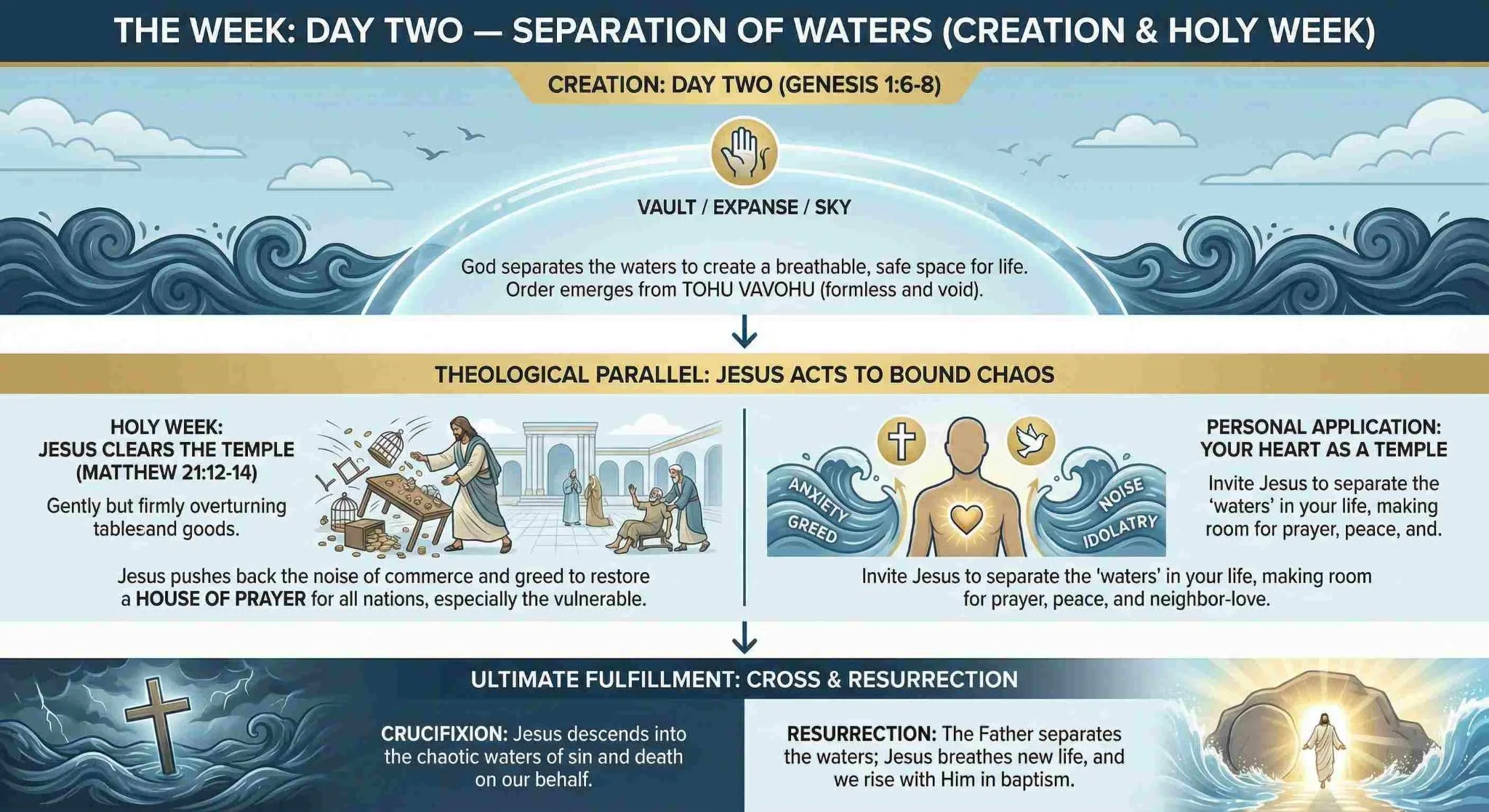
The Week: Day Two — “Separation of the Waters” (Holy Week and Creation Interwoven)
Series Context
Ongoing sermon series: “The Week,” interweaving Holy Week with the seven days of Creation.
Last week: Day One of Creation aligned with Palm Sunday—“Let there be light” as Jesus, the Light of the World, enters dark Jerusalem.
Scripture Read and Framing
Primary text: “And God said, ‘Let the vault between the waters separate water from water.’ So God made the vault and separated the water under the vault from the water above it. And it was so. God called the vault sky. And there was evening, and there was morning—the second day.” — Highlighted as from Genesis Day Two (see NIV rendering).
Translation note:
The pastor affirmed “vault/expanse/sky” (NIV) as a strong translation.
He critiqued translations that render it “heaven” in a way that confuses it with God’s dwelling; insisted this is the sky where the birds fly, not the heavenly throne.
Emphasized the value of consulting multiple translations to see the full sense.
Theological Thesis
Day Two is not trivial meteorology; it is profoundly theological.
God is pictured as establishing boundaries that restrain chaotic waters, creating breathable, safe space for life.
Parallel in Holy Week: Jesus enters the Temple to push back chaos and create a place of prayer and restoration.
Cultural and Personal Illustrations: Water in Its Place vs. Out of Bounds
Personal love for water: tranquil scenes at Daytona Beach as a “slice of heaven.”
When water exceeds boundaries, it becomes terrifying:
2022 hurricanes in Daytona Beach: seawall breaches; pools hanging or eroded; concrete stairs torn off and buried ~15 feet under sand.
St. Louis flooding near Interstate 44: concrete barriers wrapped in plastic sandbagging the freeway; water overtopping the road—an image of destructive chaos.
Universal human instinct: fear of the deep (e.g., dangling toes while treading water after falling off skis); myths of monsters (Leviathan) in the deep.
Hebrew imagination: “the deep” as chaotic, destructive, unpredictable.
Biblical-Theological Development: From Tohu Vavohu to Breathed Space
Creation language: God confronts tohu vavohu (formless and void) by bounding chaos.
Day Two: God separates waters and names the expanse “sky,” granting a breathable space—humanity comes up out of chaos for a gasp of life.
This is a pattern: God orders chaos into life-giving environments.
Holy Week Parallel: Jesus Clears the Temple
Text alluded to: “Jesus entered the temple courts and drove out all who were buying and selling… ‘My house will be called a house of prayer,’ but you are making it ‘a den of robbers.’” — Highlighted as from the Gospel accounts of the Temple cleansing (e.g., Matthew 21:12–14).
Temple design: The Court of the Gentiles intended as the place where the nations, the lame, and the blind could approach God.
Problem: Chaotic “waters” of commerce, greed, noise, animal bleating, and market scales flooded the space meant for the vulnerable.
Theological action: Jesus did not lose His temper; He enacted Day Two—forcefully pushing back the waters of chaos to create a safe expanse for prayer and healing.
Immediate fruit: “The blind and the lame came to Him…and He healed them.” The vulnerable, previously “drowned out,” re-enter and find life.
Who God Is and How He Responds to Humans
God is the Creator who:
Sets firm boundaries against chaos.
Creates spaces where humans can breathe, pray, and live.
Jesus reveals God’s character in action:
He confronts and restrains dehumanizing systems.
He makes room for the vulnerable and heals them.
He transforms acts that appear destructive into new-creation moments of order, peace, and restoration.
Who You Are in God and How to Live
Identity:
In Christ, you are intended to be a temple—a house of prayer (see 1 Corinthians 6:19–20 implied). You are made for peace and rest in God’s presence.
Calling:
Invite Jesus to separate the “waters” in your life—allow Him to push back anxiety, greed, noise, and idolatry.
Protect the vulnerable; ensure your “courts” make space for those in need.
Practice rhythms that sustain a house-of-prayer life: Scripture, prayer, forgiveness, and love of neighbor.
Self-Examination: Our Hearts as Courtyards
Modern chaos floods in:
Constant noise, overloaded schedules, pursuit of wealth, social media churn, simmering anger and anxiety.
Consequence:
The “marketplace of worry” squeezes out prayer, Scripture, forgiveness, and neighbor-love.
We regress into darkness and drown in chaos of our own making.
Gospel hope:
Jesus does not convene committees; He clears the courts. He confronts and removes what drowns us.
His cleansing is an act of creation, not mere destruction.
Cross and Resurrection: The Ultimate Separation of the Waters
Crucifixion as drowning:
In Roman crucifixion, death occurs by asphyxiation—Jesus “drowns” under the chaotic waters of our sin: greed, anxiety, idolatry, rebellion.
Baptismal imagery:
Jesus descends into the waters of judgment and chaos on our behalf.
The Father fulfills the Day Two word—He holds back the waters; Jesus breathes again on Easter.
New life:
Jesus’ breath becomes our breath; His Spirit our spirit.
In baptism, we go under the waters and rise into new life with Christ.
Application for Today’s Culture (American context)
The news cycle, work pressures, family tensions, even neighborhood conflicts can feel like hurricanes and floods tearing apart established places of peace.
God’s word to drowners: “Let the waters be separated”—come up to the expanse of grace where you can breathe again.
Practical implications:
Create intentional “expanse” daily: a quiet, tech-free space for prayer and Scripture.
Name and remove “money changer tables” in your life: practices or patterns that monetize or instrumentalize relationships and worship.
Re-center on those pushed out by noise and busyness: the vulnerable in your community, family, and church.
Receive Jesus’ cleansing as mercy, not condemnation—His goal is your life and breathing room.
Key Texts Highlighted in the Sermon
Genesis Day Two: “Let there be a vault/expanse… God called the vault sky… evening and morning, the second day.” — Highlighted as from Genesis 1:6–8 (NIV emphasis on “sky”).
“My house will be called a house of prayer… but you are making it a den of robbers.” — Highlighted as from Matthew 21:12–13; Mark 11:15–17; Luke 19:45–46 (Temple cleansing).
Themes referenced:
“Tohu vavohu” (formless and void) — Highlighted as from Genesis 1:2.
Leviathan (sea monster imagery) — Highlighted as from Job 41; Psalm 74:14; Isaiah 27:1.
Temple as a house of prayer for all nations — Highlighted as from Isaiah 56:7, echoed by Jesus.
Practical Steps for the Week
Morning and evening “breath prayers” to mark your own “evening and morning”:
Inhale: “Lord Jesus Christ” — Exhale: “Give me Your peace.”
Inhale: “Holy Spirit” — Exhale: “Make me a house of prayer.”
Identify one “table” to overturn this week:
Examples: a social media habit that stirs anxiety; an overpacked schedule; a financial pursuit overshadowing generosity; a harboring resentment.
Re-open the Court of the Gentiles in your life:
Make space for someone on the margins—invite, listen, serve, or pray with them.
Recommit to Scripture and prayer:
Read Genesis 1:1–10 and Matthew 21:12–17; journal where God is separating waters in your life.
Closing Exhortation and Prayer
Exhortation:
When chaos rises like sea billows, hear God’s creative word: “Let the waters be separated.” Come up and breathe in Christ’s peace.
“And there was evening, and there was morning—the second day.” This is good news for those gasping for breath.
Closing prayer (themes):
Thanksgiving for gathering.
Petition for God to bind up chaos, keep us from returning to tohu vavohu, reveal His peace and love, and let us breathe again in His rest.
Amen.
Closing Song (Selected Lines)
“When sorrows like sea billows roll… it is well with my soul.”
“My sin—not in part, but the whole—is nailed to the cross, and I bear it no more. Praise the Lord, O my soul.”
Assurance: Christ has died for my soul; it is well with God.
Summary Takeaways
God bounds chaos to create life-giving space; Jesus enacts this in the Temple and in our lives.
You are God’s temple—made for prayer, peace, and welcome to the vulnerable.
Let Jesus overturn the tables that drown your soul; rise to breathe in the Spirit’s life.
The cross is Jesus’ descent into our drowning; the resurrection is the Father’s separation of the waters so we can live.
Questions for the Week: The Week: The Week: Day 2 - Flipping Water
Read Genesis 1:6-8. What is your favorite memory of being near the water, and have you ever been in a storm that kind of scared you?
Read Matthew 21:12-17 The Temple was supposed to be a place of peace, but it became a chaotic marketplace that drowned out the vulnerable. What are the "chaotic waters" (anxiety, schedules, social media, etc.) that currently flood your own mind and squeeze out your peace and the peace of others?
To the moneychangers, Jesus driving them out of the temple looked like an act of destruction. To the blind and lame, it was an act of creation that gave them room to breathe. Has there ever been a time in your life when God "flipped the tables" on your plans, which felt destructive at the time but ultimately brought you peace?
Jesus drowned in our chaos on Friday so we could breathe anew on Sunday. When the news, your job, or life pressures make you feel like you are going under, how does remembering that Jesus has already conquered the depths help you find rest?
What Had happened at Grace this week.
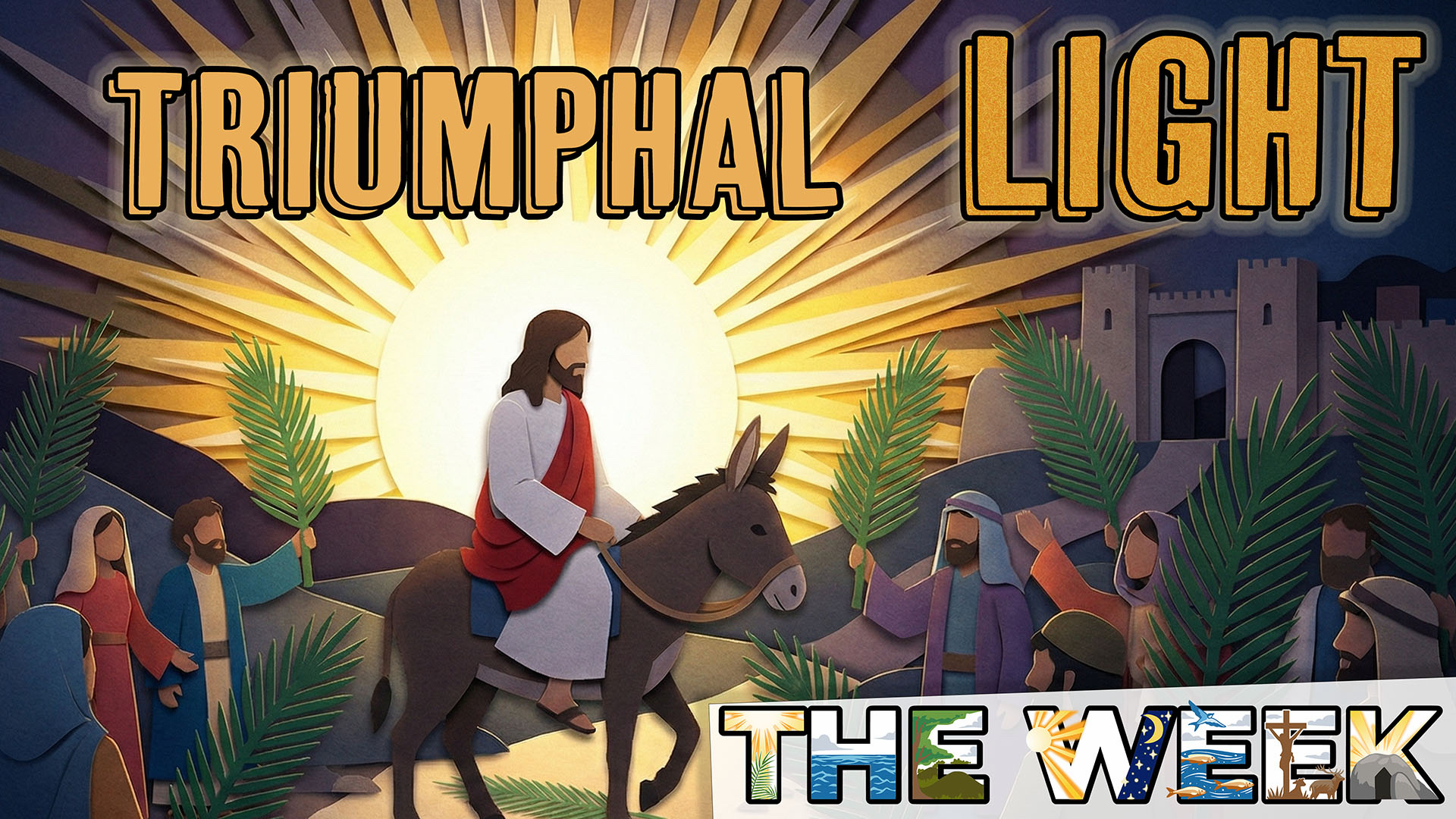
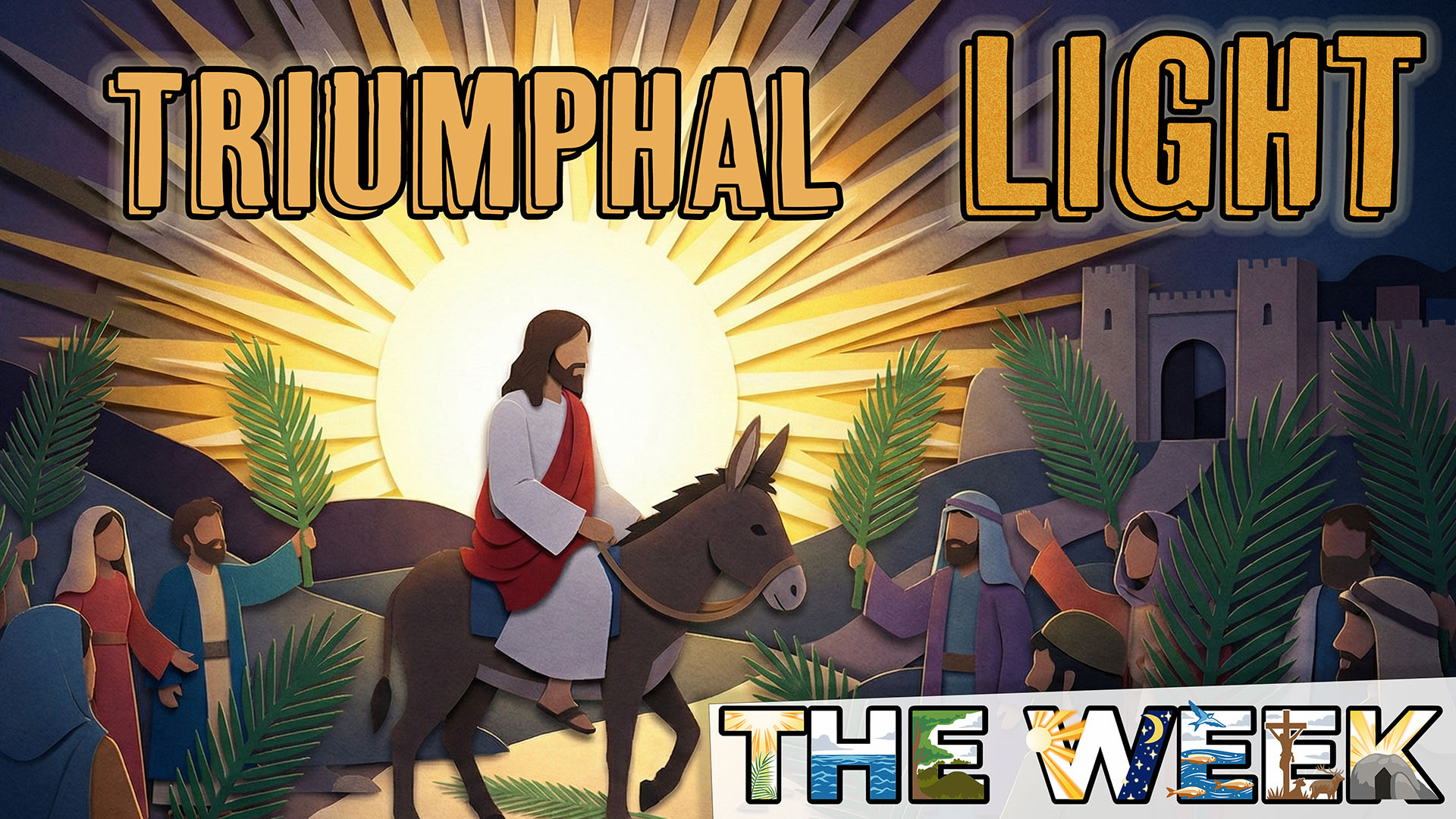
![[Sunday] Day 1 - Triumphal Light, The Week](https://images.squarespace-cdn.com/content/v1/5852f18a20099e30cd2c01dc/1771552956713-TI1XXCI66JVVG8GJHST8/The+Week+1aaaa.jpg)
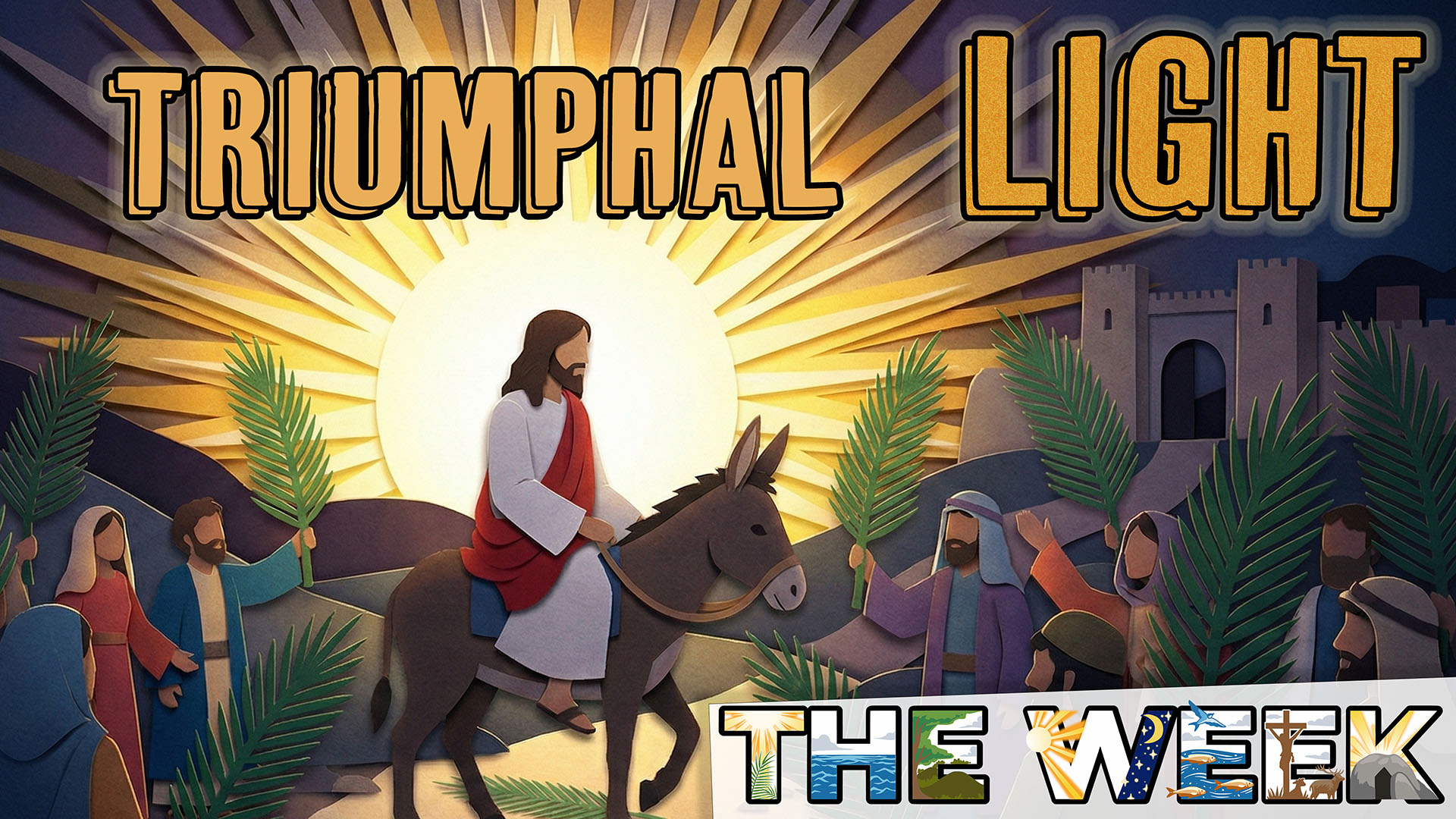
[Sunday] Day 1 - Triumphal Light, The Week
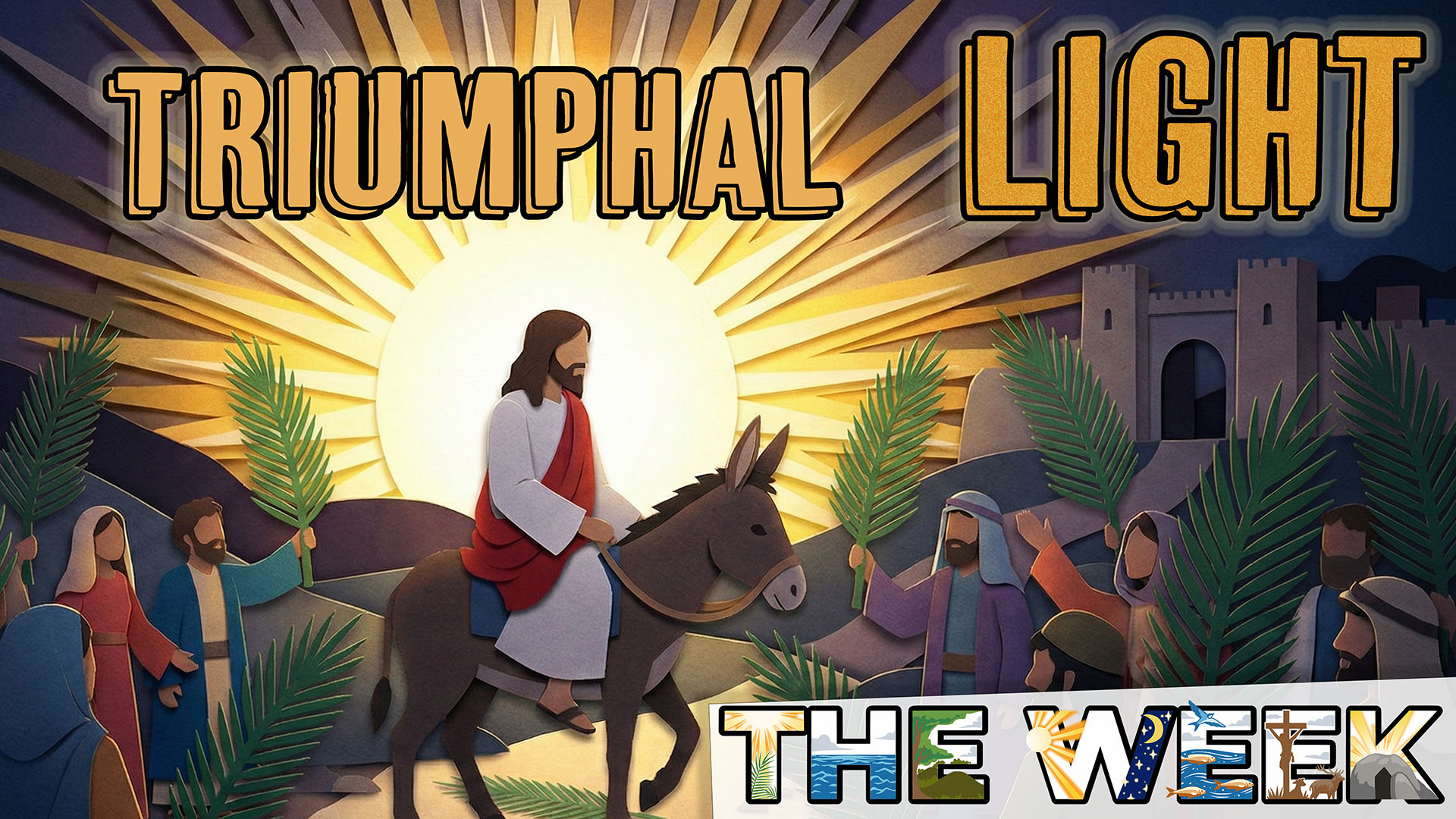
The Triumphal Entry shows us the difference. We chase the 'wins' of this world; Jesus rides into the darkness of this world. We look for success; He brings the Light that saves.
The Triumphal Entry shows us the difference. We chase the 'wins' of this world; Jesus rides into the darkness of this world. We look for success; He brings the Light that saves.
-
This is an AI Summery, some things may be incorrect.
Overview
Sermon series title: “The Week”
Concept: Interweaving the seven days of Creation with the days of Holy Week.
Focus for this sermon: Day 1 of Creation (“Let there be light”) aligned with Palm Sunday.
Aim: To show how God’s creation theme—bringing order and light out of chaos—runs through Scripture and culminates in Jesus’ entry into Jerusalem, His passion, death, and resurrection.
Opening Context: Reading Creation as Theme, Not Only Timetable
Pastor reflects on moving from a strictly literal “six 24-hour days” view to noticing Scripture’s deeper themes.
Key theological insight: God creates by bringing order out of chaos—out of “tohu vavohu” (formless and void).
Example threads across Scripture:
Israel’s journey from Egyptian slavery through the wilderness to the tabernacle/temple—God reorders chaos into worship and presence.
Jesus’ Passion described with cosmic darkness—creation “rolling back”—then resurrection as new light.
Application: Reading Scripture for its patterns helps us see God’s consistent work to bring light out of human and cosmic darkness.
Palm Sunday: Jesus as the Light Entering Jerusalem
Jesus enters Jerusalem at the start of Holy Week; He is the true Light.
Crowd response: “Hosanna to the Son of David!” with cloaks and palm branches (public acclaim of Messiah and Light).
Key question: Are people actually holding the Light—or mistaking their own “lanterns” (agendas) for it?
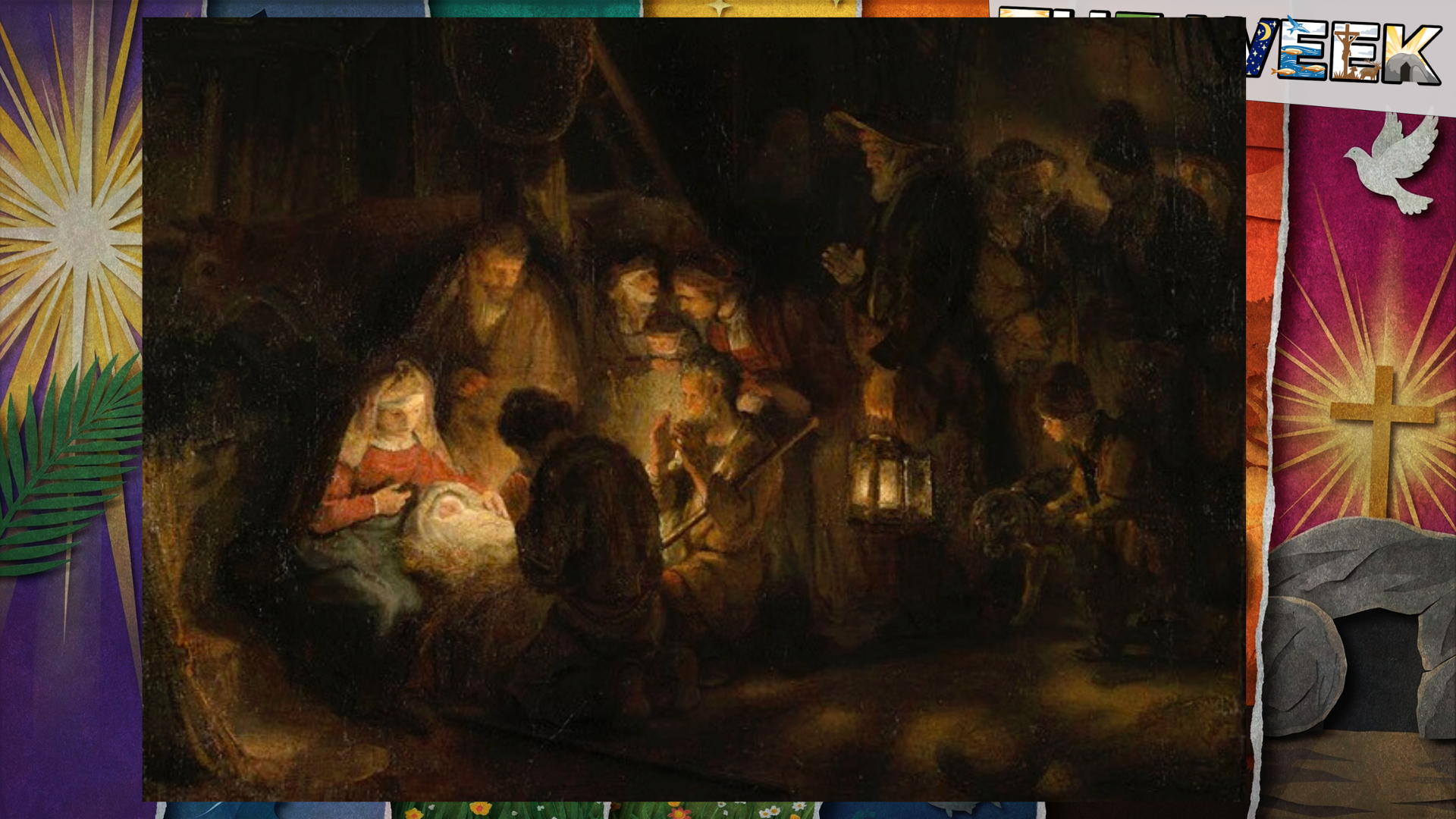
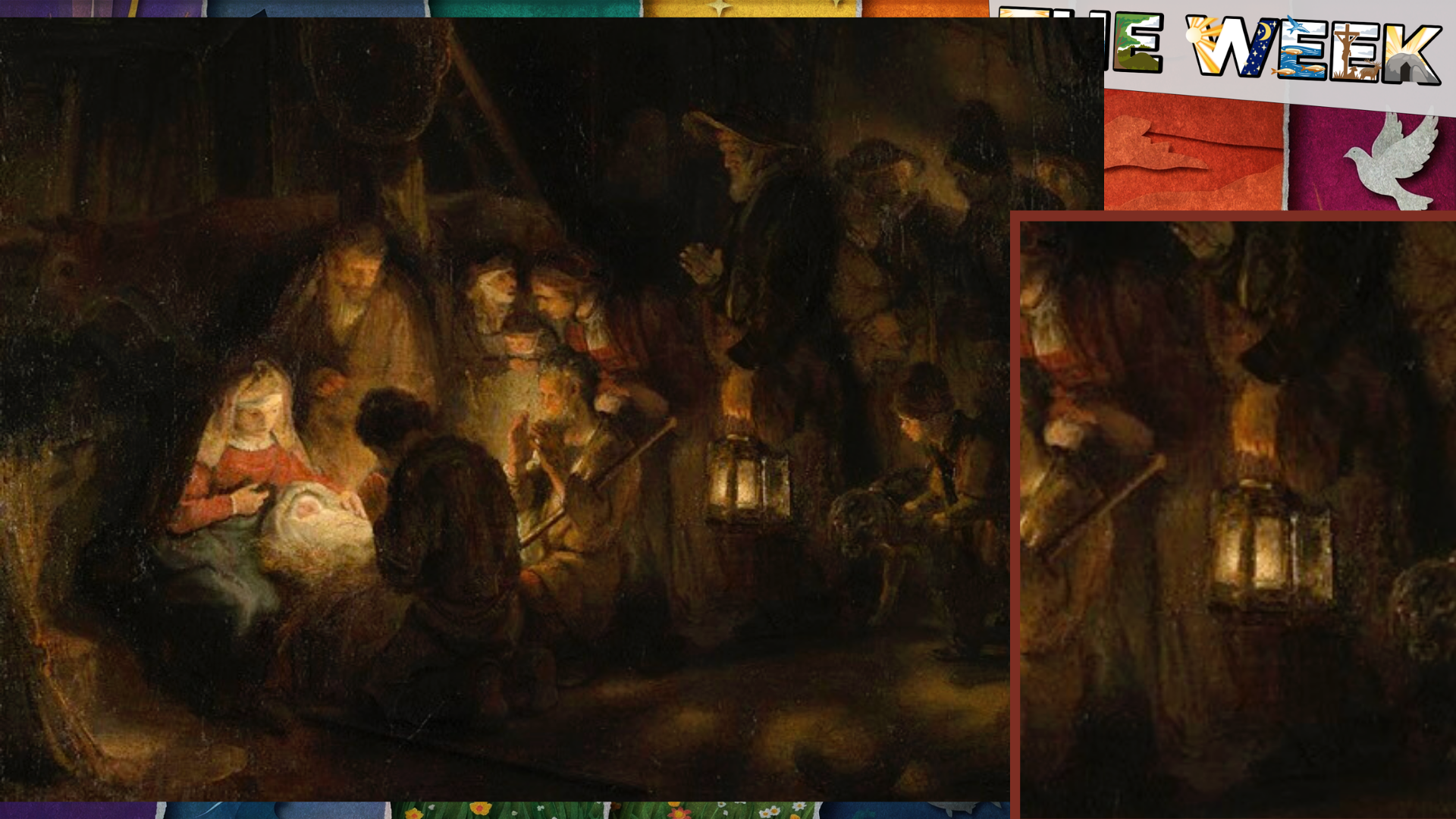
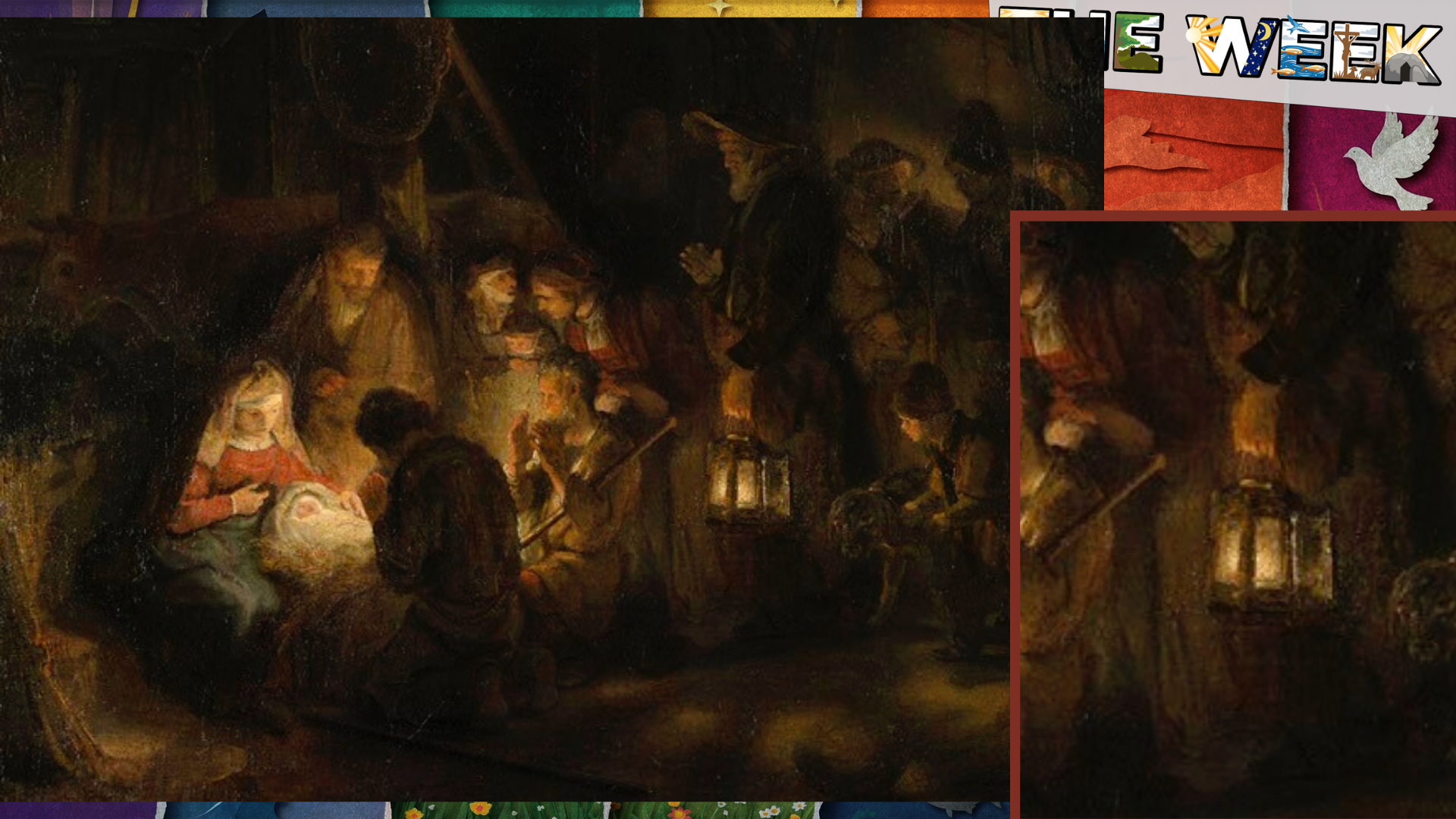
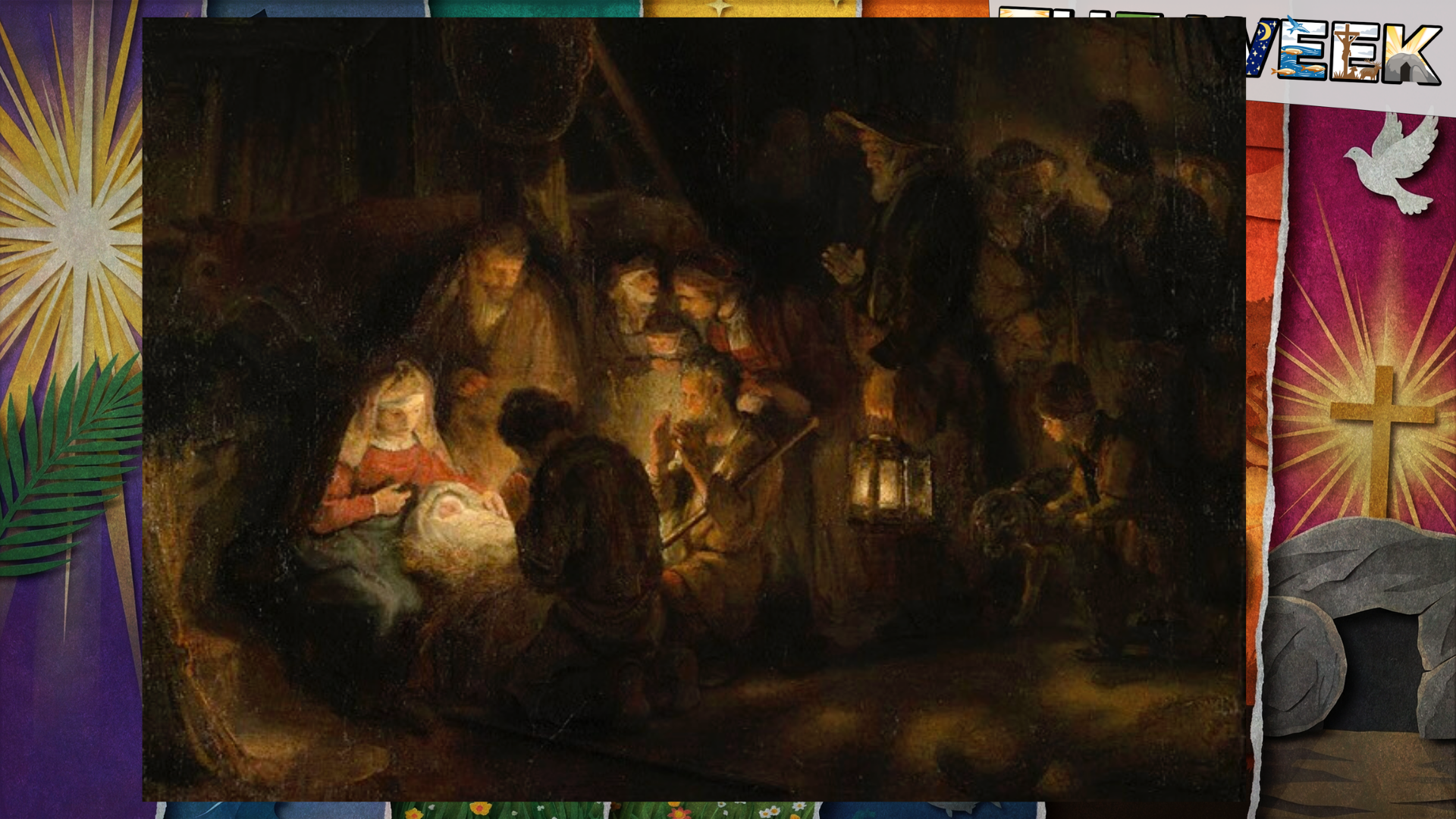
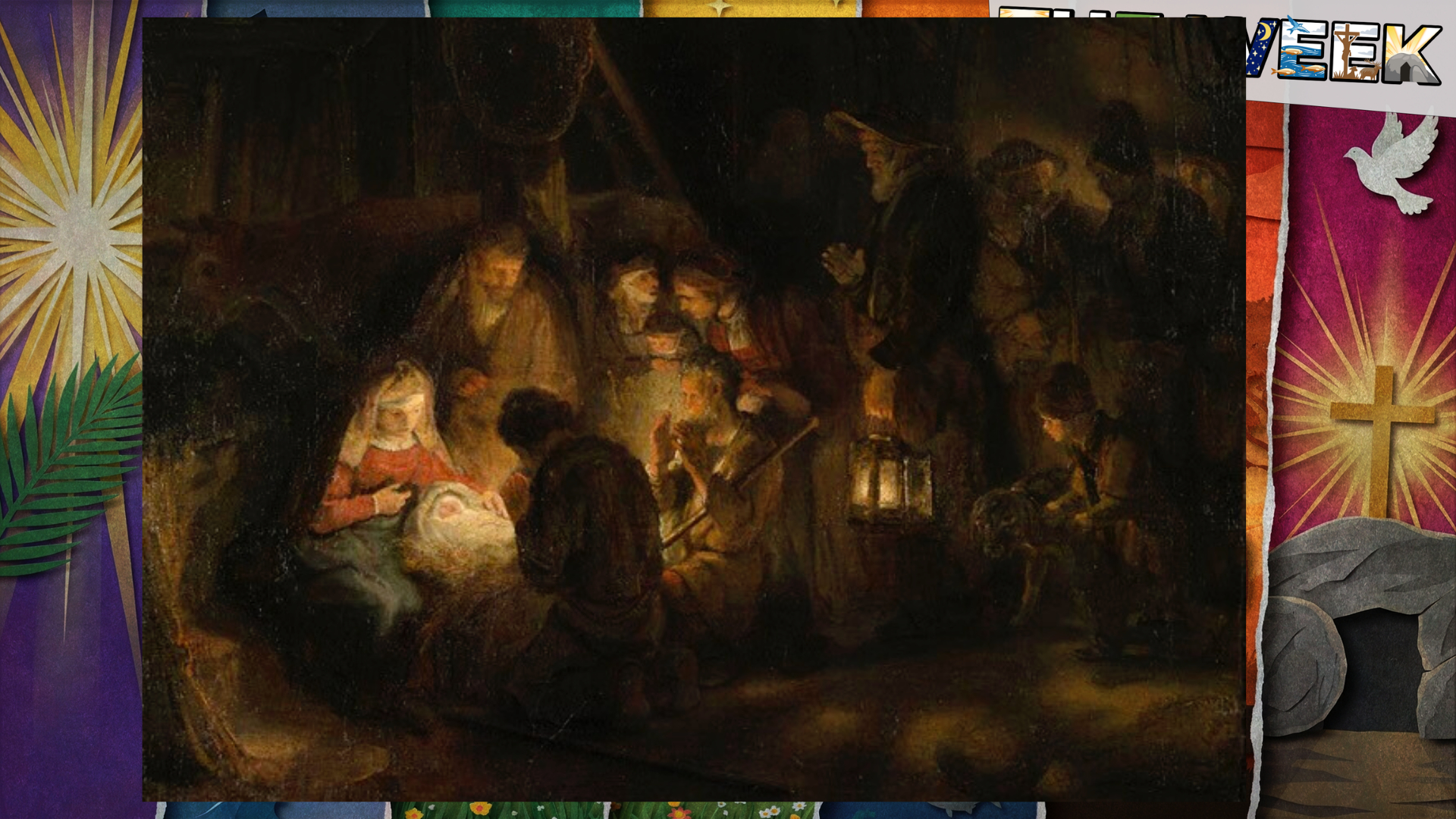
Artistic Illustration: Rembrandt’s “The Adoration of the Shepherds”
Style note: Stark contrast of light and dark (chiaroscuro).
Theological observation:
The baby Christ is the source of light in the painting.
A lantern is present but contributes little light—suggesting humans often think their light originates from themselves.
Application: We frequently try to be “lantern-bearers,” mistaking our own influence, plans, or righteousness as the source of light rather than Christ.
Contrast with Jerusalem and the Pharisees
Jerusalem’s self-image: “shining city on a hill,” self-assured, believing themselves to be the light for the nations.
Pharisees’ posture:
Authority figures insisting they define and control the light for others.
Response to the crowd’s praise: “Teacher, rebuke your disciples” (desiring to silence witness to Jesus).
Jesus’ reply: If praise is suppressed, “the rocks will cry out.”
Application:
Warning against spiritual pride and gatekeeping—confusing stewardship of truth with self-centered control.
Even the enthusiastic crowd can misread Jesus by projecting their agendas onto Him.
Historical Expectation: Judas Maccabeus vs. Jesus
Background: A century earlier, Judas Maccabeus (“the Hammer”) led a rebellion against Greek rule; celebrated with palms and “Hosanna,” entering Jerusalem on a warhorse.
Crowd’s mistaken hope: Jesus as a new Maccabeus—political liberator who will expel Rome and elevate Jerusalem’s status.
Jesus’ actual mission:
Enters on a donkey (sign of humility; fulfills messianic peace rather than war).
Comes not to conquer Rome but to suffer, die, and rise—conquering sin, death, and the grave.
Human Agendas vs. Christ’s Light
Examples of modern “lantern” agendas:
Political victories (“If we win this election, light will come”).
Life scripts (marriage, children, promotions, retirement) treated as salvation.
Seeking control, status, and personal validation.
Outcomes of agenda-driven living:
Division, mistrust, hurt, and darkness rather than true life and peace.
Application:
Recognize where we equate our plans with God’s light.
Repent of idolatry of self, success, and power; receive Christ as the true source of light and peace.
Jesus’ Heart for a Dark City
As Jesus approaches Jerusalem, He weeps over it.
Quotation from Jesus: “If you, even you, had only known on this day what would bring you peace…”
Identity of Jesus:
The Prince of Peace who stands before them, unrecognized.
The Light who enters Jerusalem’s darkness, and ultimately the tomb’s darkness, for our sake.
Christ’s peace:
Not delivered through force or triumphalism, but through His broken body and shed blood—true reconciliation with God.
Creation and New Creation
Day 1 of Creation: “Let there be light.” Evening and morning—the first day.
Holy Week pattern:
Good Friday’s darkness transitions to Easter morning’s light.
Resurrection as God’s “new creation” spoken into the void of death.
Application:
The light of Christ shines into our hearts despite our idolatrous agendas.
He dies and rises for all, bringing order and life into our chaos.
Who God Is, Who We Are, and How We Live
Who God Is:
Creator who speaks light into darkness and order into chaos.
Faithful Redeemer who enters our darkness, weeps over our lostness, and brings peace by sacrifice.
The true source of light—Jesus Christ.
Who God Says We Are:
Beloved yet often misguided people prone to self-reliance and idolatry.
Recipients of His light, mercy, and new creation life through Christ’s death and resurrection.
How We Are to Live:
Humble dependence on Christ as light, not on our “lanterns.”
Pursue peace shaped by Christ’s cross rather than power and agendas.
Worship and witness that point to Jesus’ light, even when others try to silence it.
Scripture References Highlighted
Genesis creation theme: “Let there be light.” — Genesis 1:3
Jesus’ Triumphal Entry: — Matthew 21:1–11; — Mark 11:1–10; — Luke 19:28–40; — John 12:12–19
Jesus’ weeping over Jerusalem: — Luke 19:41–44
“Hosanna” acclamation: — Matthew 21:9; — Mark 11:9–10; — John 12:13
“The rocks will cry out”: — Luke 19:40
Darkness at the crucifixion: — Matthew 27:45; — Mark 15:33; — Luke 23:44–45
Christ’s resurrection and new creation theme: — Matthew 28:1–10; — Mark 16:1–8; — Luke 24:1–12; — John 20:1–18
Key Applications and Examples
Art as theology: Rembrandt’s baby Christ illuminating the scene versus the dim lantern—our tendency to replace Christ’s light with our self-made light.
Cultural examples:
Corporate ladder in Arkansas: promotions pursued as salvation, yet leaving emptiness.
Retirement disillusionment: expecting rest to save, discovering we never learned to rest in God.
Church life example:
The shift from praising to condemning within days—mirrors the crowd’s move from “Hosanna” to “Crucify,” exposing how quickly agendas supplant faith.
Closing Gospel Assurance
The Light of Christ is for you.
The empty tomb is for you.
Hosanna—God saves. Evening gave way to morning; the first day concludes with light.
Good news: Jesus, the true Light, has come, and He brings peace by His cross and resurrection.
The Adoration of the Shepherds by Rembrant

Questions for the Week: The Week: Day 1 - Triumphal Light
In the Rembrandt painting, Adoration of the Shepherds, the man holding the lantern thinks he is bringing light, but the real light comes from Jesus. In what ways do we, like that man, think we are "bringing the light" to the world, when we are actually just holding a dim lantern compared to Jesus?
Read Luke 19:35-44. Why is it often disappointing when God answers our need for peace instead of our desire for victory?
We sometimes turn good things (like wanting a happy family, doing well in school/work, or politics) into "idols" that take the place of God. How can we make sure we are following Jesus' light rather than carrying around our own lanterns?
Jesus conquered sin and death not by fighting back but by letting Himself be broken on the cross. How does Jesus’s humble victory change the way we think about "winning" or "being strong" in our own lives?
What Had happened at Grace this week.
![[Ash Wednesday] Tohu Va Vohu, The Week](https://images.squarespace-cdn.com/content/v1/5852f18a20099e30cd2c01dc/1771357675041-30HE65PQCBUAPY72UXLJ/Ash+Wednesday+aa.jpg)
[Ash Wednesday] Tohu Va Vohu, The Week
God speaks light into our wilderness waste, and ash.
God speaks light into our wilderness waste, and ash.
What Had happened at Grace this week.

The Week | Lent Teaching Series
"From 'Let there be light' to the light of the empty tomb.
From 'Let there be light' to the light of the empty tomb
Reading Plan
Read around the readings for Sunday
2/18/26 - Ash Wednesday - Formless and void
Genesis 1:1-2
2 Corinthians 5:20b–6:10
Luke 4:1-13
2/22/26 - Palm Sunday Let there be Light
Genesis 1:3-5
Ephesians 5:6-15
Luke 19:35-44
3/1/26 The Temple and the separation of the waters
Genesis 1:6-8
1 Cor 14:26-33a
Matthew 21:12-17
3/8/26 - The fig tree and land from waters
Genesis 1:9-13
Colossians 1:9-14
Matthew 21:18-24
3/15/26 - No one knows the hour and Sun, Moon, Stars
Genesis 1:14-19
Matthew 24:29-31
Matthew 25:1-12
3/22/26 - The Birds of the Air and the Fish of the servants waters.
Genesis 1:20-23
Colossians 3:12-17
John 13:1-11, 31-35
3/29/26 Created from the ground and returned
Genesis 1:24-31
Colossians 2:9-15
Matthew 27:45-54
4/5/26 - Easter Rest
Genesis 2:1-4
Colossians 1:15-20
Luke 24:1-12
4/12/26 - The New Creation
Genesis 2:15-25
Revelation 21:1-7
John 20:1-18
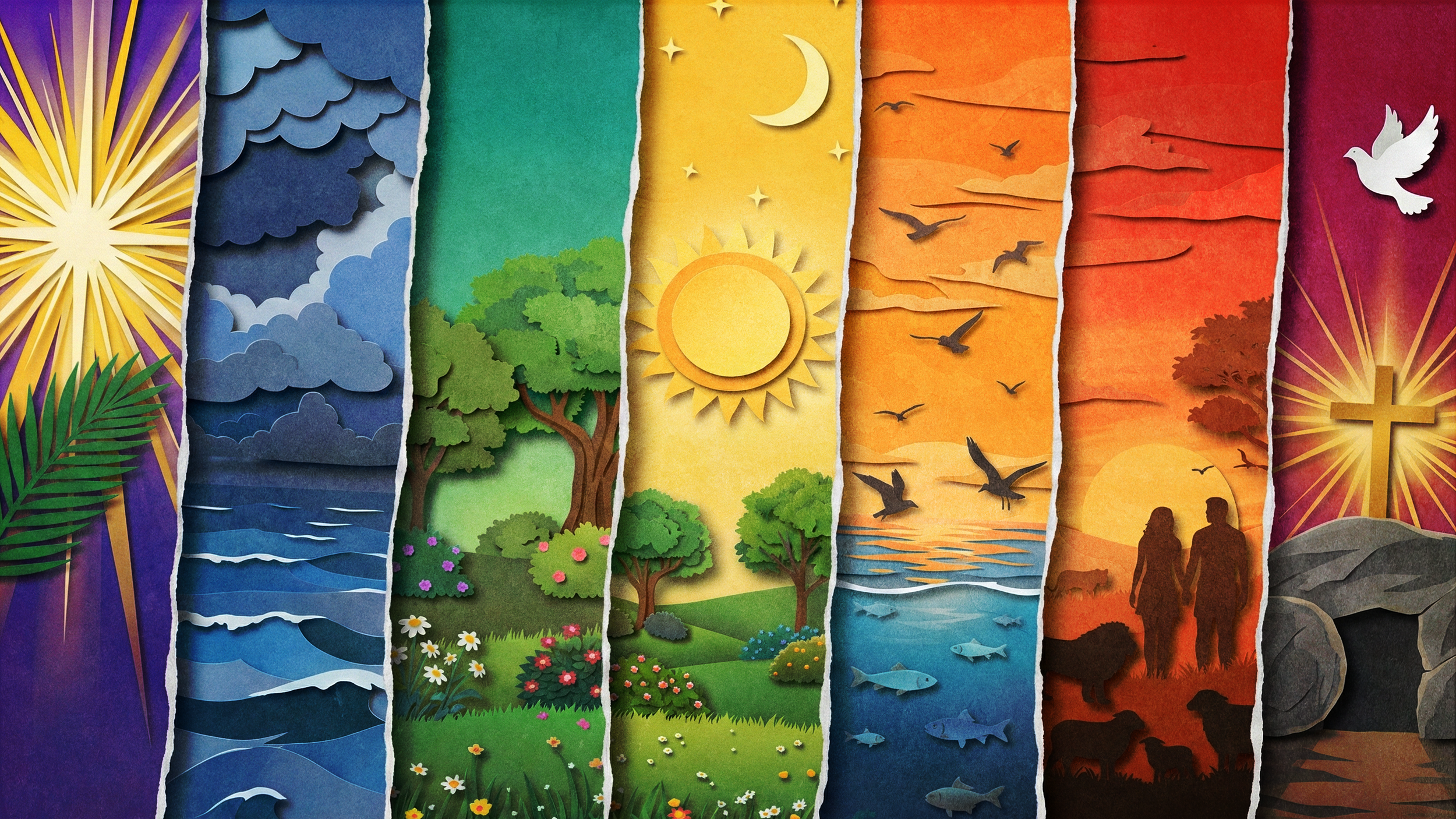
There is always hope when a buried seed begins to sprout.