

![[Bible Study] Chapter 13 | Gospel of Mark](https://images.squarespace-cdn.com/content/v1/5852f18a20099e30cd2c01dc/1656079720140-XZXZOZR2V7Q0IF6PTQFT/mark13.jpg)
![[Sunday] Good In All Things - In All Things](https://images.squarespace-cdn.com/content/v1/5852f18a20099e30cd2c01dc/1655472116410-5V697U3D182DKAKNJTCU/IAT+4a.jpg)
[Sunday] Good In All Things - In All Things
We desire to live the good life which will ultimately land us in the good place. But in our search for the good place, we may find ourselves not fulfilled as our lust for desires goes unmet. Maybe true fulfillment can be found in death and resurrection.

Questions for the week
Describe something you thought was good, but ended up being bad in your life.
Read Colossians 3:1-17. What two types of lifestyles does Paul compare? How has Jesus freed you to live the second type of lifestyle?
Read Colossians 3:18- 4:1. How does Paul's encouragement in these verses encourage us to reflect Jesus in relationships with others?

What Had happened at Grace this week.
![[Sunday] A Song of Christmas Light - Know Me Better Man Stave 3](https://images.squarespace-cdn.com/content/v1/5852f18a20099e30cd2c01dc/1765482111687-AQYCM4FZQV9BO7JIPL02/Christmas+light+3a.jpg)




![[Wednesday] - Mid-week Advent - Christmas Variety Show](https://images.squarespace-cdn.com/content/v1/5852f18a20099e30cd2c01dc/9bbb3ea9-ae2f-4317-a416-e9a3b6aa13ce/Variety+show25a.jpg)
![[Sunday] A Song of Christmas Light - Flickering Past Stave 2](https://images.squarespace-cdn.com/content/v1/5852f18a20099e30cd2c01dc/1764904771417-1ODC6N70IDWFLRDHDLYP/Christmas+light+2a.jpg)




![[Sunday] Forward In All Things - In All Things](https://images.squarespace-cdn.com/content/v1/5852f18a20099e30cd2c01dc/1654867356344-O33STPWPFW691U3BFXYZ/IAT+3a.jpg)
[Sunday] Forward In All Things - In All Things
When I moved, I placed everything in a huge moving truck and rolled my car onto a small trailer. This taught me a simple lesson in life, one we see here in the Bible: always be moving forward.

Questions for the week
Describe a time when you stopped moving forward and got stuck going backwards.
Read Colossians 2:6-15. What does it mean to “walk in Christ?”
What empty philosophies might hold you captive?
How does walking in Christ and in what he has done free us from that captivity?
What Had happened at Grace this week.







Pastor Cris Birthday photos
Thanks to everyone for making it fun
Thanks for making the day fun!


The Mysterious Disappearance of Moses
Somehow the Jewish sect that claimed to follow the Messiah Jesus very quickly ceased to follow the Law.
Read the whole article at The Mysterious Disappearance of Moses - Mockingbird (mbird.com)
Investigators from the missing persons unit of Christian Theology are seeking the public’s assistance in locating Moses ben Amran, who has gone missing. His last known whereabouts appear to be some time in the first century. His last known associate was Saul of Tarsus, last seen traveling from Jerusalem to Damascus on a secretive business trip. While some witnesses are claiming that Moses has been heard from recently, his public appearances have mysteriously dwindled and investigators remain baffled as to the cause.
Where did Moses go?……………………..
![[Bible Study] Chapter 12 | Gospel of Mark](https://images.squarespace-cdn.com/content/v1/5852f18a20099e30cd2c01dc/1654865131748-IJCMYCWNS1EM6TPHPG29/mark12.jpg)

What to Do When You’re Running Low on Faith
Faith is walking toward your dreams despite the odds. It’s knowing that your best effort is enough, and that you’ll be provided for through God’s grace. Faith is fearless.
Read the whole article at What to Do When You're Running Low on Faith - RELEVANT (relevantmagazine.com)
Faith is walking toward your dreams despite the odds. It’s knowing that your best effort is enough, and that you’ll be provided for through God’s grace. Faith is fearless.
Every person of faith knows we need faith more than food, even. But how do you just magically “get” it? How do you go from not believing that you can even be happy to living out your purpose and fully trusting in God?
I discovered that faith, like most things, is a learning process; and that if you want to leap, you have to walk and hop first.
MY FAITH JOURNEY
I struggled with faith for the first half of my adult life. I just didn’t think that I could take care of myself or be happy, so I didn’t even try……………………………………..
![[Sunday] Hope In All Things - In All Things](https://images.squarespace-cdn.com/content/v1/5852f18a20099e30cd2c01dc/1654222823414-AHLCONIOUPLEL6OQFSML/IAT+2a.jpg)
[Sunday] Hope In All Things - In All Things
When looking for hope, we often try to find it in other gods and gospels, but the Holy Spirit is always calling us back to the one that can truly save us. See why Jesus matters.

Questions for the week
Describe a song that has impacted you. What about it made such an impact?
Read Colossians 1:15-20. Paul is writing in poetry. What other parts of the Bible is this song like?
Paul draws us to the wonder of creation and how that creator is with us in all things. How does that change how you look at the world around you?
What Had happened at Grace this week.
![[Sunday] Song of All Things - In All Things](https://images.squarespace-cdn.com/content/v1/5852f18a20099e30cd2c01dc/1653619794124-MWIZMNCXP8C9IXJA46YW/IAT+1a.jpg)
[Sunday] Song of All Things - In All Things
Beginning his letter of encouragement, Paul leans into the history of the scriptures, using the language of song to convey something bigger than can be realized with just mere words. With the prophets, the psalms, and even the first five books behind him, he weaves encouragement the only way a song can.

Questions for the week
Describe a song that has impacted you. What about it made such an impact?
Read Colossians 1:15-20. Paul is writing in poetry. What other parts of the Bible is this song like?
Paul draws us to the wonder of creation and how that creator is with us in all things. How does that change how you look at the world around you?
What Had happened at Grace this week.
![[Bible Study] Chapter 11 | Gospel of Mark](https://images.squarespace-cdn.com/content/v1/5852f18a20099e30cd2c01dc/1653684929387-O007ZU8XONAOI82ZMZ9R/mark11.jpg)

The Gospel and Butterbeer
There is no substitution for the real thing.
Read the Whole Article at The Gospel and Butterbeer - Mockingbird (mbird.com)
My father’s text message came a little past five in the morning. “I think we should cancel our Universal Studios trip this weekend. It’s just going to be too gross in Orlando. It will be storming the whole time.” My bag was already packed in the corner, but I agreed. I was excited to go back to Orlando, but I knew another opportunity for a Florida getaway would come. A weekend at home with my husband and dogs would be good for me.
Still, I was looking forward………………………………..

In All Things (Teaching Series)
While sitting in prison, the apostle Paul receives word of a new church. He pens a letter of encouragement, filled with love and songs, about how Jesus the Christ is in all things. This is a reminder that the Christian story encompasses all things. Nothing -- and no one -- is left out.
While sitting in prison, the apostle Paul receives word of a new church. He pens a letter of encouragement, filled with love and songs, about how Jesus the Christ is in all things. This is a reminder that the Christian story encompasses all things. Nothing -- and no one -- is left out.
Reading Plan
May 29th 22 -
Creator of All things -Genesis 1, Colossians 1:1-20
June 5th 22 -
Redeemer of All Things -Colossians 1:19-28, Luke 23:33-43
June 12th 22 -
Lord of All thingsColossians 2, Luke 15
June 19th 22
Servant of All Things -Colossians 3:12-Ch4, John 13
June 26th -
Restorer of all things -Colossians 3:1-11, Matthew 8
![[Sunday] Christ In All Things - In All Things](https://images.squarespace-cdn.com/content/v1/5852f18a20099e30cd2c01dc/1656083572547-8NPQTORRZXMZIICABI9A/IAT+5aa.jpg)
![[Sunday] Gentleness & Respect - Spiritual Conversations](https://images.squarespace-cdn.com/content/v1/5852f18a20099e30cd2c01dc/1653012509674-H2OG52EIUQ3NVEJZ27ER/SC+5a.jpg)
[Sunday] Gentleness & Respect - Spiritual Conversations
Peter sat up from writing the last paragraph and thought about all the times he was difficult to Jesus. He had put his foot in his mouth so many times. He even denied the Lord on that cold day when everything changed. But Peter's heart filled with warmth when he remembered how Jesus treated him when he rose: with gentleness and respect.

Questions for the week
Think of the last time you had a spiritual conversation. How did it go? How did it feel?
Read 1 Peter 3:8-18. What are the Christians whom Peter is writing to facing in life?
How does Peter encourage them to respond? What has Jesus done that enables them to respond that way?
What do you think is important to keep in mind so that you can spark a spiritual conversation while still being gentle and respectful?
Past Links and Helps


What Had happened at Grace this week.

Church For Normies
The church has to make room for the unsatisfactory, the just-getting-by, the I’m-barely-paying-the-bills, the it-took-all-I-had-to-show-up-this-morning, the I’m-doing-my-best, the just-give-me-a-break folks. The holly-ivy Christians, who begrudgingly show up twice a year.
The Whole Article is here but it is from. https://www.bradeast.org/blog/church-for-normies
By Brad East
In his book Hauerwas: A (Very) Critical Introduction, Nicholas Healy raises an objection with Hauerwas’s ecclesiology. He argues that Hauerwas’s rhetoric and sometimes his arguments present the reader with a church fit only for faithful Christians—that is, for heroes and saints, for super-disciples, for the extraordinarily obedient, the successful, the satisfactory. By contrast, Healy argues that the church ought to be a home and a haven for “unsatisfactory Christians,” and that our doctrine of the church ought to reflect that.
That phrase, “unsatisfactory Christians,” has stuck with me ever since I first read it. It’s often what I have in mind when I refer to “normie” Christians: ordinary believers most of whose days are filled with the mundane tasks of remaining decent while doing what’s necessary to survive in a hard world: working a boring job, feeding the kids, getting enough sleep, paying the bills, not getting too much into debt, occasionally seeing friends, fixing household or familial problems, maybe taking an annual vacation. Into this all-hands-on-deck eking-out-a-survival life, “being a Christian” is somehow supposed to fit, not only seamlessly but in a transformative way. So you go to church, share in the sacraments, say your prayers, raise your kids in the faith, and generally try to fulfill the duties and roles to which you understand God to have called you.
I used to be Hauerwasian (or Yoderian, before that moniker assumed other connotations) in my ecclesiology, but over the years I’ve come to think of that style of construing Christian discipleship as a well-intended error, though an error all the same. To be clear, I’m not talking about Hauerwas himself—who defends himself against Healy’s critique in a later book—but about the sort of ecclesiology associated with him and with those who have developed his thought over the decades. I’m thinking, that is, of an approach to church that sees it as a small band of deeply committed disciples whose life together is aptly described as an “intentional community.” These are people who know their Bibles, who have strong and well-informed theological opinions, who are readers and thinkers, who have college degrees, who are white collar and/or middle-/upper-middle class, who make common cause to found or form or join a local community defined by a Rule of Life and thick expectations and rich, shared daily practices. Often as not they meet in homes or move into the same neighborhood or even purchase a plot of land for all to live on together.
I would never knock such communities. Extending the monastic vision to include lay people in all walks of life is a lovely development. Though I do worry that such communities are usually short-term arrangements lacking longevity, and that they are typically idealized and overly romantic, nonetheless they represent a healthy response to the vision of the church in the New Testament and sometimes even work out. Nothing but kudos and blessings upon them.
My disagreement is with the view that this vision of church just is what any and every church ought to be, as though all other versions of church must therefore be (1) pale imitations of the real thing, (2) tolerable but incomplete attempts at church, or even simply (3) failed churches. That’s wrong. It’s wrong for many reasons, including exegetical, historical, and theological reasons. But let me give one closer to the ground, rooted in human experience.
The radical church is not a church for normies. To use Healy’s terminology, it’s not a community meant for unsatisfactory Christians. It’s for Christians who have their you-know-what together: Christians who are both able and willing, given their background, education, financial status, temperament, moral and intellectual aptitude, and personal desire, to enter the monastic life, only here as laypersons. It’s certainly possible to make a case, based on the Gospels and the teaching of Christ, that the church exists solely for such Christians, since the condition for faith is discipleship to Christ, and discipleship to Christ is costly. I believe this to be a profound misunderstanding, however, not least because the rest of the New Testament exists. Just read St. Paul. He’ll disabuse you rather quickly of the notion that the church consists of satisfactory Christians. It turns out the church is nothing but unsatisfactory Christians. And if your Christian community is such that no normie would ever dream of visiting or joining it, because it’s clear that he or she is not and would never be up to snuff, then—allow me to suggest—you’re doing it wrong.
The church has to make room for the unsatisfactory, exactly in the manner I described above: the just-getting-by, the I’m-barely-paying-the-bills, the it-took-all-I-had-to-show-up-this-morning, the I’m-doing-my-best, the just-give-me-a-break folks. The holly-ivy Christians, who begrudgingly show up twice a year. The Kichijiros and Simon Peters and doubting Thomases. The addicts who relapse, the gamblers in debt, the porn-addled who can’t quit, the foreclosed-on and laid-off, the perennially fired and out of work, the ex-cons and adulterers and fathers of five kids by three different moms. Is the church not for such as these? “Truly, I say to you, the tax collectors and the harlots go into the kingdom of God before you.”
Our churches may not, must not, fall prey to the temptation that such people have no place in them, because if we believe that, then we will make them such places. Worse, we will inadvertently make them havens for a different kind of person: neither “the least of these” (whom Jesus loves) nor the radical types who flock to intentional communities, but the sort of credentialed professionals who want that sweet, sweet upper-middle-class life alongside others who look and talk and live just like them. Such folks are all unsatisfactory to a person—that’s just to say they’re human—but they present the opposite on the outside. Either way, the undisguised unsatisfactory have nowhere to lay their heads: the well-to-do don’t want them and the radicals can’t receive them.
Does this mean our churches should expect less of their members? Does it mean our churches should restructure their common life? Does it mean churches should function to permit and even welcome the straggler, the good-for-nothing, the failed disciple, the I’m-just-here-to-take-the-Eucharist-and-run type?
Yes. That is exactly what I’m saying. Radicals hate the medieval distinction between the evangelical counsels of perfection and the “lower” universal teachings of Jesus meant for all Christians. But the distinction arose for a reason, and it’s an essential one. Further, it’s why the church, especially in patristic and medieval periods, developed such a strong account of the sacraments as the heart of lay Christian life. The sacraments are pure reception, pure gift: grace upon grace. That’s what a sacrament is, the material sign and instrument of God’s grace, and it’s what the Blessed Sacrament of Christ’s Body and Blood enacts and encapsulates. God willing, the Spirit so moves in the regular, daily and weekly, reception of Holy Communion that a believer is drawn into a lifelong journey of sanctification, what is unsatisfactory (this plain and unimpressive water) being transformed into that which pleases the Lord and edifies his body (the miraculous wine saved best for last). But that’s up to God, and it begins, it does not end, with initiation into and partaking of the liturgical and sacramental life of God’s people.
We need churches that offer and embody and invite people to that, making clear all the while that the summons is for all—especially normies.
![[Bible Study] Chapter 10 | Gospel of Mark](https://images.squarespace-cdn.com/content/v1/5852f18a20099e30cd2c01dc/1653012188504-U5FP6VYR7VLIHDSQW7LI/mark10.jpg)
![[Sunday] Eager - Spiritual Conversations](https://images.squarespace-cdn.com/content/v1/5852f18a20099e30cd2c01dc/1652451592564-OR8VRNJ5T9YCLS6P4ZR7/SC+4a.jpg)
[Sunday] Eager - Spiritual Conversations
The armor of God sometimes seems like it's something we daily put on to fight our way through the culture. However, when we look at what Paul was actually saying, it's something that signals our readiness and eagerness to show the love of our God in Christ Jesus our lord.

Questions for the week
What do you think you would need to be able to talk about your faith more effectively?
Read Ephesians 6:10-20. Who does Paul encourage us to find our strength in? What does it look like to be strong in the Lord in your life?
How does getting ready by putting on the armor of God equip you to share your faith?
Review Lutheran Hour Ministries description of an “Eager Conversationalist” at www.lhm.org/eager. Take the “Eager Inventory” found on that website. Which letter are you strongest in? Which can you most improve in? How can spending more time with Jesus help you grow in those areas?
BONUS: Visit www.lhm.org/eager and begin the free LHM Learn course “Eager to Share.”
What Had happened at Grace this week.

5 1/2 habits of Remarkably Ineffective People
Was Jesus successful? I guess it depends on your definition and criteria.
Read Whole article at 5 1/2 Habits of Remarkably Ineffective People - Mockingbird (mbird.com)
Hi Was Jesus successful? I guess it depends on your definition and criteria. The gospels themselves swing between accounts of Jesus drawing a crowd then preaching it down to a dozen (e.g. John 6:1-13; John 6:66ff).
Recently I was preparing to preach on the rich and strange story of Jesus’ temptation in Luke 4. Clearly the Devil is offering Jesus a highly effective path to glory — to trade his Passion for praise and recognition. Had Jesus done exactly what the Devil said, there would have been no question a……………………..
![[Bible Study] Chapter 9 | Gospel of Mark](https://images.squarespace-cdn.com/content/v1/5852f18a20099e30cd2c01dc/1652453635873-4J0L78KXPDPS7NK15FKA/mark9.jpg)
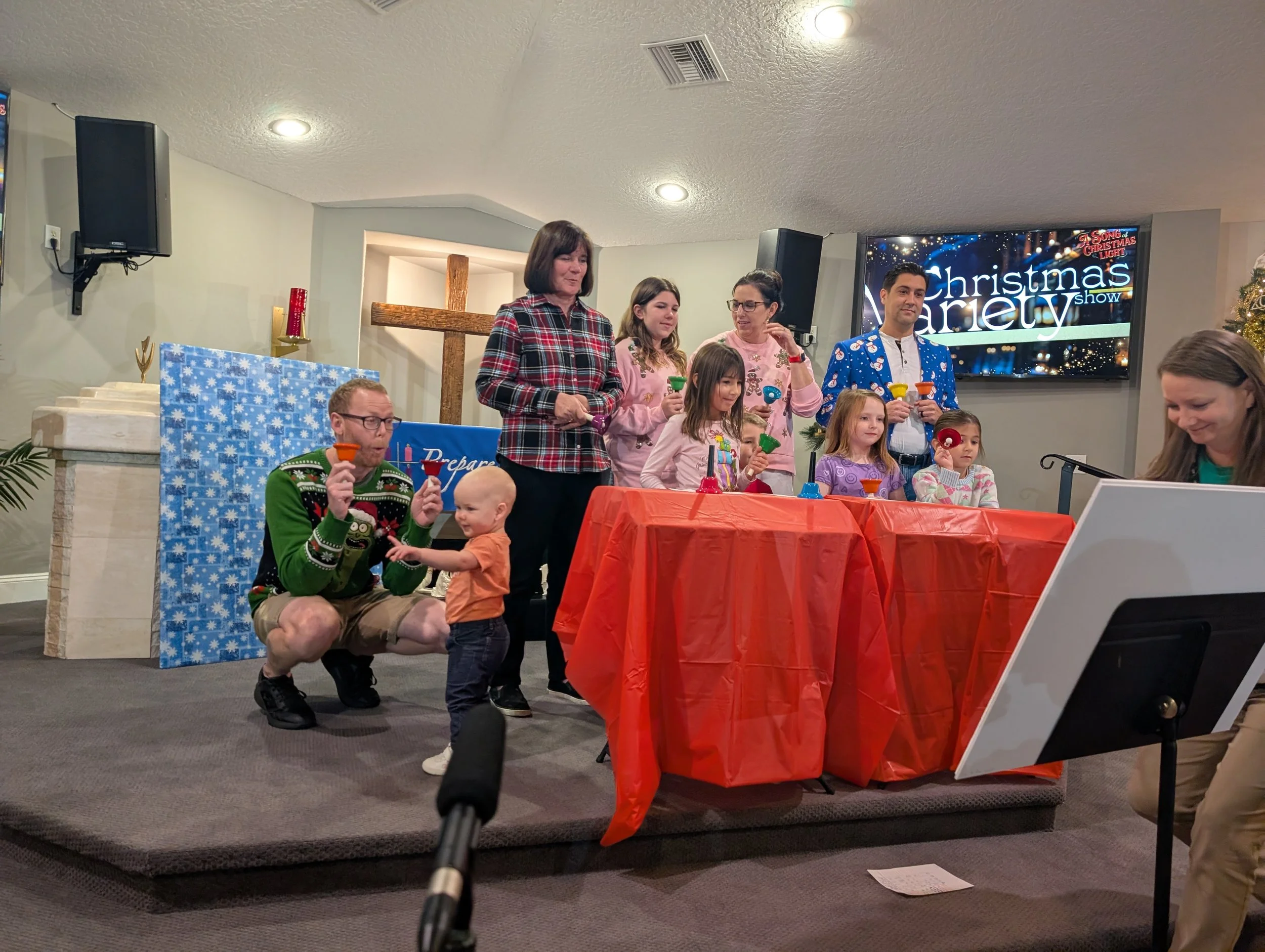
Kids did a wonderful job singing and playing the bells.