

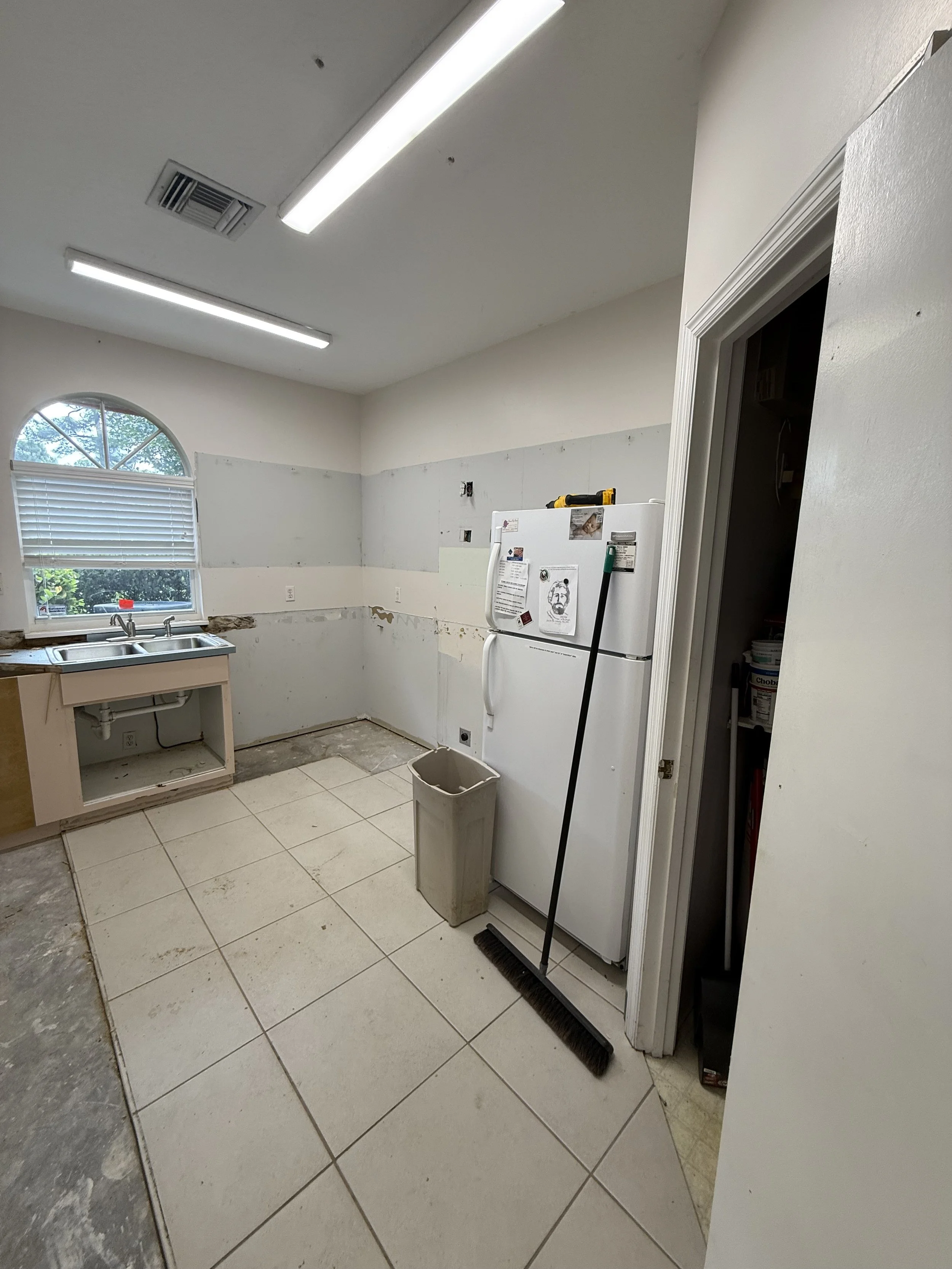
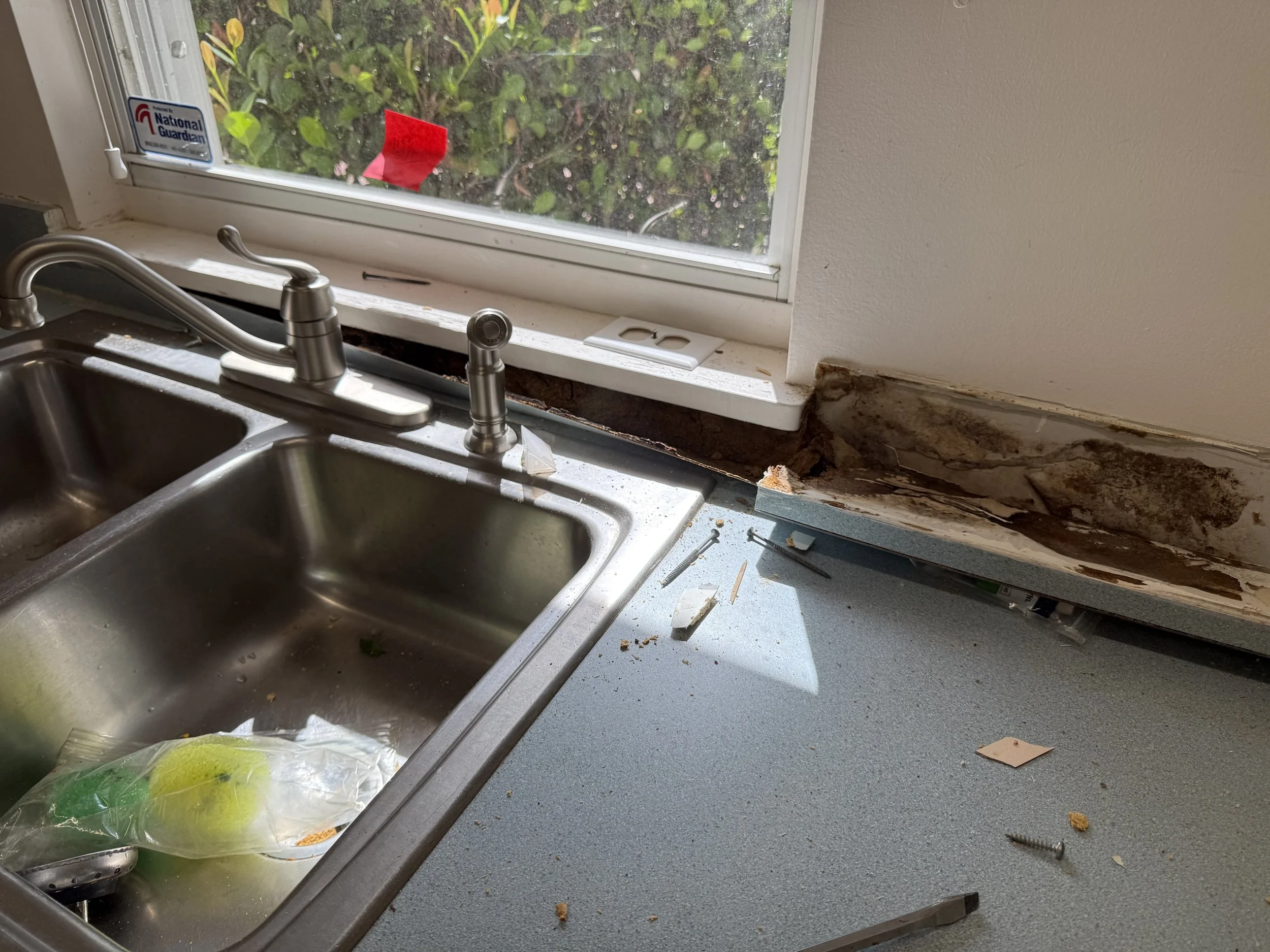
Kitchen Refresh Started
Mike and Joseph got a good start on the kitchen refresh.
Mike and Joseph got a good start on the kitchen refresh.







Re(D)Formation Pictures
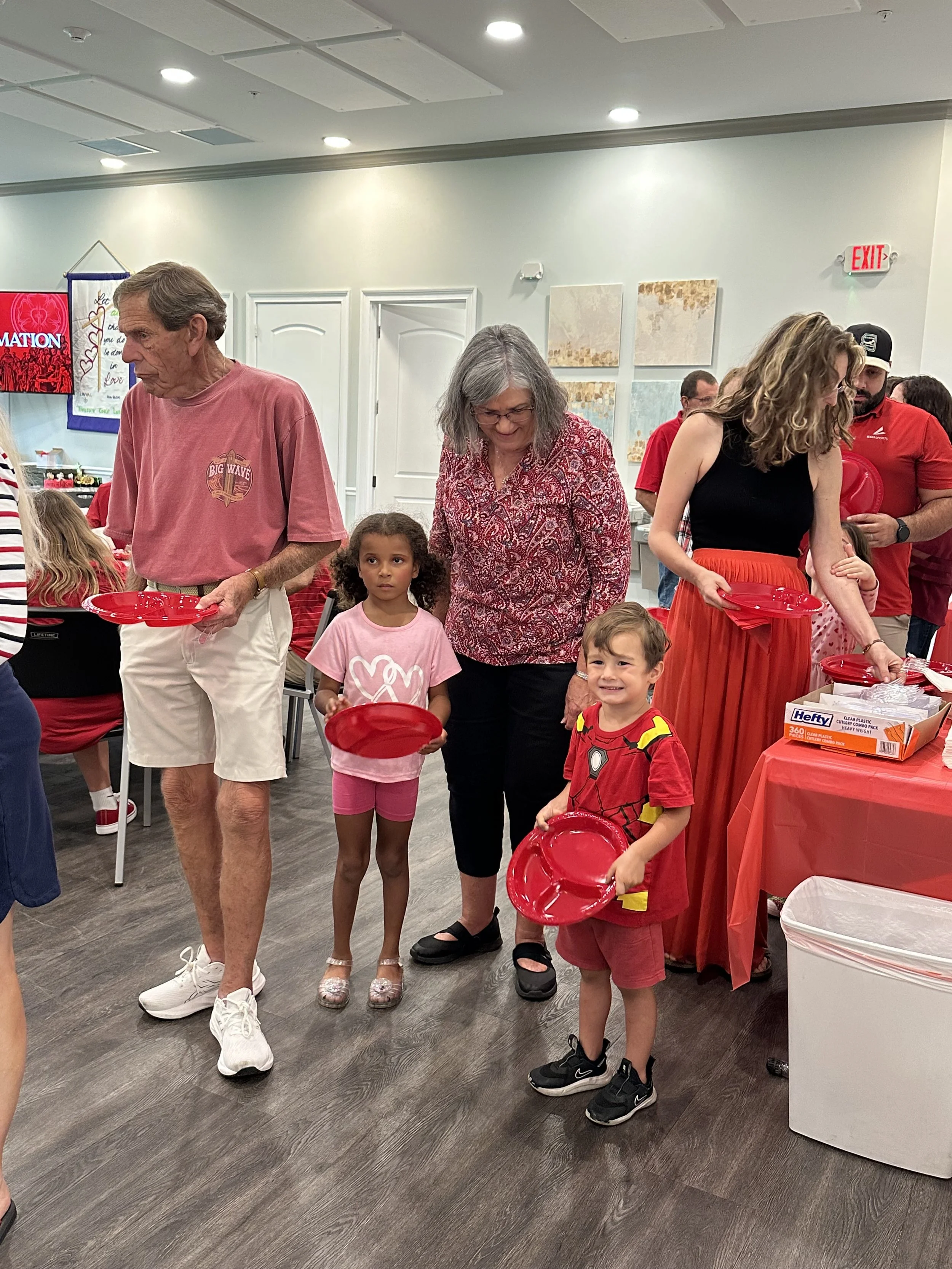
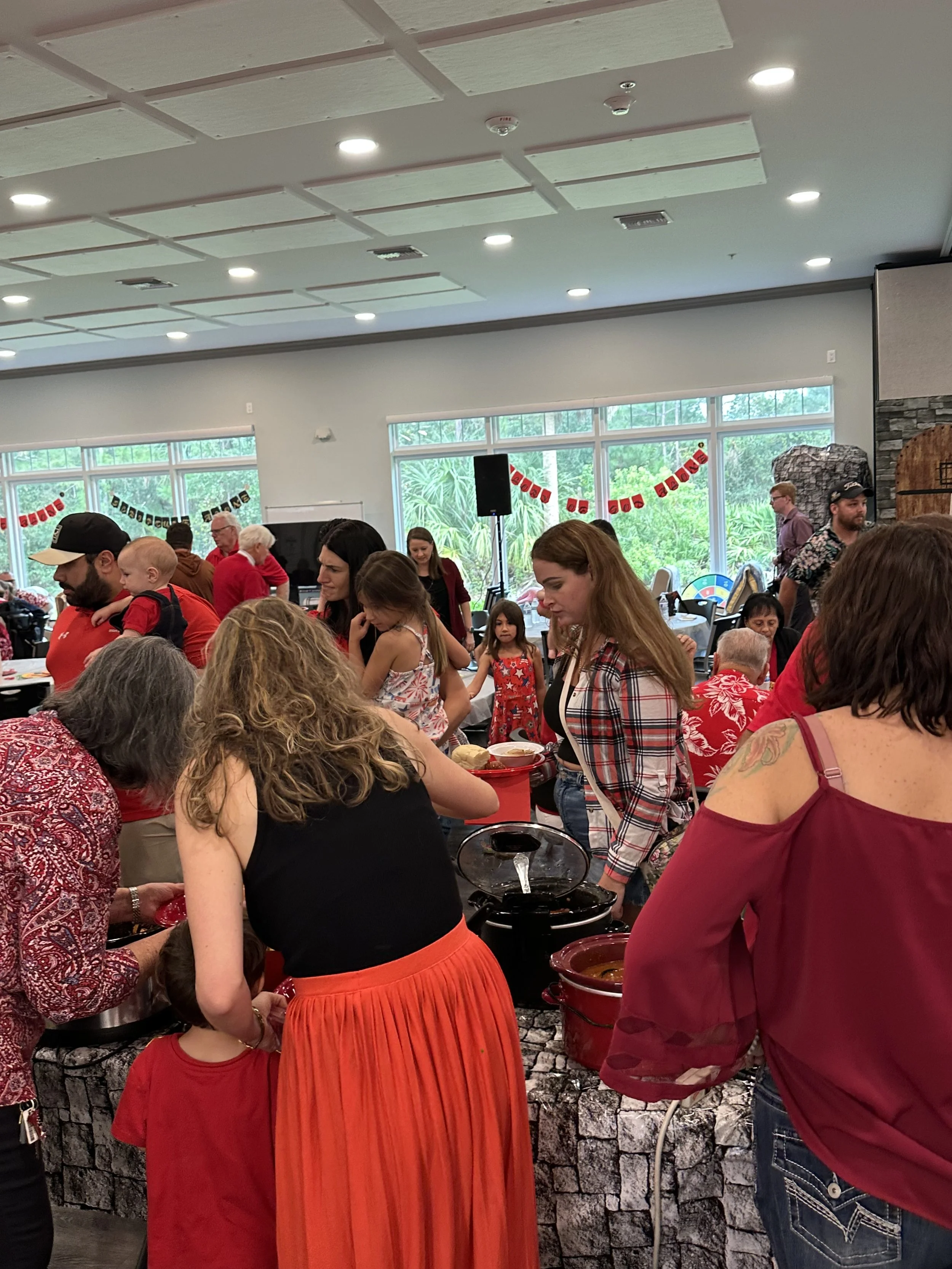
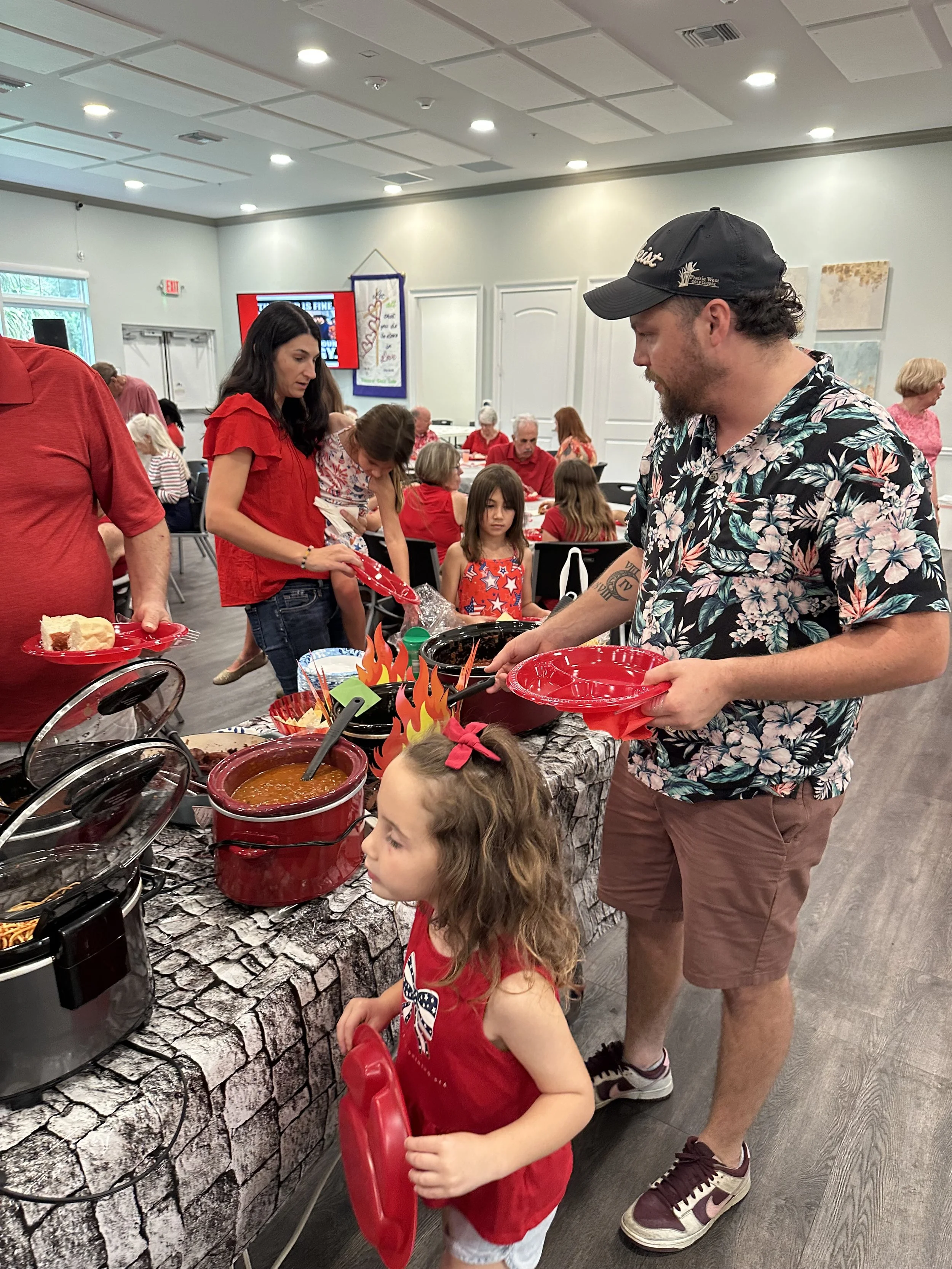
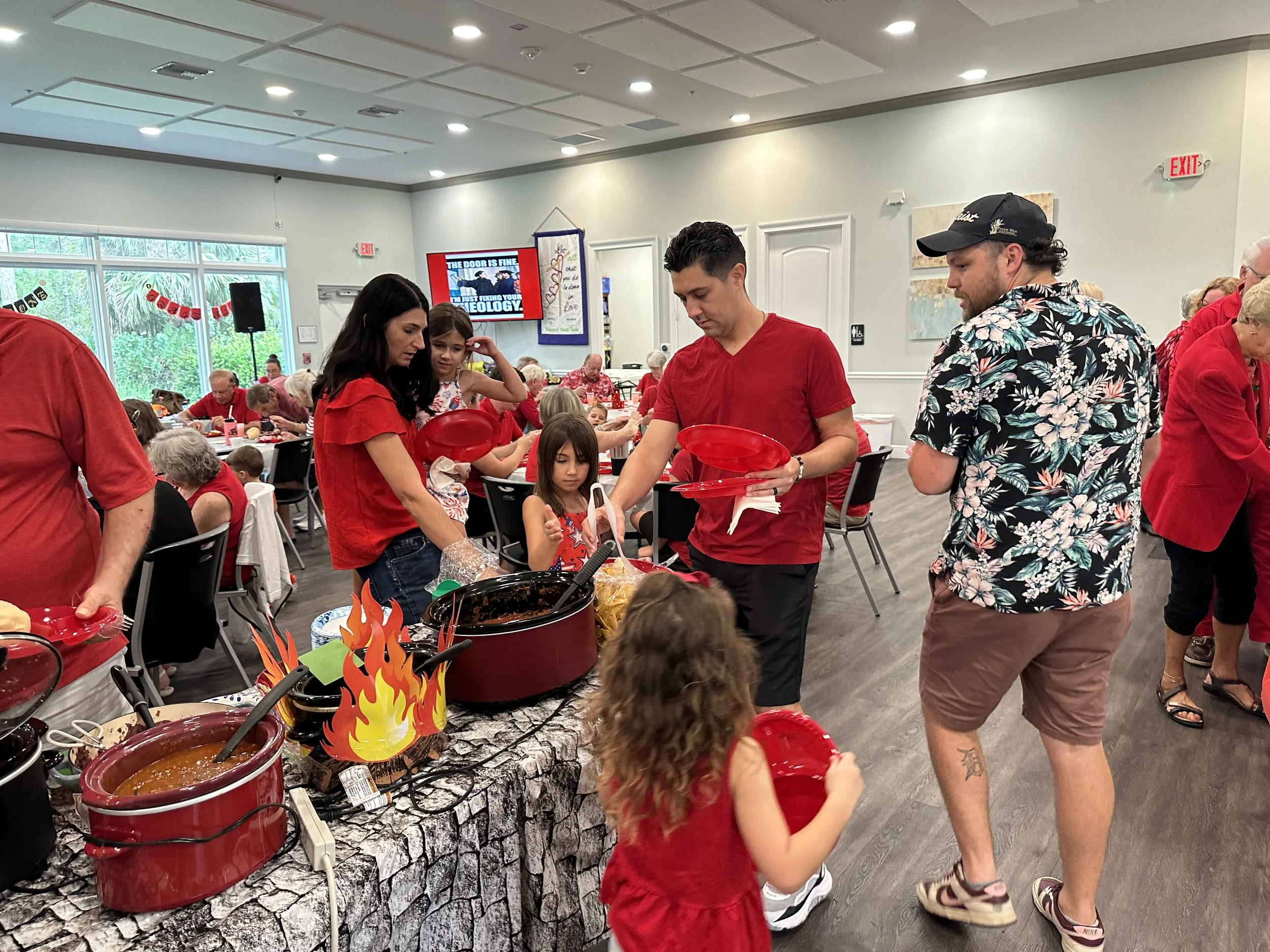
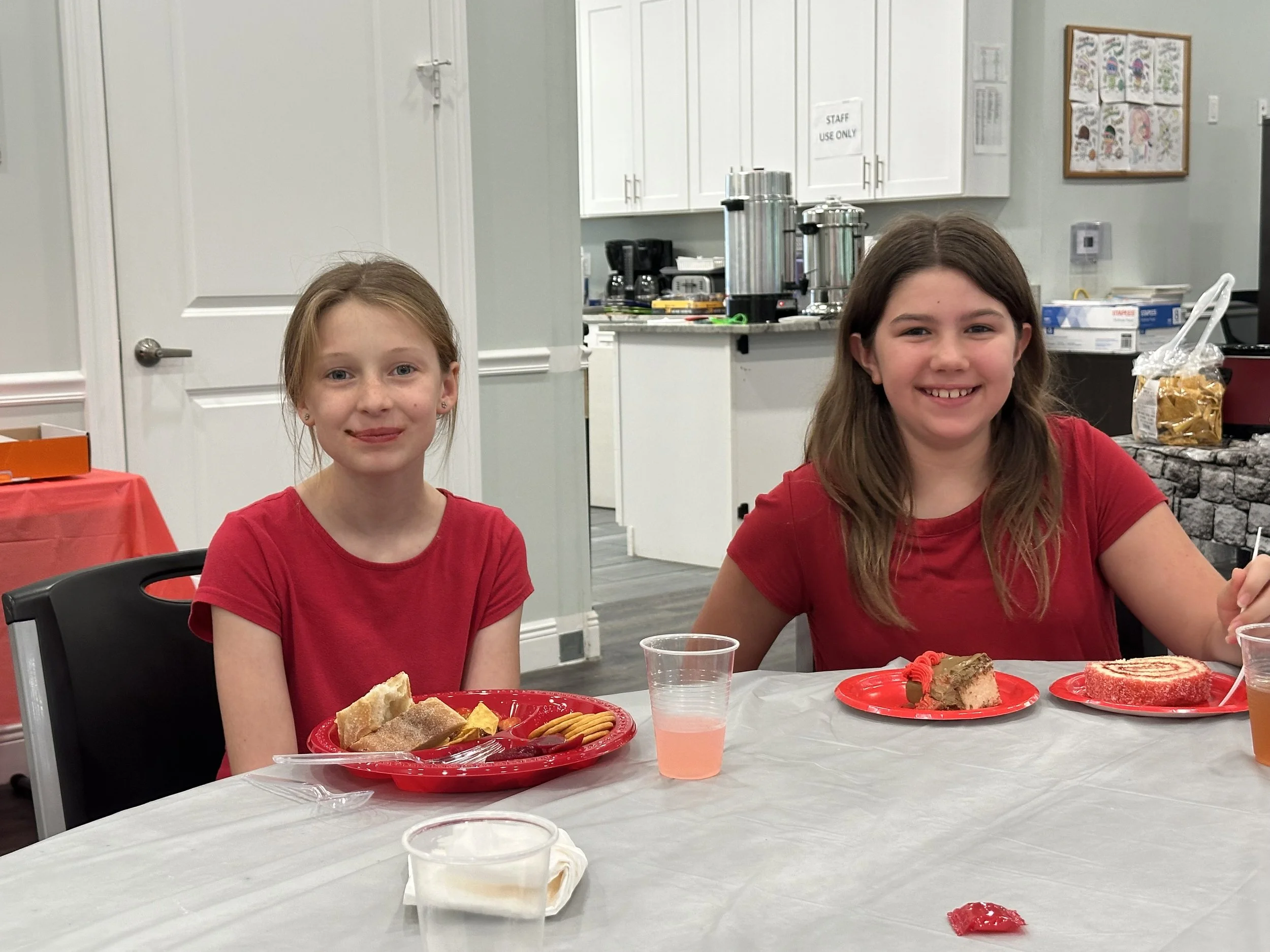
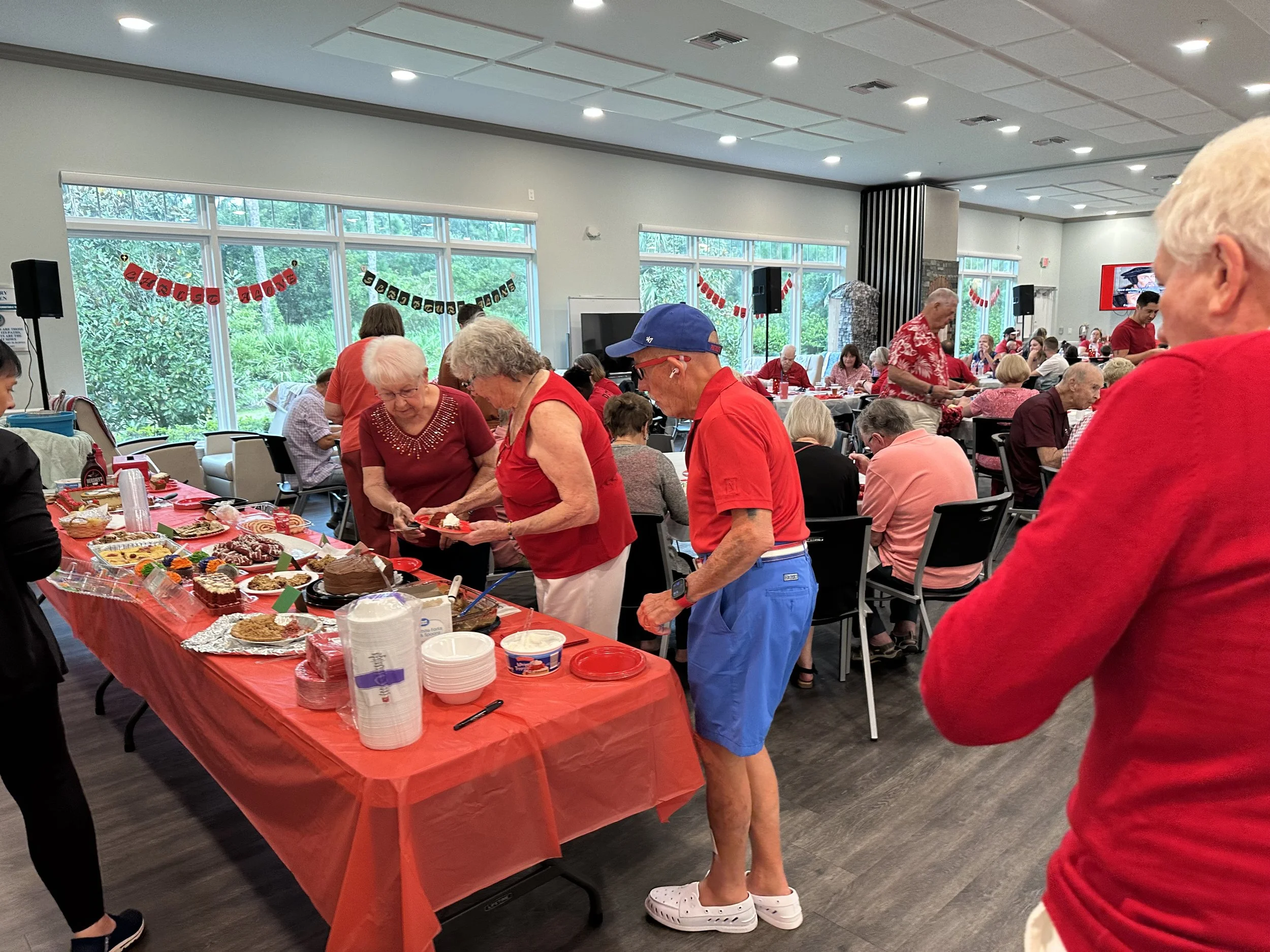
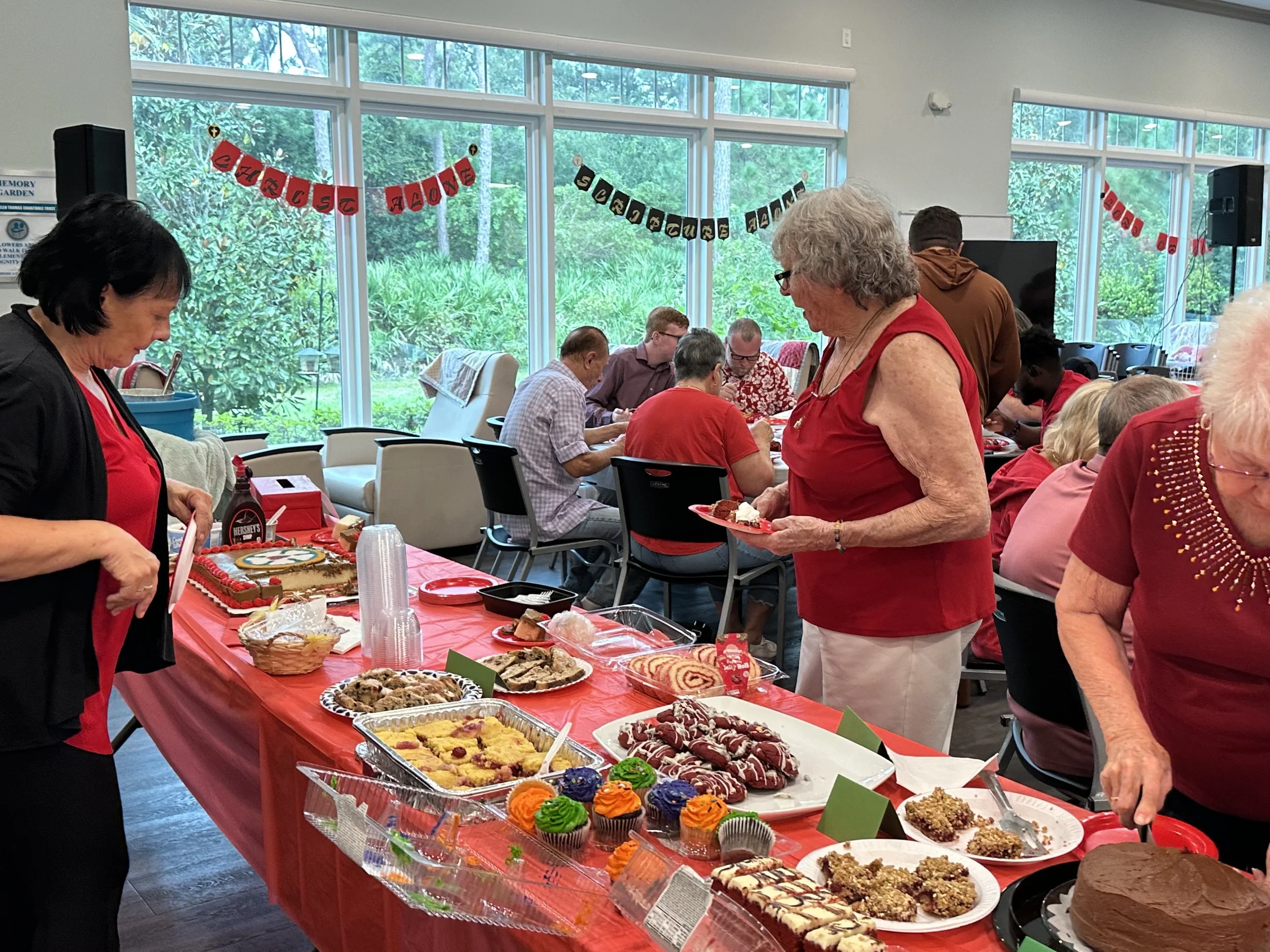
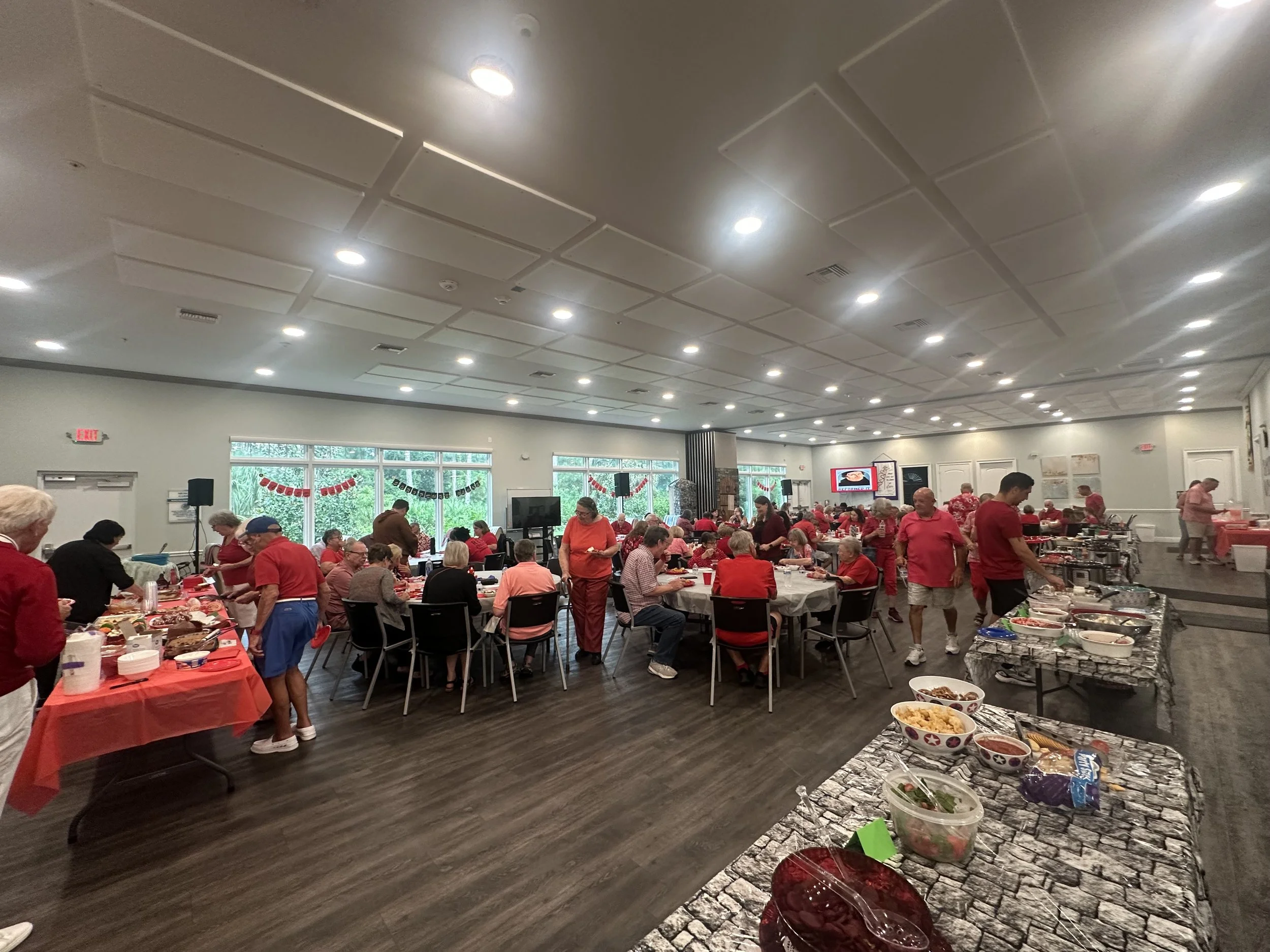
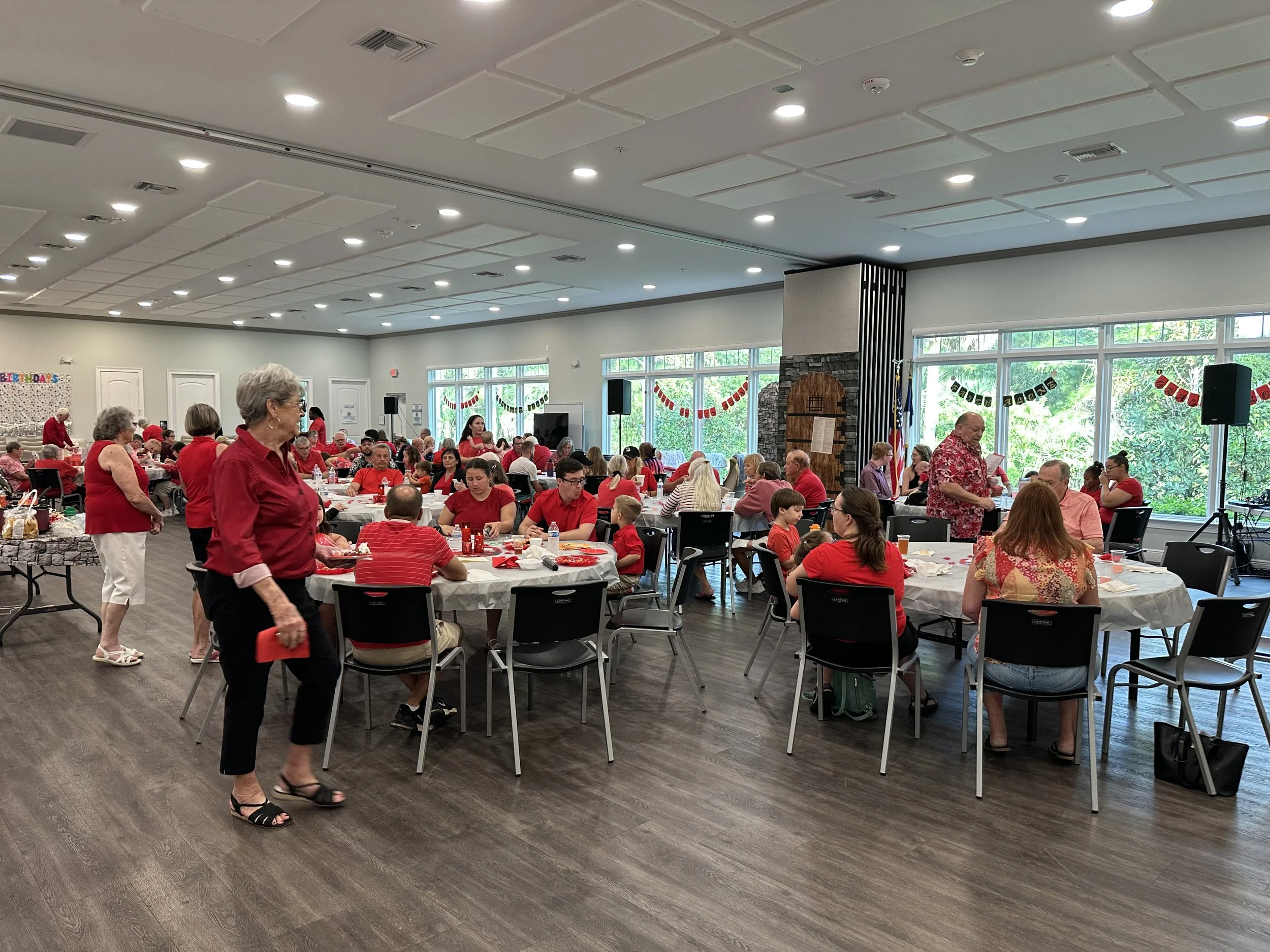
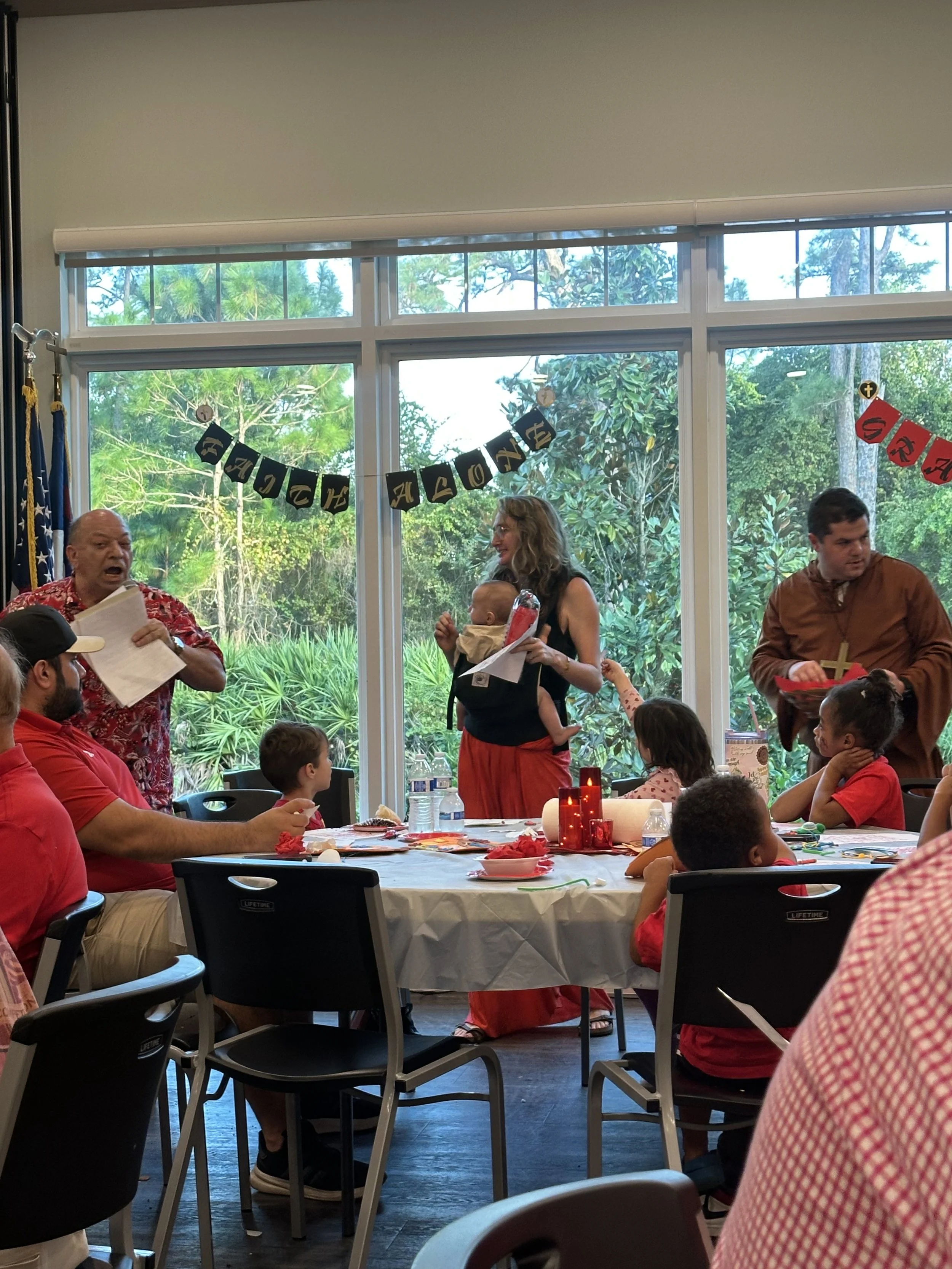
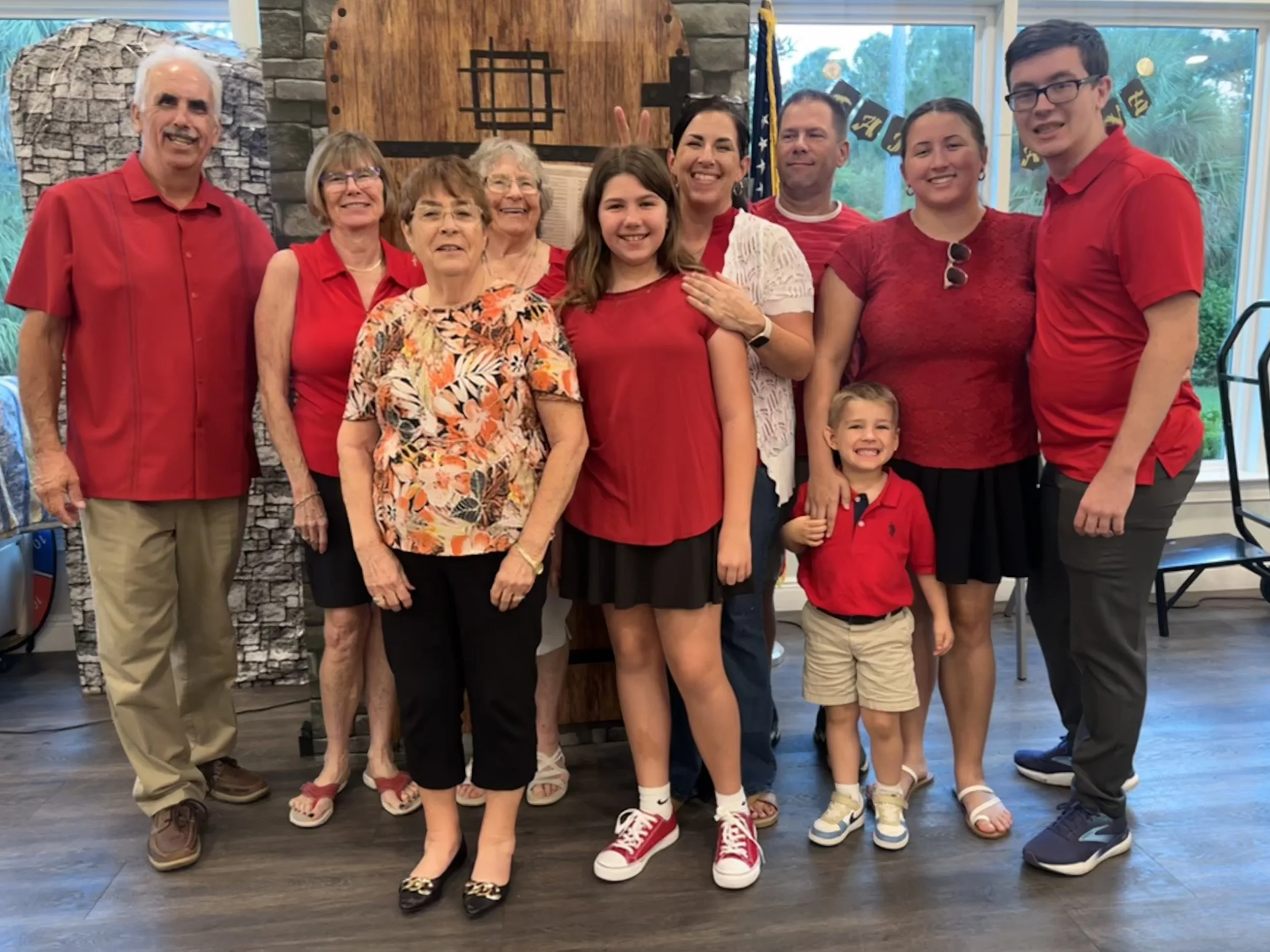
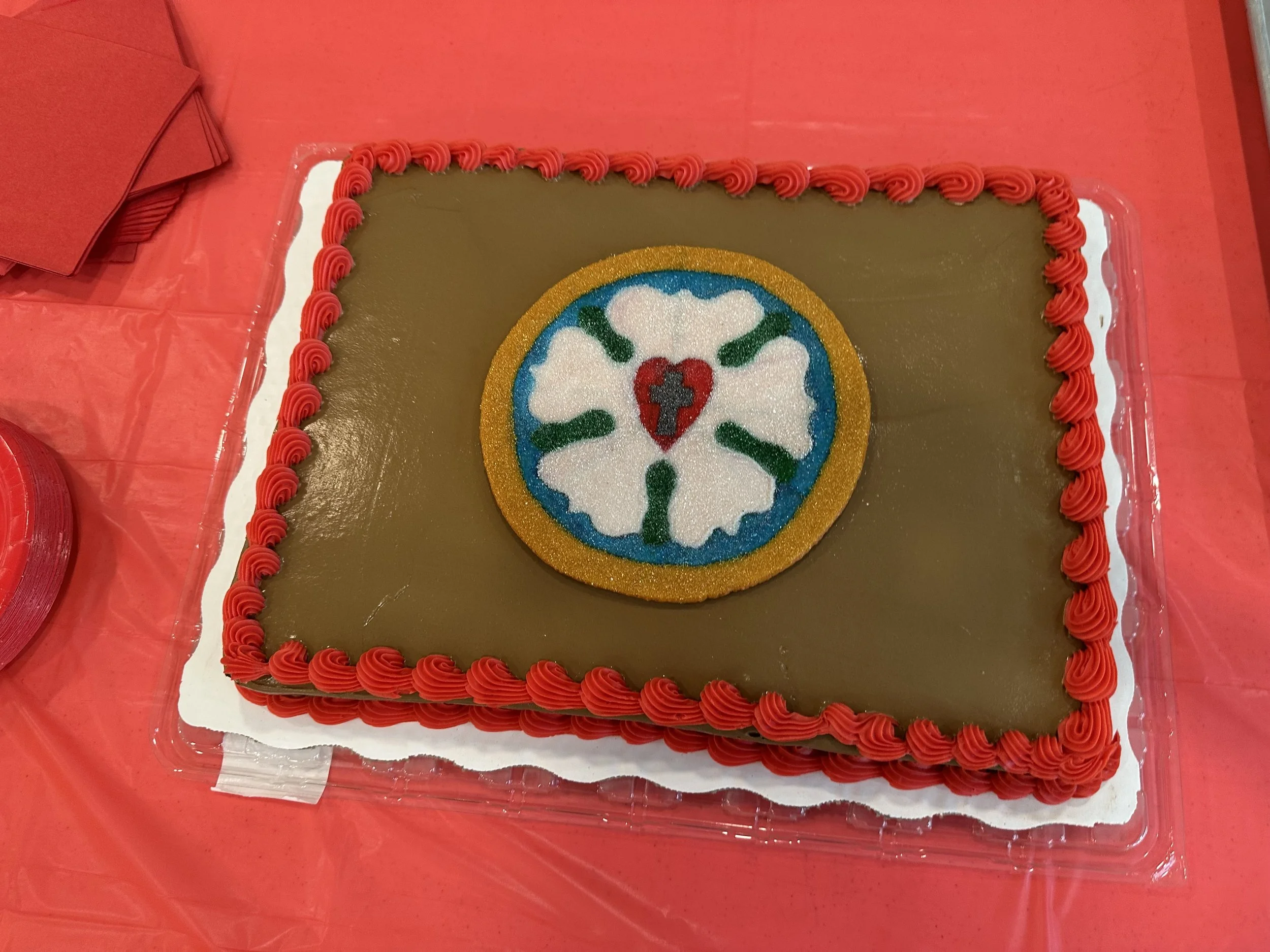
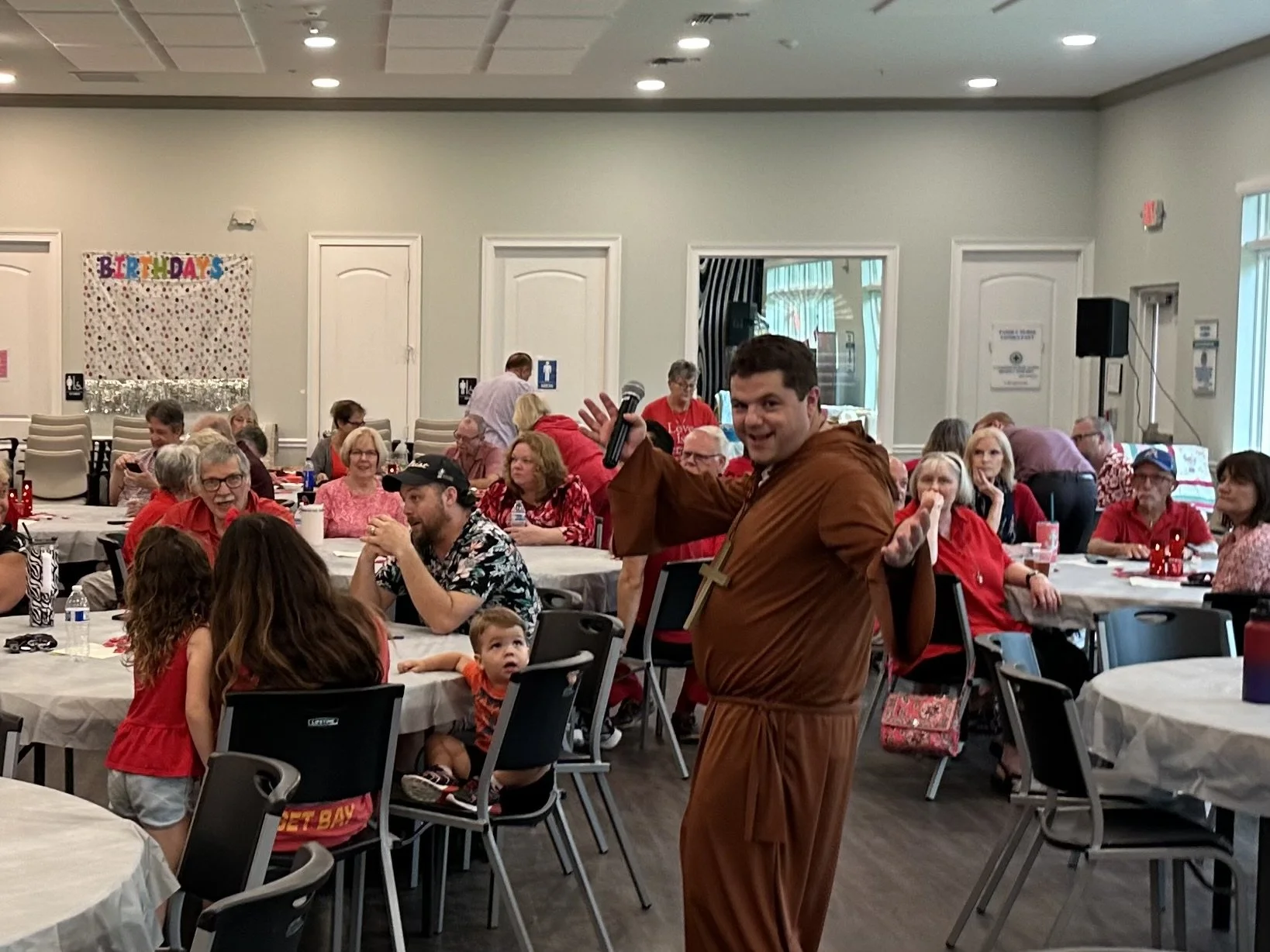
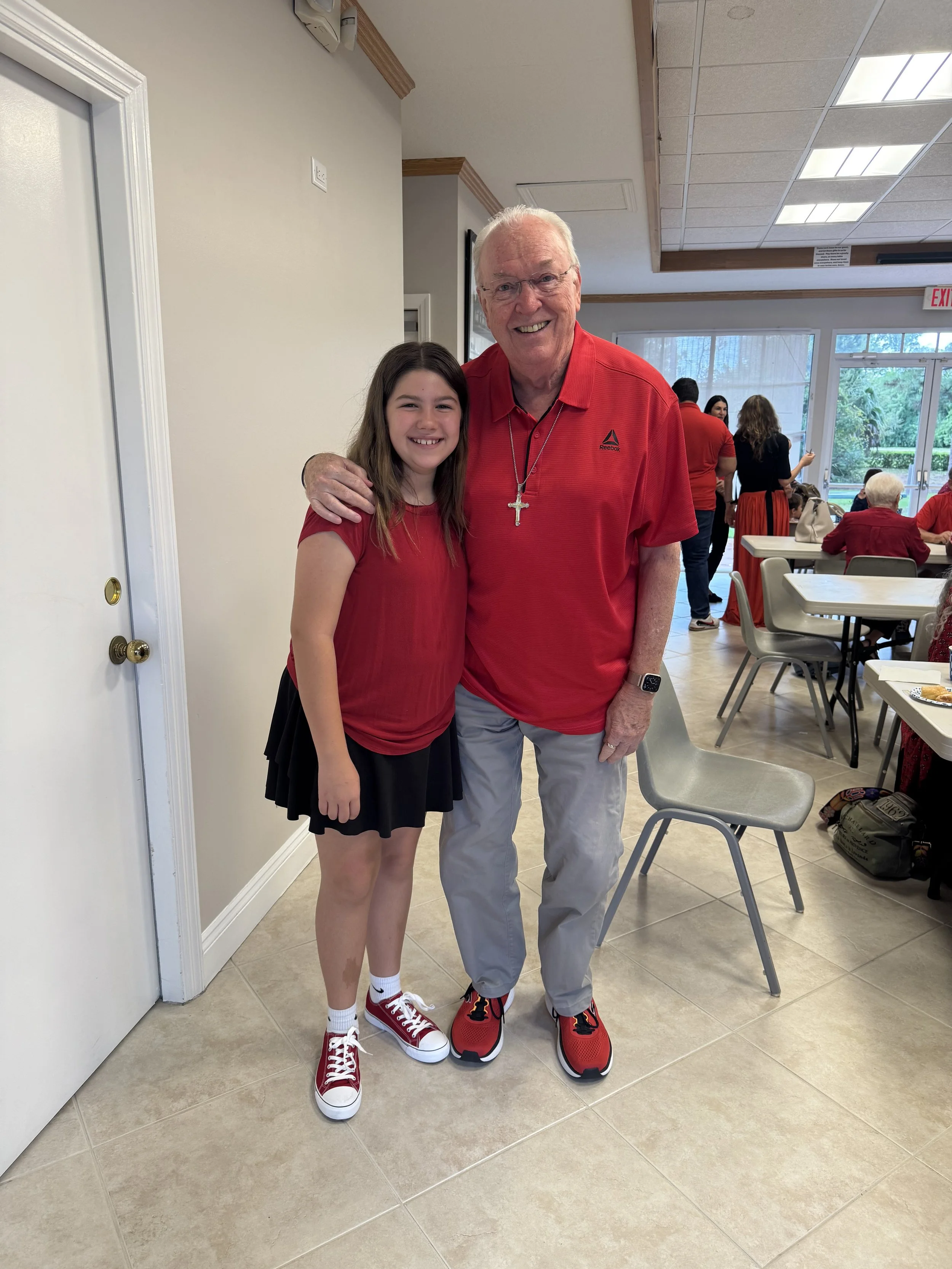
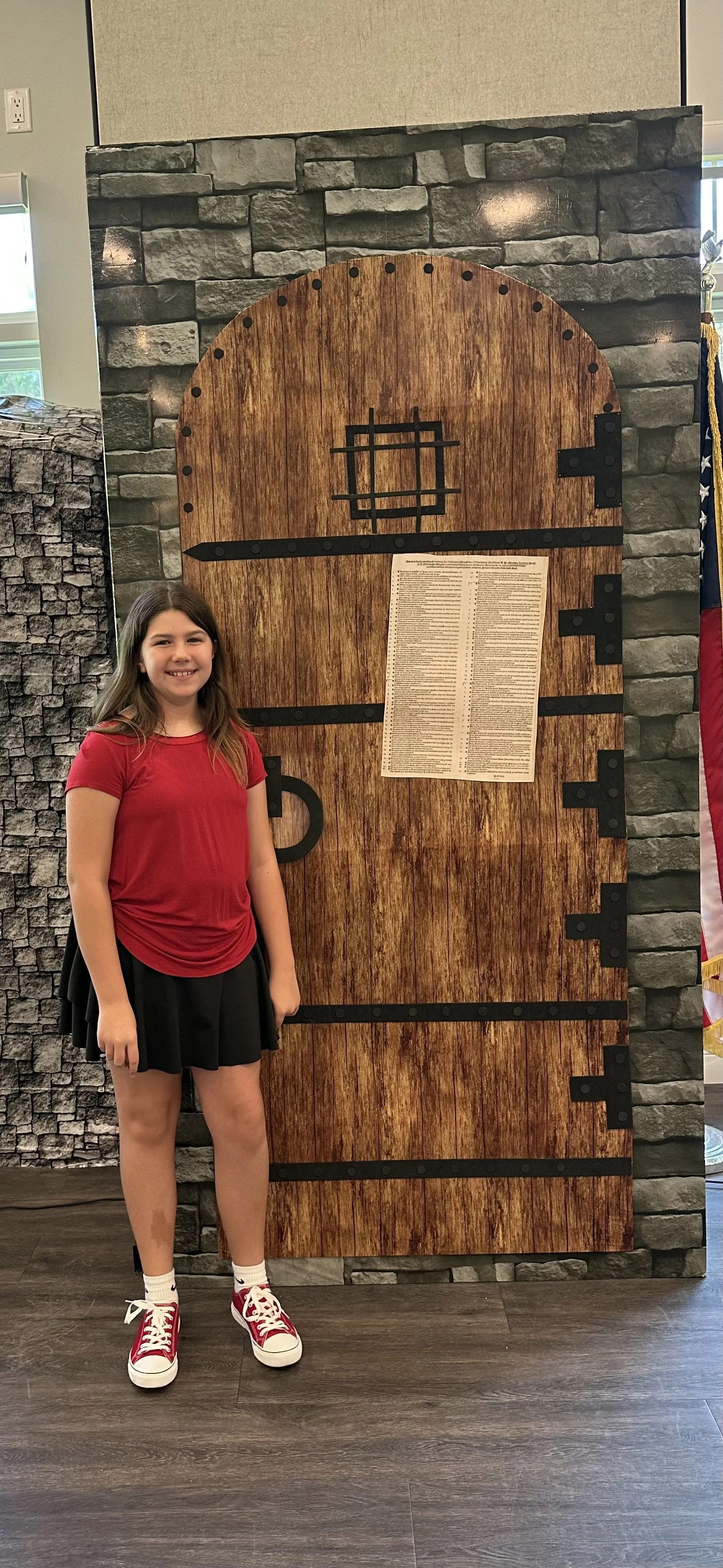
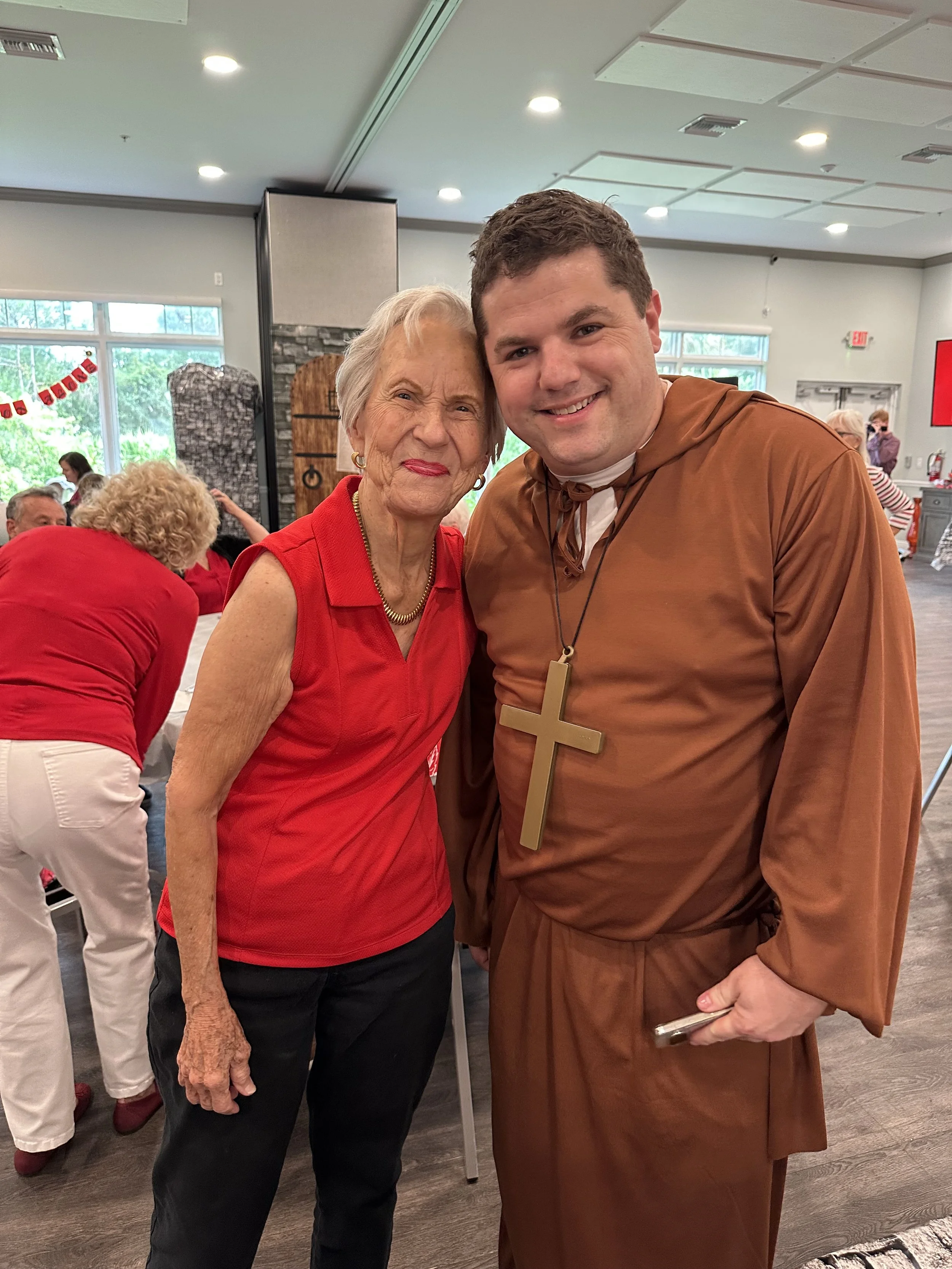
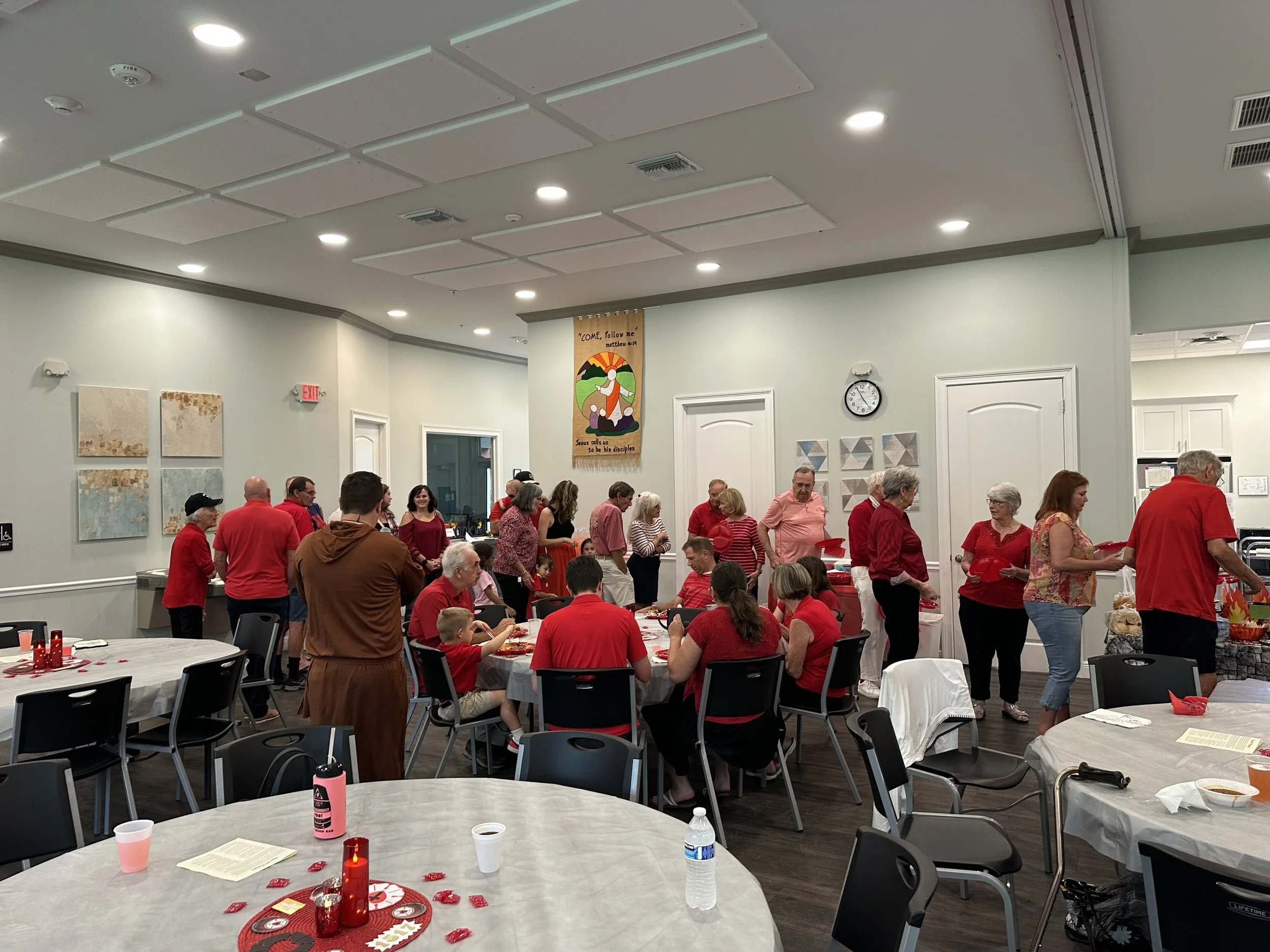
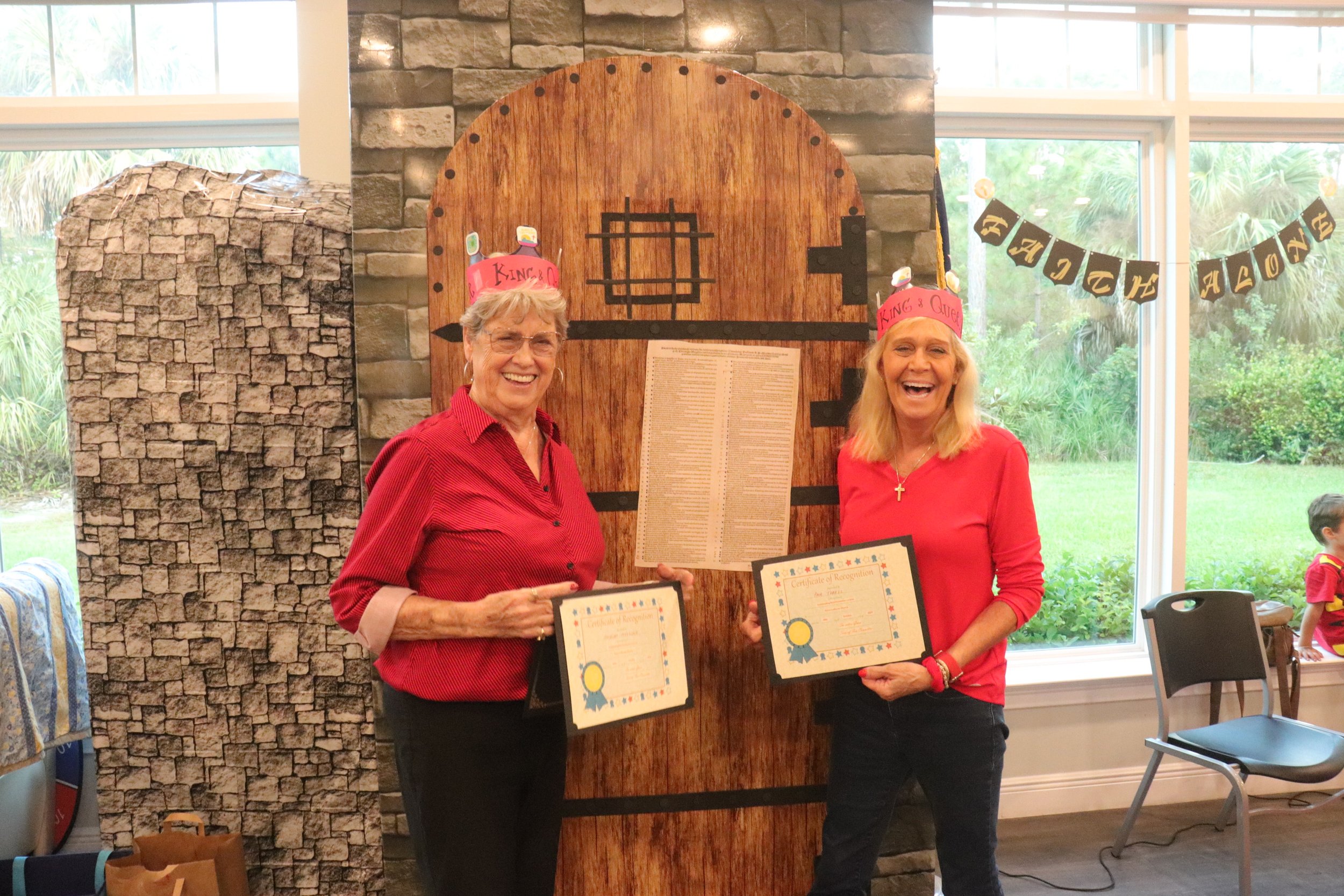
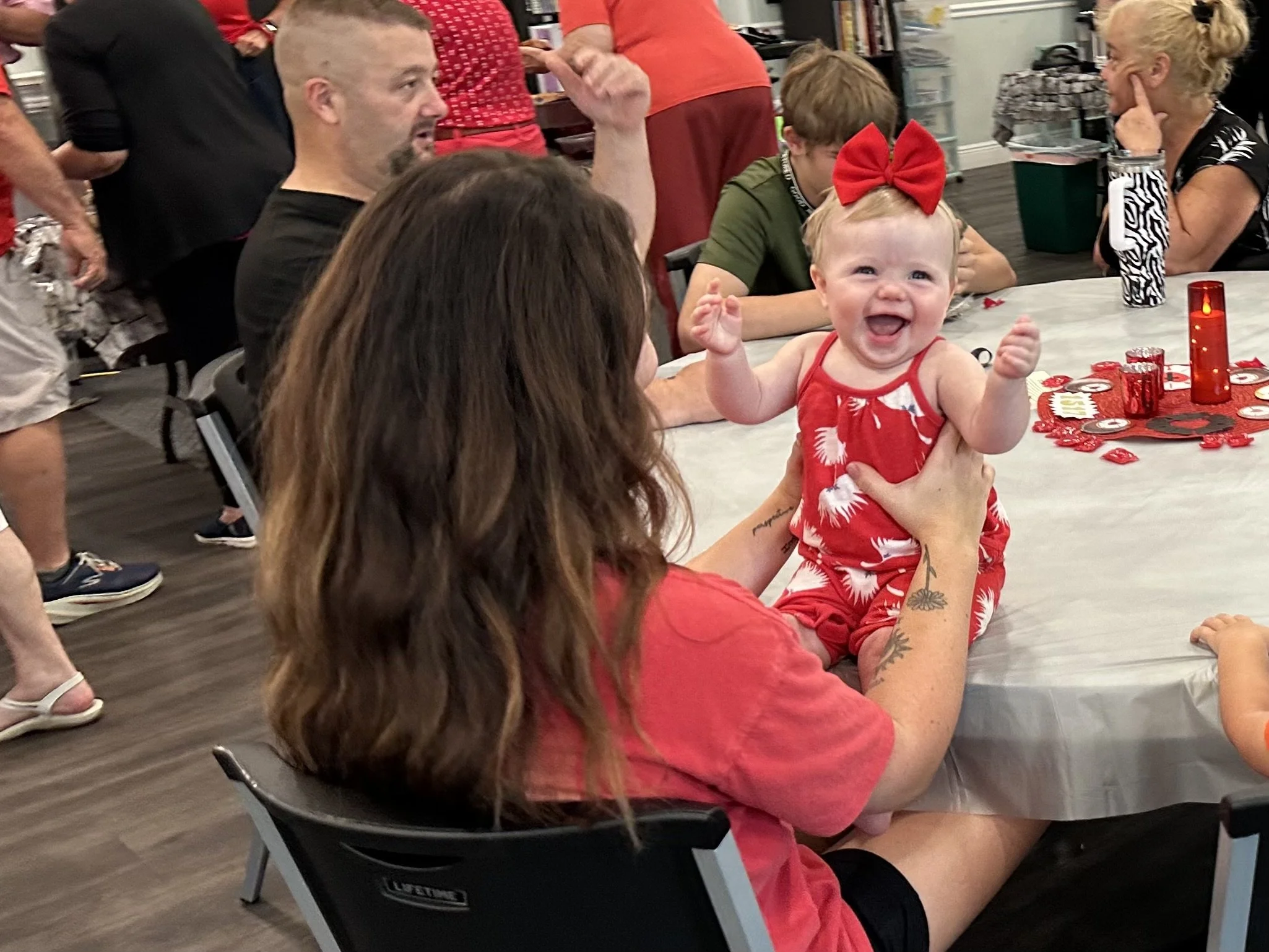
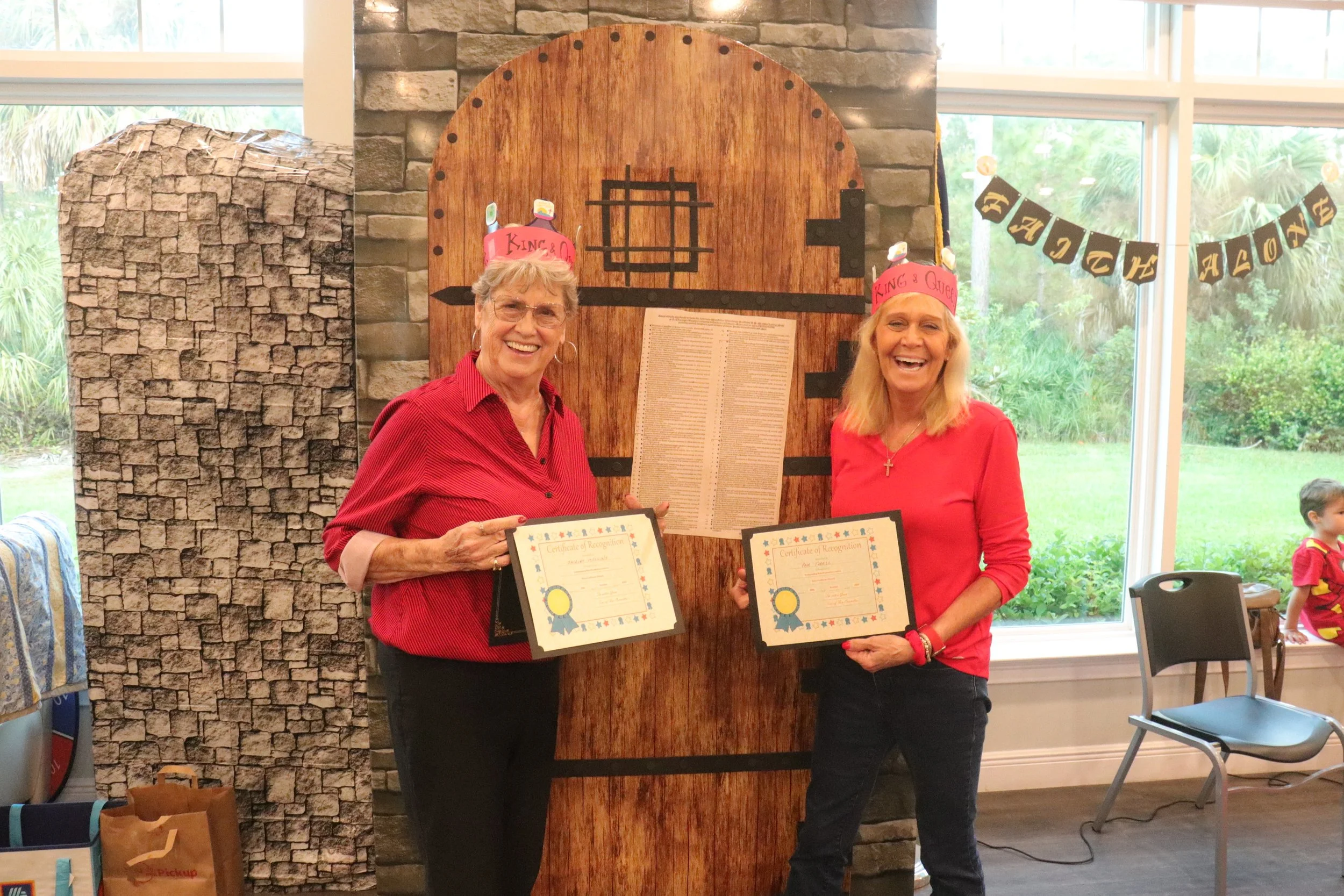
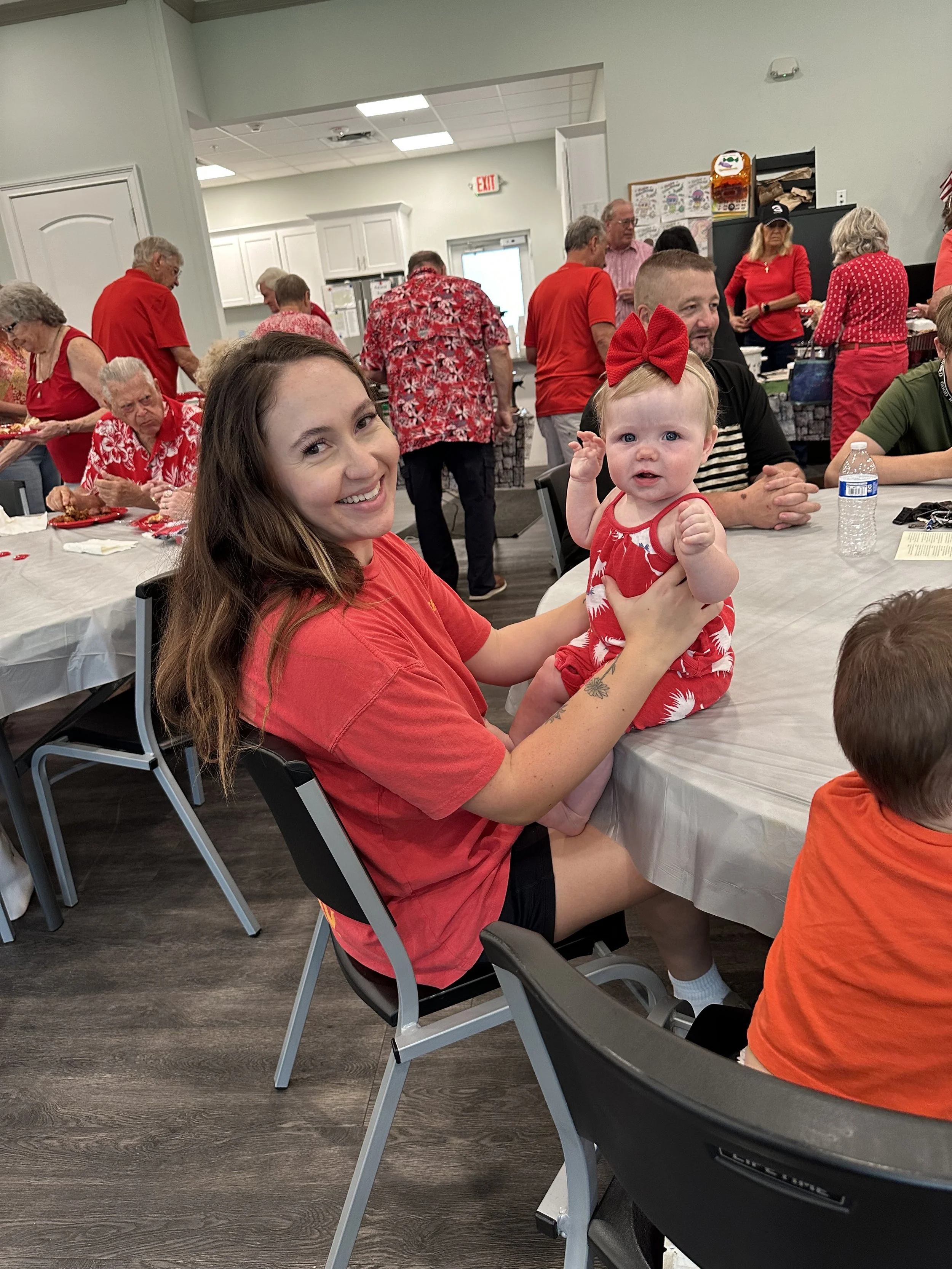
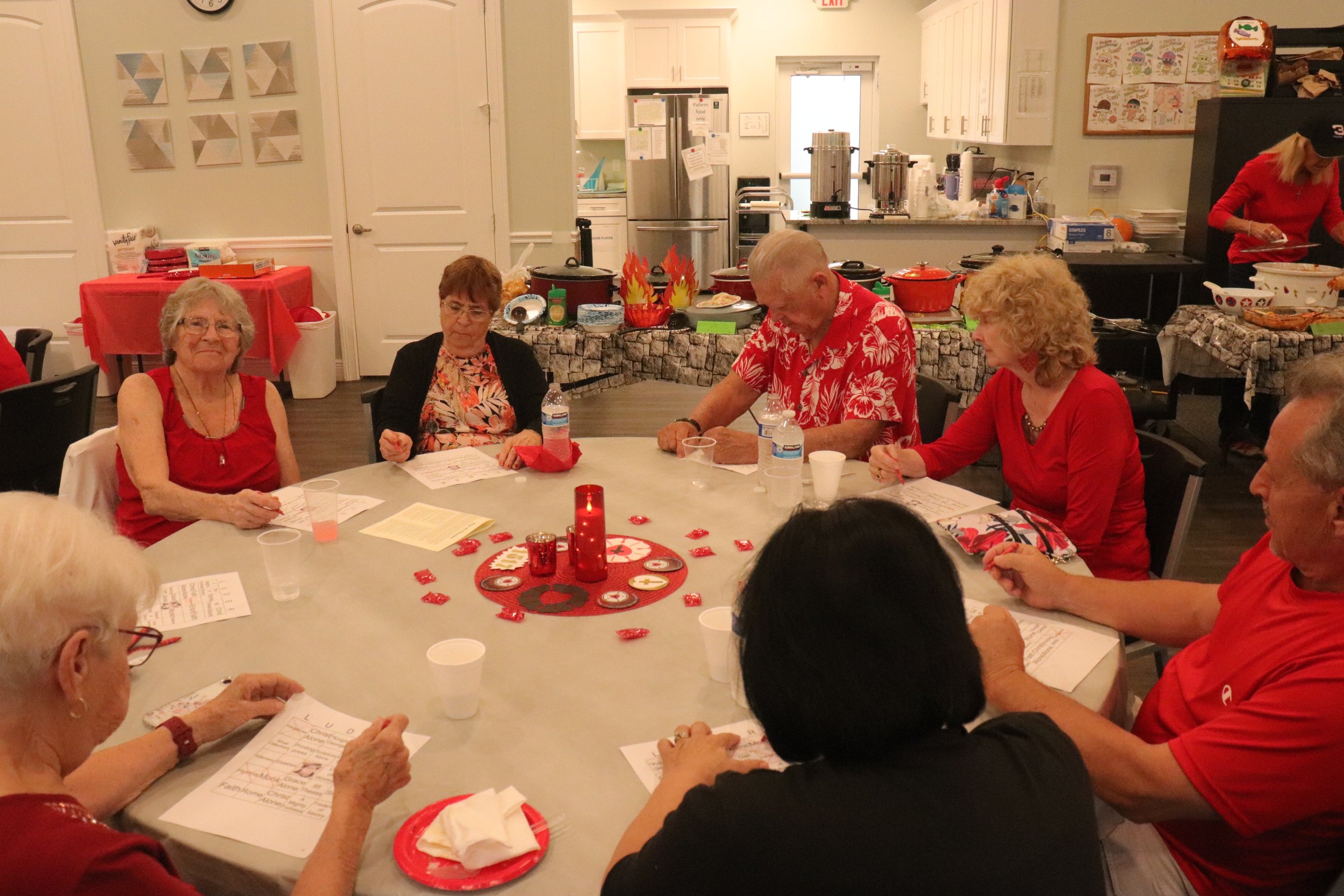
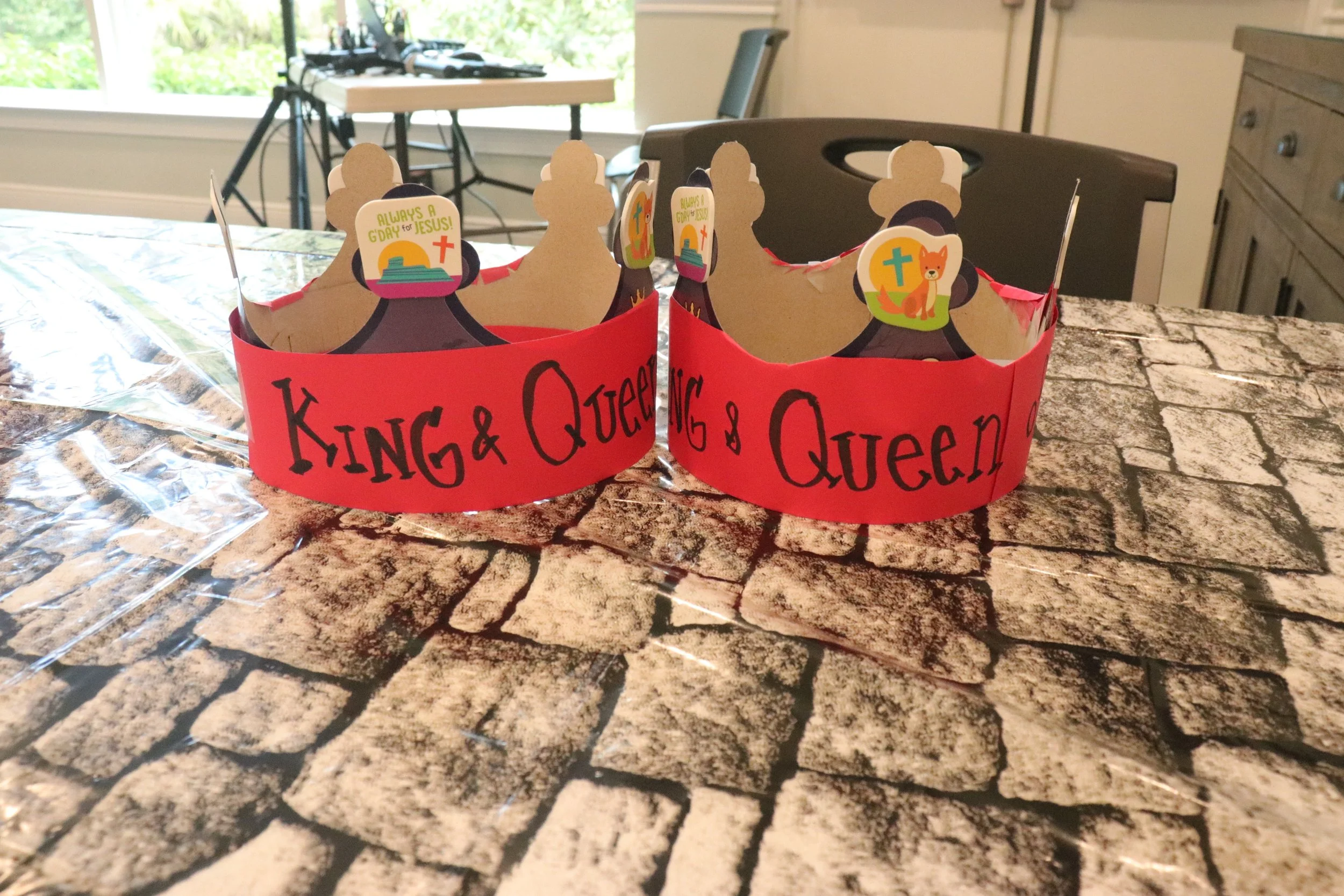
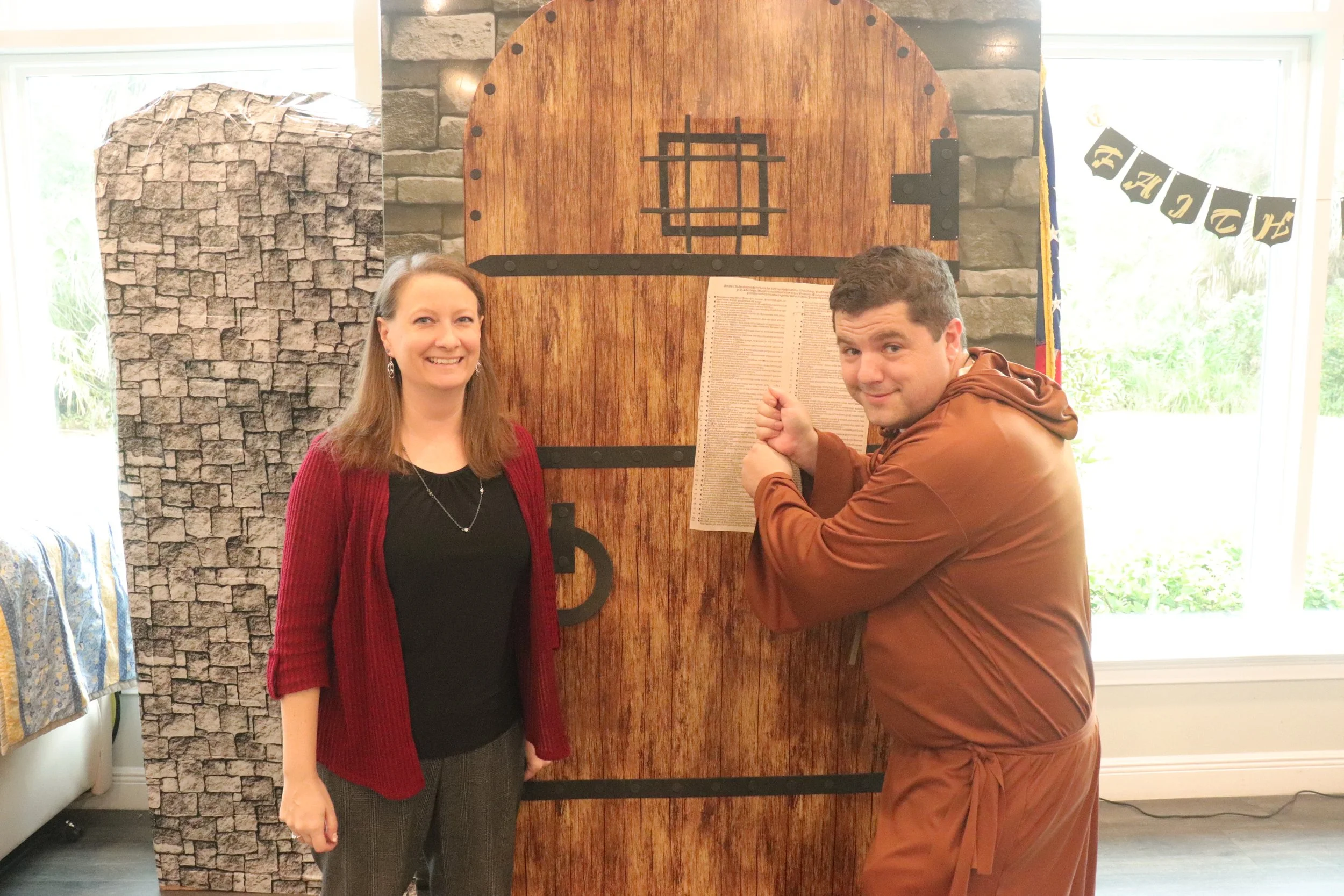
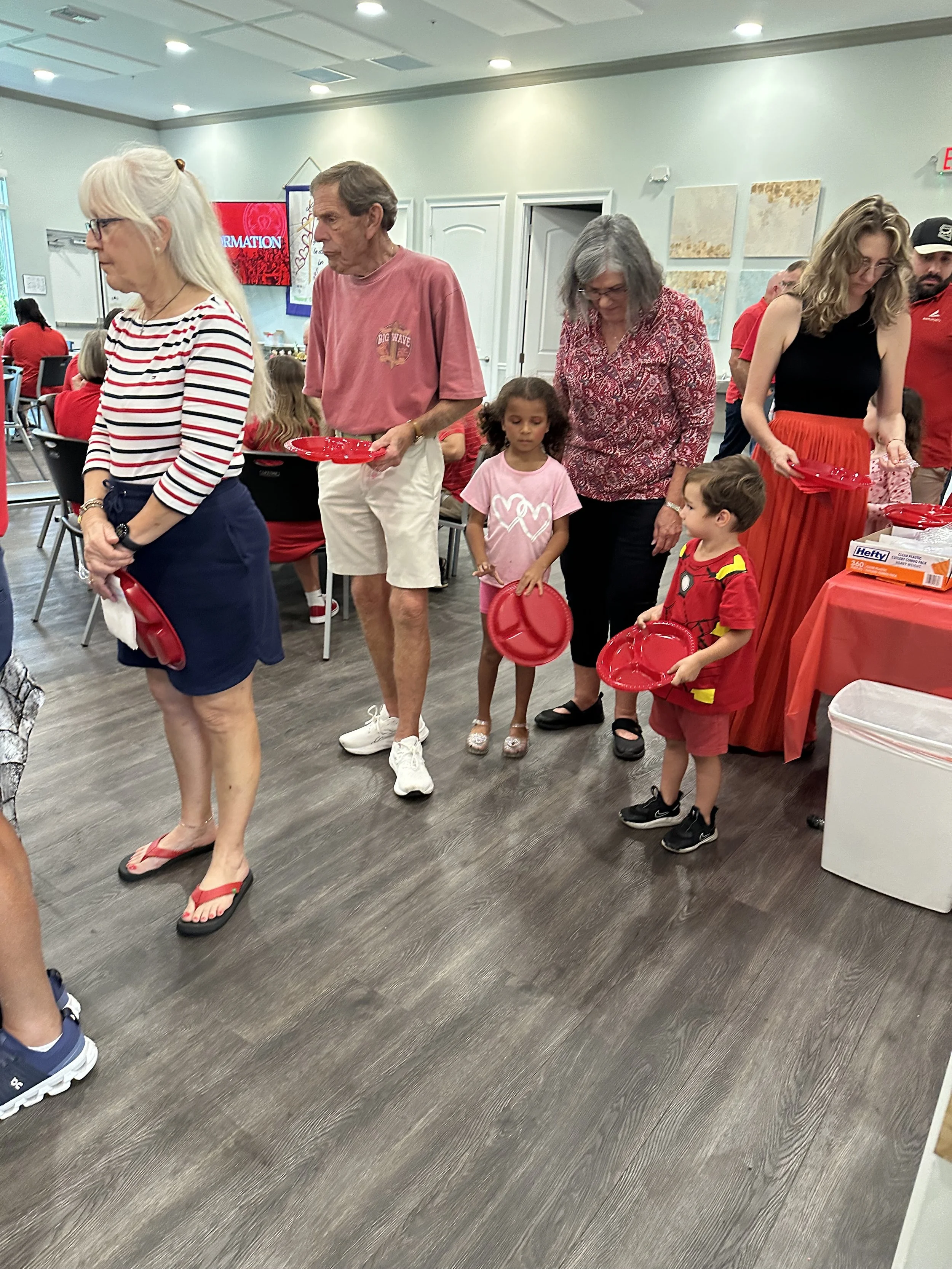
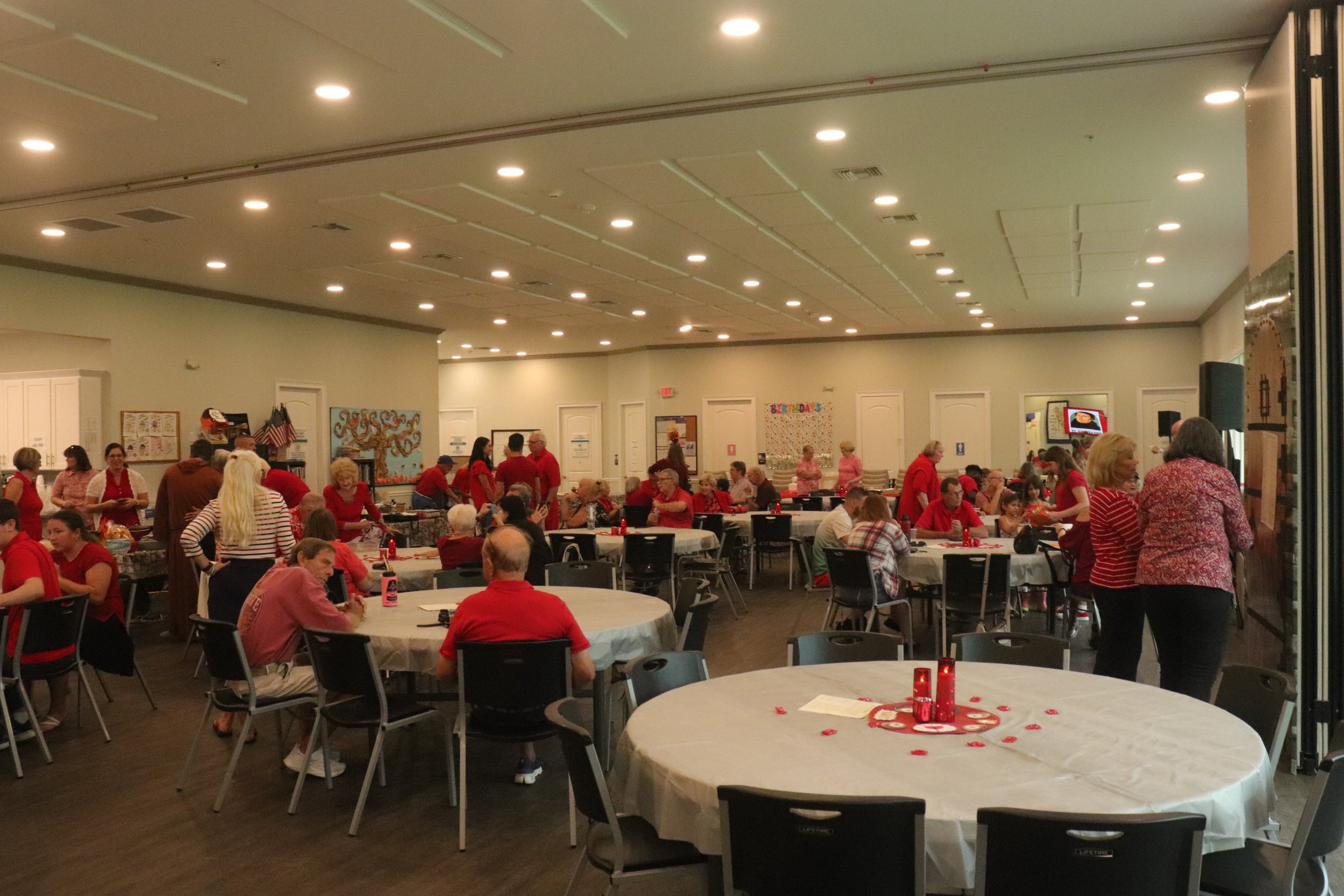
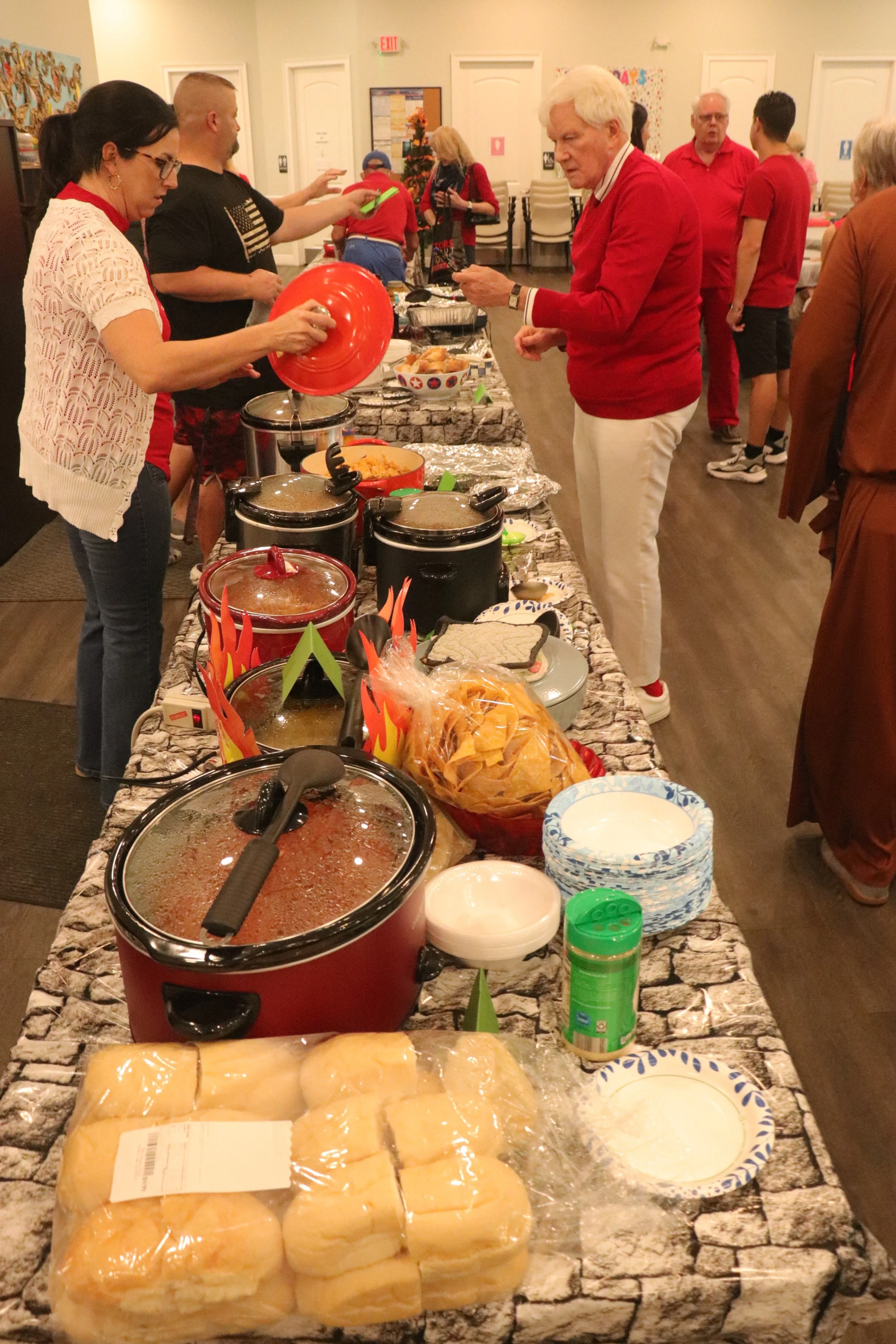
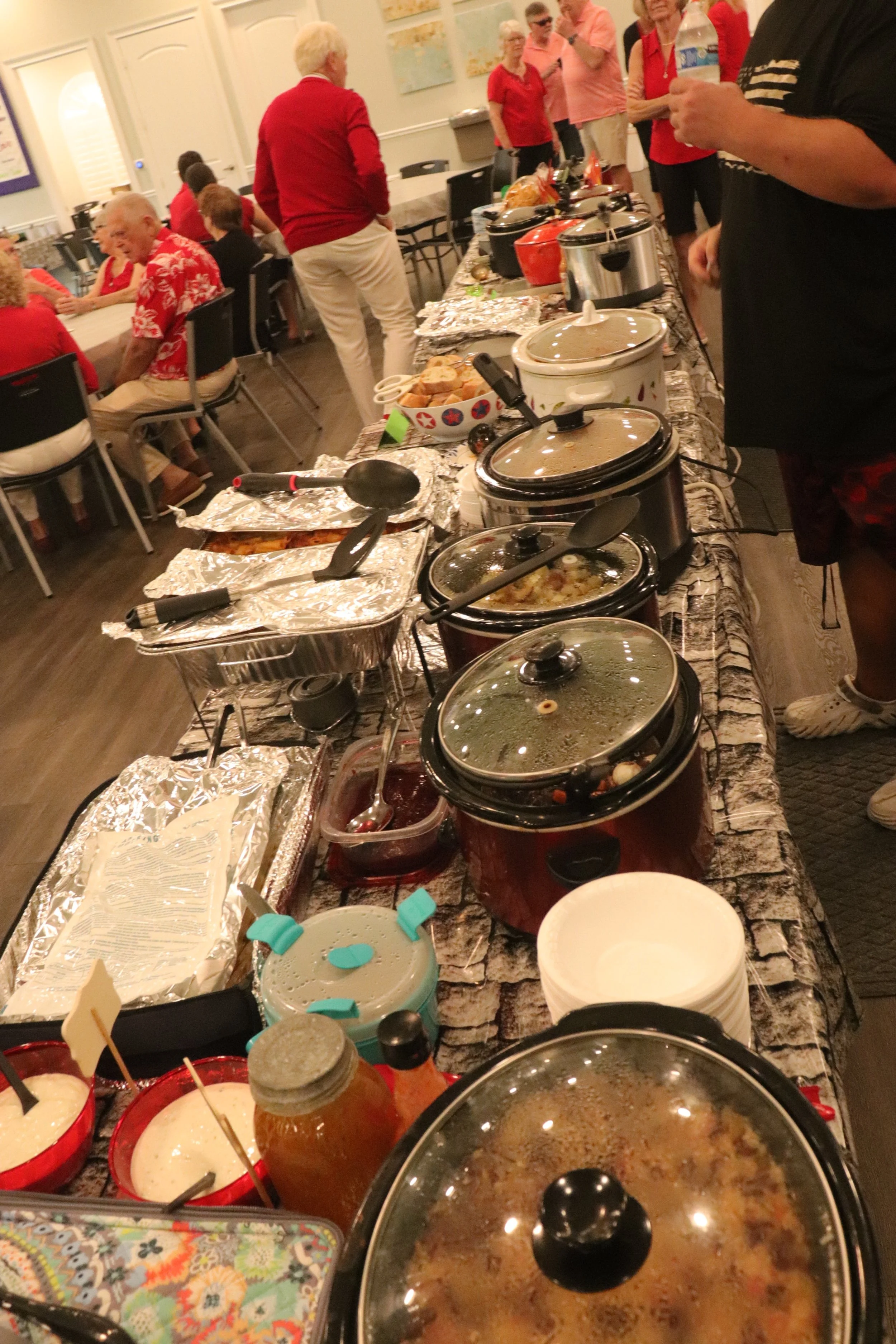
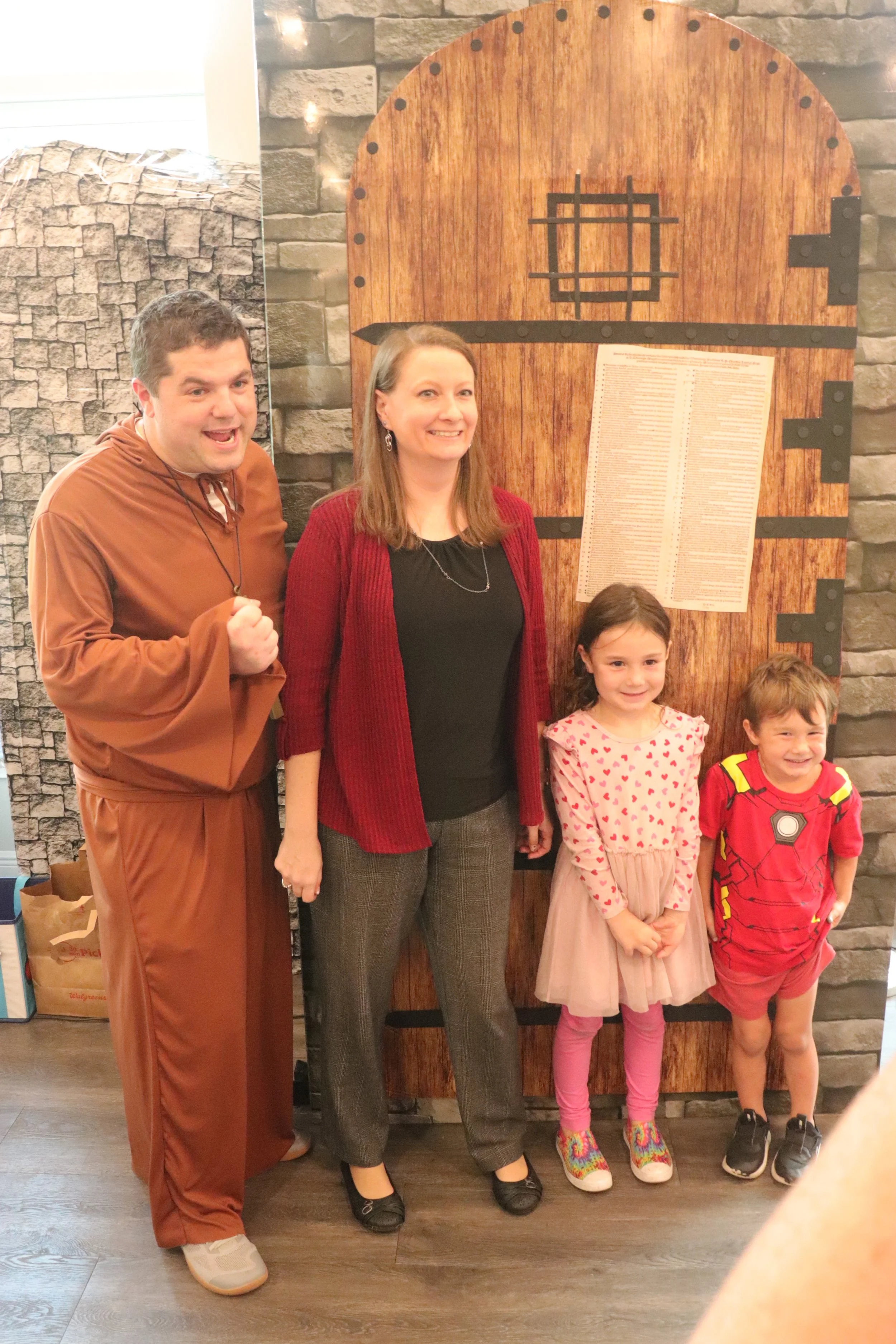
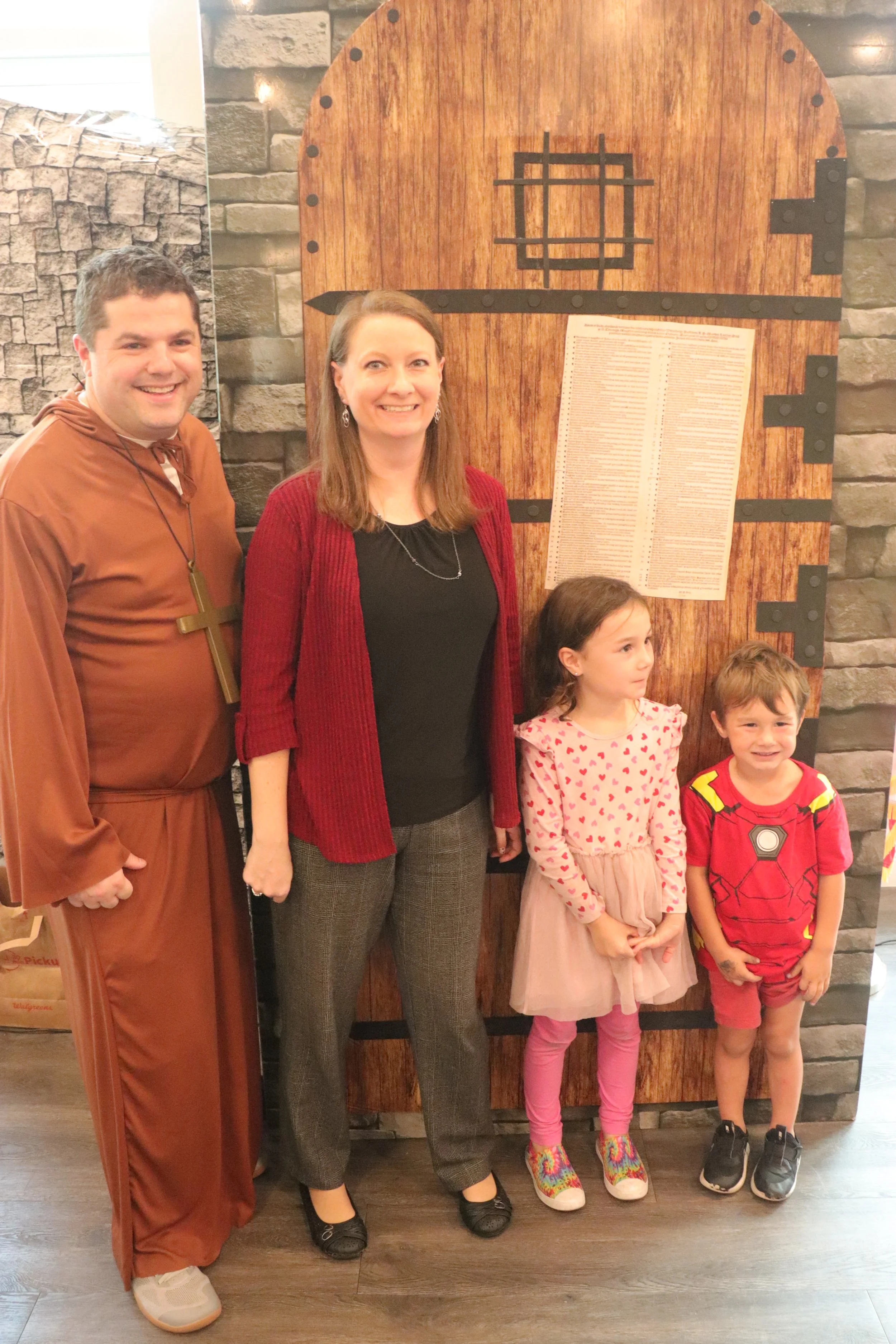
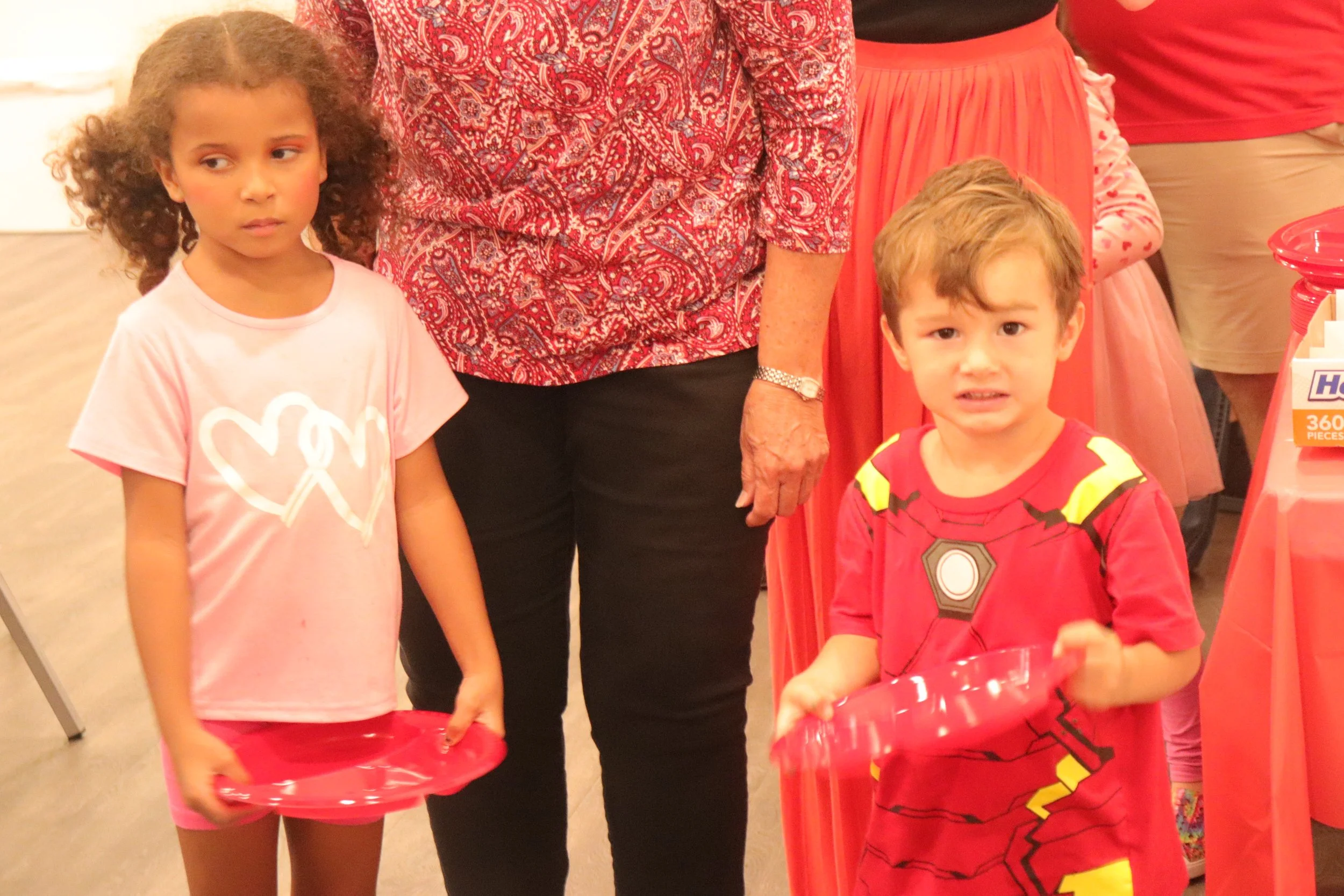
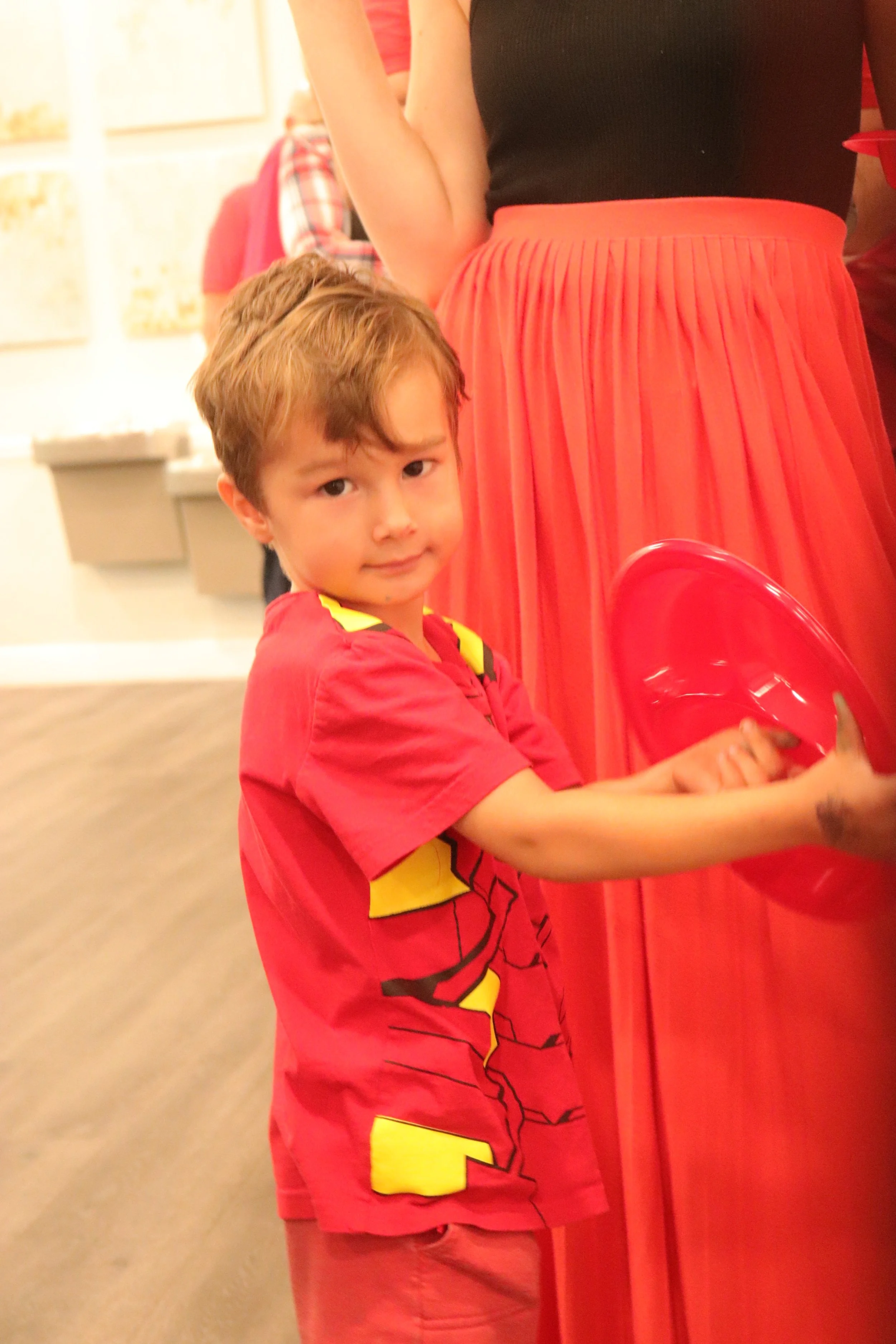
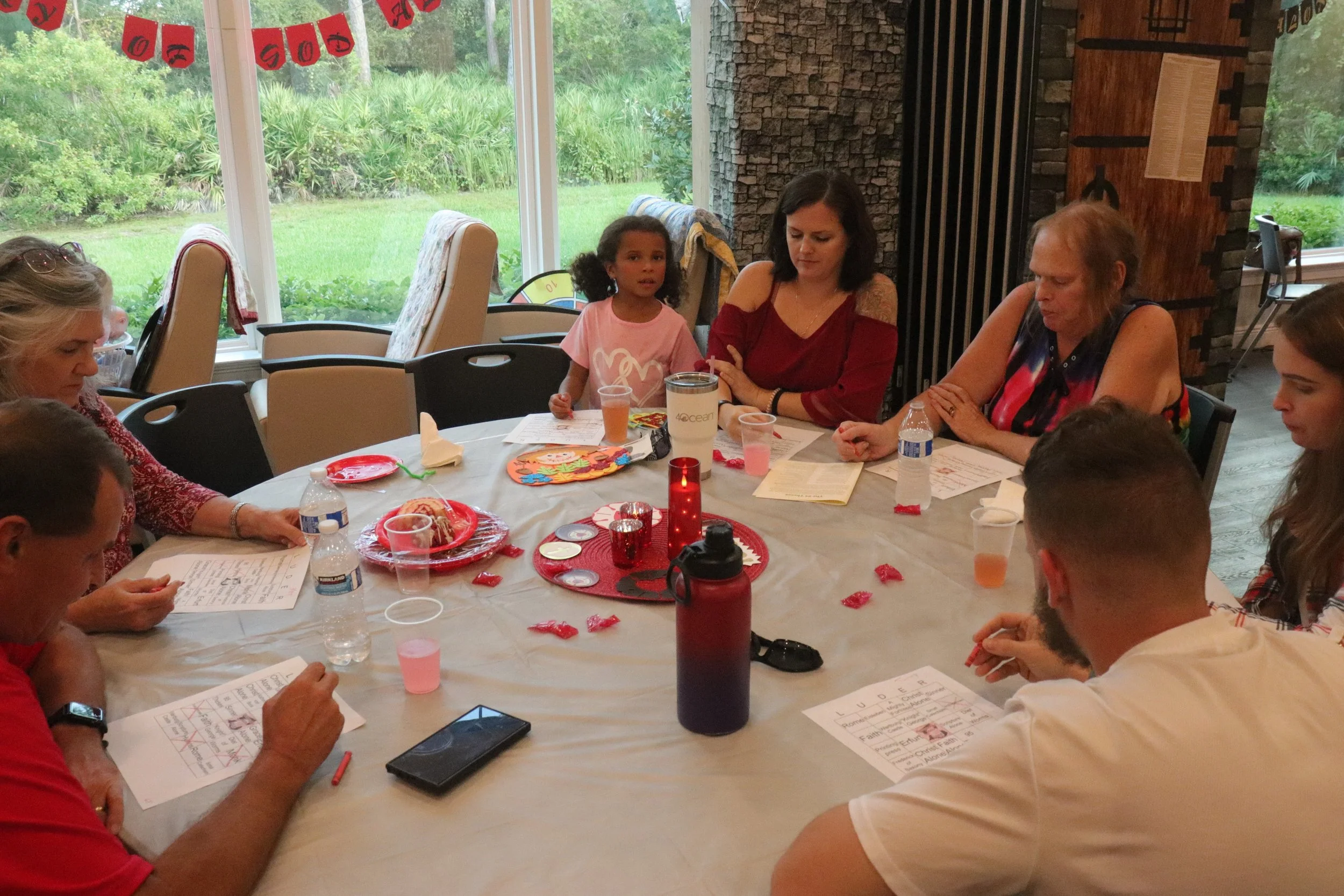
Pictures for our Reformation Dinner 25’
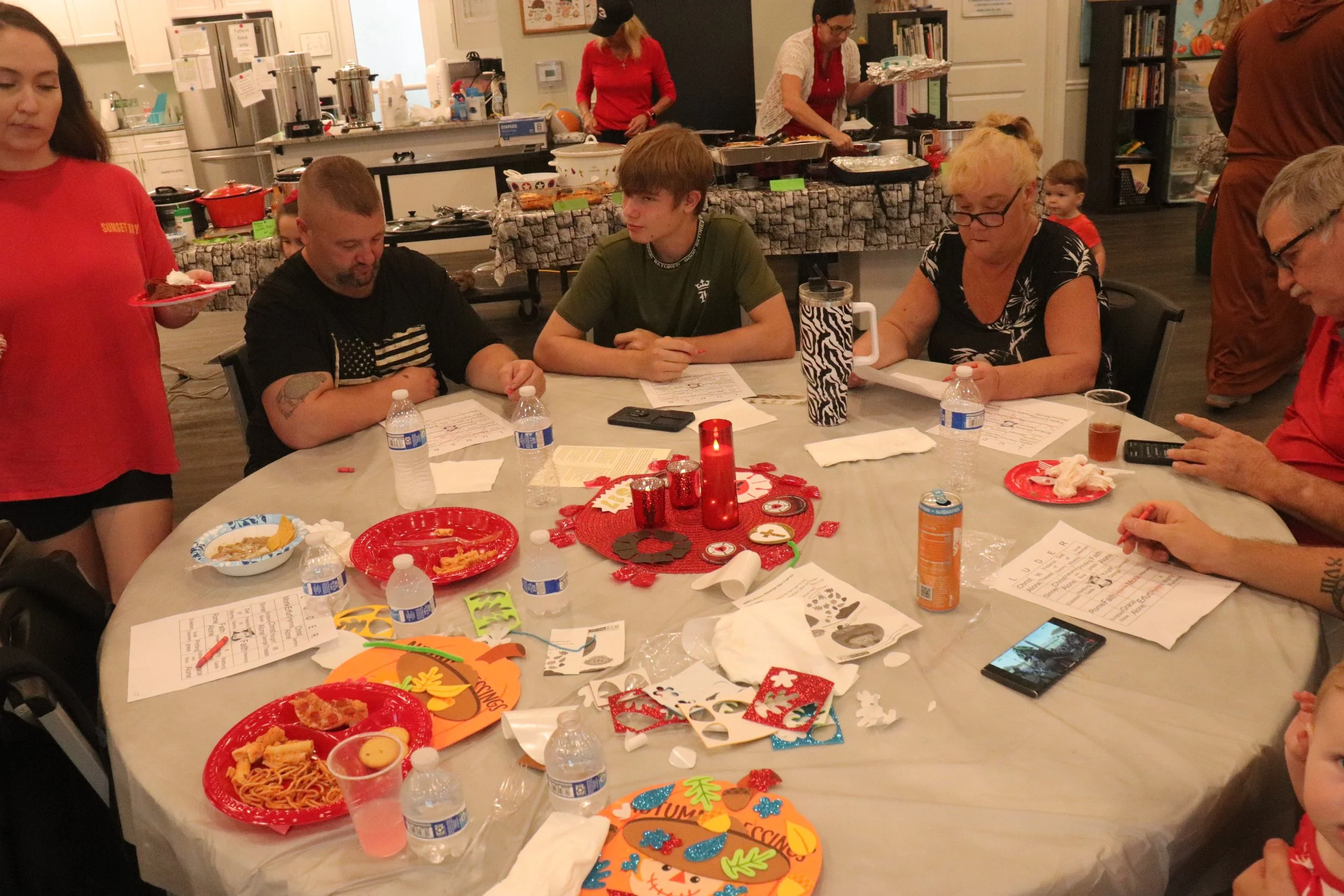
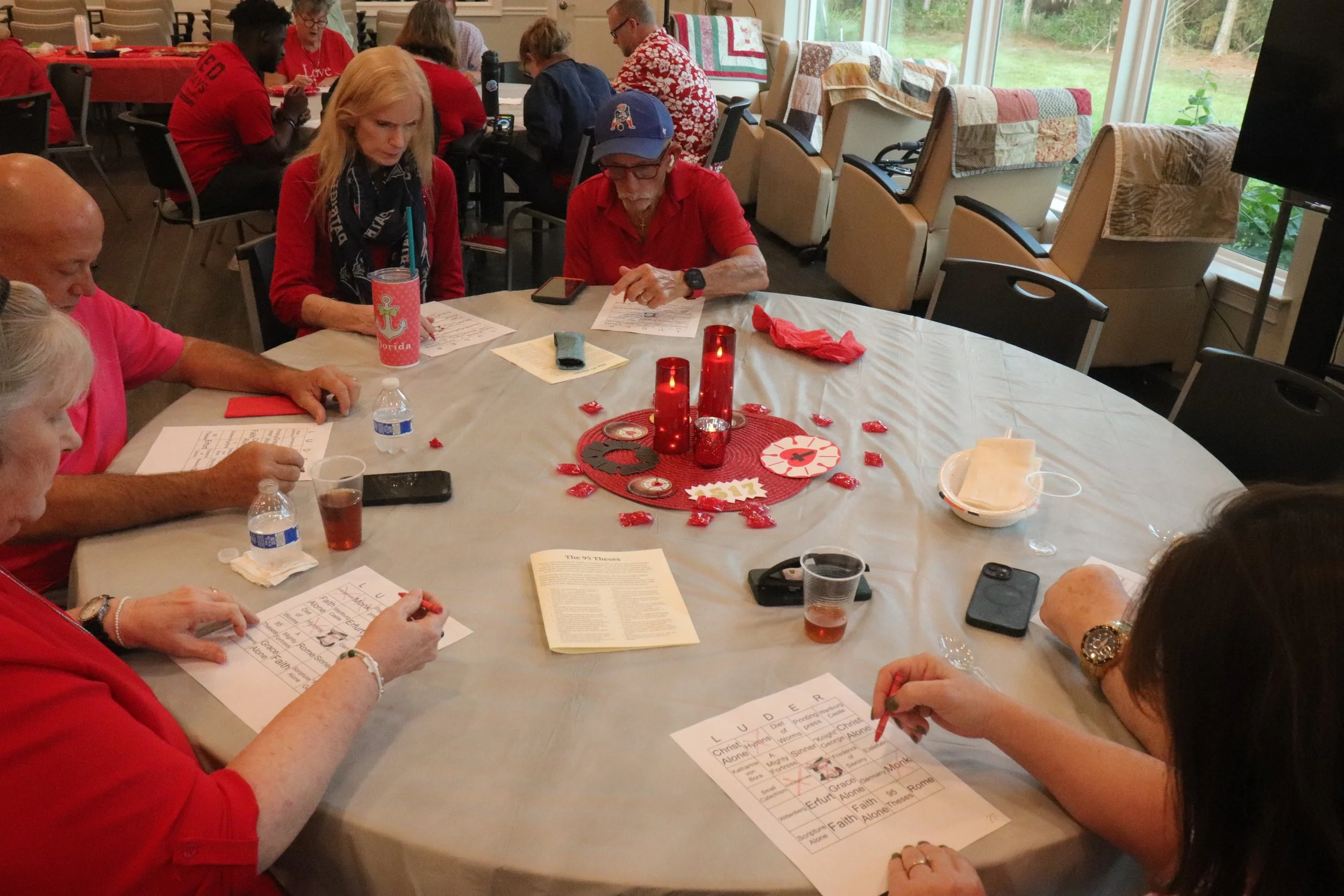
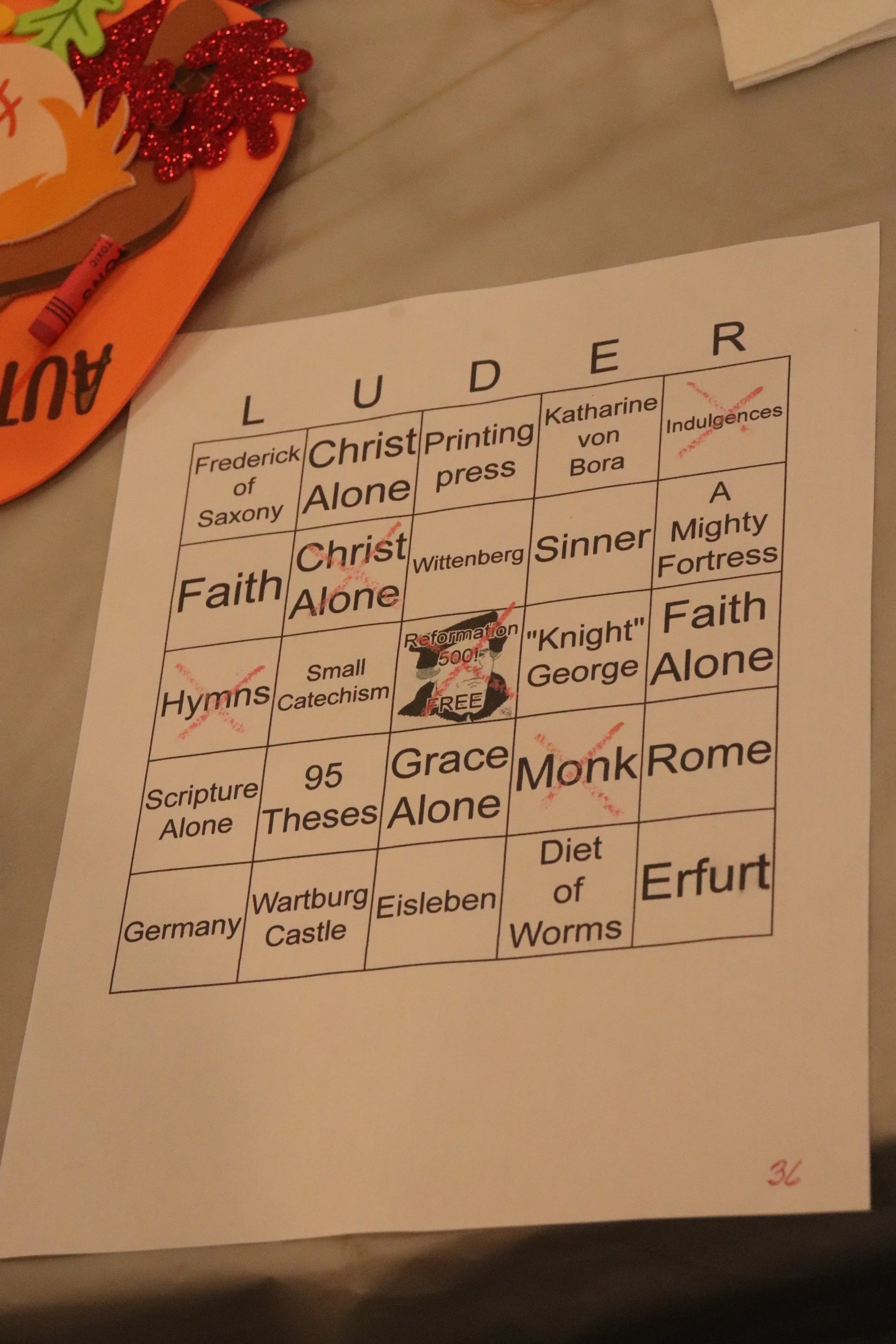
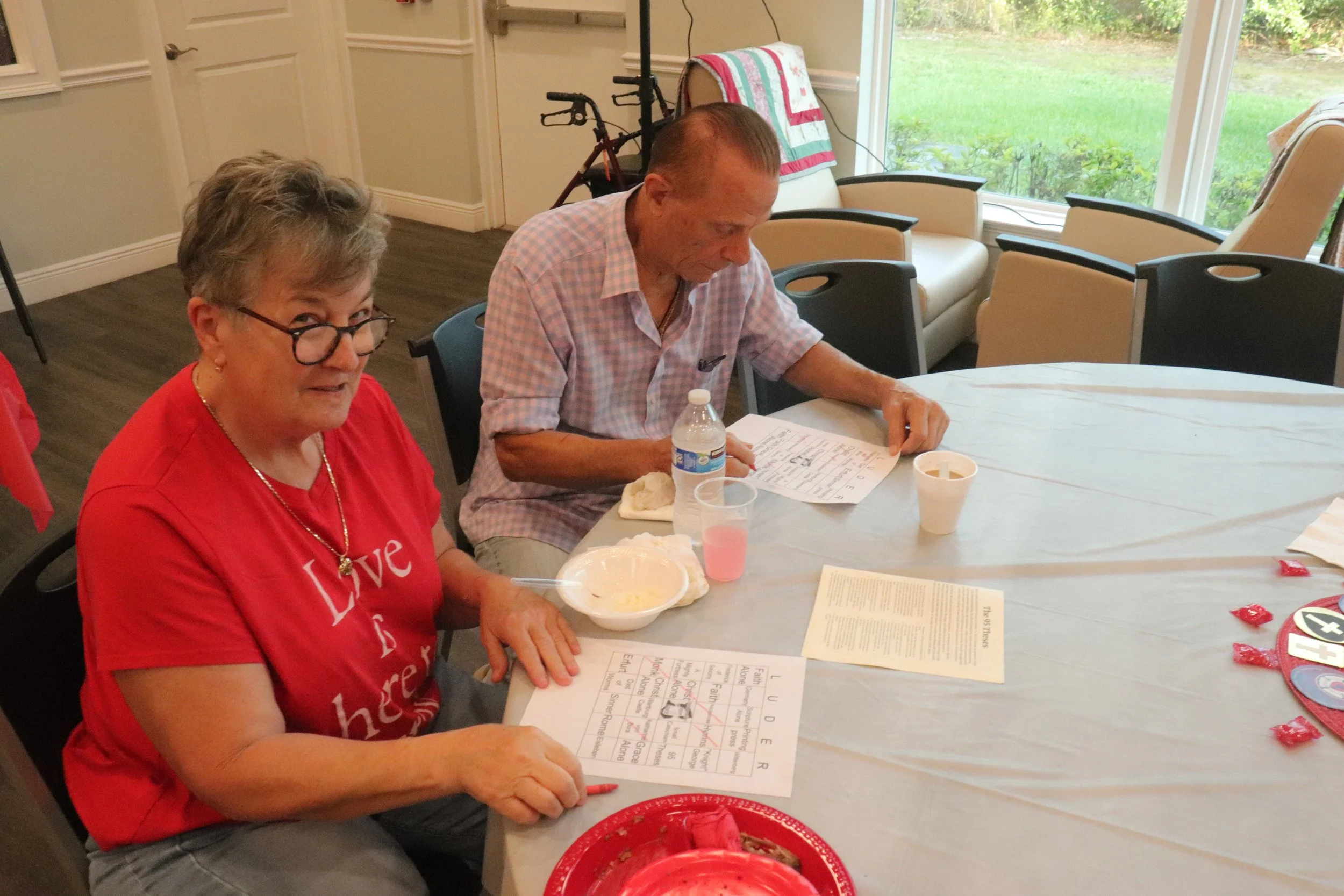
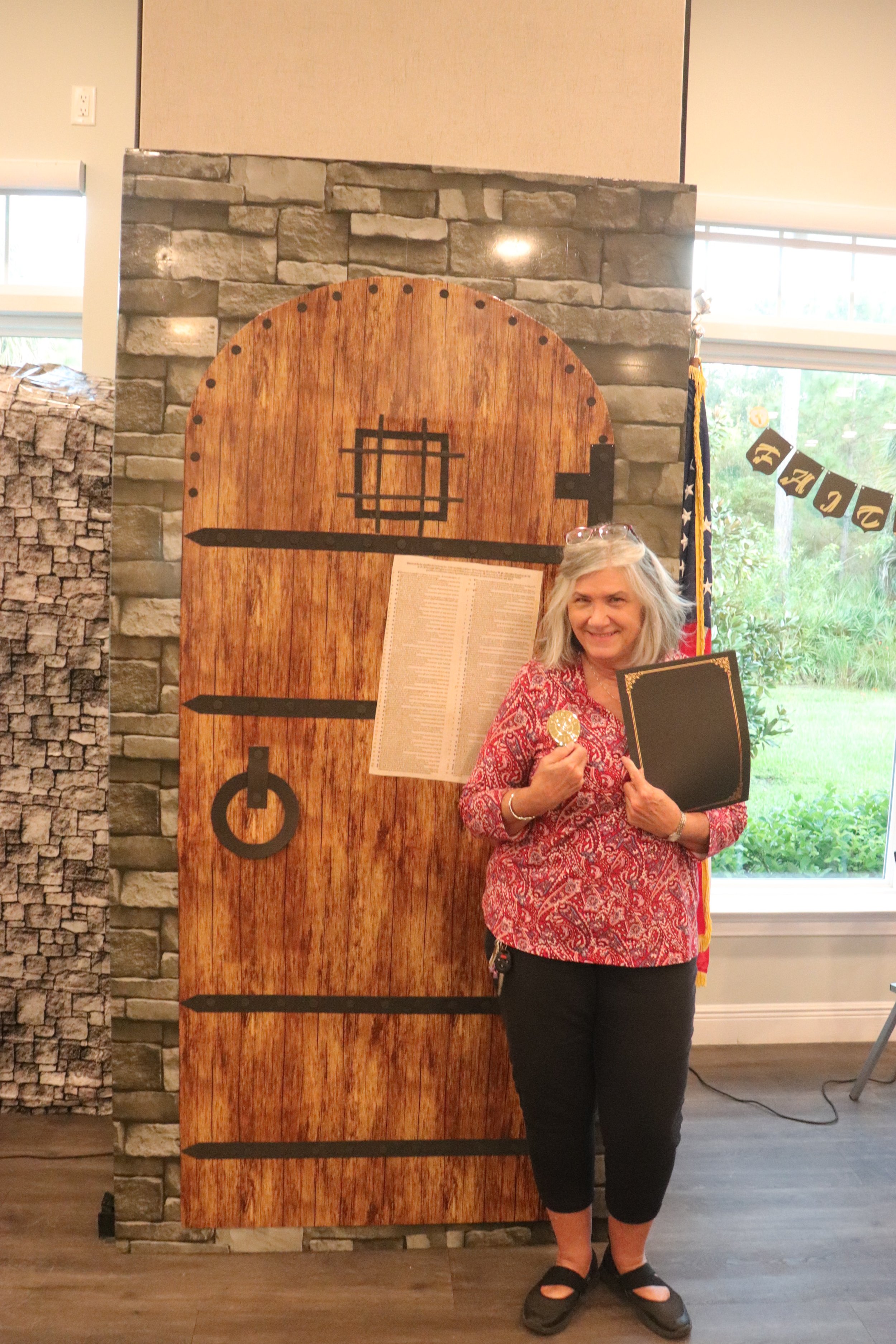
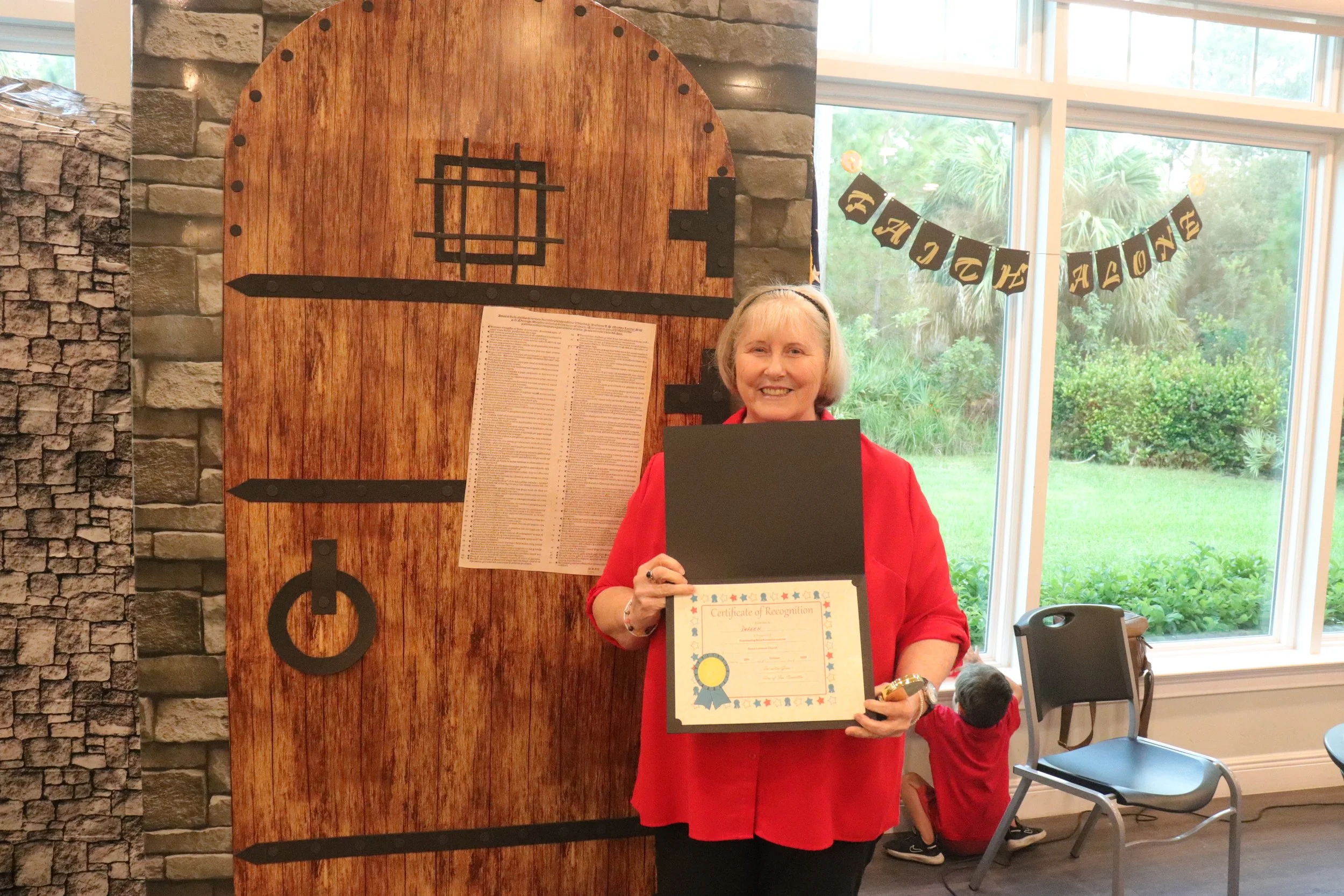
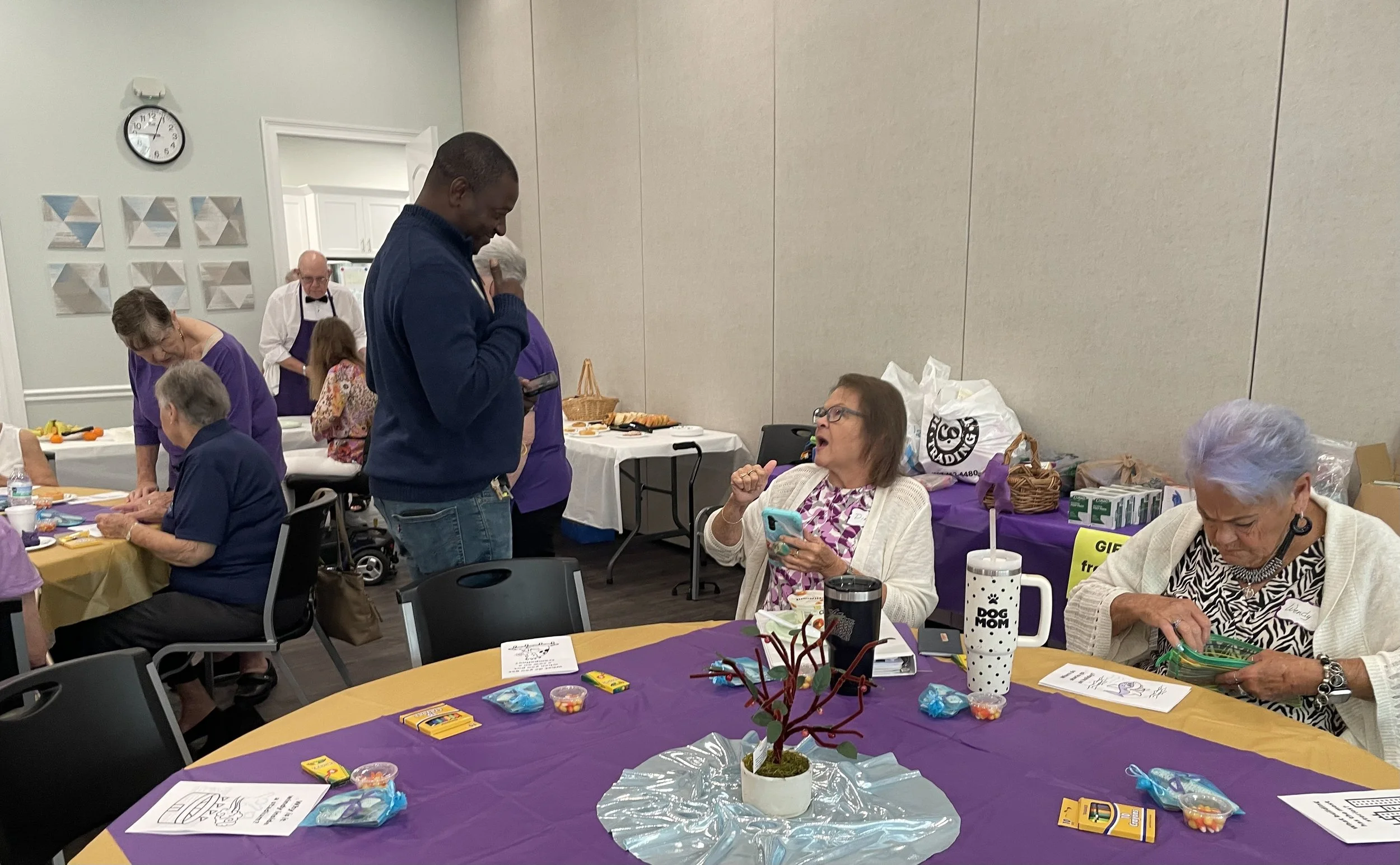
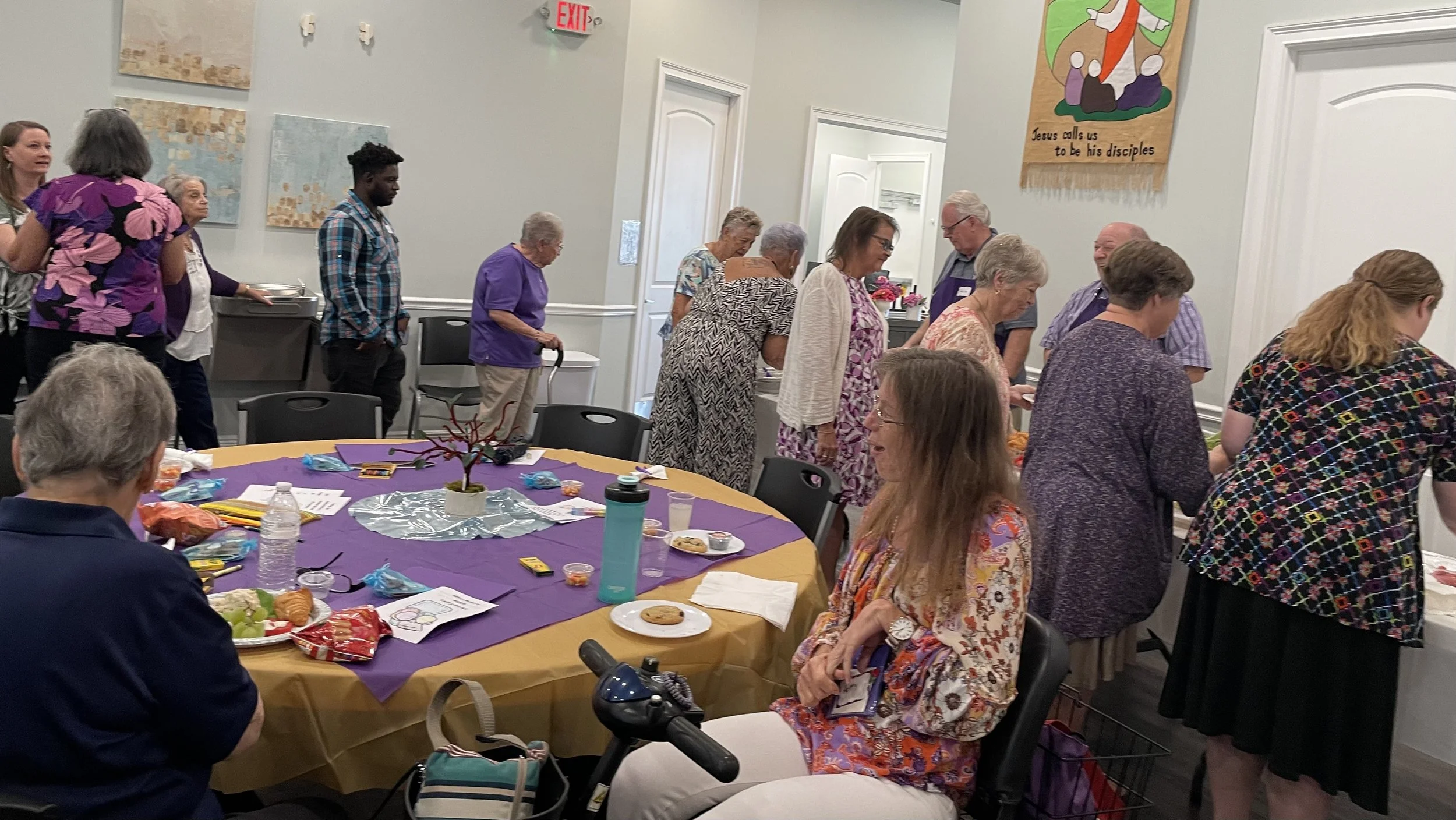
We had a wonderful time celebrating the Reformation. We enjoyed playing Reformation Bingo, where many won fantastic prizes. We also awarded prizes for the juiciest beets and other red-themed foods.













Revelation Ch 21-22 Bible Study
We traced Revelation 21–22 as the climactic reunification of heaven and earth, connecting its temple/tabernacle imagery, priestly stones, and the Bride/City to Eden’s river and tree of life, contrasting Babylon’s coercive economy with God’s freely given water of life and the Lamb’s healing light for the nations.
The Book of Revelation.
Chapter 21-22
This is an AI Recap of the class.
Some things may be incorrect.
Short Summary of the Whole Class
Our class explored Revelation 21–22 as the culmination of Scripture’s story: God dwelling with His people in the New Jerusalem, a holy city shaped by temple/tabernacle echoes (gold, jewels, perfect cube, priestly stones) where the Lamb is the light, the nations are healed, and tears, death, and pain are no more. We contrasted Babylon/Rome’s exploitative splendor and coercive “peace” with God’s economy of abundance and gift—“without cost”—and saw how the city’s gates and foundations bear the names of God’s people, forming a Bride/City crafted by God. Revelation 22’s renewed Eden (river of life, tree of life) anchored an invitation to “Come,” a call to worship God alone, guard the prophetic word, and embody kingdom mercy within worldly systems without worshiping them.
Timestamped Walkthrough and Section Summaries
0:00–3:00 — Setting the Stage: Revelation’s Climax and Eden’s Echo
Discussion: Positioned Revelation 20–22 as a unified picture of Jesus’ victory and the reunification of heaven and earth (God’s space and human space), returning the story to Eden’s original unity.
Scriptures: Revelation 20–22 (overview).
Stories/Themes: Eden as unified space; New Creation as end-goal.
Short summary: The end brings us back to the beginning—God and humanity sharing one space.
3:01–10:00 — Reading Revelation 21 Aloud
Discussion: Read Revelation 21:1–27—new heaven and earth; New Jerusalem as Bride; God dwelling with His people; no more tears, death, sorrow, pain; “Behold, I make all things new”; water of life freely given; cube-like city; no temple—God and the Lamb are its temple; the Lamb as light; nations and kings in submission; purity of those in the Lamb’s book of life.
Scriptures: Revelation 21:1–27.
Short summary: Revelation 21 paints a lavish, symbolic vision of God’s healing presence with His people.
10:01–16:00 — Interpreting the Imagery: Symbolism over Literalism
Discussion: Emphasized the symbolic nature of ornate descriptions (e.g., transparent gold), rooted in biblical patterns rather than literal architecture; splendor serves theological purpose—God’s dwelling.
Scriptures: Revelation 21 (imagery).
Short summary: The city’s beauty is biblical symbolism, pointing to God’s historic dwelling with His people.
16:01–24:00 — Tabernacle Echoes: Gold, Jewels, and the Cube
Discussion: Connected the city’s measurements and jewels to the tabernacle/temple; highlighted the Holy of Holies as a cube, reflected in the city’s equal dimensions; paradox of “gold like transparent glass” evokes surpassing splendor.
Scriptures: Revelation 21:15–17; Exodus 26.
Short summary: The whole city mirrors the Holy of Holies—God’s sacred presence now fills all.
24:01–32:00 — Exodus Offerings and Reoriented Splendor
Discussion: Read Exodus 35:4–29 (offerings for the tabernacle) showing wealth redirected from idolatry (golden calf, Exodus 32) to worship; contrasted Babylon/Rome’s power-glorifying splendor with biblical splendor that glorifies God’s dwelling.
Scriptures: Exodus 35:4–29; Exodus 32; Revelation 21 (foundations, gates).
Stories: Golden calf.
Short summary: God repurposes human wealth to build a dwelling where heaven meets earth.
32:01–40:00 — No More Tears: Lamb’s Peace vs. Pax Romana
Discussion: Focused on Revelation 21:4; contrasted Rome’s Pax Romana (peace by domination) with the Lamb’s compassionate reign that wipes away tears.
Scriptures: Revelation 21:4.
Stories/Themes: Pax Romana vs. Lamb’s peace.
Short summary: The Lamb brings true peace that heals suffering, unlike coercive imperial “peace.”
40:01–48:00 — Nations and Kings in the Lamb’s Light
Discussion: Revelation 21:23–26—nations walk in the Lamb’s light; kings bring glory in submission; contrasted merchants mourning Babylon (Revelation 18–19) with purified honor in God’s presence.
Scriptures: Revelation 21:23–26; Revelation 18–19 (allusion).
Short summary: Earthly glory is surrendered and purified in the Lamb’s light.
48:01–56:00 — God’s Economy: Water of Life Without Cost
Discussion: Revelation 21:6—life is gift, not transaction; contrasted Babylon’s scarcity/exploitation with divine abundance; noted echoes of Revelation 6 (balances of commerce).
Scriptures: Revelation 21:6; Revelation 6 (allusion).
Short summary: God’s economy replaces scarcity with free, abundant life.
56:01–64:00 — Desert Contrast and True Splendor
Discussion: Exodus 26’s rich design in a desert underscores God’s life breaking into desolation; contrasted Herod’s performative vanity with the Lamb’s substantive splendor around the slain-yet-victorious Christ.
Scriptures: Exodus 26.
Stories: Herod and John the Baptist (Mark 6:17–29, implied).
Short summary: God’s presence brings real beauty into barren places, unlike hollow imperial show.
64:01–72:00 — Priestly Stones and the City’s Holiness
Discussion: Compared Exodus 28:17–20 (breastplate stones) with Revelation 21:19–21 (foundations/gates); city as priestly, holy space; New Jerusalem embodies God’s desire to dwell with His people.
Scriptures: Exodus 28:17–20; Revelation 21:19–21.
Short summary: What was once limited to priests/Holy of Holies now defines the shared life of God with His people.
72:01–80:00 — Twelve Stones, Seals, and Foundations Mean People
Discussion: Exodus 28:21’s engraved stones as tribal representation; “twelve” symbolizes God’s people (tribes/apostles); city “built out of the people,” yet wrought by God; reflection on the torn temple curtain.
Scriptures: Exodus 28:21.
Stories: Temple curtain torn at the crucifixion (thickness noted).
Short summary: The city’s foundations signify God’s people and God’s initiative in redemption.
80:01–88:00 — Bride and City; Names on Gates; Holy of Holies Geometry
Discussion: Revelation 21:9–14—angel shows the Bride as the City; twelve gates named for tribes; twelve foundations; cubic geometry evokes Holy of Holies; names inscribed signal covenant identity.
Scriptures: Revelation 21:9–14.
Short summary: The Bride/City bears the names of God’s people—identity embedded in God’s dwelling.
88:01–95:00 — Pronoun Nuance: “She” vs. “It” and God-Lit City
Discussion: Greek feminine forms tie the city to Bride imagery; Revelation 21:22–27—no temple; Lamb is light; nations walk by His light; Lord’s Prayer motivates mercy ministries as kingdom living now.
Scriptures: Revelation 21:22–27; Matthew 6:10; Matthew 1:23; Matthew 28:20.
Stories: Mercy ministry example (serving those with Alzheimer’s).
Short summary: The Bride/City’s personal identity and God-lit reality call the church to live the kingdom through mercy.
95:01–102:00 — Eden Renewed: River and Tree of Life
Discussion: Revelation 22:1–5—river from the throne; tree of life with twelve fruits; leaves heal the nations; no more curse; God’s face; reigning forever; continuity with Genesis/Ezekiel.
Scriptures: Revelation 22:1–5; Genesis 2 (implied); Ezekiel 47 (implied).
Short summary: Eden is restored—perpetual life, healing, and unmediated communion with God.
102:01–110:00 — Faithful Words, Worship God, and Openness
Discussion: Revelation 22:6–11—“These words are faithful and true”; John corrected to worship God; “Do not seal” the words—urgency and accessibility of the message.
Scriptures: Revelation 22:6–11.
Short summary: The faithful, urgent word redirects worship to God and keeps Revelation’s hope open.
110:01–118:00 — “I Am Coming Quickly”: Invitation to “Come”
Discussion: Revelation 22:12–17—Christ’s identity (Alpha and Omega, root and offspring of David, bright morning star); blessing on those who keep His commandments; universal invitation: “Come…take the water of life freely.”
Scriptures: Revelation 22:12–17; Numbers 24:17 (echo).
Stories: C.S. Lewis’s The Great Divorce (invitation imagery).
Short summary: Christ’s imminent coming grounds a church that welcomes all to receive free life.
118:01–125:00 — Guarding the Message; “Even so, come, Lord Jesus”
Discussion: Revelation 22:18–21—warnings against adding/subtracting; “Surely I am coming quickly”; “Even so, come, Lord Jesus”; benediction of grace; guard the message from misuse to prop up worldly control.
Scriptures: Revelation 22:18–21.
Short summary: Protect Revelation’s hope, await Jesus’ coming, and rest in grace.
125:01–135:00 — Living in Babylon without Worshiping It
Discussion: Identity marked by God’s name (vs. beast’s mark); baptismal belonging; participate in everyday systems without capitulation; hope endures as God deals with evil.
Scriptures: Revelation 22:4; Revelation 13 (referenced); Romans 6:3–4 (implied); Revelation 21:4 (echoed).
Stories: Modern examples (Amazon, air conditioning, Cracker Barrel, selling a house).
Short summary: We inhabit worldly systems but refuse to worship them; our identity and hope are in God.
135:01–145:00 — OT Echoes and Pastoral Caution
Discussion: Revelation’s deep OT vocabulary (gems, city, temple); recover OT resonance for clarity; resist religious abuse; keep saying “Come” with mercy and hope.
Scriptures: Exodus 28 (implied); Revelation 21–22; Micah 6:8 (implied).
Stories: Pastoral warnings against weaponizing faith.
Short summary: Understanding OT echoes clarifies Revelation; our witness remains invitational and merciful.
Medium-Length Summary of the Class
We followed Revelation 21–22 as Scripture’s consummation: God reunites heaven and earth and dwells with His people in the New Jerusalem. The chapter’s ornate imagery—gold, jewels, a perfect cube—draws from the tabernacle, temple, and priestly stones, signaling that the entire city is the Holy of Holies where God’s presence fills all. This splendor is not self-glorifying; it reorients wealth, power, and beauty around the slain Lamb whose light guides the nations and transforms earthly glory into humble submission. We contrasted Babylon/Rome’s coercive economy and hollow “peace” with God’s gift economy: the water of life given “without cost,” the removal of tears, death, and pain, and the healing of the nations. Revelation 22’s renewed Eden—river of life, tree of life with twelve-fold fruit, the end of the curse, God’s name on His people—anchors our identity and worship. We heard Christ’s “I am coming quickly” as promise and presence, guarded the prophetic word from misuse, and embraced the universal invitation: “Come.” Practically, we live within worldly systems without worshiping them, embodying mercy and justice as the Spirit and the Bride keep calling thirsty people to life.
Main Points
Revelation 21–22 climaxes Scripture’s story with the reunification of heaven and earth.
The New Jerusalem’s ornate imagery echoes the tabernacle, temple, Holy of Holies, and priestly stones.
God dwells with His people; no more tears, death, sorrow, or pain.
The Lamb is the city’s light; nations walk in His radiance; kings bring their glory in submission.
God’s economy is abundance and gift—“without cost”—contrasting Babylon’s scarcity and coercion.
Eden is renewed: river of life, tree of life with healing leaves, no more curse, God’s name on His people.
The Bride/City is formed by God and bears the names of His people; “twelve” signifies covenant identity.
Worship God alone; guard Revelation’s message; live kingdom mercy now within worldly systems without worshiping them.
Christ is coming quickly; the church echoes the Spirit’s invitation: “Come.”
Scriptures Mentioned
Revelation 20–22 (overview)
Revelation 21:1–27
Revelation 21:4
Revelation 21:6
Revelation 21:9–14
Revelation 21:15–17
Revelation 21:19–21
Revelation 21:22–27
Revelation 18–19 (allusion)
Revelation 6 (allusion)
Revelation 22:1–5
Revelation 22:6–11
Revelation 22:12–17
Revelation 22:18–21
Revelation 13 (referenced)
Exodus 26
Exodus 28:17–21
Exodus 35:4–29
Exodus 32
Matthew 1:23
Matthew 6:10
Matthew 28:20
Numbers 24:17 (echo)
Romans 6:3–4 (implied)
Genesis 2 (implied)
Ezekiel 47 (implied)
Micah 6:8 (implied)
Mark 6:17–29 (implied)
Stories and Illustrations Mentioned
Eden: original unity of God’s space and human space
Golden Calf (Exodus 32)
Herod and John the Baptist (Mark 6:17–29, implied)
Temple curtain torn at the crucifixion (thickness noted)
Church practice of writing names on building studs (identity inscription parallel)
Pax Romana vs. Lamb’s peace
Merchants mourning Babylon (Revelation 18–19, allusion)
Mercy ministries (serving those with Alzheimer’s)
C.S. Lewis’s The Great Divorce (invitation imagery)
Modern consumer examples: Amazon, air conditioning, Cracker Barrel, selling a house
Prodigal Son (Luke 15:11–32, referenced conceptually)
Abraham’s failures with Pharaoh/Abimelech (Genesis 12:10–20; 20:1–18)
![[Sunday] Reformation - Sola Gratia - Freely](https://images.squarespace-cdn.com/content/v1/5852f18a20099e30cd2c01dc/1761273301890-F1LE8S0V2OBCT837YDE4/Freely1a.jpg)
[Sunday] Reformation - Sola Gratia - Freely
Overturning the common belief that grace is reluctantly earned, the freely given reality of the Gospel is that God's salvation flows from His eager delight to love and forgive us.

Overturning the common belief that grace is reluctantly earned, the freely given reality of the Gospel is that God's salvation flows from His eager delight to love and forgive us.
Questions for the Week: Reformation - Sola Gratia
Do you personally find it easier to focus on your sinfulness and the need for grace, or on God's active delight in extending that grace?
God's grace is rooted in His delight. What does it mean for your daily life to know that God doesn't just tolerate you, but actively delights in showing you kindness and forgiveness? (Psalm 145:8)
Read Ephesians 2:1-10. The sermon contrasted living under the "burden" of earning grace with living under the "delight" of free grace. What are some ways you might still unconsciously try to "pay" for your sins today?
Esau met Jacob, his deceiver, with grace and delight. How can you practically extend that same kind of delighted, extravagant forgiveness to someone who has wronged you?

What Had happened at Grace this week.
![[Sunday] Epiphany - We Three Kings](https://images.squarespace-cdn.com/content/v1/5852f18a20099e30cd2c01dc/1767125671191-FUYDUJF532NJJ4IKWZHZ/Christmas+light+7a.jpg)
![[Sunday] A Song of Christmas Light - Wait | Simeon](https://images.squarespace-cdn.com/content/v1/5852f18a20099e30cd2c01dc/1766465408750-D8B3EGC204JHKAXLWITJ/Christmas+light+6a.jpg)
![[Christmas Day] Beautiful Trees](https://images.squarespace-cdn.com/content/v1/5852f18a20099e30cd2c01dc/1766458441148-4Z6ZUARBSWFIBNXRVG4D/Christmas+light+Daya.jpg)
![Christmas Eve 2025 [Photos]](https://images.squarespace-cdn.com/content/v1/5852f18a20099e30cd2c01dc/1766636596066-PCWQTYYY2FFHOGAYNJ1S/PXL_20251224_213833482.jpg)
![[Christmas Eve] A Song of Christmas Light](https://images.squarespace-cdn.com/content/v1/5852f18a20099e30cd2c01dc/1766459038816-RE9GU9A1NB5IBYM52X0S/Christmas+eve+.jpg)
![[Sunday] A Song of Christmas Light - Pointing to Greatness Stave 4](https://images.squarespace-cdn.com/content/v1/5852f18a20099e30cd2c01dc/1766107074577-MKU6U8LW1N5S1EATE1RW/Christmas+light+4a.jpg)


Re(D)formation Party Oct 26th 4:30pm
Red Food Cookoff!
Bingo!
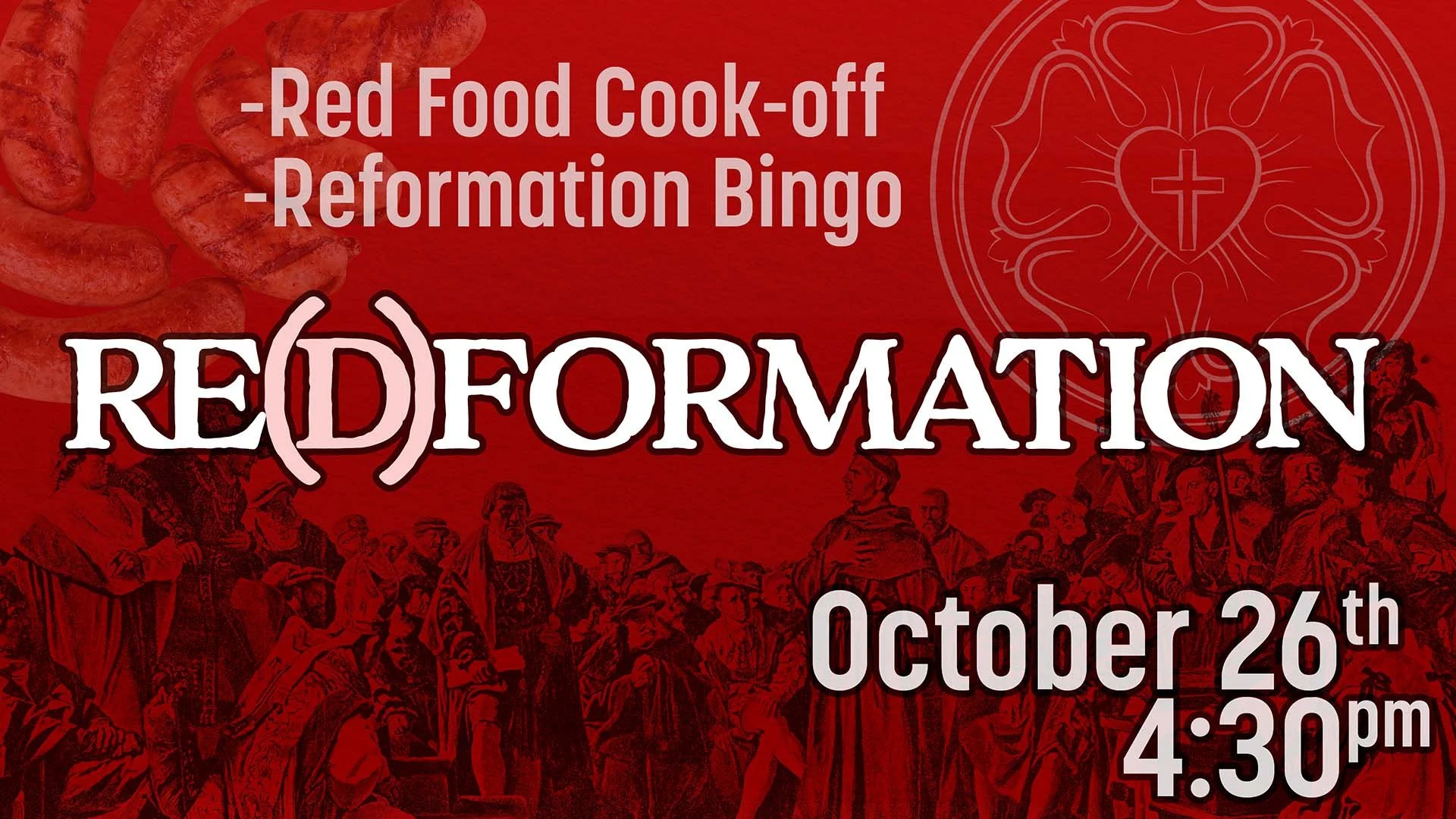
Oct 27th 4PM
Our next event “Red-formation”
Sunday, October 26th from 4:30 PM
There will be a “Red” Pot Luck Dinner & Bingo.
All are invited!. “Wear red!”
FOOD!!! PRIZES!!! FUN!!! Especially - FELLOWSHIP!!


Photos of from last year

Freely: Given/Shared (Teaching Series)
We are the recipients of God's overflowing grace and boundless love. This gift transforms our very identity, compelling us toward a life of radical gratitude and contagious generosity. Let's fully embrace this joyful way to live by sharing our time, talents, and resources.
We are the recipients of God's overflowing grace and boundless love. This gift transforms our very identity, compelling us toward a life of radical gratitude and contagious generosity. Let's fully embrace this joyful way to live by sharing our time, talents, and resources.
Reading Plan
10/26/25
Reformation & Rediscovering GraceIsaiah 55:1-5
Ephesians 2:1-10
John 3:13-21
11/2/25
Stewarding Our Time and Talents (Gifts)Exodus 35:30-35
1 Corinthians 12:1-11
Matthew 25:14-30
11/9/25
Stewarding our ResourcesLeviticus 25:18-28
2 Corinthians 9:6-15
Luke 12:13-21
11/16/25
Stewarding our WitnessMicah 6:1-8
1 Peter 3:8-18
Matthew 5:13-20
11/23/25
Christ The King SundayPsalm 95:1-7a
1 Cor 15:20-28
Matthew 25:31-46
![[Sunday] Freely - King’s Table](https://images.squarespace-cdn.com/content/v1/5852f18a20099e30cd2c01dc/1763608759984-90GCUBKCWQJ0H8NOVYGU/Freely5a.jpg)
![[Sunday] Freely - Witness](https://images.squarespace-cdn.com/content/v1/5852f18a20099e30cd2c01dc/1763081926738-NTIAR1U7F2XSQSAZXV8H/Freely4a.jpg)
![[Sunday] Freely - Tenants](https://images.squarespace-cdn.com/content/v1/5852f18a20099e30cd2c01dc/1762273604004-HCTI0OPYW2CD8XVZLUIL/Freely3a.jpg)
![[Sunday] Freely Dwell](https://images.squarespace-cdn.com/content/v1/5852f18a20099e30cd2c01dc/1761872439620-0NL4CWJAC0EXUFWBB601/Freely2a.jpg)

Revelation Ch 20-21 Bible Study
Revelation chapter 20-21 Worship, Martyrdom, and Final Judgment
The Book of Revelation.
Chapter 20-21
This is an AI Recap of the class.
Some things may be incorrect.
Short Summary of the Whole Class
This Bible study walked through Revelation 20–21, highlighting God’s ultimate defeat of evil, the reality of judgment, the hope of bodily resurrection, and the renewal of creation as heaven comes down to earth. We connected Revelation’s imagery to Genesis, Job, the Gospels, and Romans, countered gnostic misunderstandings, and applied these truths pastorally to Christian grief and funerals. The class emphasized that Jesus has overcome, believers share in His victory, death cannot separate us from God’s love, and God will dwell with His people in a renewed creation.
Section 1: Reading and Framing Revelation 20
We recalled Revelation 20’s imagery: the abyss (bottomless pit), the dragon/serpent, and links back to Genesis 1 (primordial depths), Genesis 3 (serpent), and Job’s cosmic conflict.
We read about the thousand years, the first resurrection, Satan’s brief release, Gog and Magog, the final defeat of the devil, the great white throne judgment, the opening of books and the Book of Life, and death and Hades being cast into the lake of fire.
We framed the chapter as victory portraits rather than a strict timeline, underscoring God’s sovereignty and evil’s restraint.
Short summary:
Revelation 20 sets the stage for God’s sovereign victory: evil is restrained and ultimately destroyed, the saints reign with Christ, judgment is rendered, and death is defeated.
Section 2: Noticing the Theme of Destruction and Hope
We noted the recurring theme of destruction, clarified as God’s destruction of evil, not of creation’s goodness.
The call to “overcome” in Revelation was traced from the churches to Jesus Himself; believers share in His overcoming.
Short summary:
Destruction in Revelation is hopeful because it targets evil, and believers share in Jesus’ victory through the call to overcome.
Section 3: The Sea, Death, and Hades Giving Up the Dead
We discussed how the sea, death, and Hades “give up the dead,” affirming God’s power to raise all, regardless of how or where bodies were lost.
We addressed cremation history (noting some 19th-century atheist challenges) and clarified that God can resurrect all.
We explained “Hades” as the Greek underworld concept used culturally to show nothing is beyond God’s summons to judgment.
Short summary:
No realm can retain the dead—God will raise all for judgment and restoration; “Hades” reflects cultural language to emphasize God’s comprehensive authority.
Section 4: Countering Gnosticism: Tangibility and Resurrection
We confronted gnostic ideas that demean material creation and over-spiritualize hope.
We highlighted Scripture’s affirmation of creation’s goodness and Jesus’ bodily resurrection (eating, being touched) as the anchor of our future bodily resurrection.
Funeral language was examined to avoid implying that bodies are bad; the Christian hope is embodied and tangible.
Short summary:
Christian hope is bodily; Jesus’ real resurrection grounds our own, and creation’s goodness will be restored—counter to gnostic tendencies.
Section 5: Pastoral Application—Death, Grief, and Hope
We named death as the problem and evidence of sin; grief is honest and appropriate.
Lutheran funerals center on resurrection hope, contrasting abstract or purely spiritual views (e.g., Masonic elements).
We affirmed that believers are “with Jesus,” and nothing—death included—can separate us from God’s love (Romans 8).
Short summary:
We grieve honestly because death is the evidence of sin, yet we hope confidently in Christ’s presence and the promise of bodily resurrection and reunion.
Section 6: Grieving with Hope and the Trajectory Toward Eden
We discussed cultural practices of celebrating life at funerals, holding stories and hope together.
We framed Scripture’s trajectory as movement back toward Eden—reunification and restoration—anticipating Revelation 21–22.
We preferred saying “with Jesus” over speculation about the intermediate state, trusting His promise to be with us.
Short summary:
Christian grief blends sorrow and hope, aiming toward restored Eden; Jesus’ abiding presence secures our comfort even amid judgment scenes.
Section 7: The “Second Death,” the Millennium, and Evil Restrained (Revelation 20)
We examined the “second death” (lake of fire) as final judgment.
We acknowledged diverse millennial views without settling on one, focusing pastorally on God’s sovereign restraint of evil.
Like in Job, what threatens is limited by God; Satan is bound, and the climactic battle is anticlimactic under God’s reign.
Short summary:
Revelation 20 emphasizes God’s sovereign control—evil is restrained; the second death is final judgment, but believers rest secure in Christ.
Section 8: The “First Resurrection” and Interpreting Difficult Passages
We wrestled with the “first resurrection,” considering various interpretations.
Pastorally, we connected it to Christ’s resurrection and believers’ participation, ensuring the second death has no power over those in Him.
Central theme: death is the problem; Christ’s resurrection is the solution.
Short summary:
Though interpretive details vary, sharing in Christ’s resurrection secures believers against the second death; our hope is anchored in Jesus.
Section 9: The Books, the Book of Life, and Judgment (Revelation 20:11–15)
We explored the “books” recording deeds and the Book of Life identifying God’s people.
We connected Revelation 20 with Revelation 5, where only the Lamb is worthy to open the scrolls, implying Christ mediates judgment.
Without Christ, none could stand; with the Lamb’s victory, judgment becomes survivable for believers.
Short summary:
Judgment is comprehensive and mediated by Christ; the Book of Life marks God’s people, and the Lamb’s victory makes salvation possible.
Section 10: Clarifying the Millennium and Transition to Revelation 21
We noted traditional distinctions between the millennium and the new creation (world to come), avoiding rigid timelines.
We anticipated Revelation 21’s clearer comfort: God’s dwelling with humanity, end of death and sorrow, and renewal.
Short summary:
We emphasized Christ’s reign over precise chronology and looked forward to Revelation 21’s clearer promises of renewal and presence.
Section 11: Reading and Hearing Revelation 21:1–27
We read the vision of new heaven and new earth, New Jerusalem descending, and God dwelling with His people.
Former things pass away—no more death, sorrow, crying, or pain.
The city’s radiance, open gates, and God/Lamb as light underscore holiness and welcome for those in the Lamb’s Book of Life.
Short summary:
Revelation 21 paints a vivid, hope-filled picture of renewed creation and God’s dwelling with His people, ending suffering and establishing holy, radiant life.
Section 12: “No More Sea” and the End of Chaos
“No more sea” was explained as symbolic of the end of chaos and evil (Leviathan imagery), not literal ocean removal.
This draws on biblical patterns where the sea represents disorder opposed to God’s purposes.
Short summary:
“No more sea” signals the complete removal of chaos and evil as God brings new creation.
Section 13: The New Jerusalem Comes Down—Heaven to Earth
We emphasized that heaven comes down—God’s kingdom arrives here.
Christian hope is renewal, not escape; “Thy kingdom come” shapes ethical living and stewardship now.
Short summary:
God brings heaven to earth; therefore our present life, justice, and care for creation matter in light of God’s coming kingdom.
Section 14: God Dwelling with His People—Emmanuel and Presence
We focused on God’s permanent dwelling among His people (Revelation 21:3), fulfilling the Emmanuel promise and Jesus’ “I am with you always.”
God consistently comes down—from incarnation to consummation.
Short summary:
God’s abiding presence culminates in Revelation 21, fulfilling Emmanuel as He dwells with His people forever.
Section 15: Alpha and Omega, Overcomers, and Evil Excluded
God declares His sovereignty: “I make all things new… I am the Alpha and Omega.”
Those who thirst receive the water of life; overcomers inherit.
Evil and unrepentant wickedness remain outside, preserving the holiness of the city.
Short summary:
God’s total sovereignty guarantees new creation; the faithful inherit life, and evil is excluded to maintain holiness.
Section 16: City Dimensions, Gates, Foundations, and Light
The city’s measurements and symbolism unite Israel’s tribes (twelve gates) and the apostles (twelve foundations).
No temple is needed—God and the Lamb are its temple; no sun or moon—God’s glory is its light.
Gates remain open; the nations bring their glory; only those in the Lamb’s Book of Life enter.
Short summary:
The city’s design signifies the unity of God’s people and perpetual, holy openness under God’s radiant presence.
Section 17: Bible Project Video—“Heaven and Earth”
The video explained heaven (God’s space) and earth (our space), once united in Eden, separated by sin, and overlapping through temples—ultimately reunited in Jesus.
Jesus as true temple and sacrifice creates “pockets of heaven,” culminating in the New Jerusalem where heaven and earth fully unite.
Clarified that while believers are with Jesus after death, Scripture’s focus is the future union of heaven and earth.
Short summary:
Jesus reunites God’s space and human space, leading to the full renewal of creation when heaven comes down and New Jerusalem fills the world with God’s presence.
End-of-Class Summary
We connected Revelation 20–21 to the broader biblical story and pastoral life: Jesus has overcome, evil is destroyed, judgment is mediated by the Lamb, and death itself is cast out. Christian hope is bodily resurrection and renewed creation as heaven comes to earth. We countered gnostic misunderstandings, affirmed creation’s goodness, and emphasized honest grief anchored in Christ’s presence. Revelation 21’s vision of New Jerusalem gave clear comfort: God dwells with His people, suffering ends, and the holy city welcomes the redeemed nations.
Main Points
God sovereignly restrains and defeats evil; Satan, death, and Hades are vanquished.
Judgment is comprehensive; the books record deeds; the Book of Life marks God’s people; the Lamb mediates judgment.
The “second death” is final judgment; those who share in Christ’s resurrection are secure from it.
The Christian hope is bodily resurrection and tangible renewal of creation, not escape from the material world.
Gnosticism’s denigration of the body is rejected; Jesus’ bodily resurrection guarantees ours.
Grief is honest; death is the evidence of sin, yet nothing can separate believers from God’s love.
Heaven comes down; New Jerusalem descends; God dwells with His people forever.
“No more sea” symbolizes the end of chaos and evil; God makes all things new.
The city’s architecture signifies the unity of Israel and the apostles; God and the Lamb are the temple and light.
Present life and stewardship matter because God is renewing this world.
Scriptures Mentioned or Alluded To
Revelation 20 (entire chapter): millennium, first resurrection, Satan’s release, Gog and Magog, great white throne, books opened, Book of Life, death and Hades cast into the lake of fire
Revelation 21:1–27: new heaven and new earth, New Jerusalem, God dwelling with His people, end of death and sorrow, city’s radiance and holiness
Revelation 3:5: overcoming, white garments, names in the Book of Life
Revelation 5:1–10: scroll with seven seals; only the Lamb is worthy to open them
Genesis 1: primordial depths (abyss) imagery
Genesis 3: the serpent of old
Job (general allusion): cosmic imagery and limits on evil
Romans 8: nothing can separate us from the love of God
Gospel accounts of Jesus’ bodily resurrection (e.g., Luke 24:36–43; John 20:24–29): Jesus eats and is touched
Matthew 1:23: Emmanuel (“God with us”)
Matthew 28:20: “I am with you always, to the end of the age”
Matthew 6:10 (Lord’s Prayer): “Thy kingdom come, thy will be done on earth as it is in heaven”
Leviathan/sea-as-chaos themes (e.g., Job 41; Psalm 74:13–14) noted conceptually
Stories and Topics Discussed
Abyss and serpent imagery connecting Revelation to Genesis
Sea, death, and Hades giving up the dead; God’s authority over all realms
Historical note on cremation and 19th-century atheist movements; pastoral implications
Gnosticism’s influence on modern funeral language and the correction by Scripture
Lutheran funeral focus on resurrection contrasted with Masonic elements
Pastoral language: speaking of the deceased as “with Jesus”
Assurance of bodily resurrection and restored creation
Cultural practices of celebrating life at funerals; grieving with hope
The story of Job illustrating evil’s limits under God’s sovereignty
The Lamb’s victory and authority to open the scrolls in Revelation
The anticlimactic “big battle” under God’s reign
Distinctions between the millennium and the new heavens/new earth in traditional thought
The New Jerusalem descending; heaven to earth renewal
Bible Project “Heaven and Earth” framework: Jesus as temple and sacrifice, pockets of heaven, final union in New Jerusalem
![[Sunday] Matthew 28:19 - Richer](https://images.squarespace-cdn.com/content/v1/5852f18a20099e30cd2c01dc/1760667622647-52GHSLM0T3CLOBIQ0AZB/richer25+2a.jpg)
[Sunday] Matthew 28:19 - Richer
Moving past a fearful view of evangelism, the richer meaning of the Great Commission is found in Christ's established authority, which turns our lives into a confident declaration of His victory.

Moving past a fearful view of evangelism, the richer meaning of the Great Commission is found in Christ's established authority, which turns our lives into a confident declaration of His victory.
Questions for the Week: Together: Matthew 28:18-20
Jesus calls us to go make disciples? How are you part of this mission? Do you find it scary at times?
Read Matthew 28:17-20. The mission starts with Christ's victory: "All authority... has been given to me." How does knowing that Jesus already has all authority and victory change the way we view our personal challenges, fears, or the mission of sharing our faith? Does it make the Great Commission feel less scary?
The sermon emphasized that the "teaching" component is about Jesus' love for you and loving people (the Golden Rule, Matthew 7:12), not just mastering doctrine. How does this focus change how you approach teaching your faith to others?
The Church has a history of making disciples. The sermon used the history of LCMS education in the south. What are specific ways we can be "ambassadors of Jesus" or embody His victory and teachings in our specific community, school, or workplace this week?

What Had happened at Grace this week.

![2nd Sunday School in October [Photos]](https://images.squarespace-cdn.com/content/v1/5852f18a20099e30cd2c01dc/1760668608646-XXK8AJYUIAB73BNQGIEH/PXL_20251012_152051640.jpg)
2nd Sunday School in October [Photos]
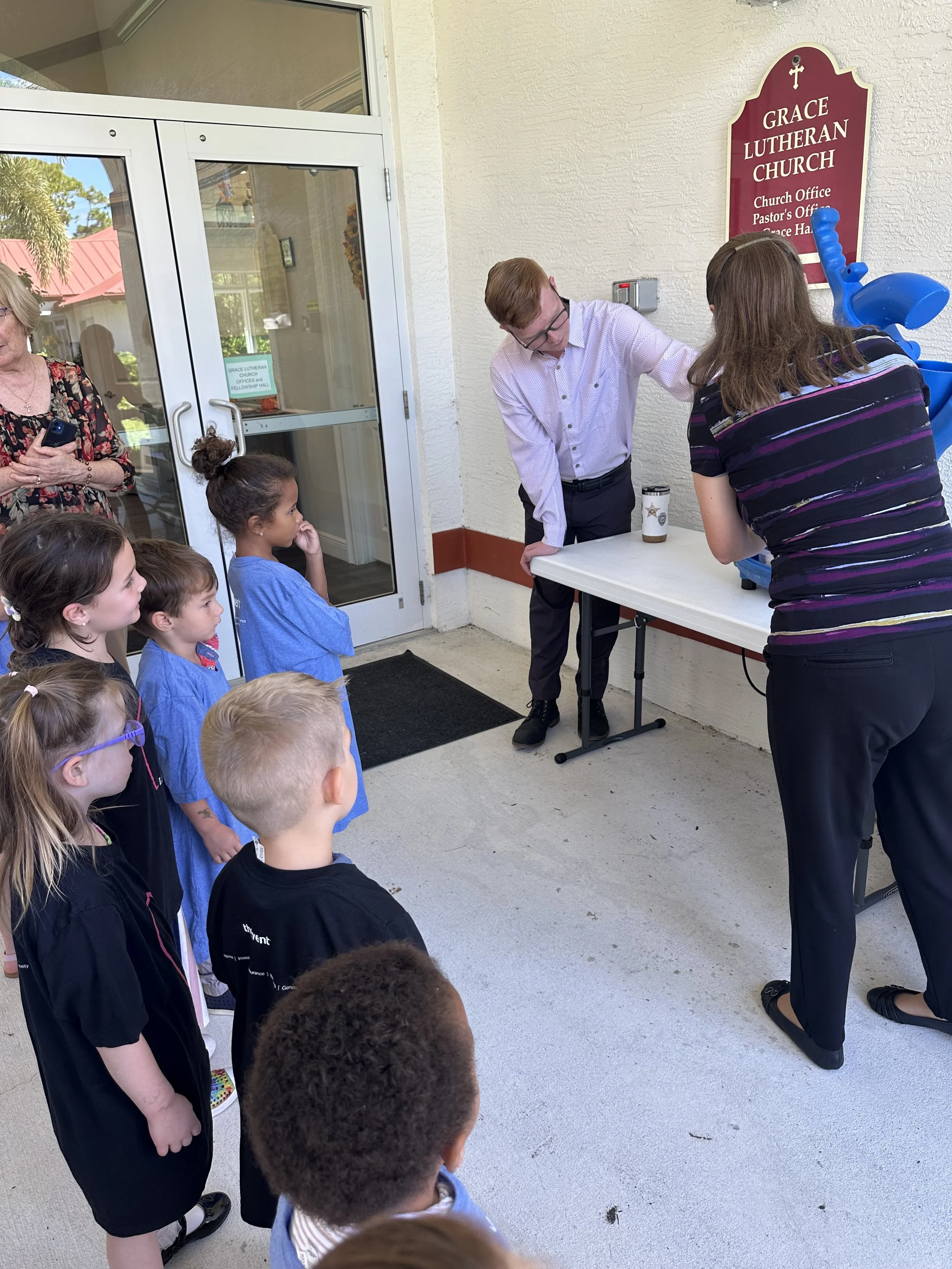
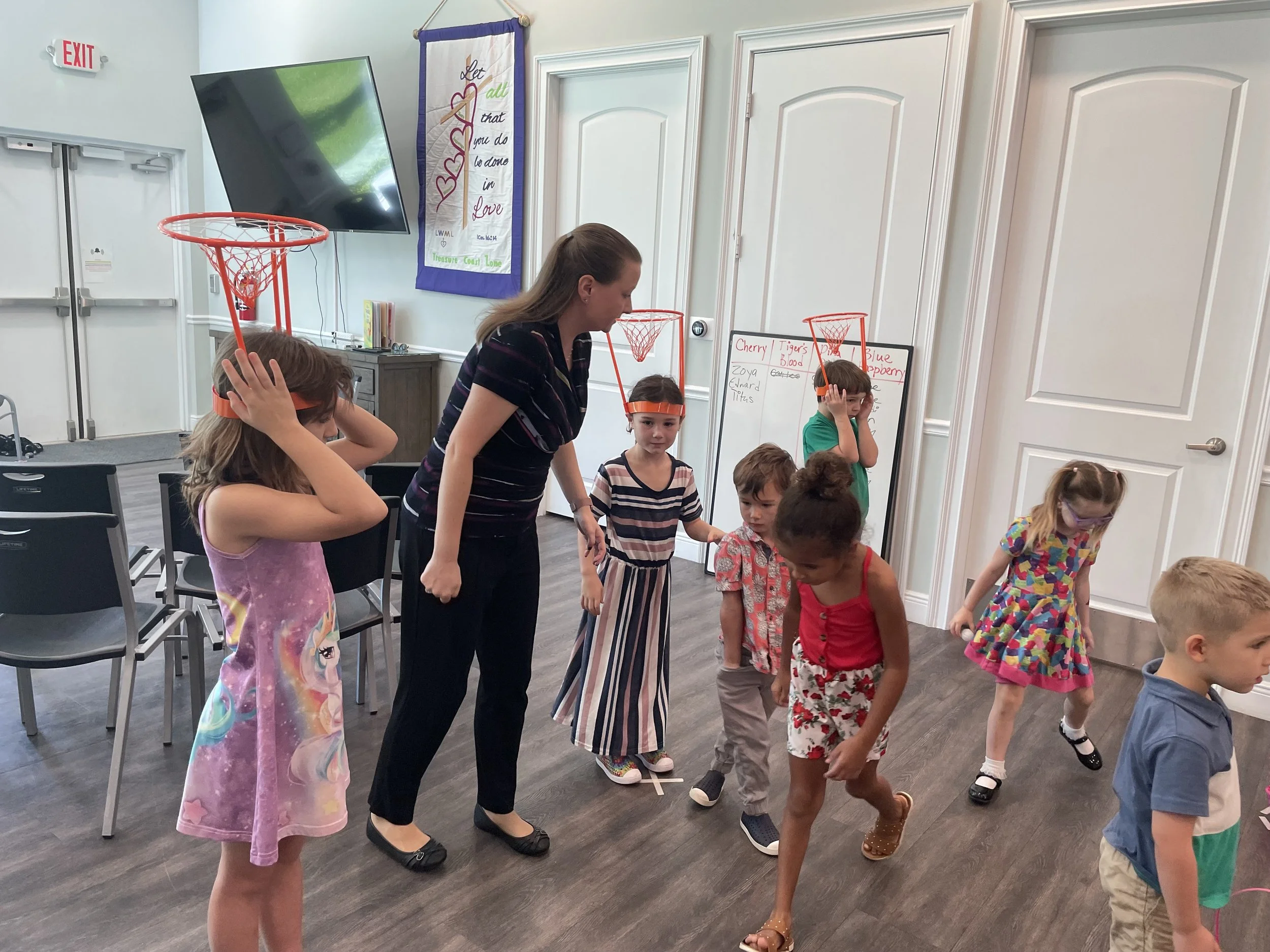
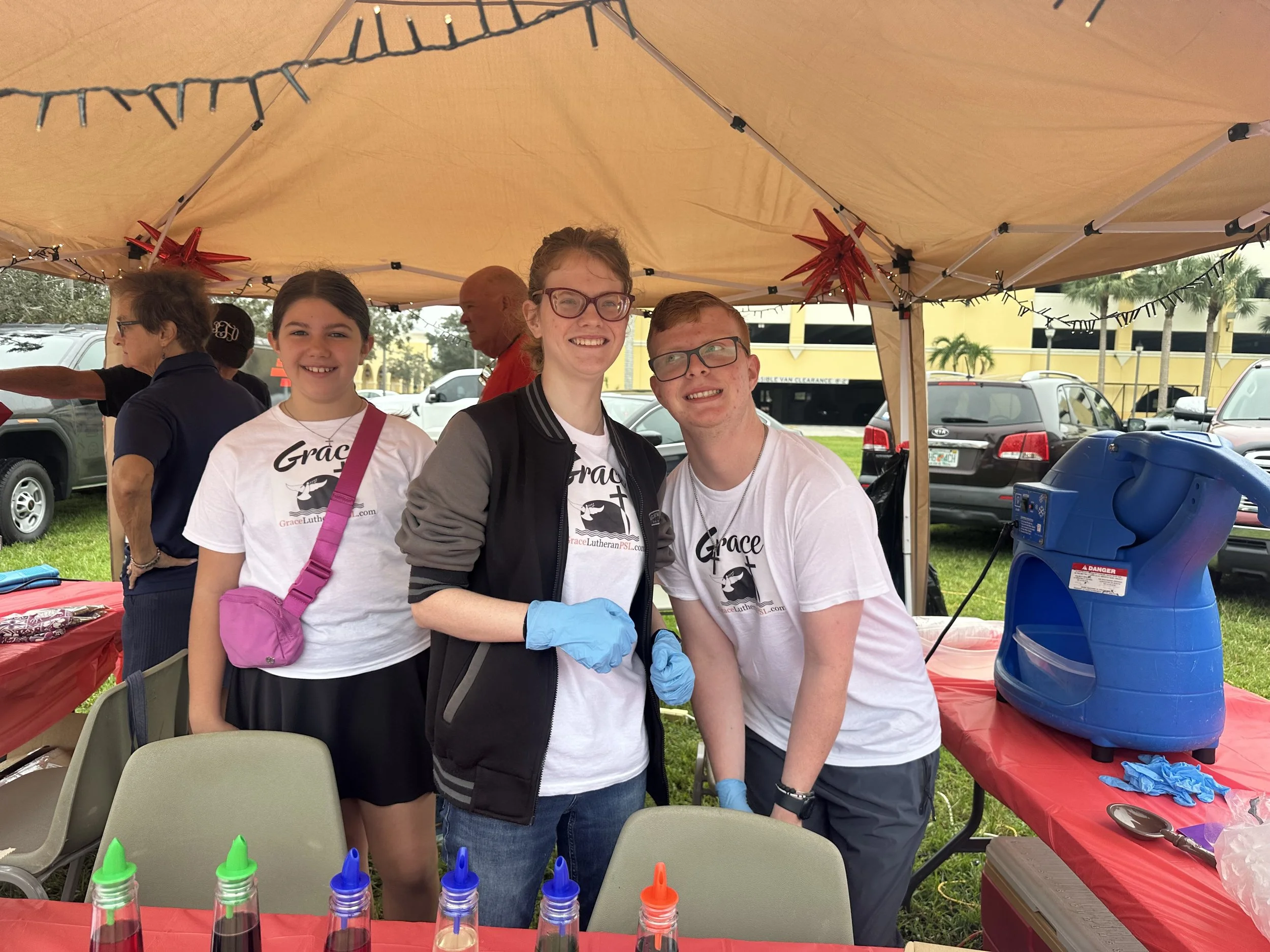
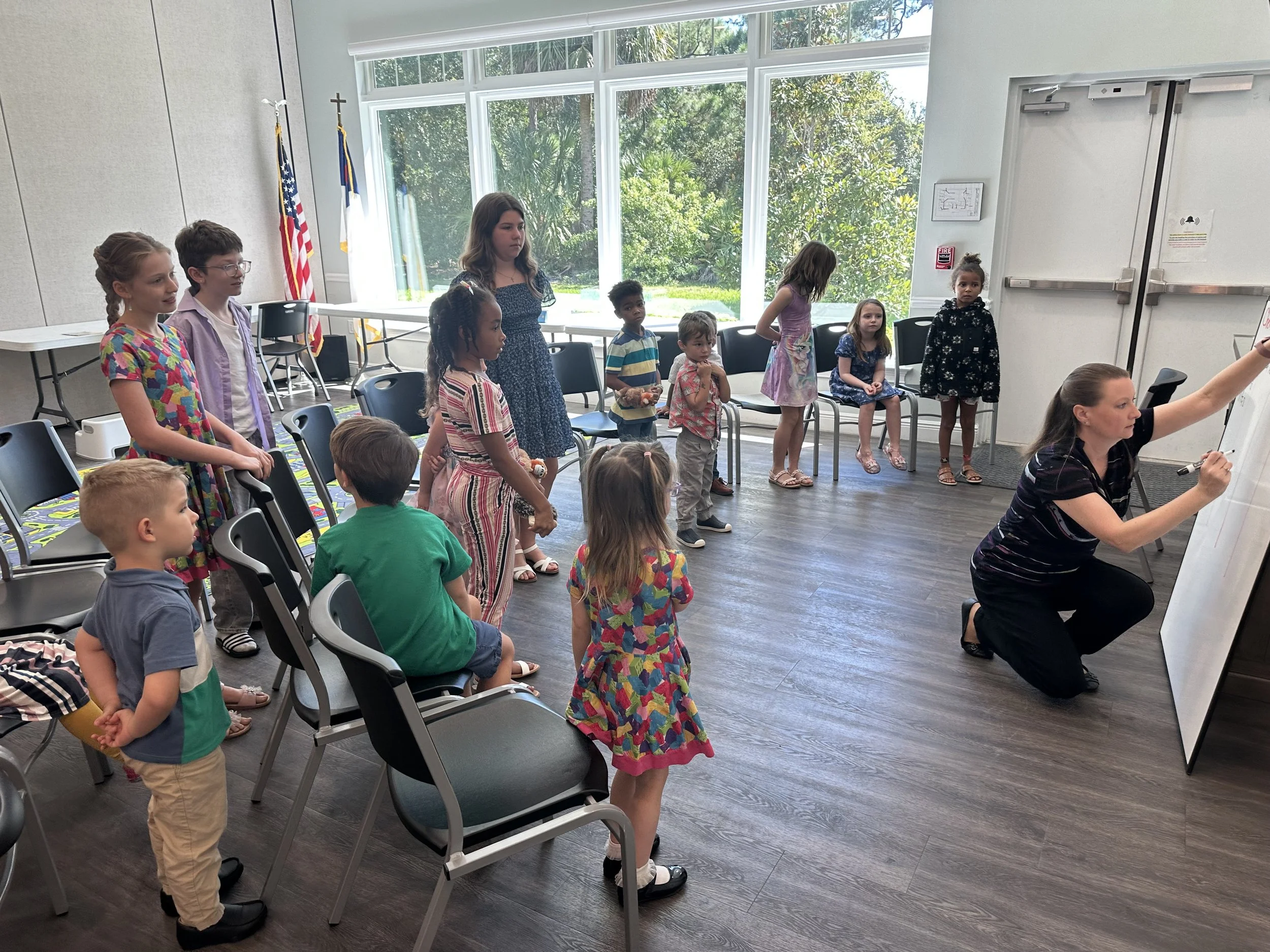
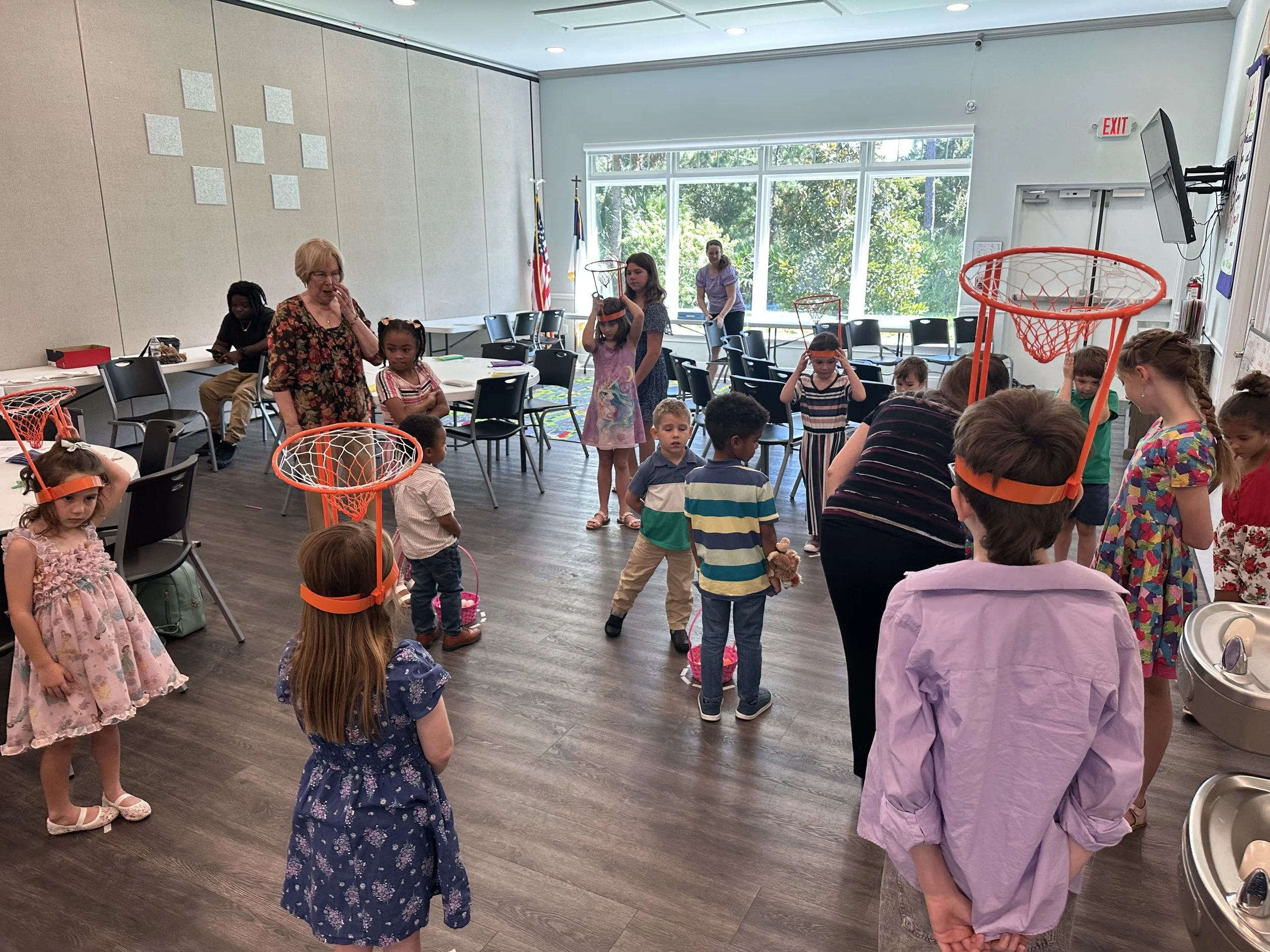
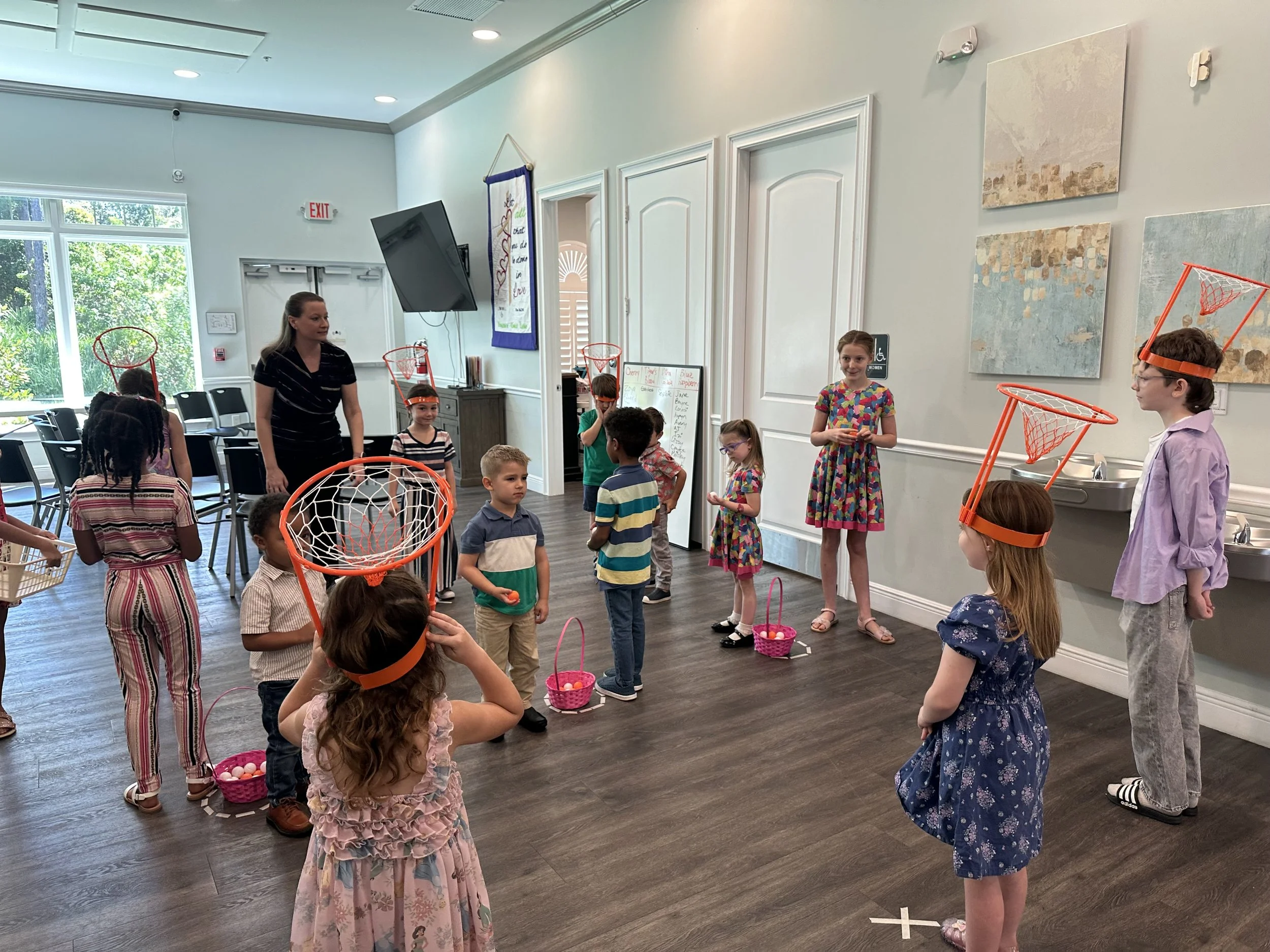
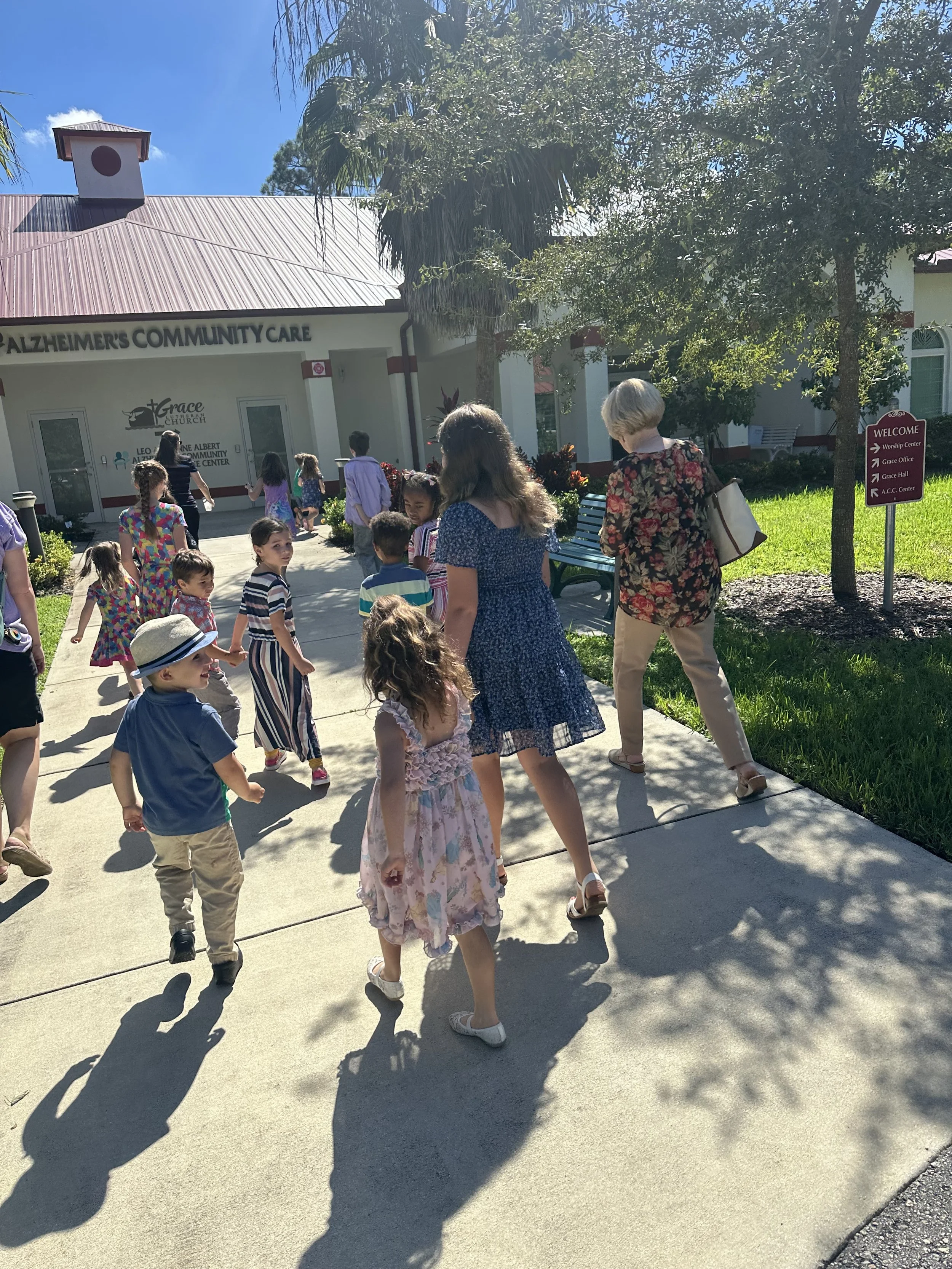
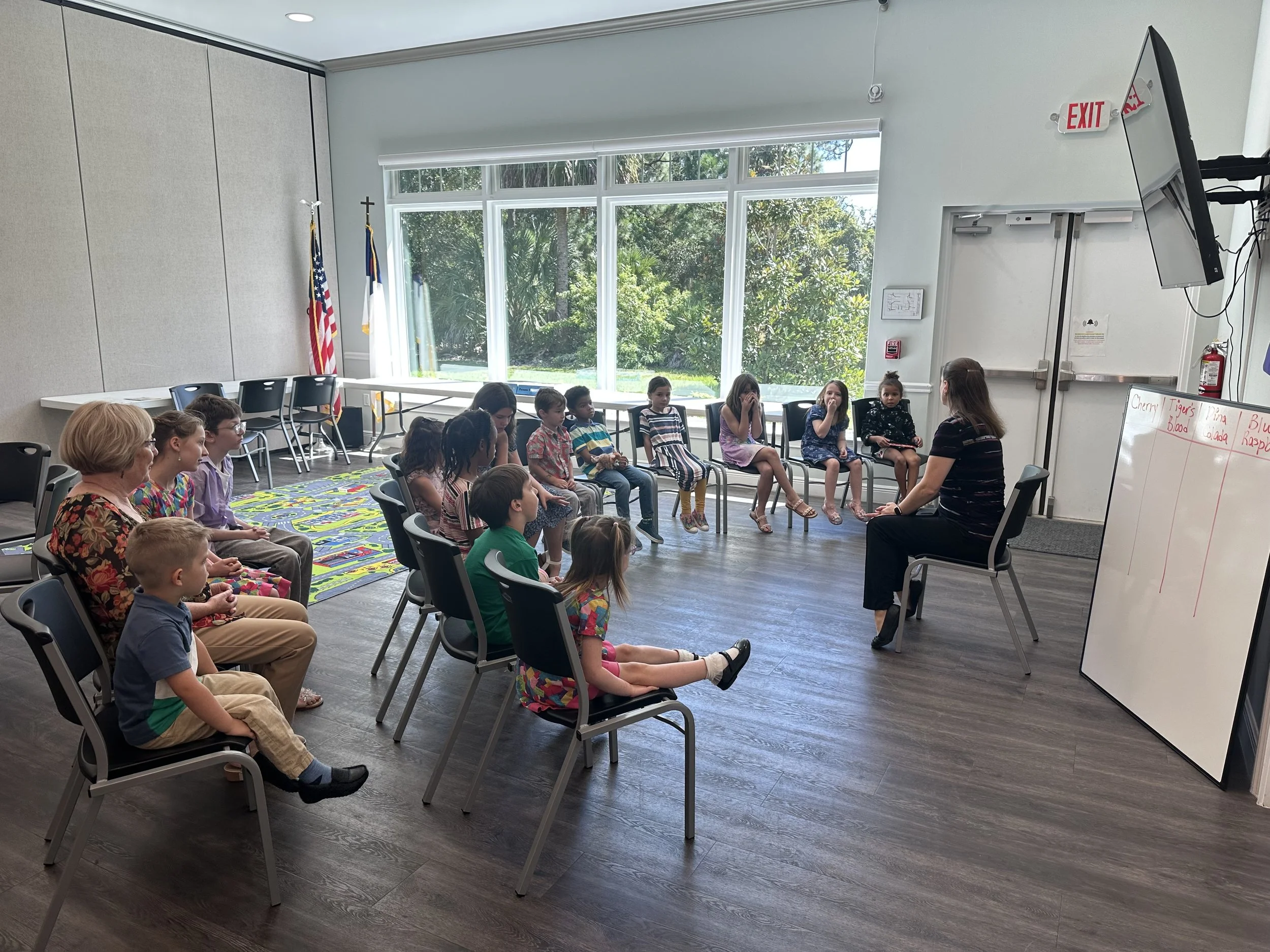
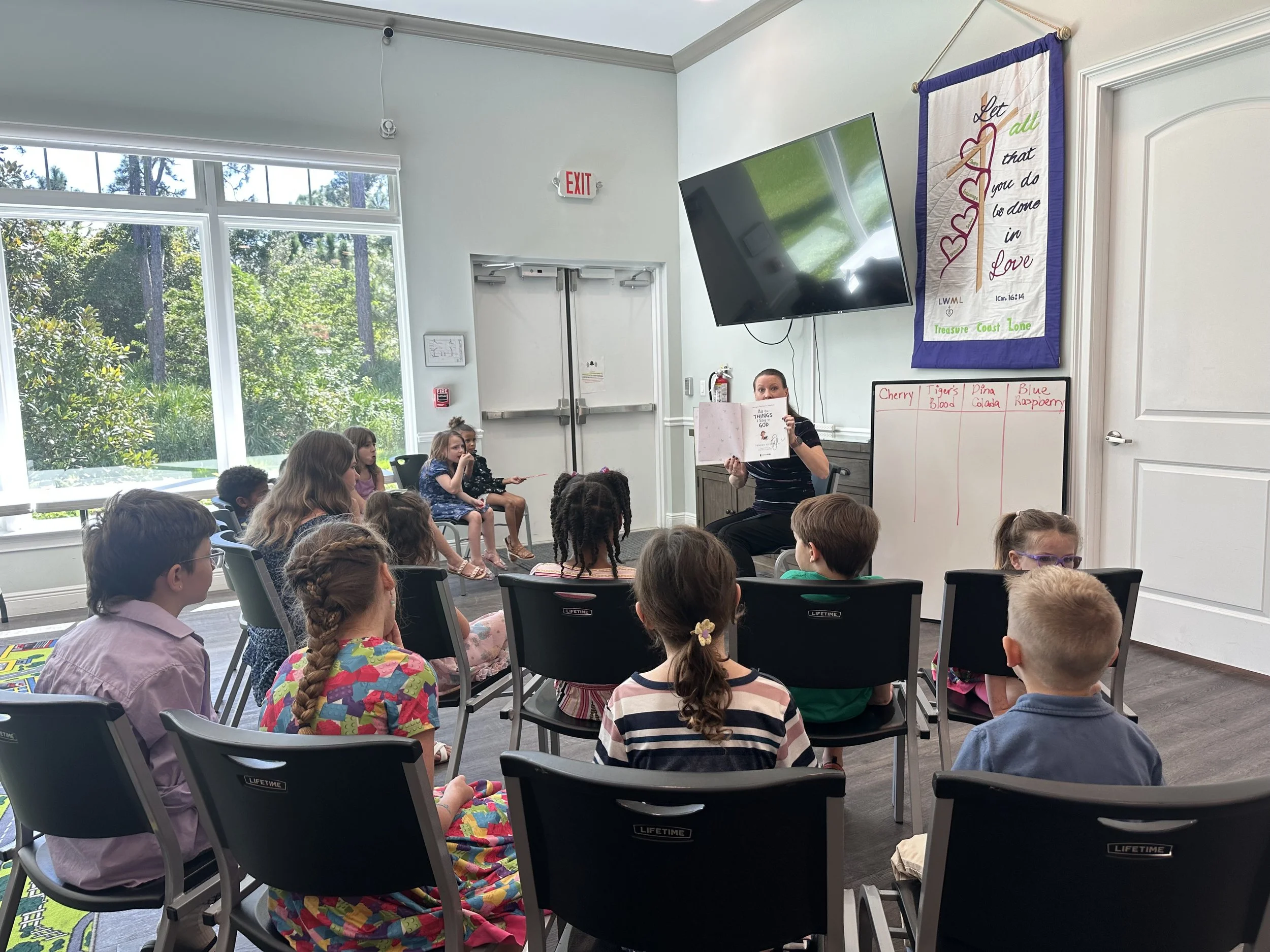
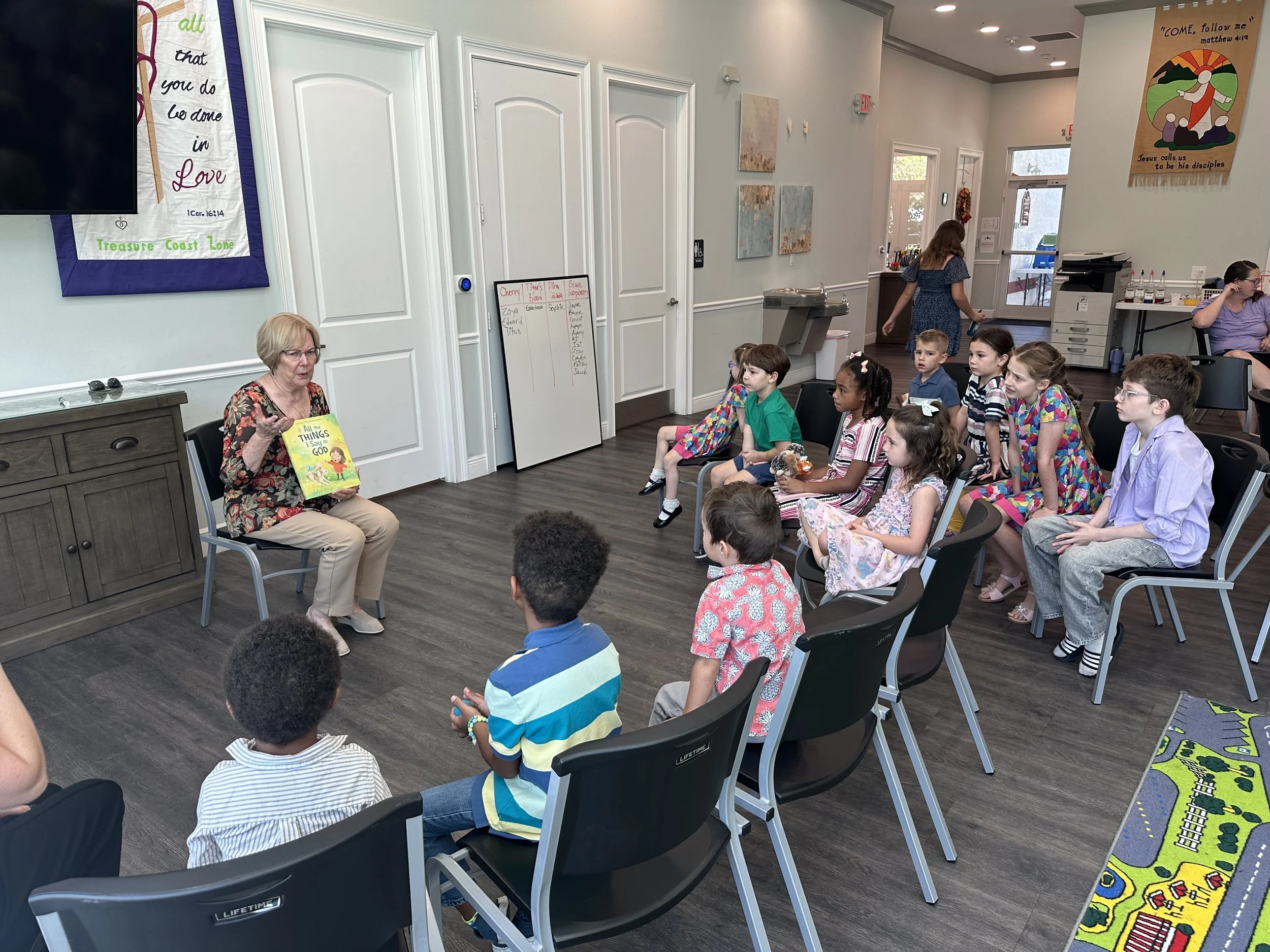
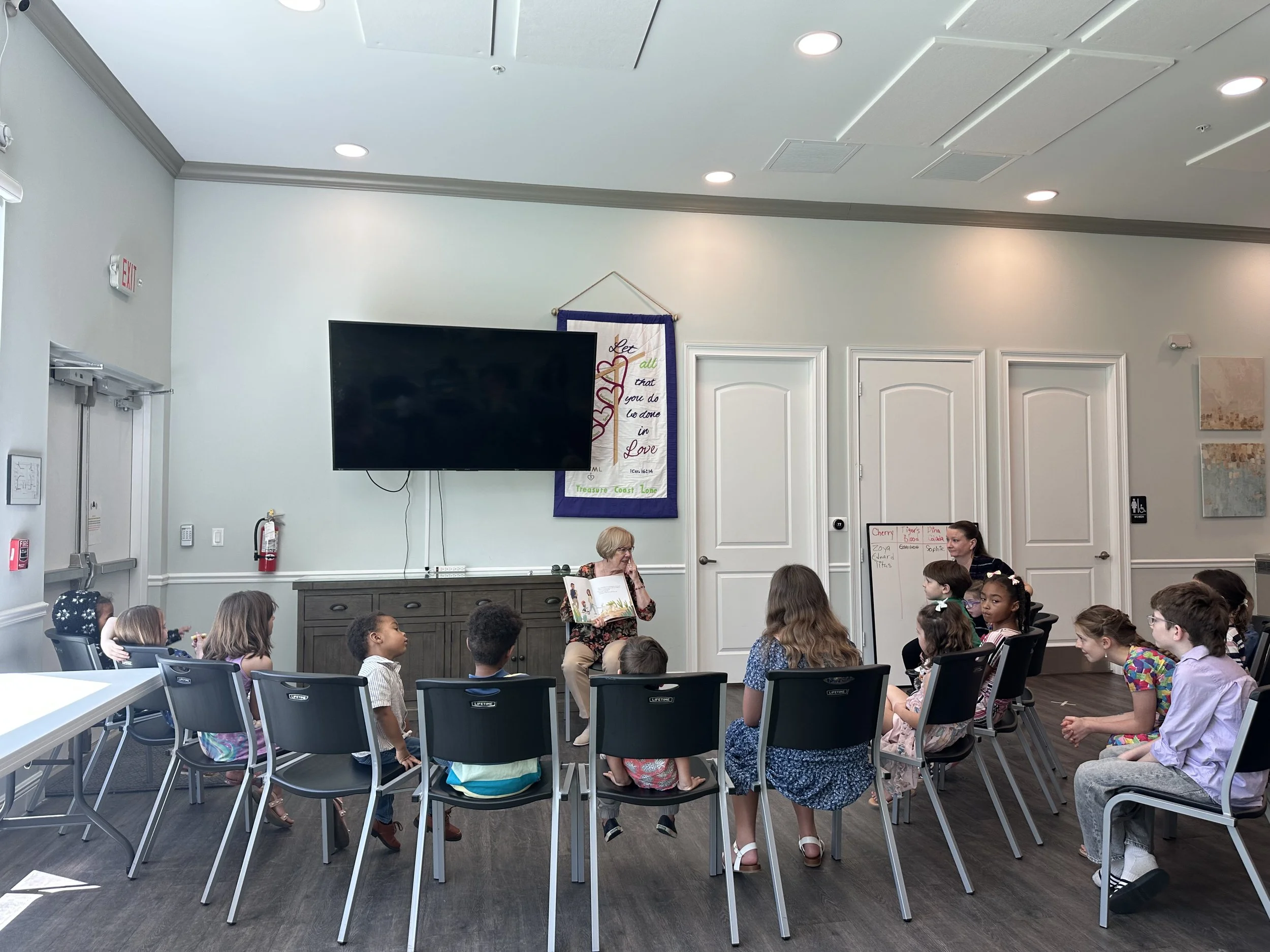
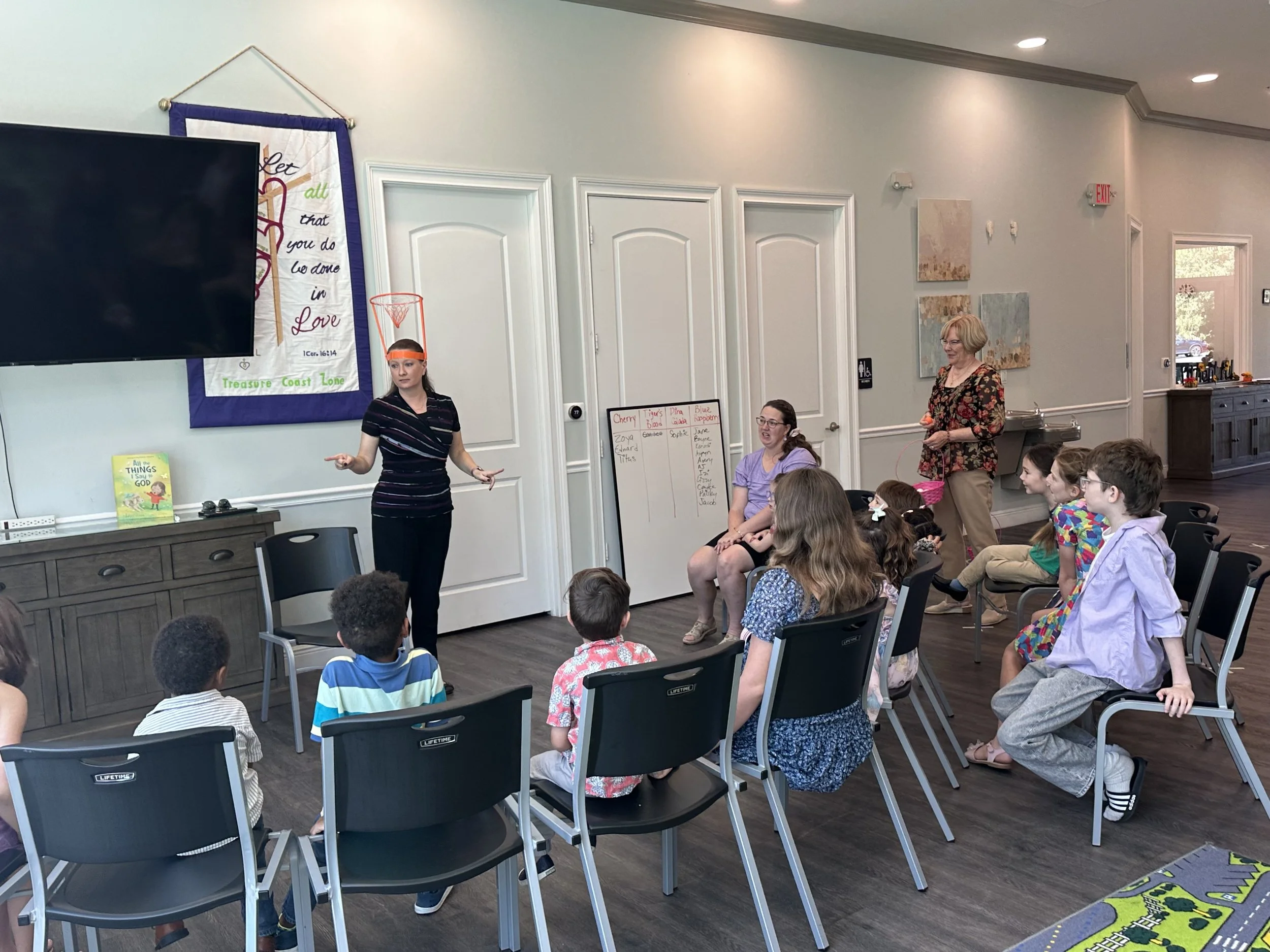
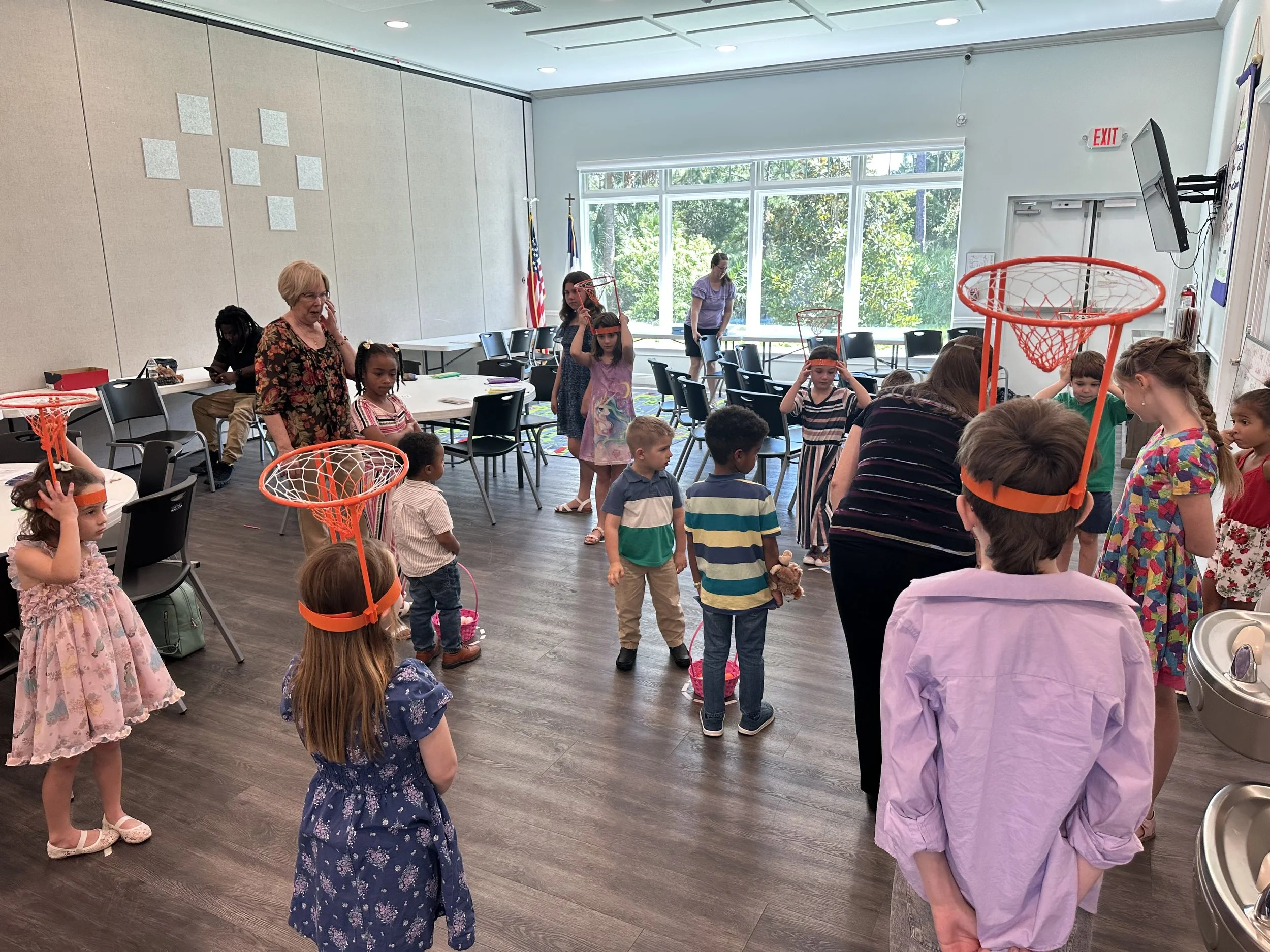
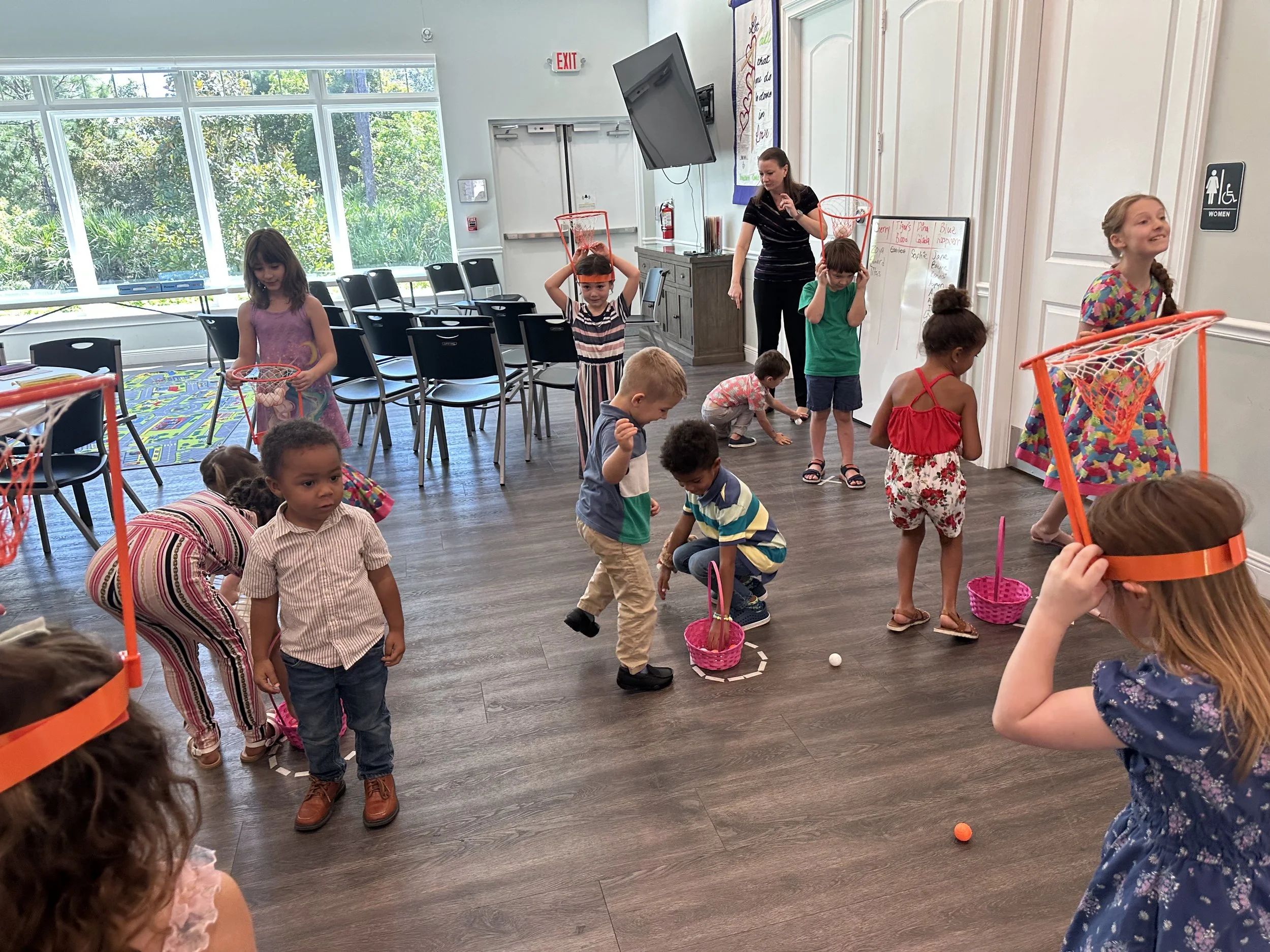
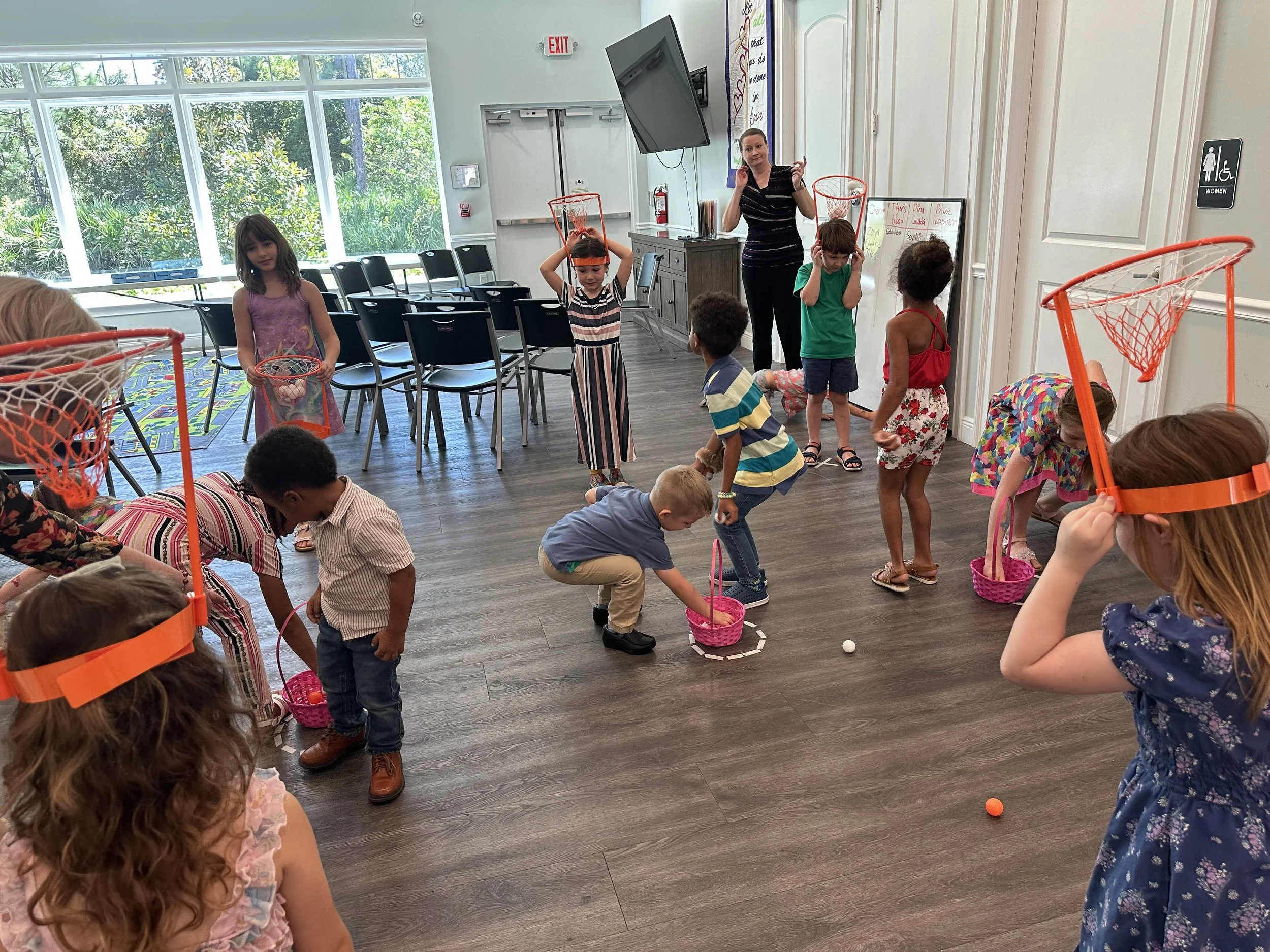
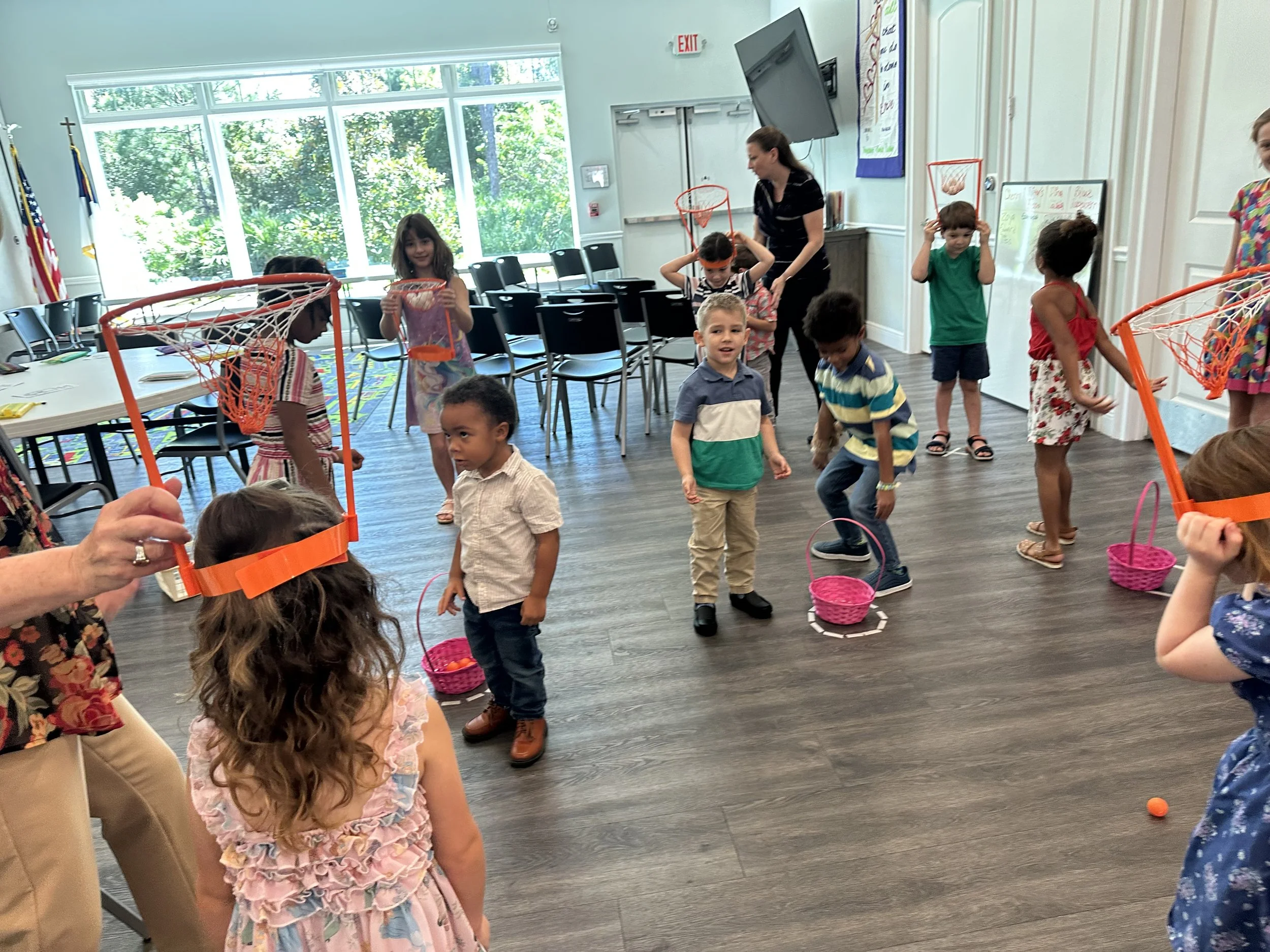
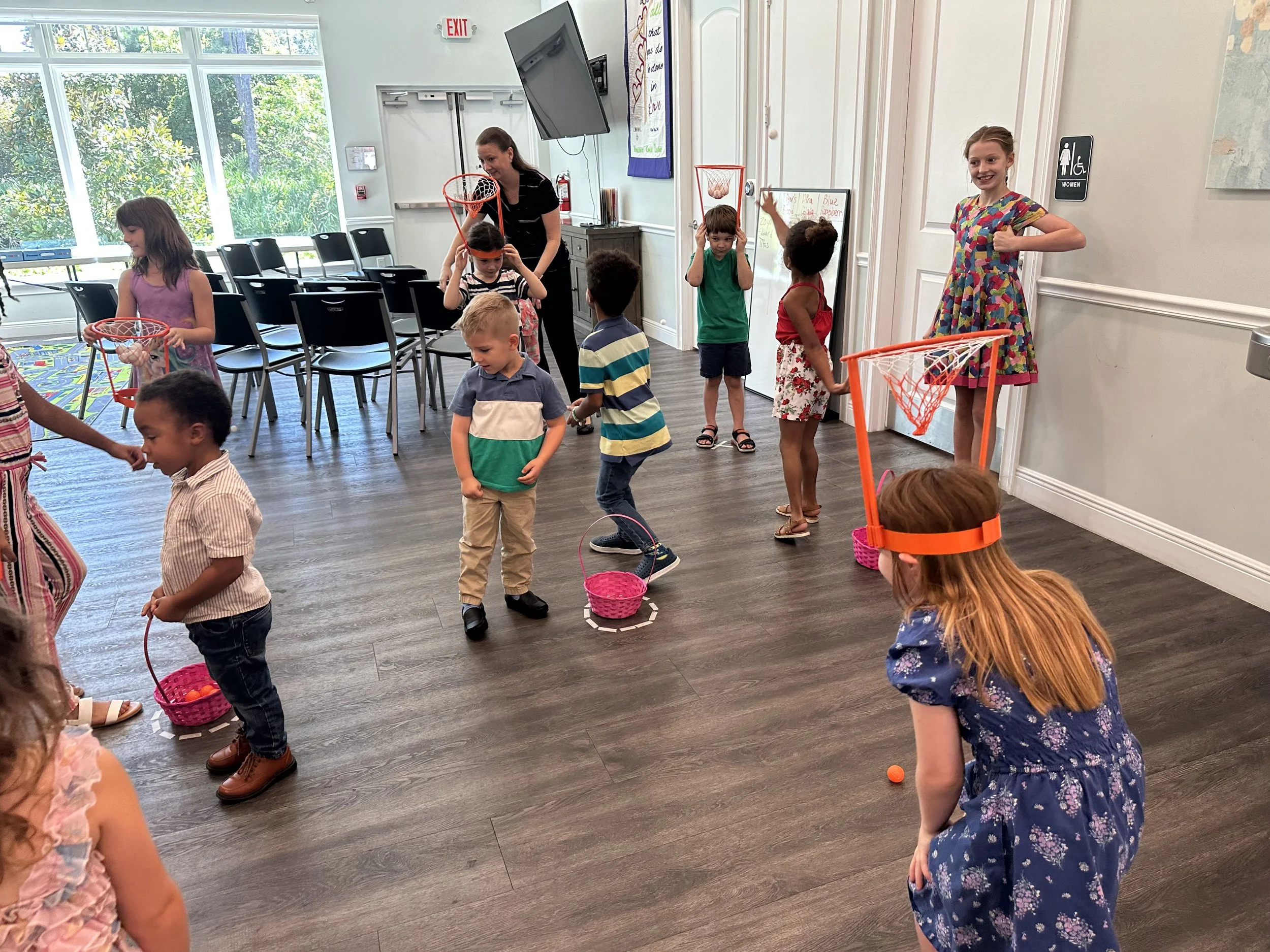
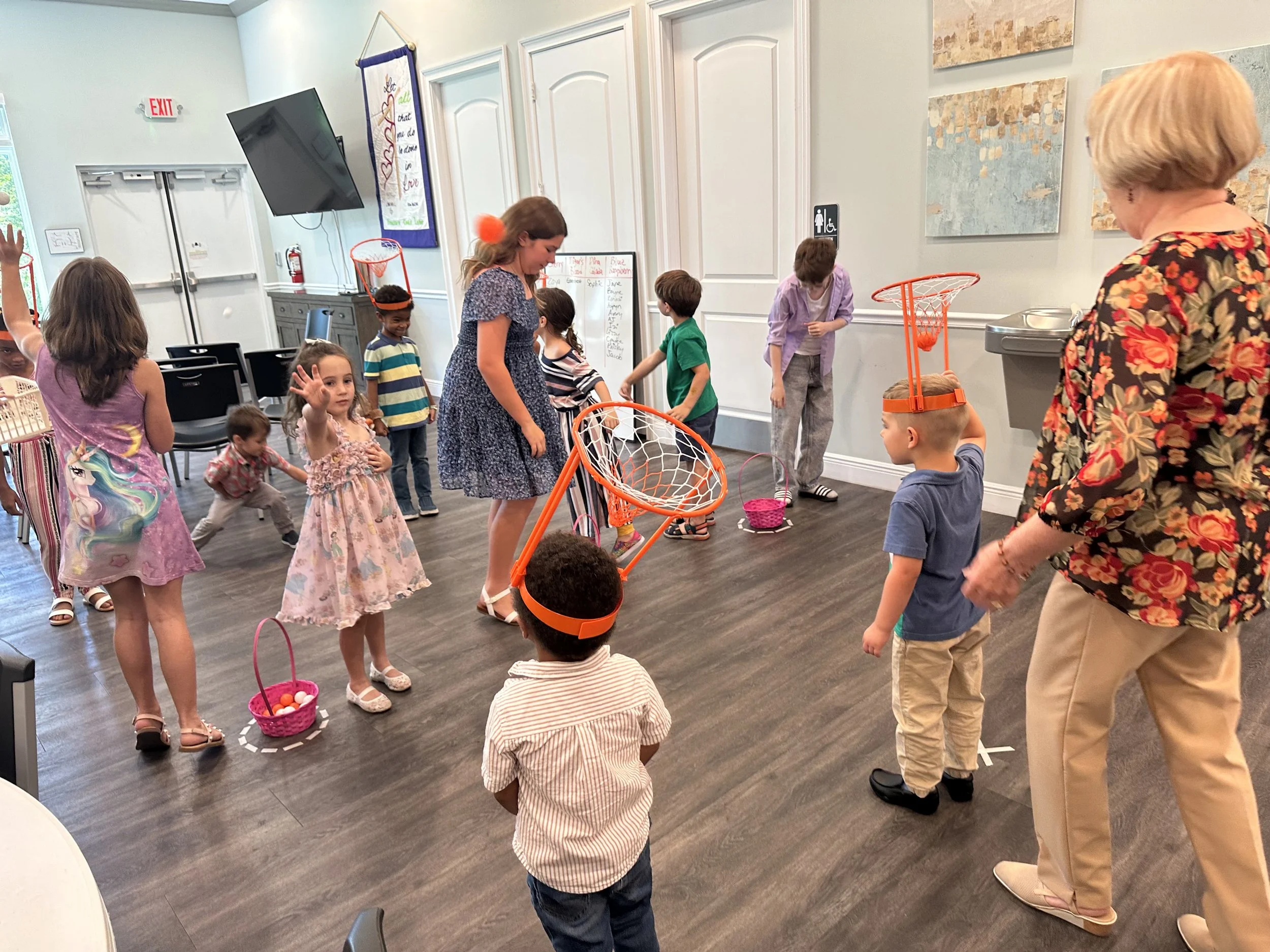
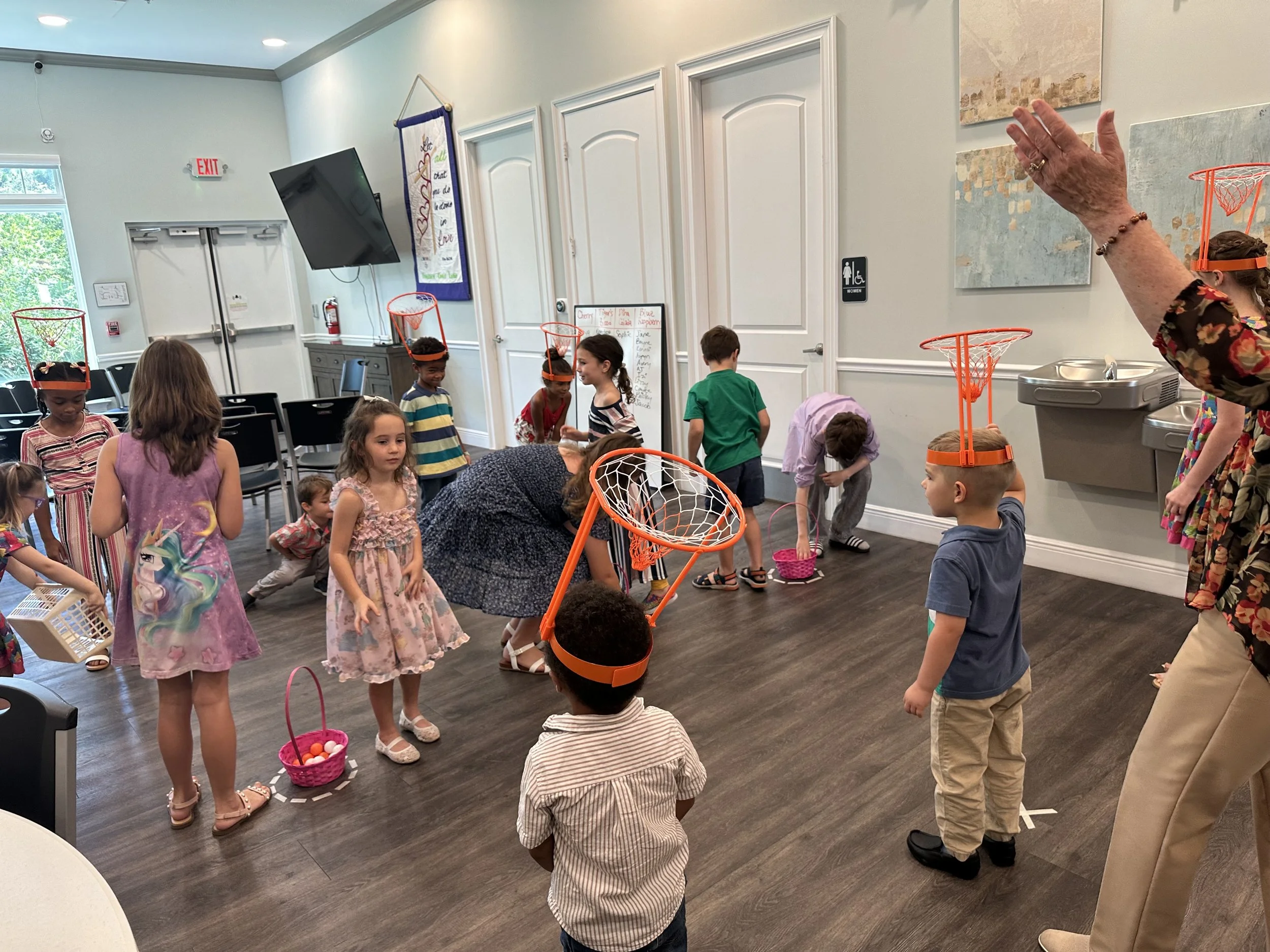
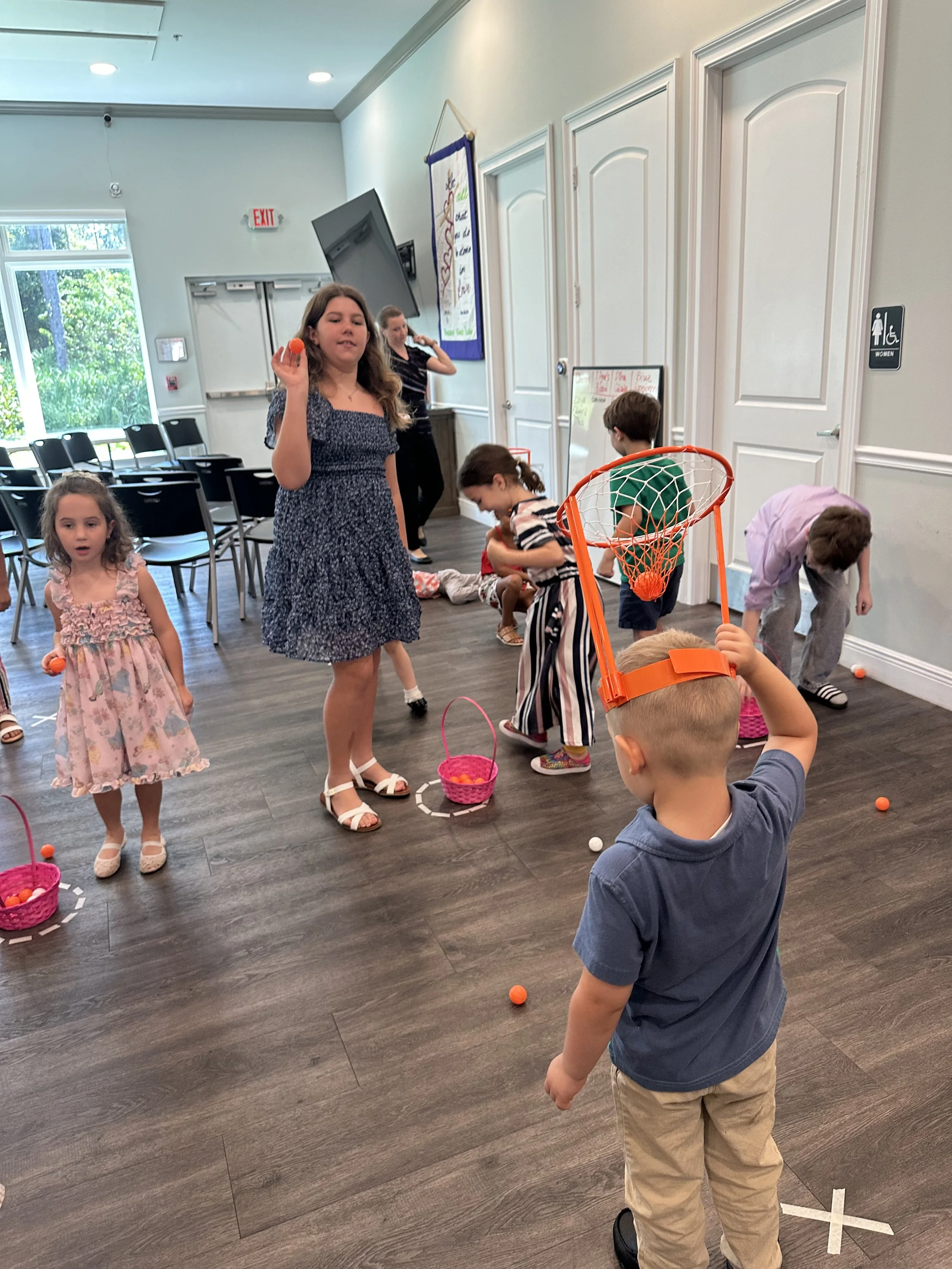
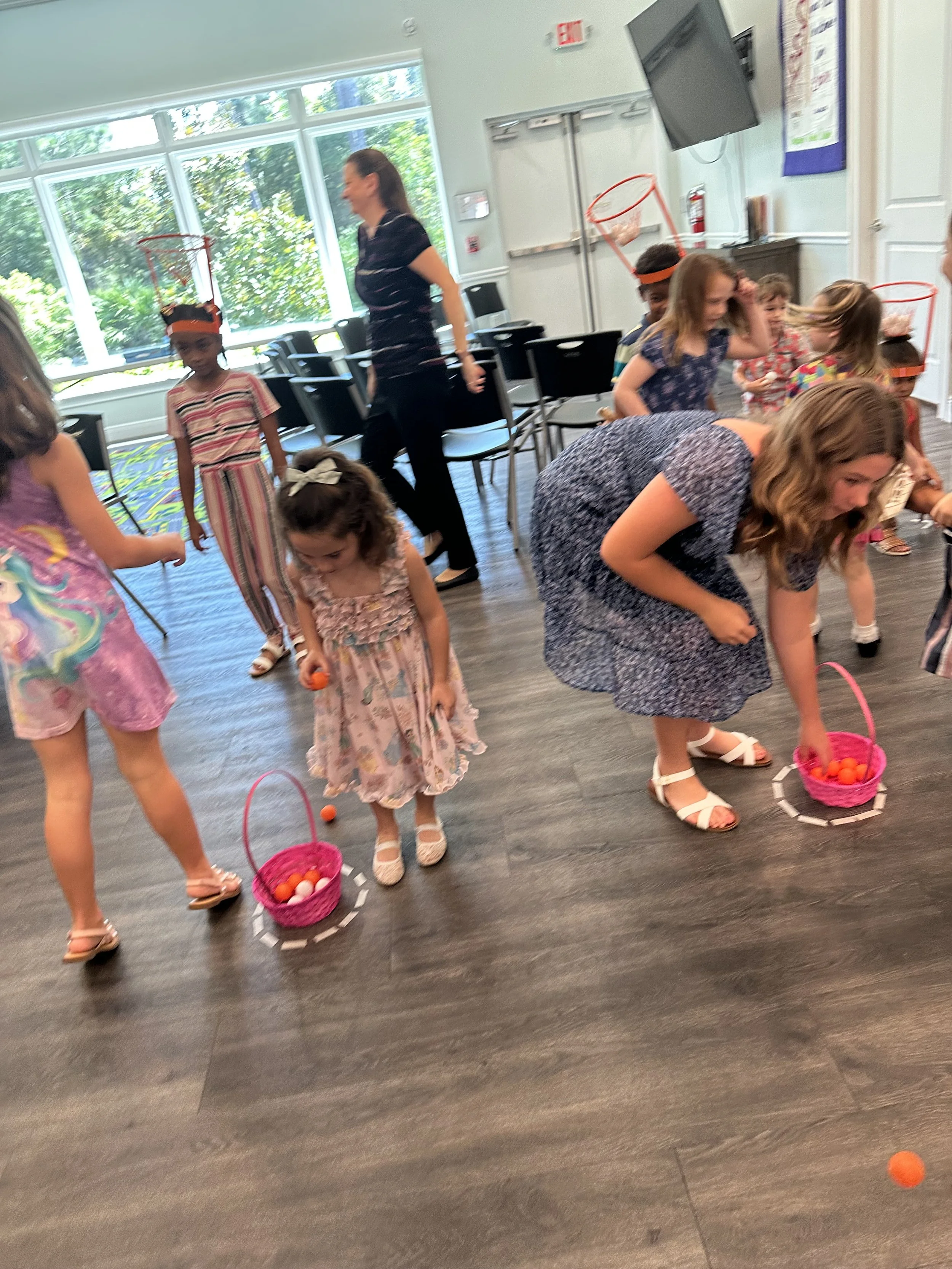
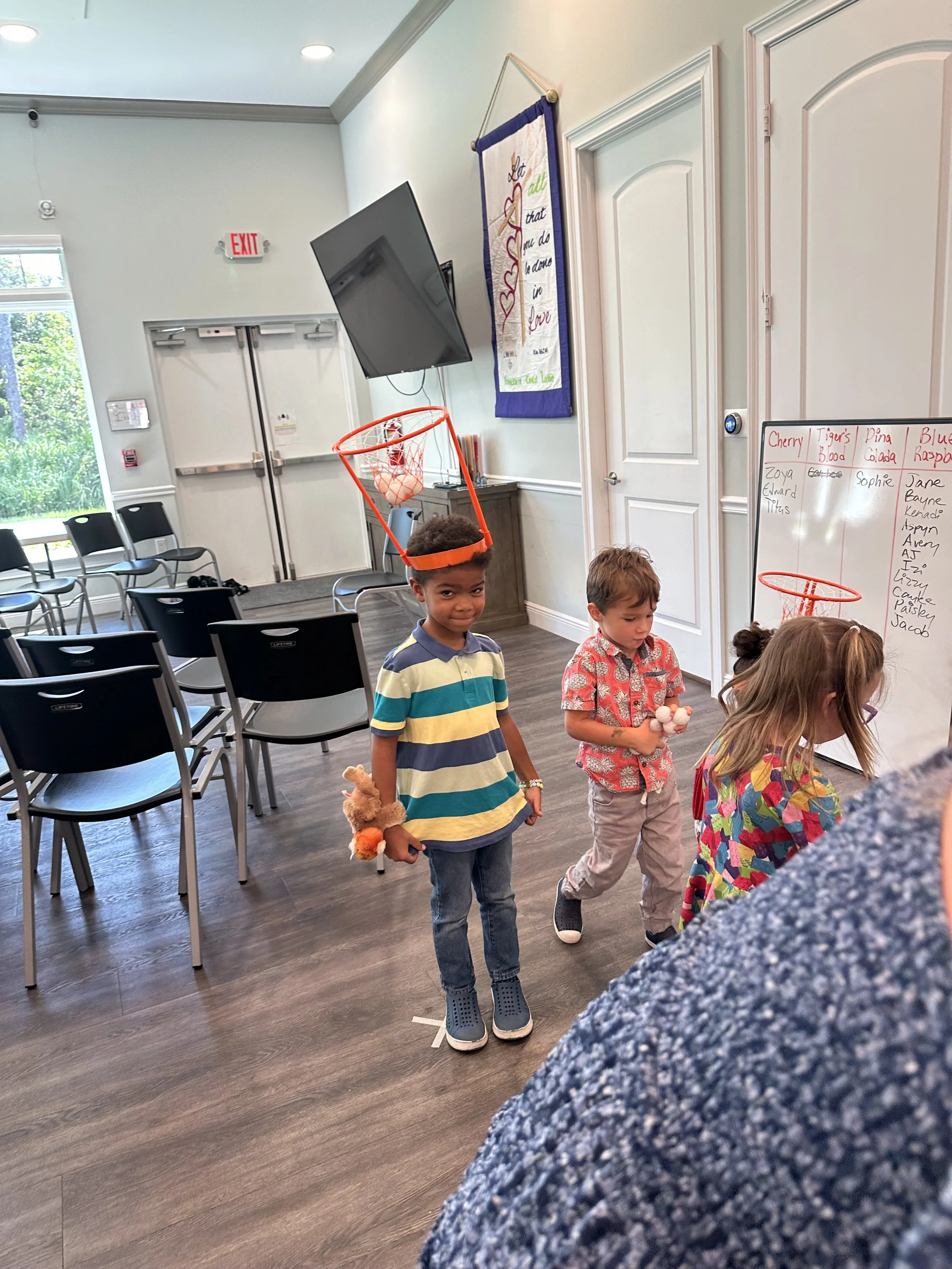
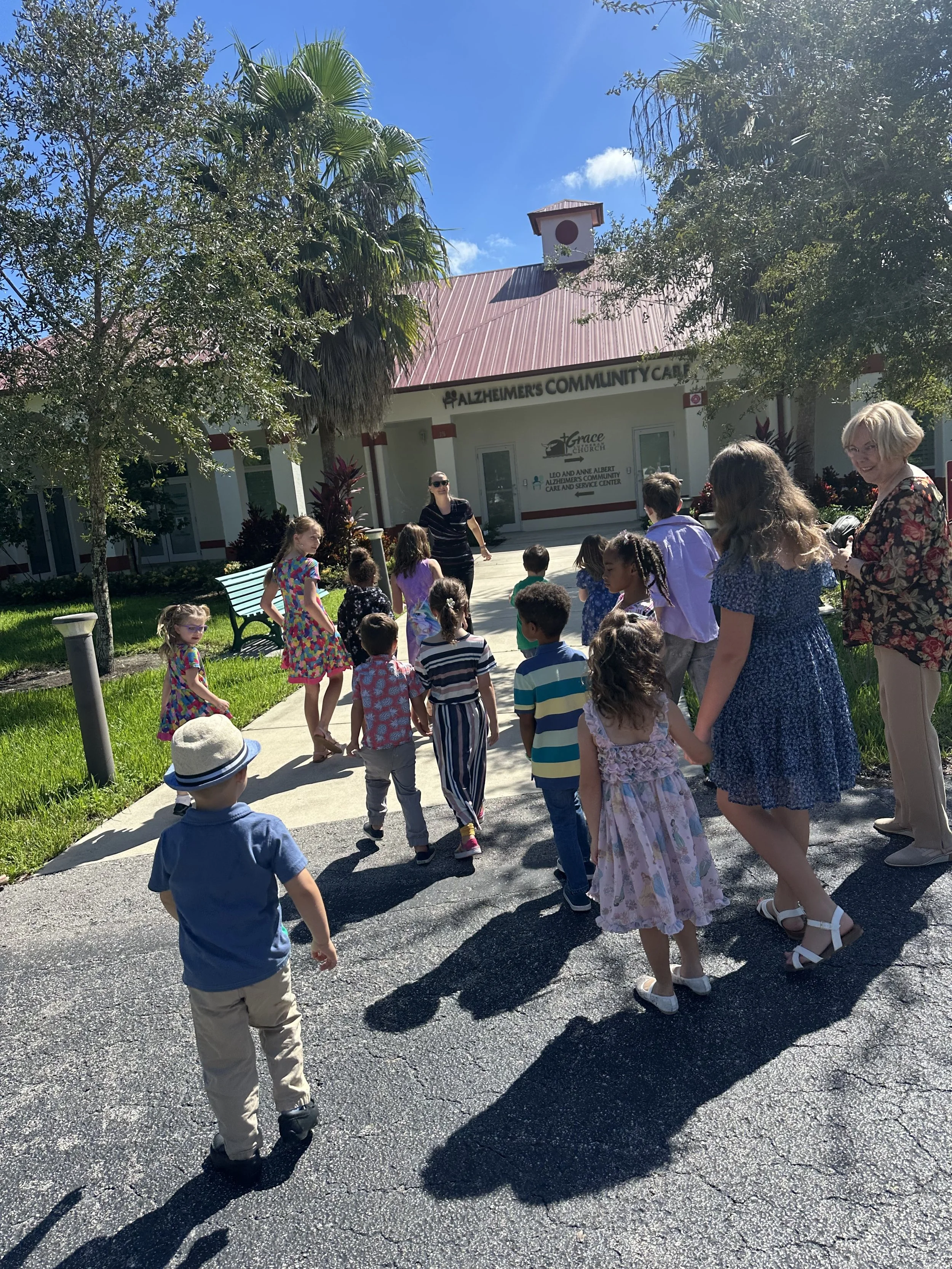
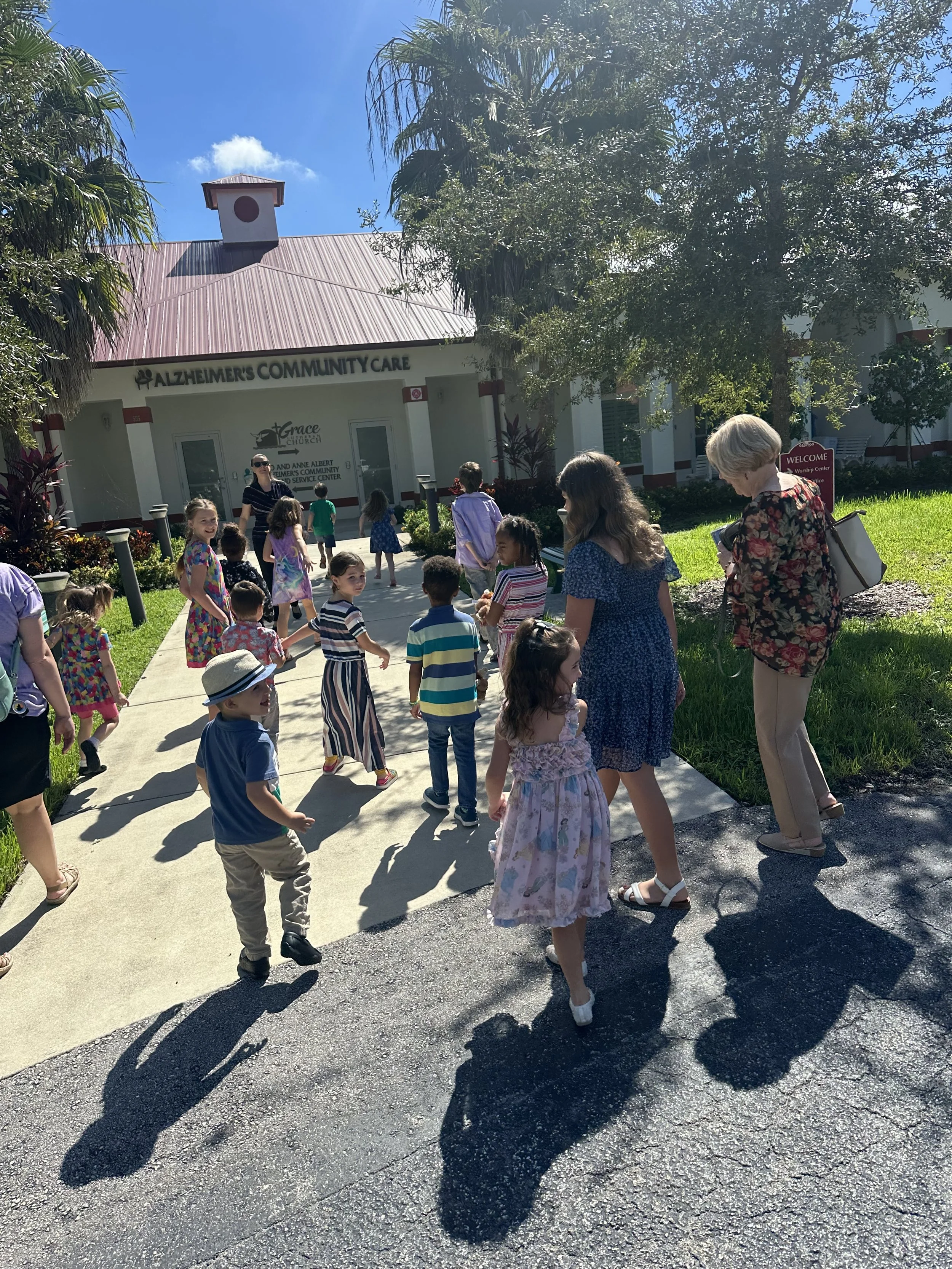
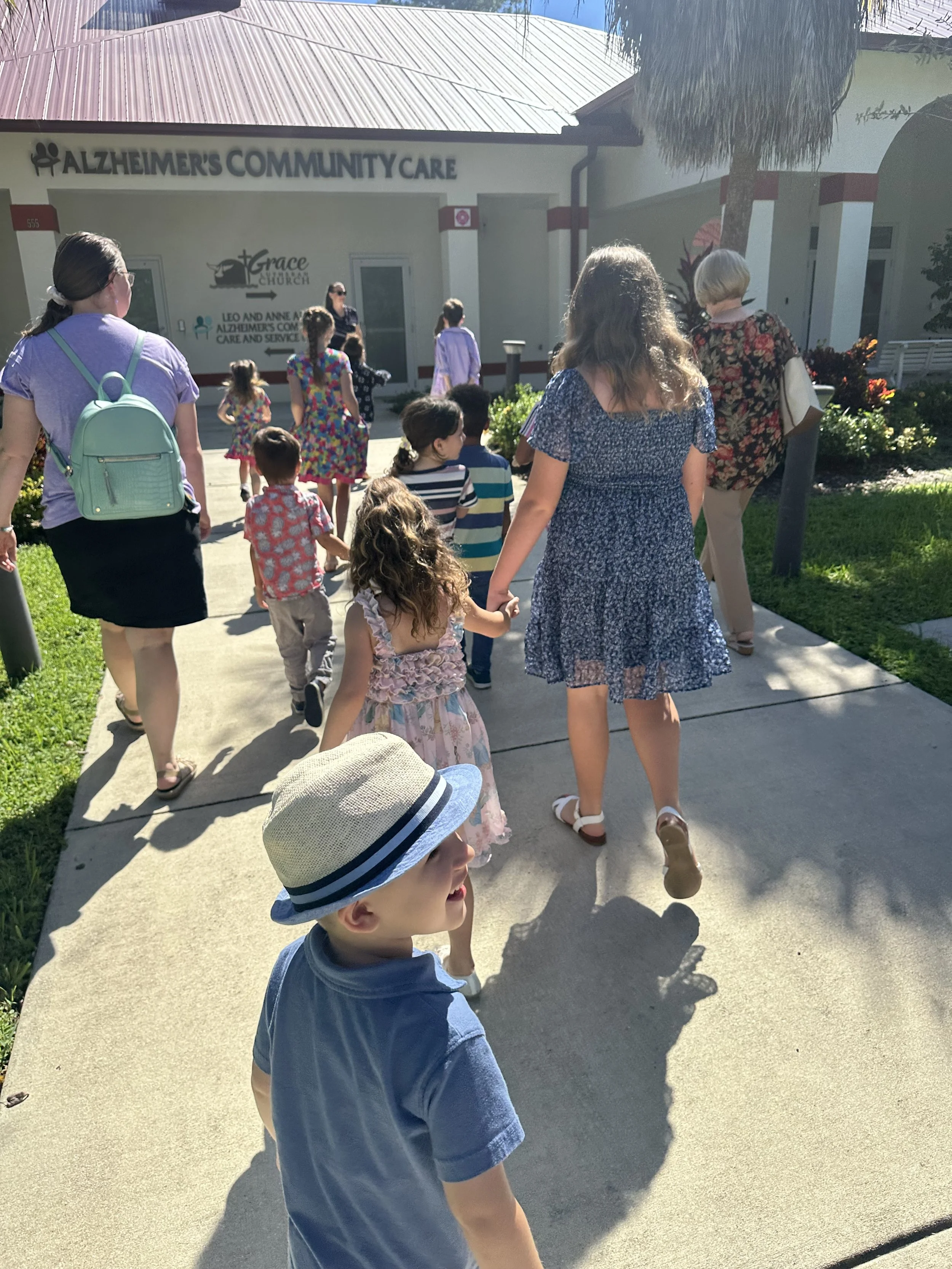
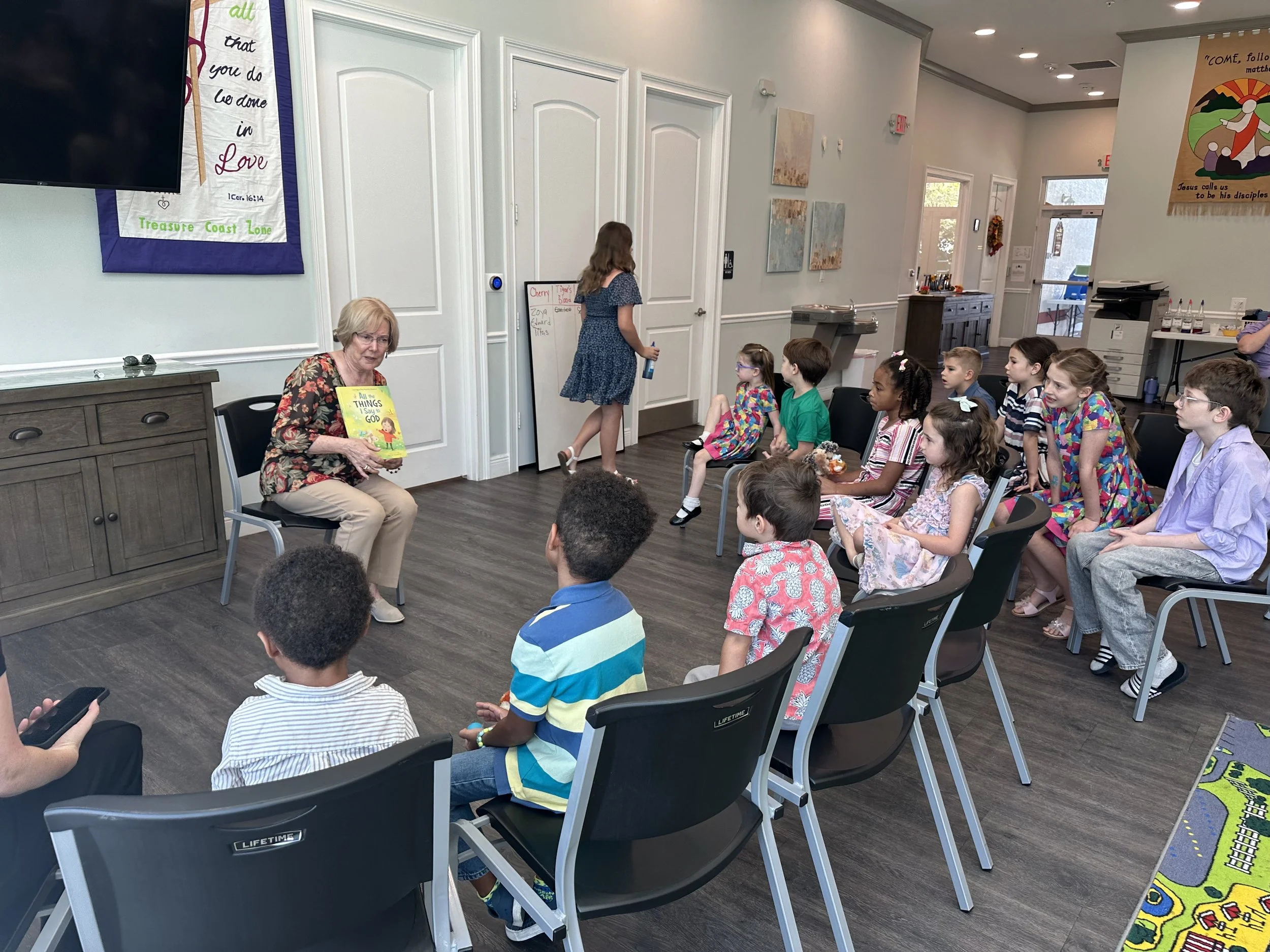
2nd Sunday school was so cool it started to snow.
It was so cool it started to snow.
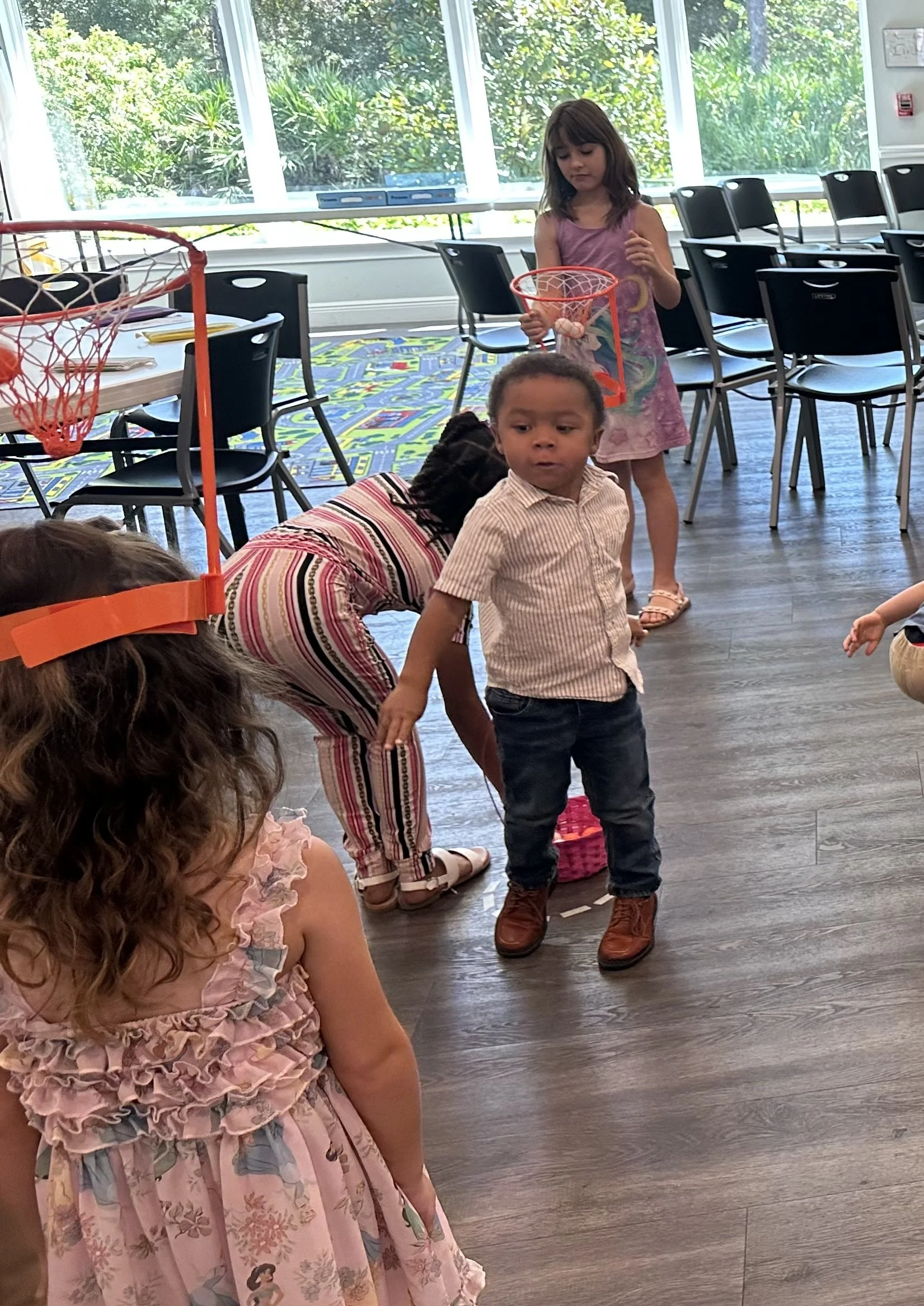
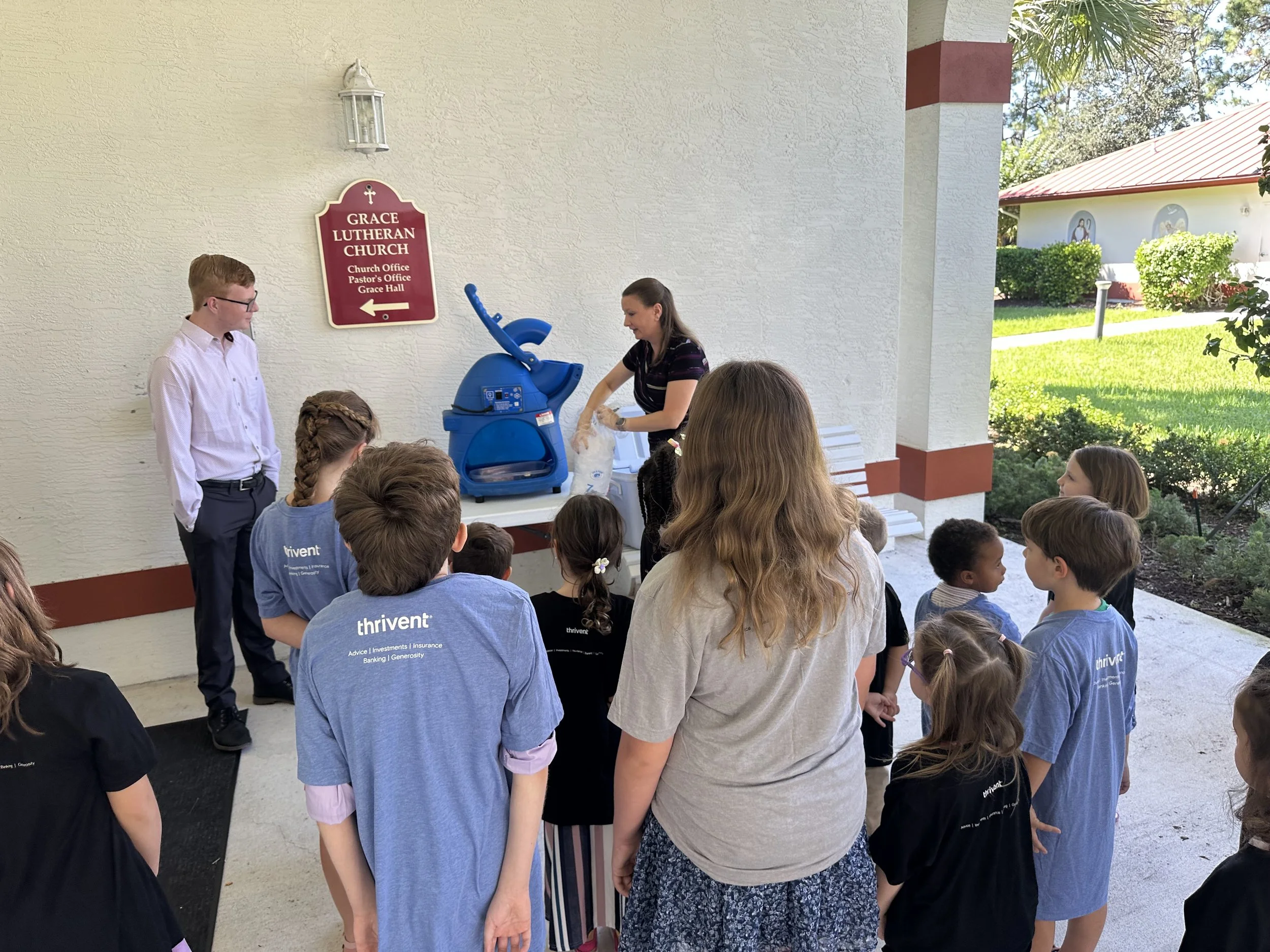
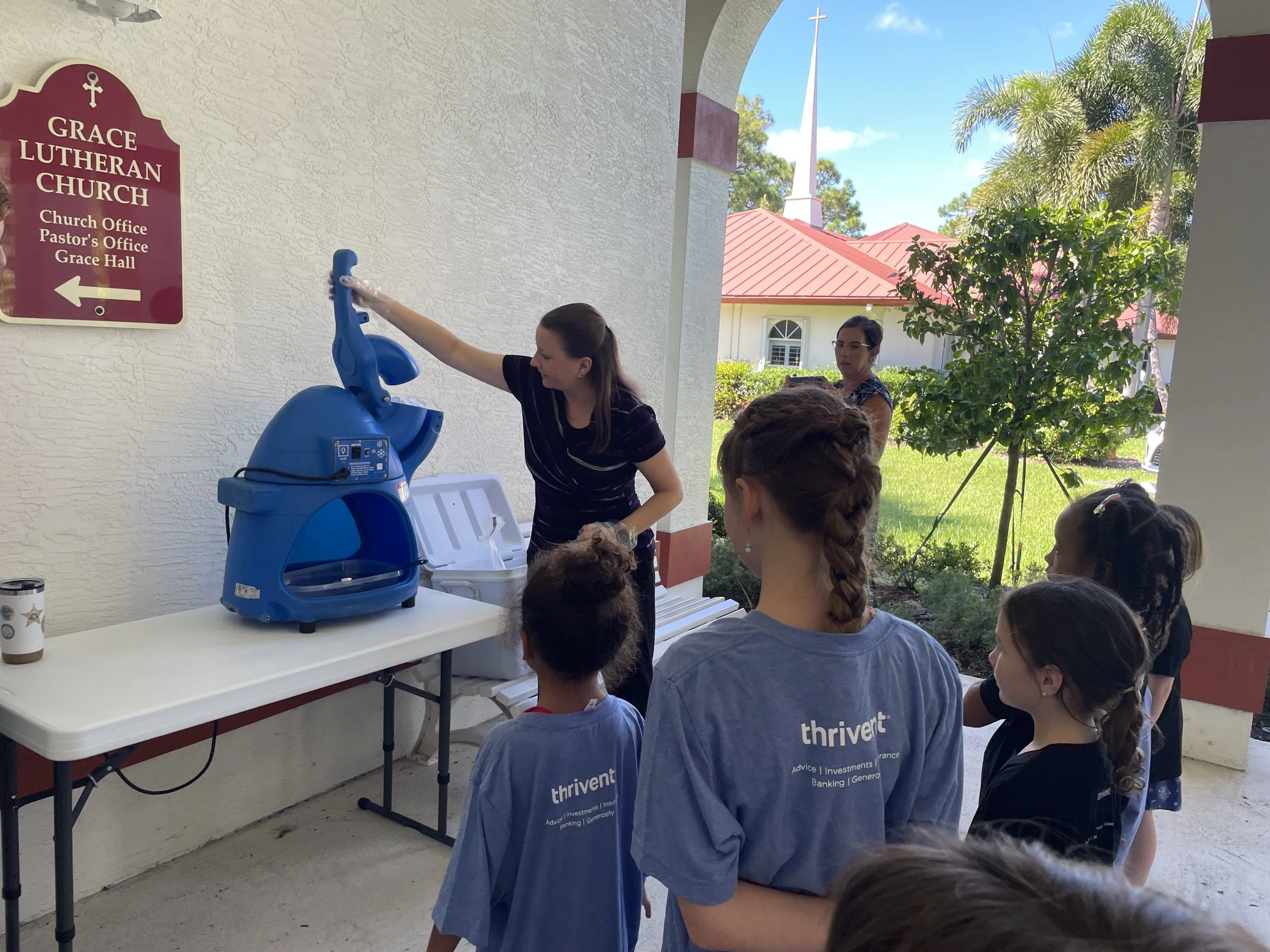
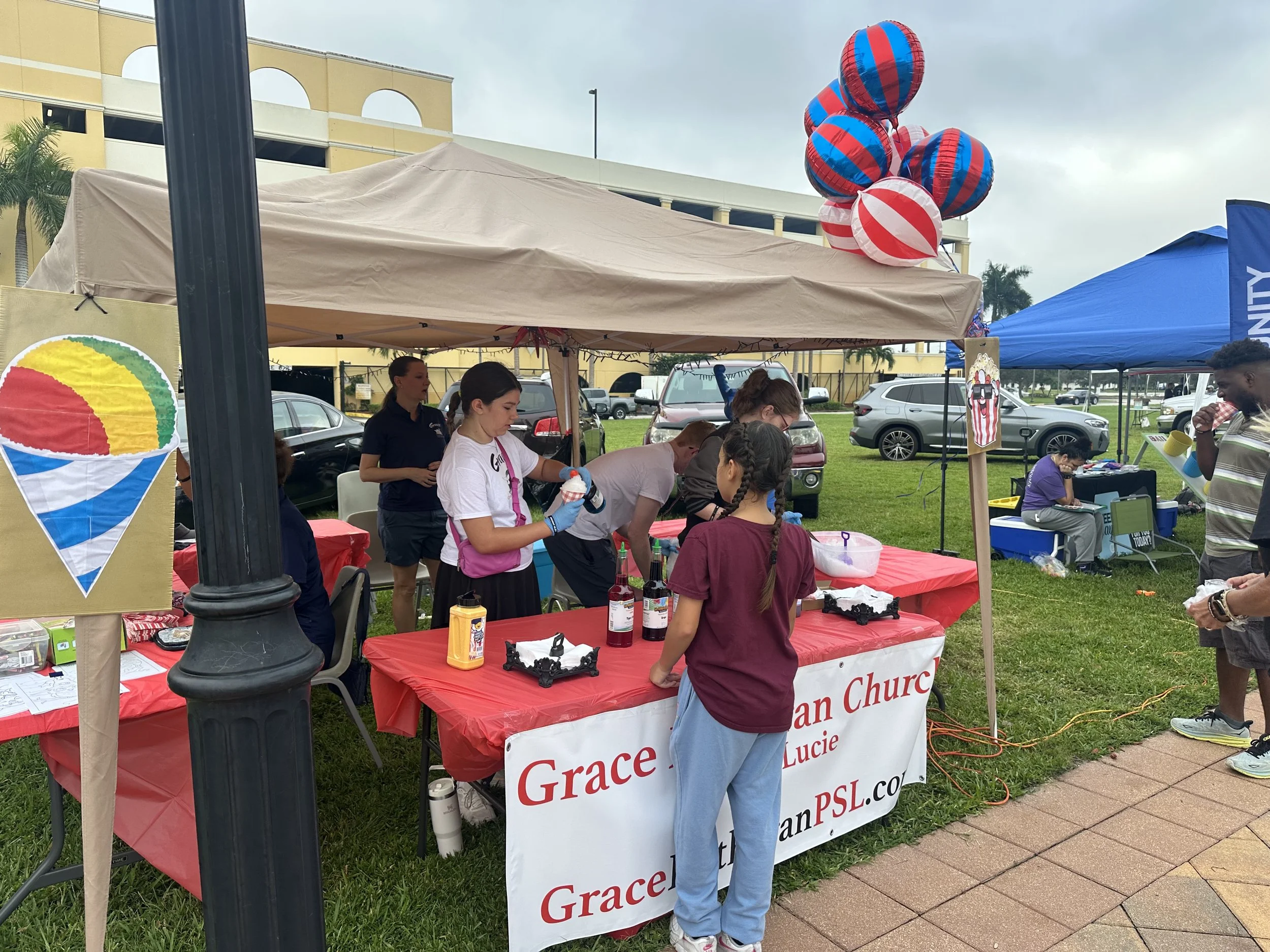
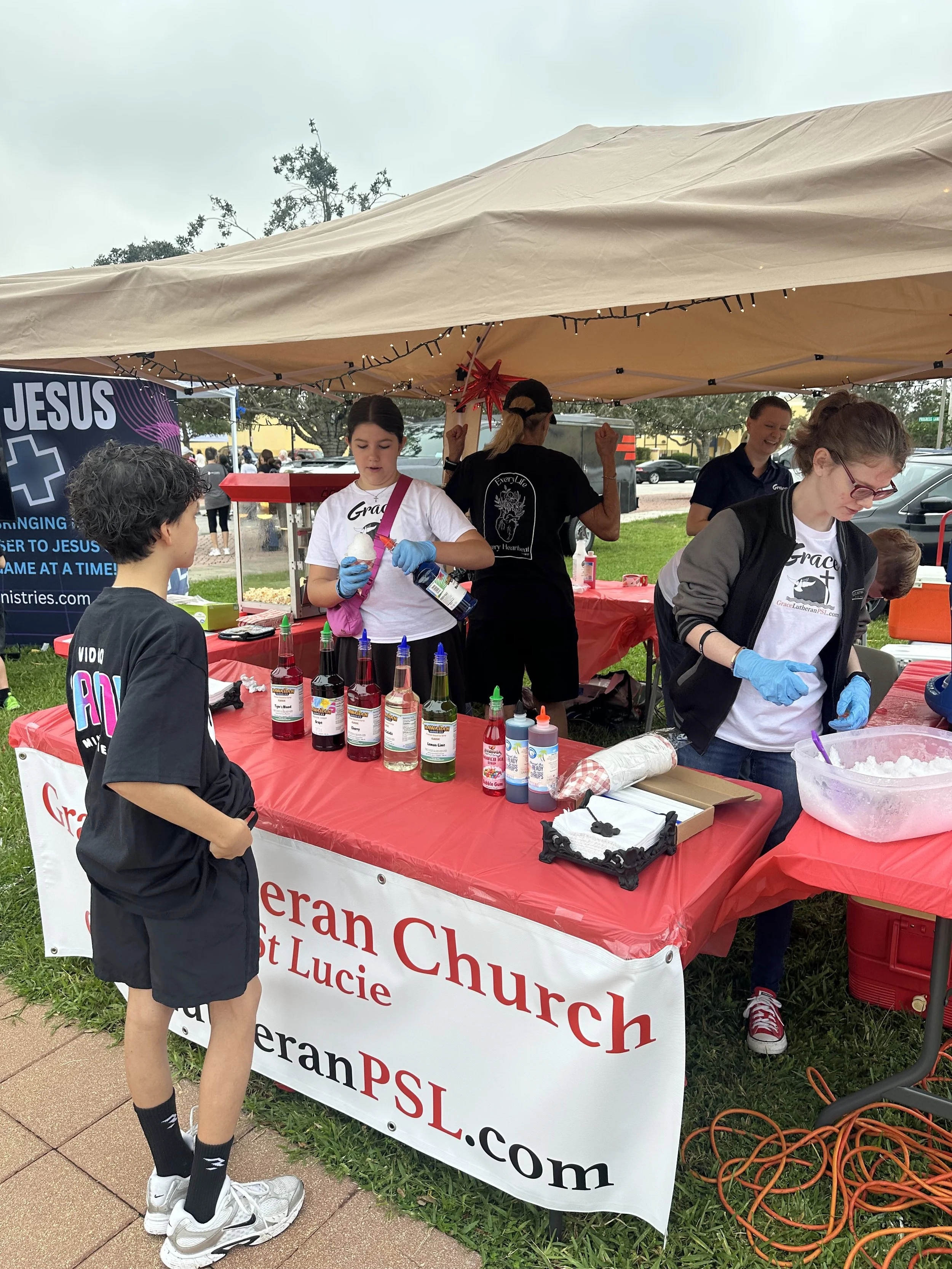
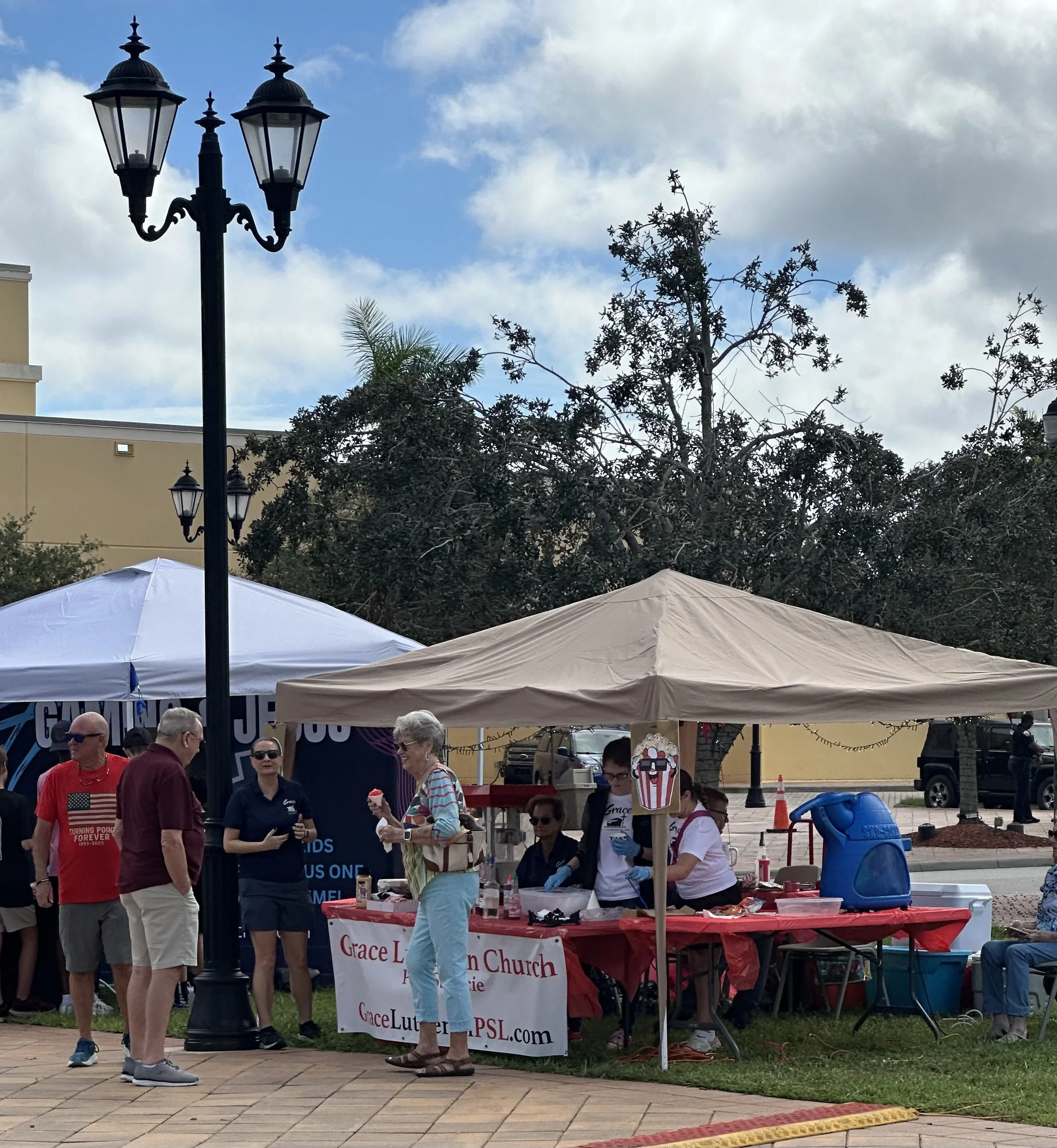
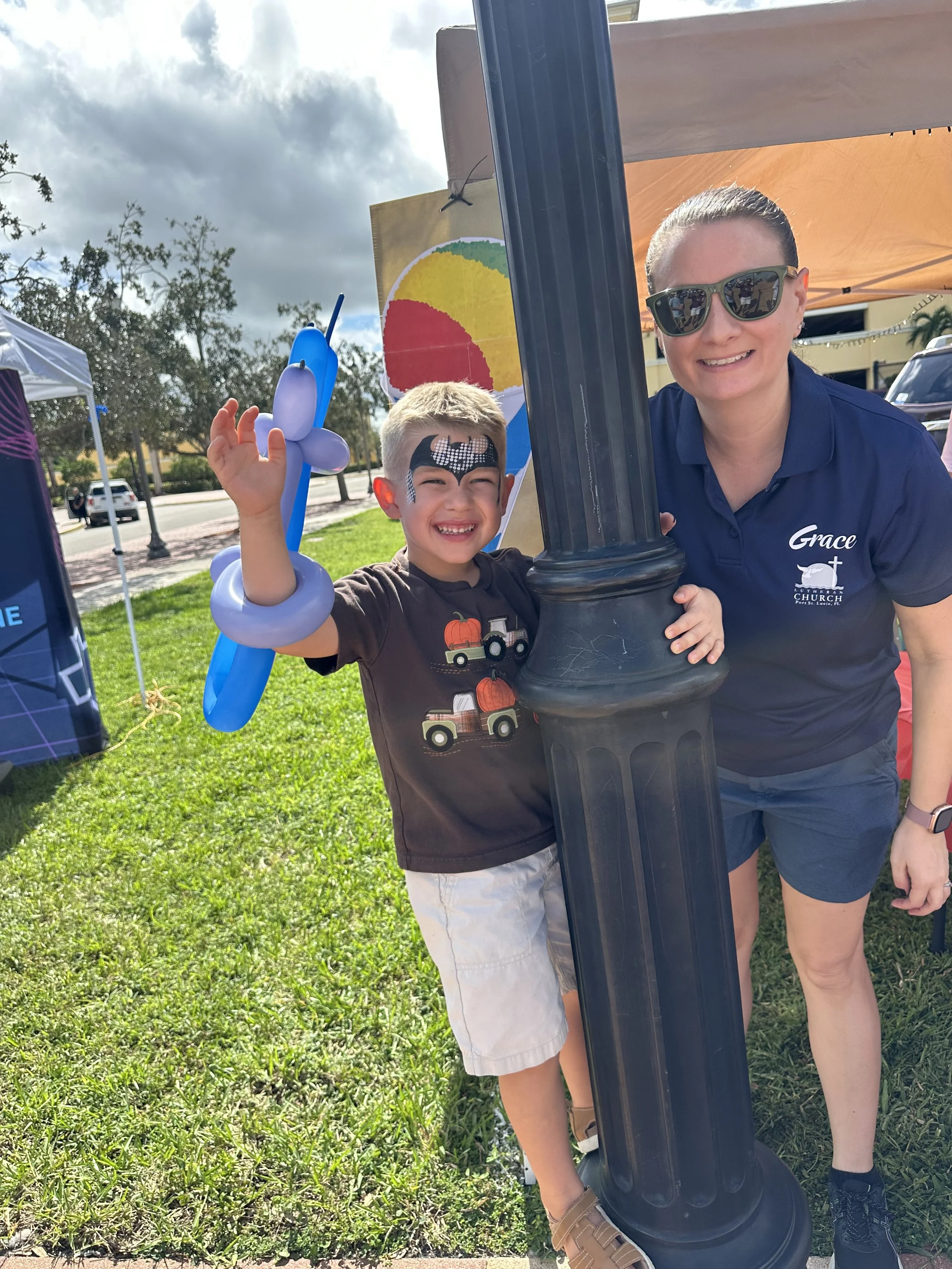
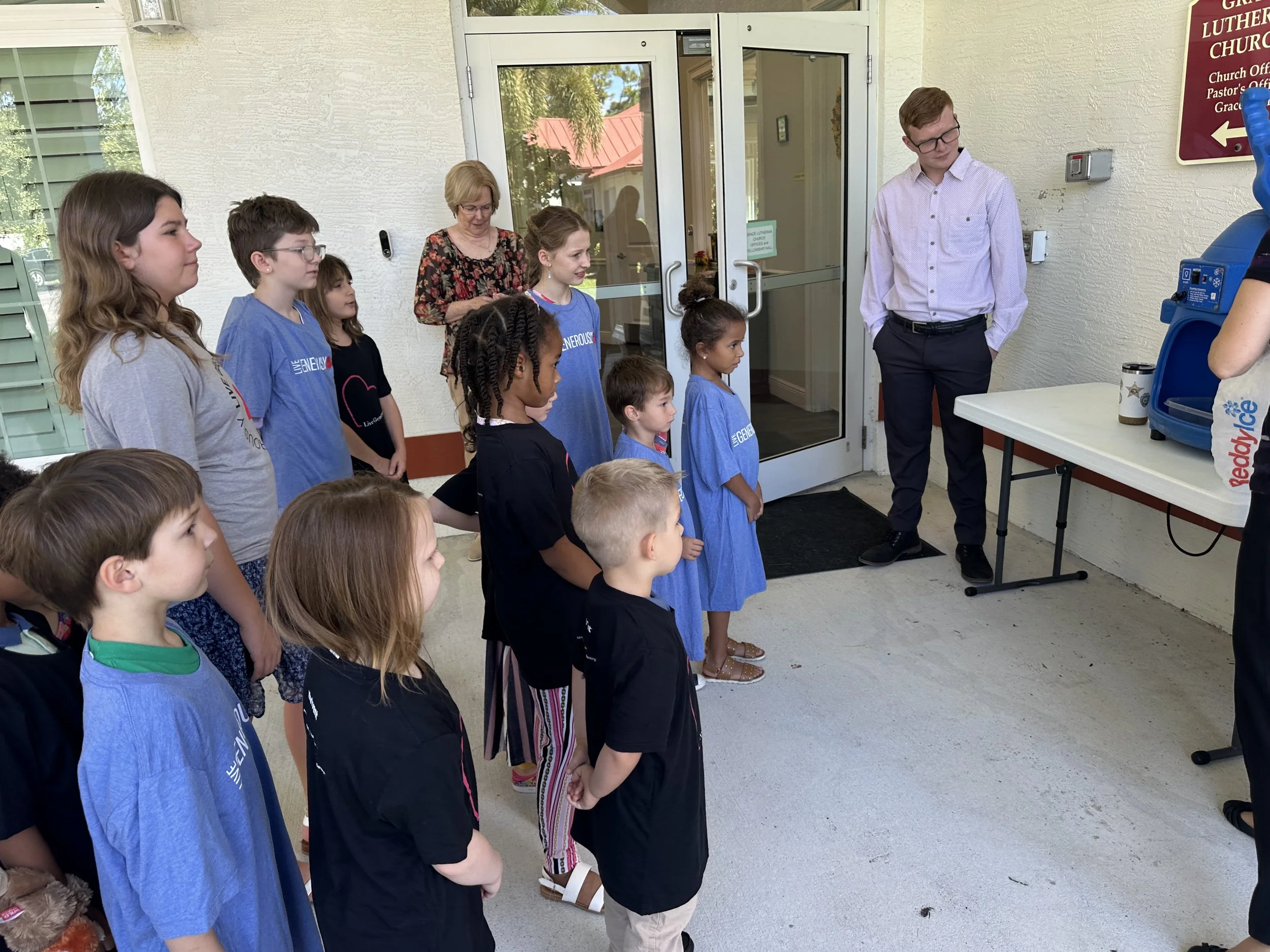
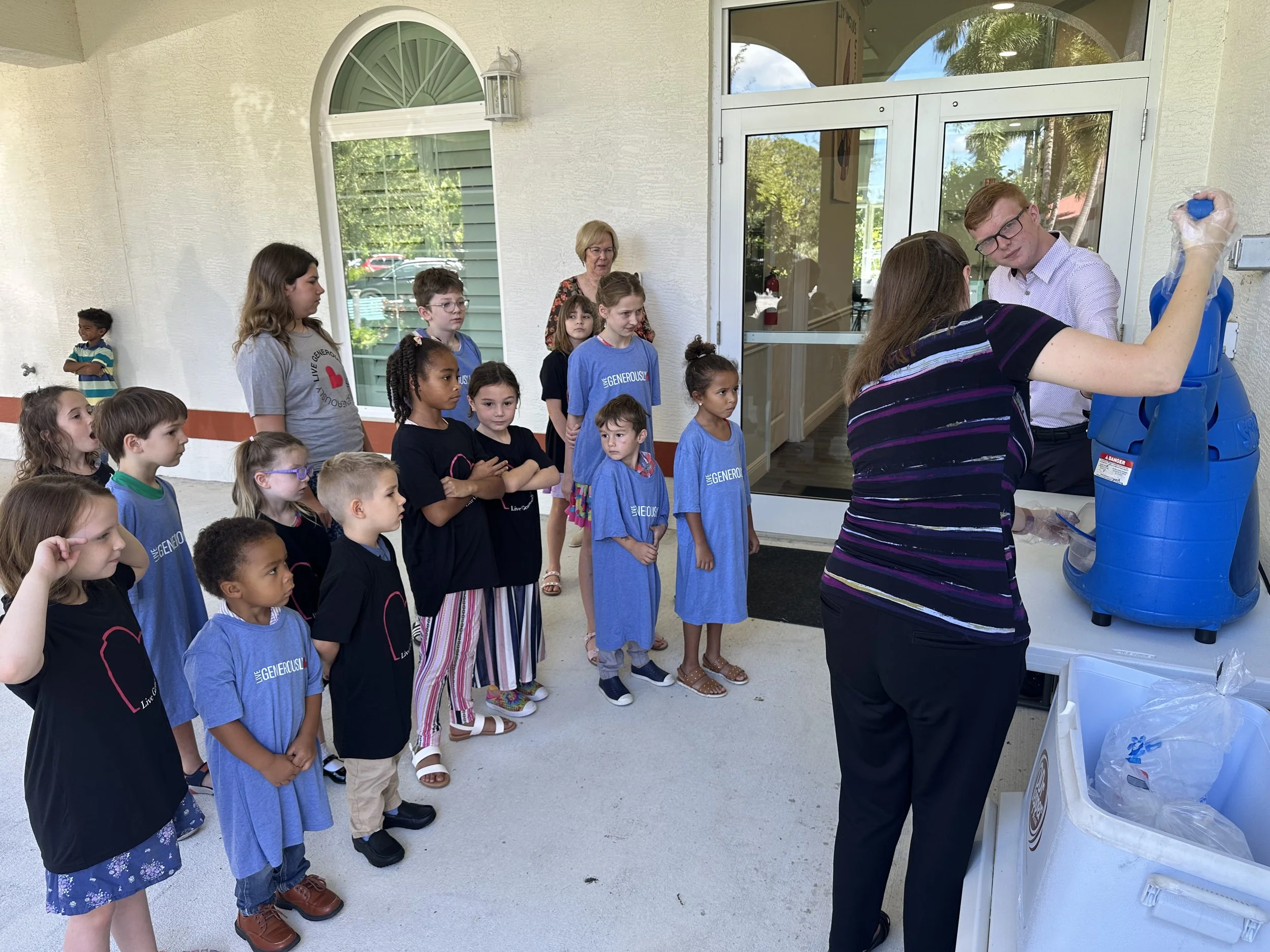
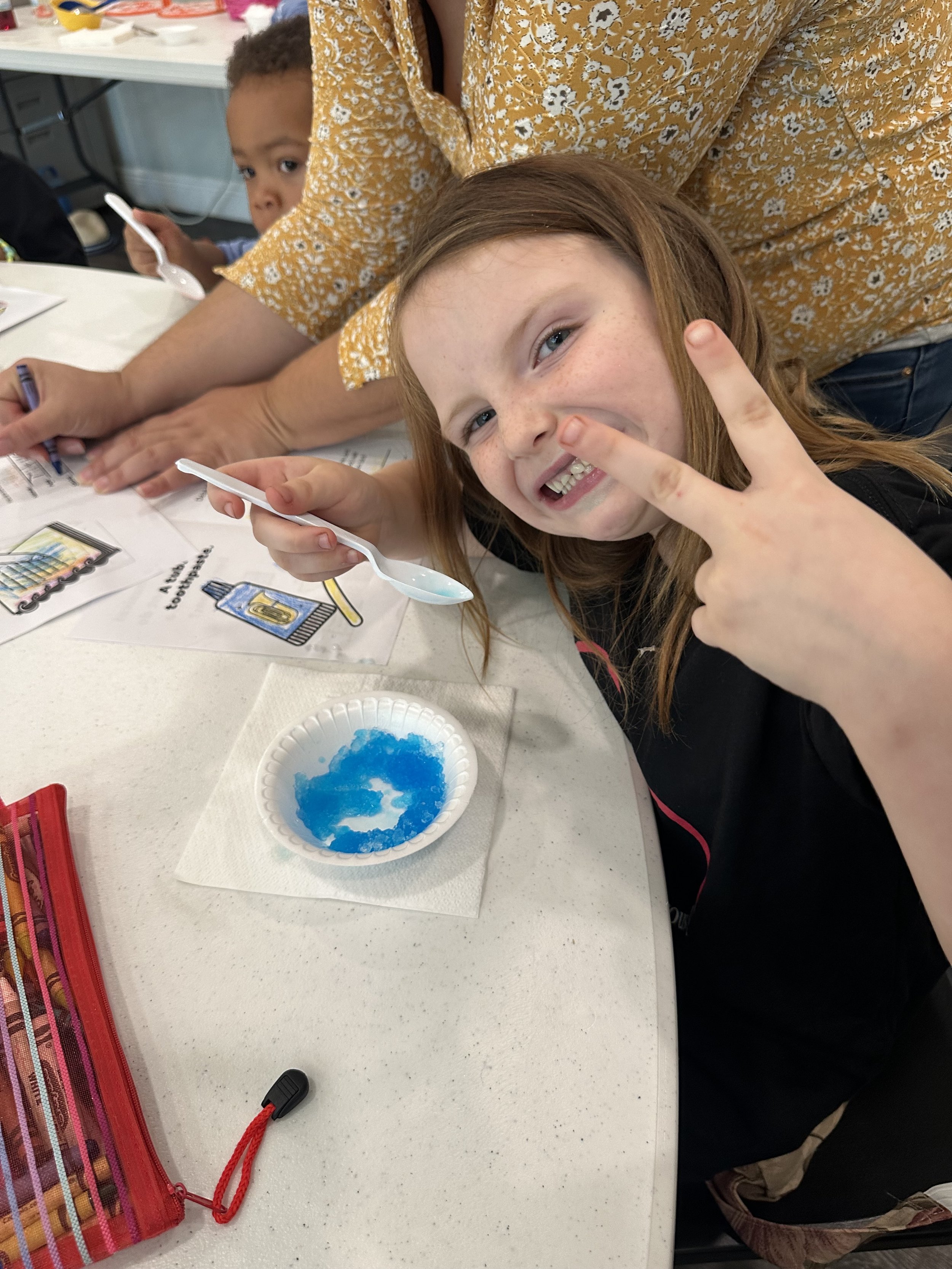
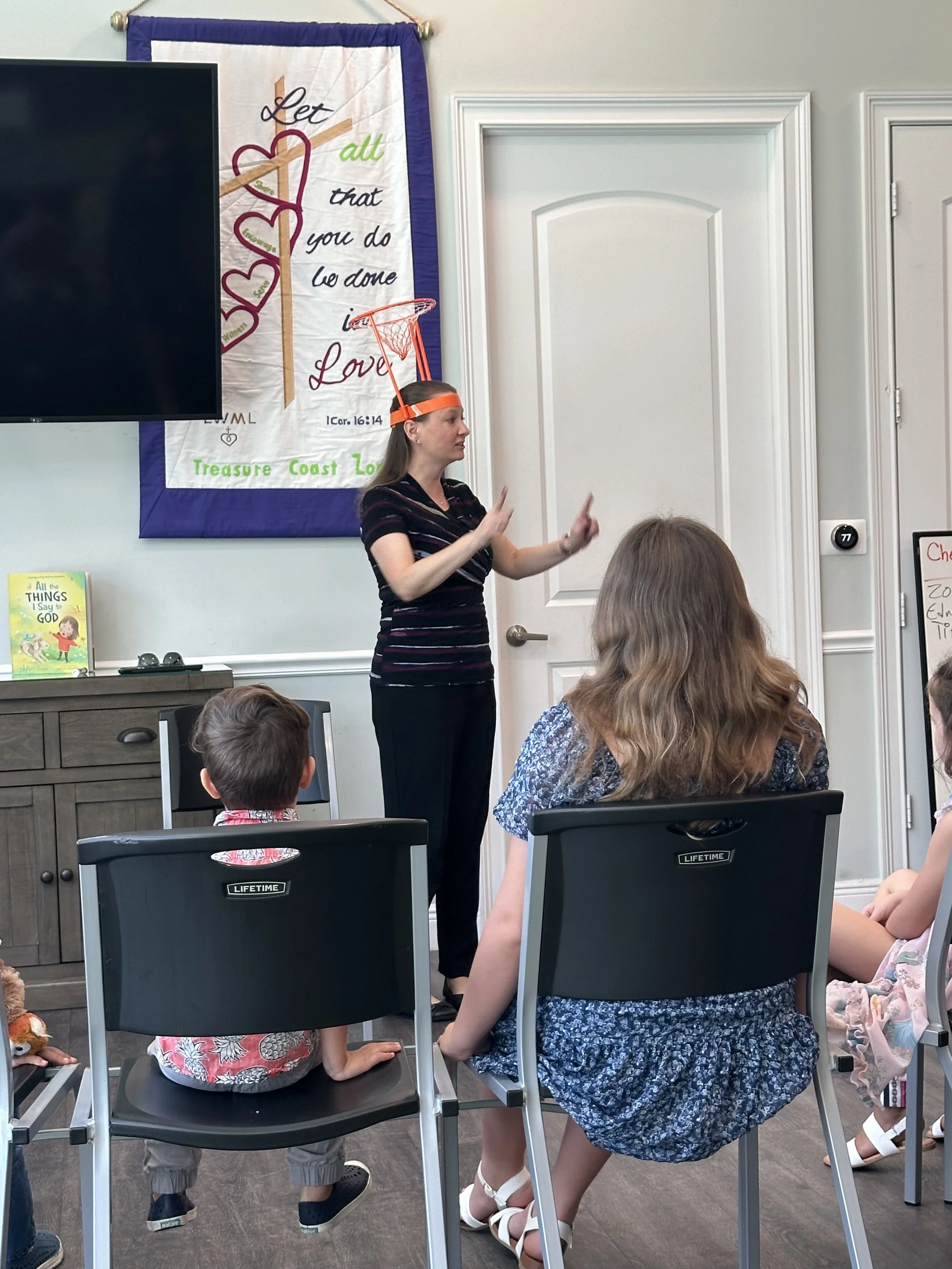
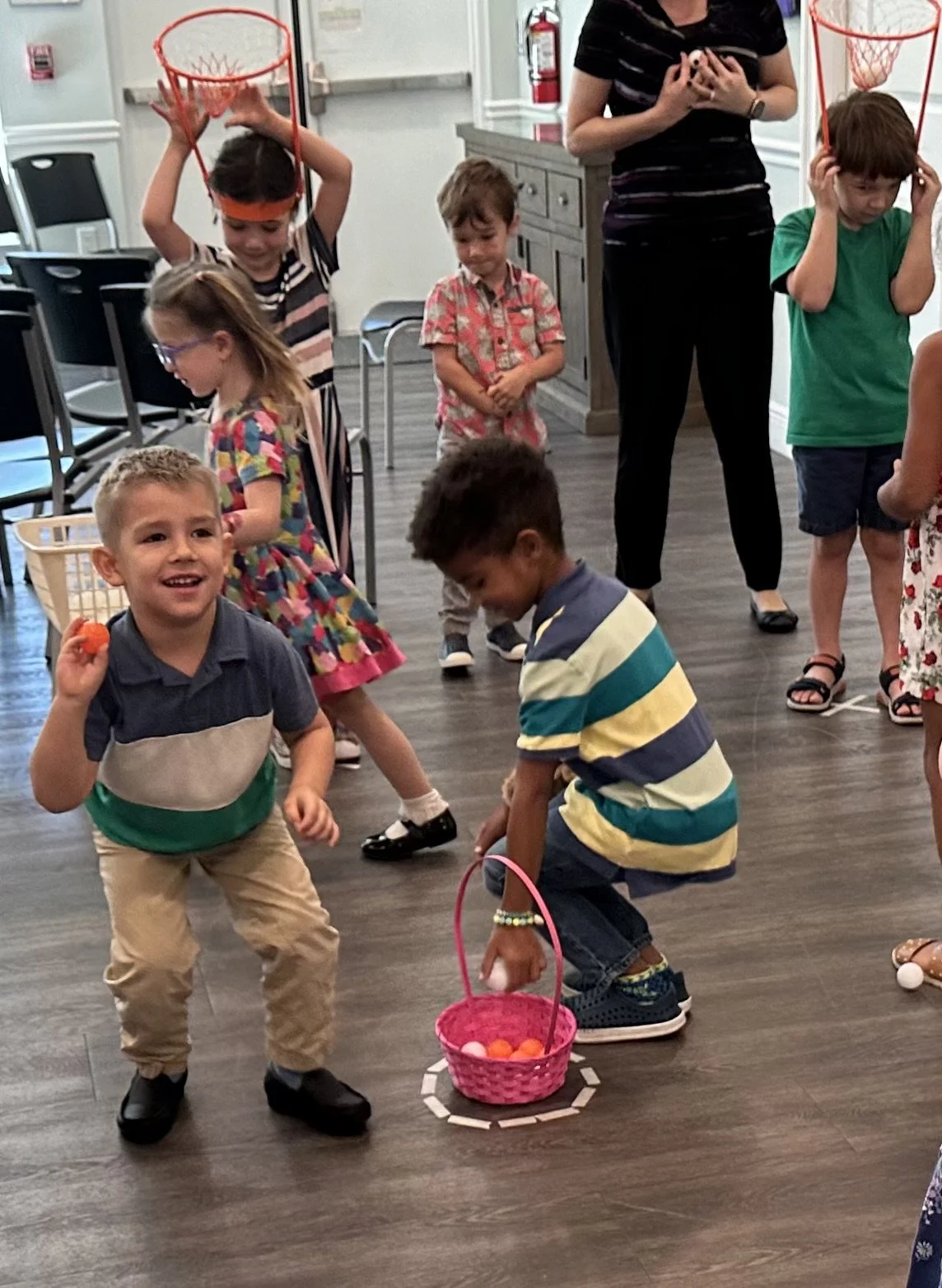
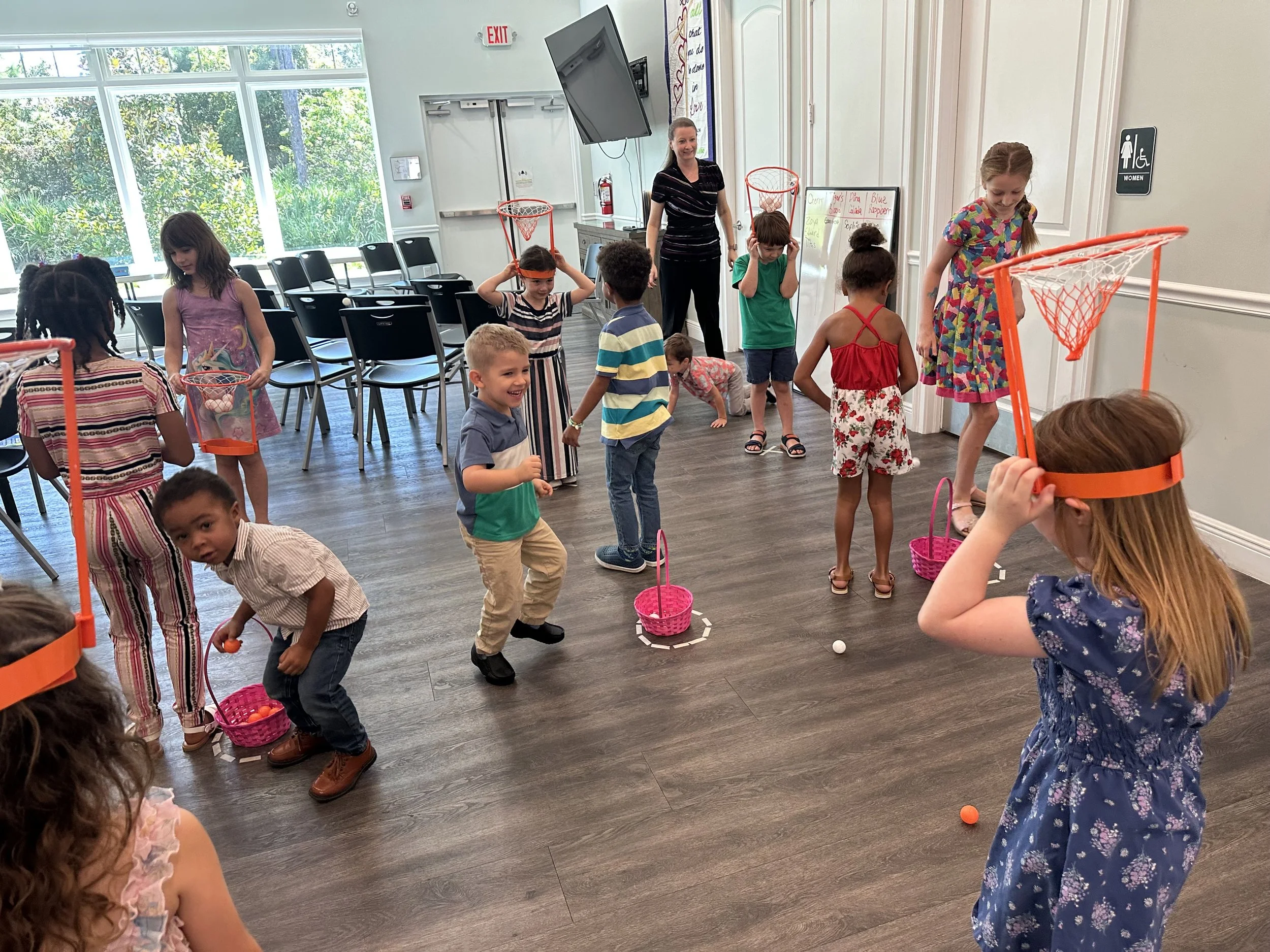
We used the snow cone machine to make delicious, icy treats. We also had fun balancing basketball hoops on our heads while playing around.














Revelation Ch 19-20 Bible Study
Revelation chapter 19-20 Worship, Martyrdom, and Final Judgment
The Book of Revelation.
Chapter 19-20
This is an AI Recap of the class.
Some things may be incorrect.
Short Summary of the Whole Class
The class continued its study in Revelation 19 and began into Revelation 20, emphasizing the contrast between Christ’s humble, sacrificial power and the Antichrist’s hollow, war-driven spectacle. We focused on true worship (worship God/Christ alone), the “testimony of Jesus” as the heart of proSphecy and faithful witness (linked to martyrdom), the marriage supper of the Lamb, and Christ’s decisive victory over evil. We also explored Revelation 20’s imagery of the abyss, the binding and brief release of Satan, the millennium, and final judgment, connecting these themes to creation and Job’s Leviathan as pictures of God’s mastery over chaos. Throughout, we called the church to servant-hearted worship, faithful testimony, humility, forgiveness, and hope in Christ’s ultimate triumph.
Section-by-Section Summary
1) Opening and Context
The class set up recording with a new device intended to generate automatic AI summaries.
We reoriented to the Revelation series, preparing to revisit chapter 19 and move into chapter 20.
Short summary of this section:
We readied the recording and refocused on our ongoing study, returning to Revelation 19 and preparing to enter 20.
2) Two Sides: Christ and Antichrist
Revelation presents two stark ways: Christ’s humble, sacrificial power versus the Antichrist’s blustering, warlike display.
Christ’s “power” appears as the Lamb who was slain—mustard seed-like, non-coercive, and quietly transformative.
The Antichrist pursues spectacle, coercion, and harm for dominance.
Illustrations:
C.S. Lewis’s The Great Divorce: grand evil is ultimately fragile—like a small crack in the soil.
Herod’s hollow power: manipulated into murdering John the Baptist.
Revelation trains us to see through worldly spectacle to the truth of the Lamb’s way.
Short summary of this section:
We contrasted Christ’s true, humble power with the Antichrist’s hollow spectacle, learning to discern the Lamb’s way over worldly dominance.
3) Reading Revelation 19
We read Revelation 19 aloud and noted:
The heavenly multitude’s “Hallelujahs.”
God’s just judgment of the great harlot and avenging His servants.
Worship by the twenty-four elders and four living creatures.
The marriage supper of the Lamb; fine linen as the righteous acts of the saints.
John’s correction from misplaced worship: “Worship God. For the testimony of Jesus is the spirit of prophecy.”
The rider on the white horse: Faithful and True; The Word; King of Kings and Lord of Lords; sharp sword from His mouth; robe dipped in blood.
Birds summoned to consume the flesh of those aligned with the beast.
The beast and false prophet captured and thrown alive into the lake of fire; the rest slain by the sword from the rider’s mouth.
Short summary of this section:
Revelation 19 portrays servant-led worship, the marriage feast, and Christ’s decisive victory over the beast and false prophet.
4) Observations and Discussion on Revelation 19
Body of Christ and marriage feast imagery resurfaced.
Focus on Revelation 19:10:
“The testimony (martyria) of Jesus is the spirit of prophecy.”
Martyria links testimony to martyrdom—faithful witness is costly.
Connections to the two witnesses and souls beneath the altar (shared word family).
Misplaced worship:
John is corrected—worship God alone.
The Lamb’s way resists intoxication by wealth and power.
Foot-washing imagery:
Servanthood posture frames testimony and worship.
Service-filled worship contrasts the Antichrist’s peacocking.
Repeated “Hallelujahs” led by humble servants.
Short summary of this section:
We emphasized testimony-as-martyrdom, redirected worship to God alone, and highlighted servant-hearted praise as the mark of the Lamb’s kingdom.
5) Christ’s Victory and the “Battle” in Revelation 19:19–21
Christ’s robe “dipped in blood” likely signals victory accomplished at the cross.
The beast, kings, and armies gather, but there’s effectively no contest—Christ’s word wins decisively.
The beast and false prophet are thrown alive into the lake of fire; judgment imagery echoes ancient warfare.
Short summary of this section:
Christ’s cross-secured victory ends the confrontation immediately; evil powers face certain and final judgment.
6) The Lake of Fire and Its Meaning
The lake of fire (with brimstone) is the destination for the beast, false prophet, later the devil, death, Hades, and those not in the book of life.
Distinguished from Sheol/Hades—ultimate, eternal judgment.
Short summary of this section:
The lake of fire signifies final, eternal judgment distinct from temporary realms.
7) Transition to Revelation 20
We planned to re-read 19 and move into 20 with a lens shaped by recent teaching.
Anticipated fresh insights at the beginning of chapter 20.
Short summary of this section:
We prepared to read Revelation 20 with renewed perspective informed by prior teaching.
8) Revelation 20—Binding of Satan, Millennium, Gog and Magog, Final Judgment
Reading Revelation 20:1–15:
Angel binds Satan with a great chain and throws him into the abyss for a thousand years.
Thrones and martyrs reign with Christ (first resurrection); the second death has no power over them.
After the thousand years, Satan is briefly released, deceives Gog and Magog, surrounds the saints; fire from heaven consumes them.
The devil is cast into the lake of fire to be tormented forever.
Great white throne judgment: books opened; book of life determines destiny; death and Hades cast into the lake of fire—the second death.
“A thousand years” discussed as likely symbolic magnitude rather than literal duration; timeline questions left open.
Short summary of this section:
Revelation 20 depicts Christ’s reign, vindication of martyrs, Satan’s brief last deception and total defeat, and the final judgment.
9) Abyss, Creation, and Job’s Leviathan
The “abyss” linked to Genesis 1:2 (LXX) “the deep”—pre-creation chaos God orders.
Job 41’s Leviathan used as an image of terrifying, untamable power under God’s control—“on a leash.”
The chain-and-abyss imagery in Revelation 20 echoes Leviathan’s leash motif—God sovereignly restrains chaotic evil.
Leviathan’s “twisted/coiled” nuance resonates with serpent/Satan imagery without asserting identity.
Short summary of this section:
We connected the abyss to creation’s ordering of chaos and Leviathan’s leash to the dragon’s binding, underscoring God’s mastery over the fiercest powers.
10) Rereading Job: Humility, Repentance, and Forgiveness
Job and friends both mis-speak; God’s theophany reorients Job.
Job moves from hedging sacrifices to intercessory sacrifice for his friends—humility and forgiveness after encountering God’s glory.
Parallels to Revelation’s call: live faithful testimony, die to self, forgive, rather than fixate on condemning others.
Short summary of this section:
Job’s arc models humility and mercy after meeting God, aligning with Revelation’s call to faithful witness and forgiveness.
11) Wrestling with Timing and Looking Ahead
Ongoing debate on whether Revelation 20 is future or recapitulation; symbolic approach favored for “a thousand years.”
Anticipation of Revelation 21’s hopeful vision of new creation.
Short summary of this section:
We acknowledged interpretive tensions, leaned toward symbolic readings, and looked forward to the hope of Revelation 21.
Final Summary of What Was Said in Class
We centered on worshiping God/Christ alone and resisting idolatry of messengers, leaders, or spectacle. The “testimony of Jesus”—His death and resurrection—was highlighted as the spirit of prophecy and the pattern for Christian life, linking witness to martyrdom. In Revelation 19, servant-led “Hallelujahs,” the marriage supper, and the rider on the white horse display Christ’s decisive, word-based victory over the beast and false prophet. In Revelation 20, we explored the binding of Satan, the millennium, Gog and Magog, and the great white throne judgment, connecting the abyss to creation’s ordered cosmos and Job’s Leviathan as a metaphor of God’s control over chaos. The class called for servant-hearted worship, faithful witness, humility, repentance, forgiveness, and confidence in Christ’s ultimate triumph.
Main Points
Worship God/Christ alone; reject idolatry of angels, leaders, or ministries.
The “testimony of Jesus” (martyria) is the spirit of prophecy—gospel witness shaped by the cross and resurrection.
Faithful witness is costly and central; believers overcome by the blood of the Lamb and their testimony.
Christ’s humble, sacrificial power exposes the Antichrist’s hollow spectacle.
The marriage supper of the Lamb signifies the church’s union with Christ and righteous acts (fine linen).
Christ’s victory is decisive and secured at the cross; the “battle” ends without contest.
The lake of fire represents ultimate, eternal judgment, distinct from temporary realms.
Revelation 20 presents Christ’s reign, vindicated martyrs, Satan’s brief release and final defeat, and the great white throne judgment.
The abyss evokes pre-creation chaos; Job’s Leviathan illustrates God’s mastery over fearsome powers.
The Christian pattern: humble service, dying to self, forgiveness, and hope in new creation.
Scriptures and Stories Mentioned
Revelation:
Revelation 18 (thematic reference to wealth accumulation and worldly power)
Revelation 19 (worship scenes; marriage supper; rider on the white horse; lake of fire; v.10 “testimony of Jesus is the spirit of prophecy”)
Revelation 20:1–15 (abyss; binding of Satan; thousand years; Gog and Magog; lake of fire; great white throne; second death)
Revelation 1:2; 1:9 (word of God and testimony of Jesus; John on Patmos)
Revelation 6:9 (souls under the altar—martyrs for the word and testimony)
Revelation 11:4, 7 (two witnesses; lampstands; finishing their testimony)
Revelation 12:11, 17 (overcoming by the blood and testimony; commandments; testimony of Jesus)
1 Corinthians 12–14 (prophecy as edifying proclamation/gospel preaching)
Genesis 1:2 (Spirit hovering over the deep/abyss)
Job 41 (Leviathan; divine mastery over chaos)
Isaiah (Leviathan references and “twisted/coiled” nuance—contextual mention)
Gospel themes:
Jesus washing the disciples’ feet (servanthood and humility)
Take up your cross and follow Jesus (die-to-rise pattern)
Historical/Literary references:
Herod and the execution of John the Baptist
C.S. Lewis, The Great Divorce (image of hollow grandeur)
Golden calf (Exodus 32—caution against idolatry)
Short summary of the final lists:
We referenced key passages in Revelation, Genesis, Job, 1 Corinthians, and gospel themes to underscore God’s sovereignty, Christ’s decisive victory, the call to faithful testimony and servant-hearted worship, and the hope of final redemption.
![[Sunday] Genesis 1:1-2 - Richer](https://images.squarespace-cdn.com/content/v1/5852f18a20099e30cd2c01dc/1760064484336-IMB2NY369HX96ONEYLFQ/richer25+1a.jpg)
[Sunday] Genesis 1:1-2 - Richer
The richer truth of Genesis 1 is that God's creation was a deliberate, harmonious song that continues, through Christ, to restore the dissonance of our chaotic world.

The richer truth of Genesis 1 is that God's creation was a deliberate, harmonious song that continues, through Christ, to restore the dissonance of our chaotic world.
Here is a video to dive deeper into Genesis chapter 1
How is our interpretation of the creation story in Genesis 1 deepened when we consider its ancient historical and cultural context? In this Bible commentary video, we look at how the literary design of Genesis 1 reveals God’s ideal vision for the whole cosmos.
Questions for the Week: Together: Genesis 1:1-2
The sermon emphasized that we were created with a beautiful song, out of love and intention. How does believing you were "sung into existence" change the way you see yourself or your worth compared to believing you are the result of chance or accident?
Read Genesis 1 - 2:3. Genesis 1 starts with God bringing order out of chaos (tohu va-vohu). What are some areas of chaos or darkness in our family's life, or the wider world, where we need God's "song" (His voice, grace, or order) to bring light and rest?
God kept declaring His creation was "good" (and humans "very good"). When is it easiest for you to believe God's declaration that you are "Goooooood", and what makes it hardest to believe that about yourself or others?
If our lives are meant to be a part of God's perfect creation "song," what does it look like when we choose to create dissonance (by choosing our own way, like Adam and Eve)? What's one practical way we can intentionally choose harmony (forgiveness, kindness, order) this week?
What Had happened at Grace this week.
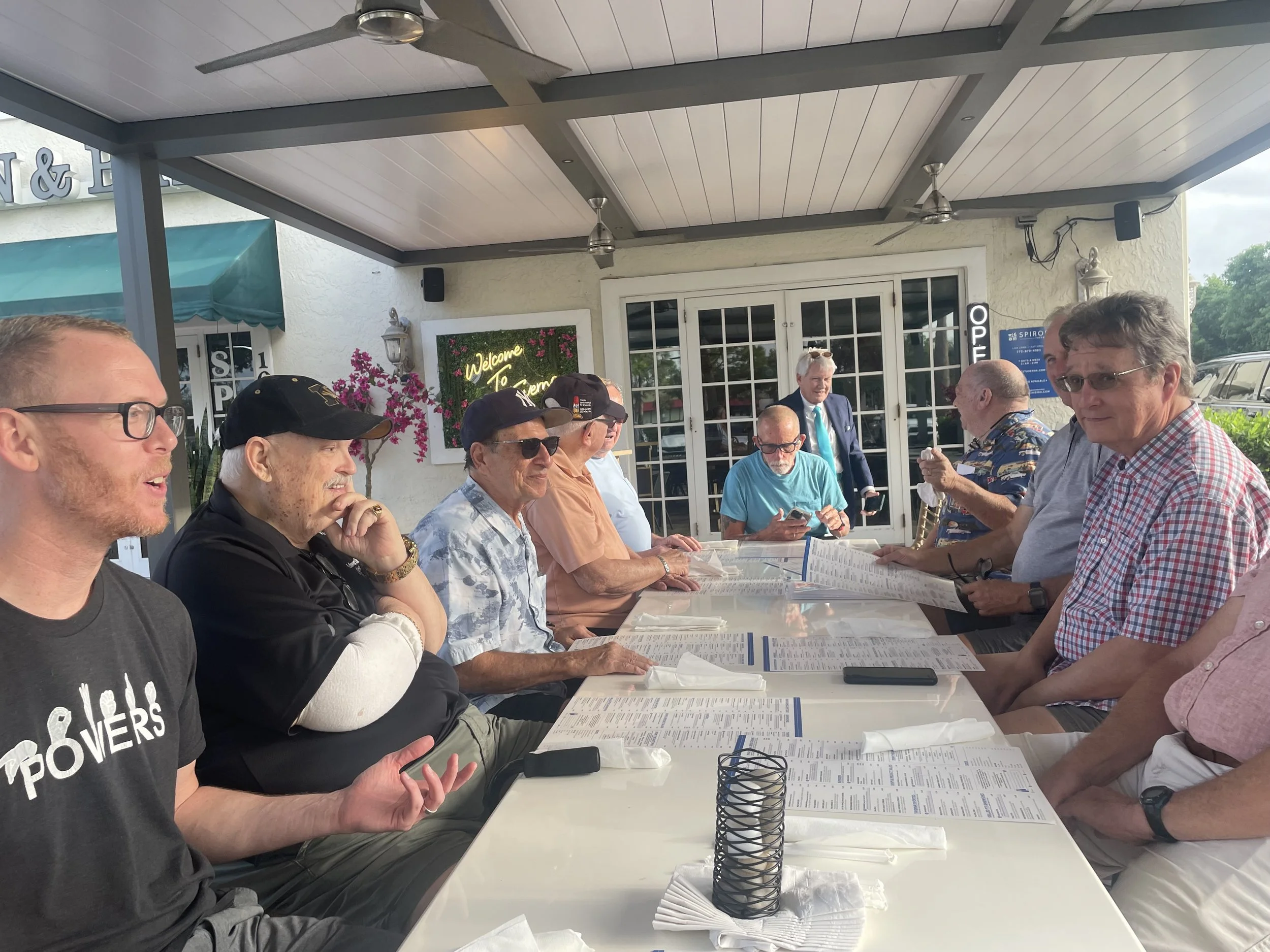
Guys Night at Spiros
Guys night Photos
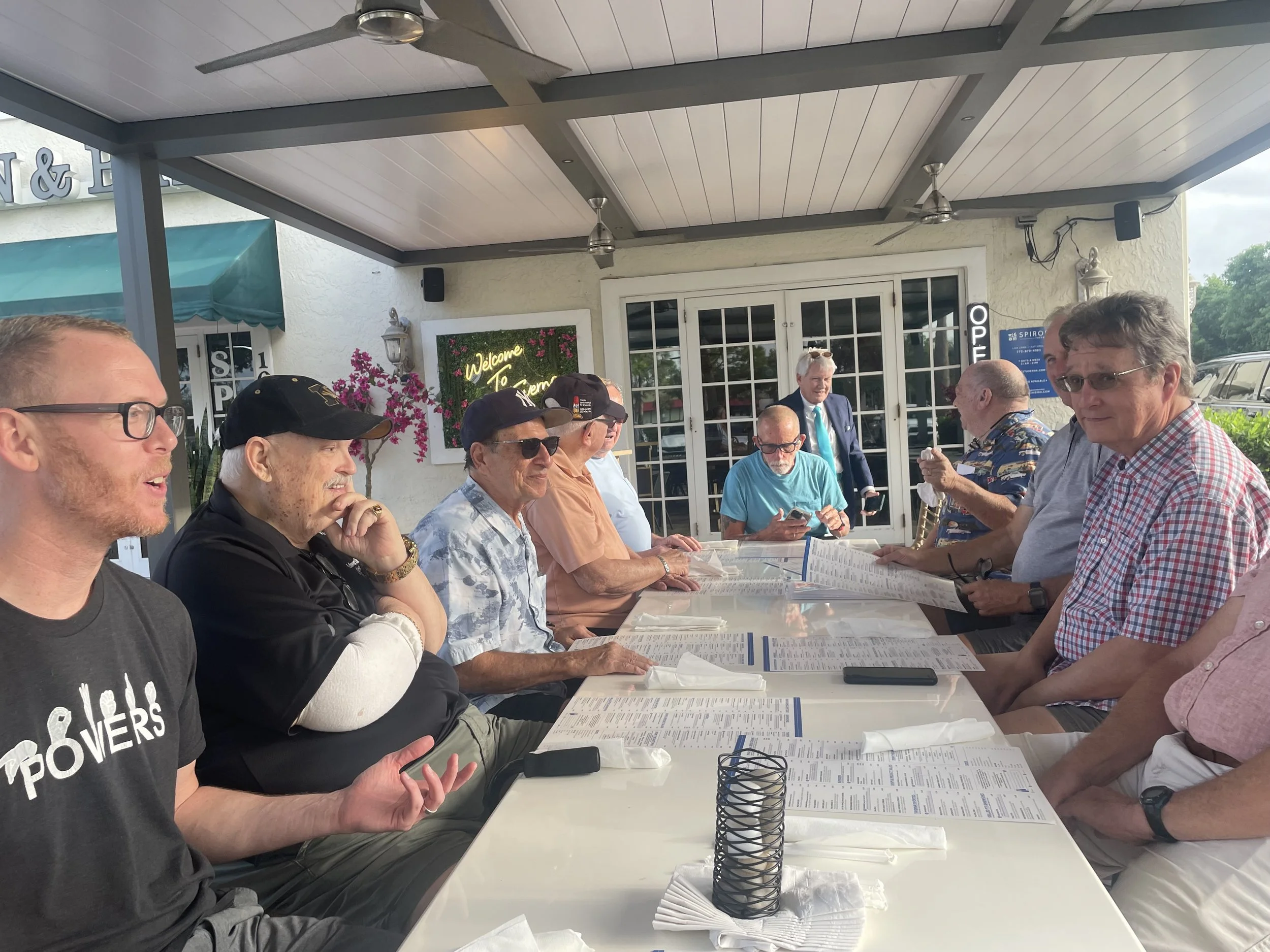
Every 1st Thursday of each month, the Guys of Grace Lutheran PSL come together for their regular meet-up.




Grace Serving at the CareNet Walk 25’
serving at the CareNet Walk
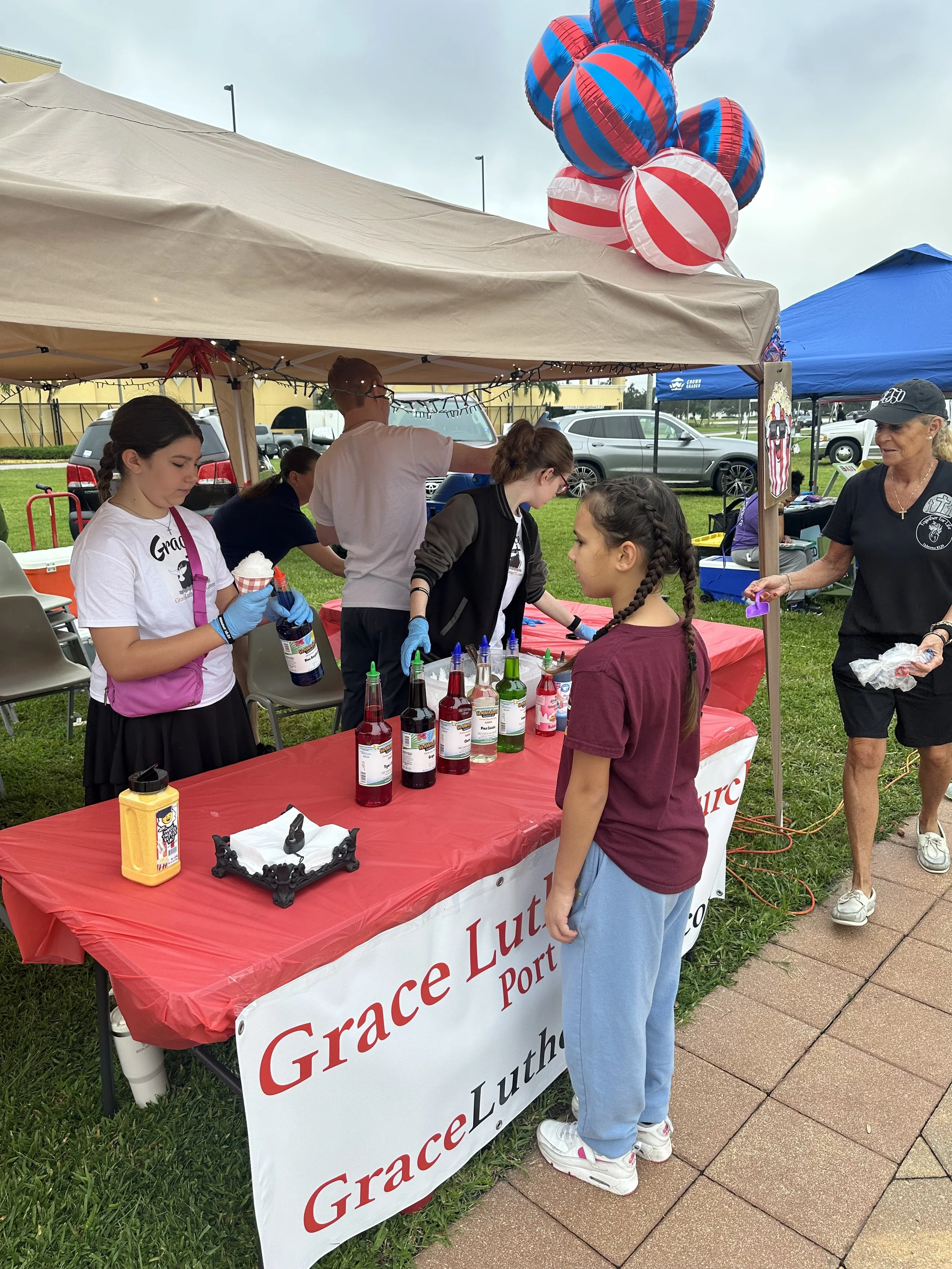
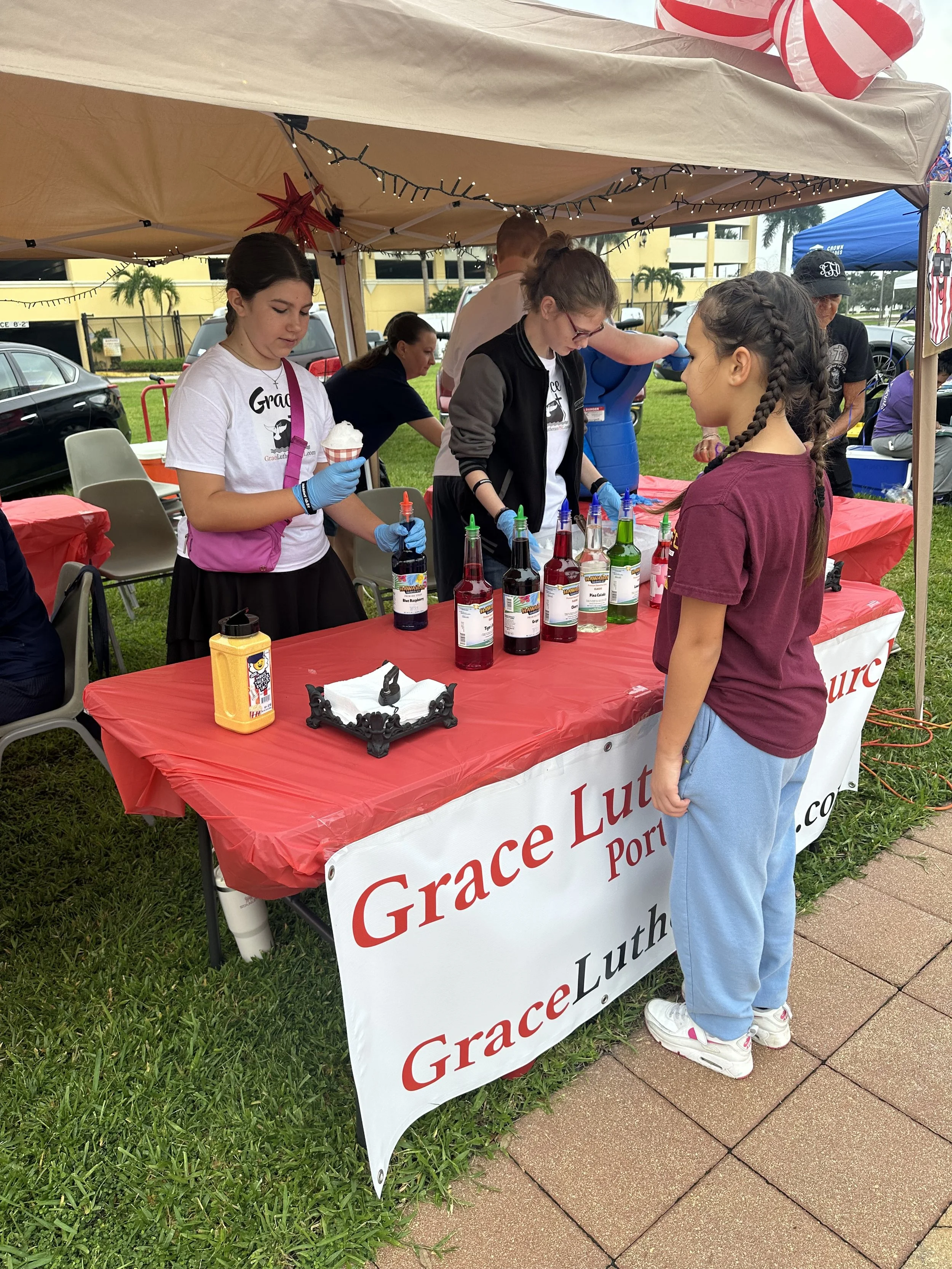
Grace operated a booth at the CareNet Walk, where we served snow cones and popcorn to attendees. The event was a wonderful opportunity to engage with the community and support families in the Treasure Coast.


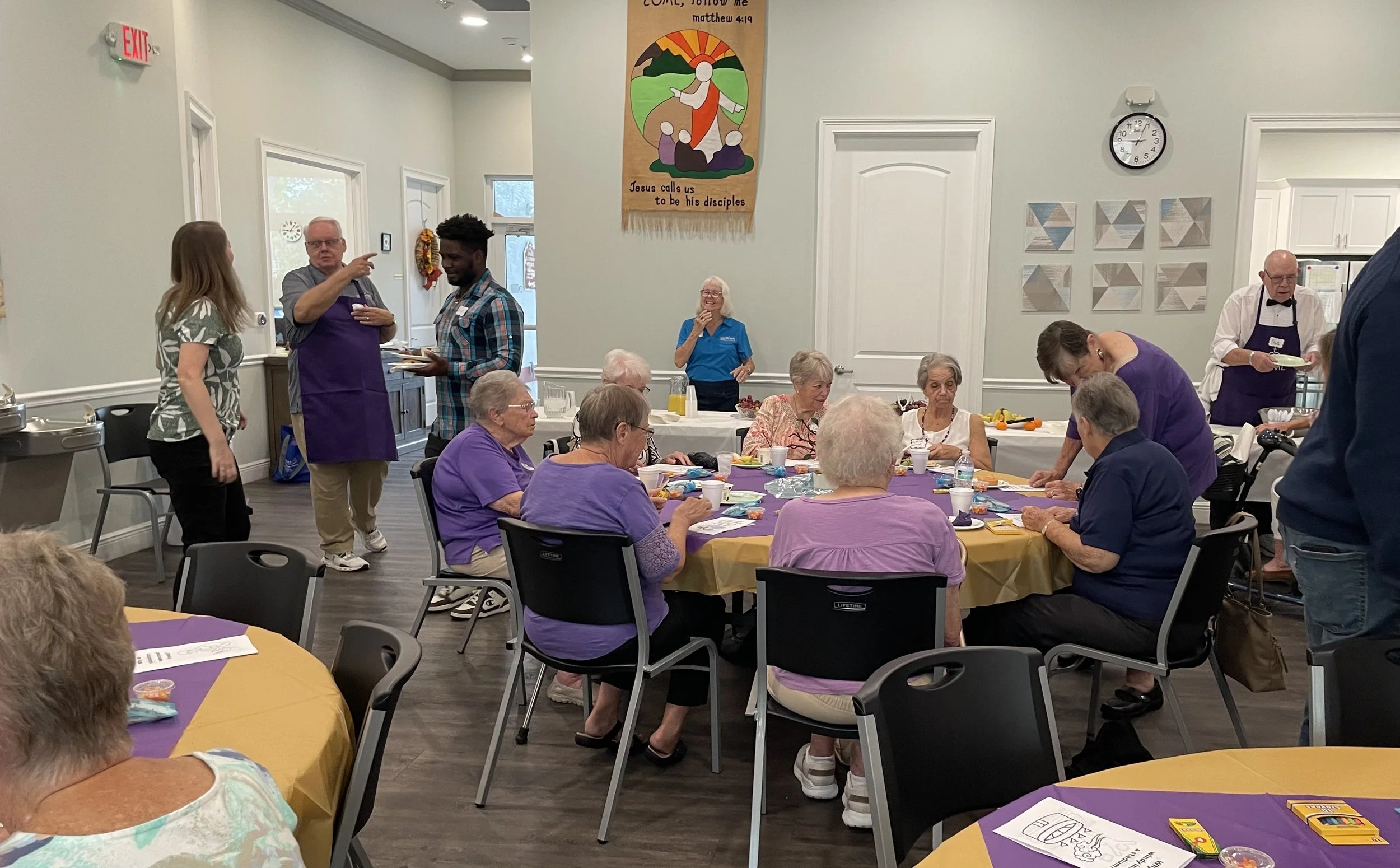
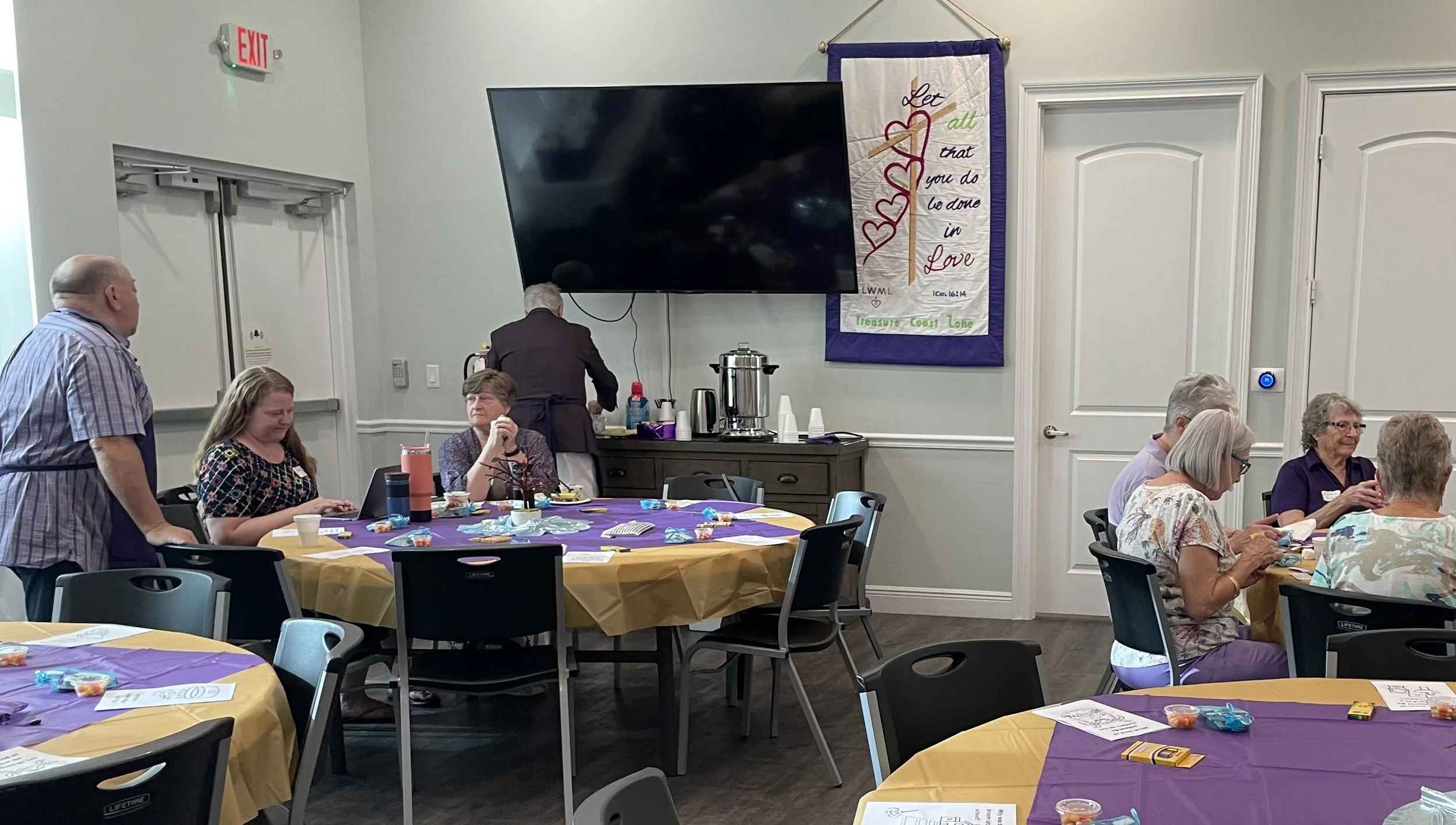
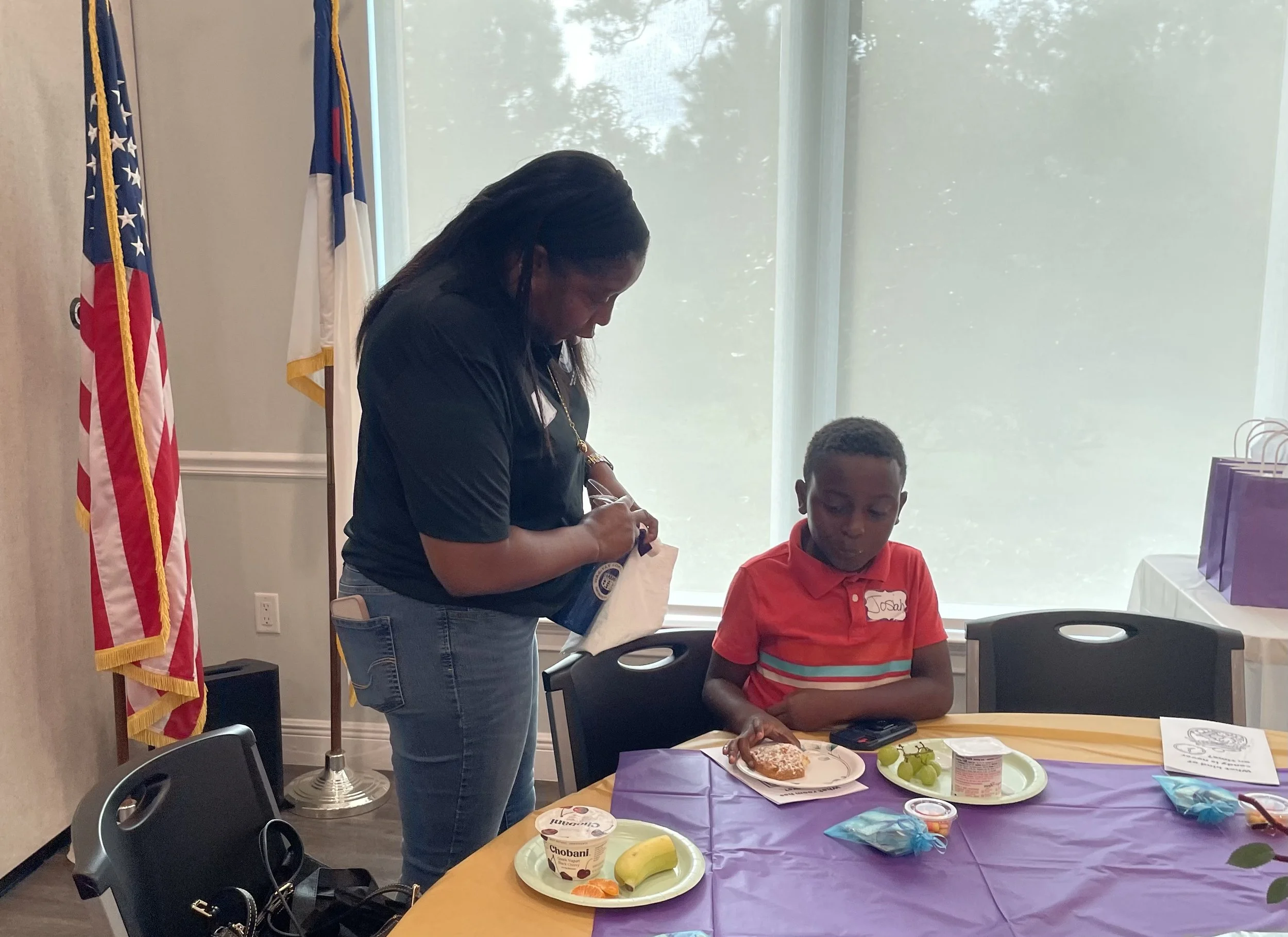
LWML Grace Rally 25’
Fun times at the LWML Rally
Grace had the wonderful opportunity to host the Fall Rally this year. During the event, Habitat for Children was also given the chance to speak about all the important work they are doing in Haiti.





New Song , Morning Has Broken
New Song for the new creation
Here is Grace’s Recording for Sunday
On October 12th 2025 we are singing
“Morning Has Broken” (Eleanor Farjeon)
1. Morning has broken like the first morning;
Blackbird has spoken like the first bird.
Praise for the singing! Praise for the morning!
Praise for them, springing fresh from the Word!
2. Sweet the rain’s new fall, sunlit from heaven
Like the first dew fall on the first grass.
Praise for the sweetness of the wet garden,
Sprung in completeness where His feet pass.
3. Mine is the sunlight! Mine is the morning.
Born of the one light Eden saw play!
Praise with elation, praise ev’ry morning,
God’s recreation of the new day!

Revelation Ch 18-19 Bible Study
Revelation chapter 18-19
The Book of Revelation.
Chapter 18-19
This is an AI Recap of the class. Some things may be incorrect.
Quick recap
Cris led a Bible study session focused on Revelation chapters 18 and 19, exploring themes of judgment, repentance, and the triumph of good over evil. The discussion covered various biblical concepts including kavok, the impermanence of material possessions, and the contrast between temporary worldly power and the enduring strength of the Kingdom of God. Cris and the group examined the violent imagery and symbolism in Revelation 19, discussing interpretations of Christ as a warrior and the significance of divine judgment, while also touching on historical and linguistic aspects of the text.
Next steps
Next steps were not generated due to insufficient transcript.
Summary
Bible Study: Revelation's Triumph
Cris led a Bible study session on Revelation, focusing on chapters 18 and 19. He explained that chapter 18 describes the fall of Babylon, symbolizing the end of a corrupt and luxurious system, while chapter 19 highlights the victory of Christ and the contrast between his kingdom of love and service versus the Antichrist's realm of warfare and death. The group read and discussed the passage, focusing on themes of judgment, repentance, and the ultimate triumph of good over evil.
Impermanence of Material and Corporate Success
Cris discussed the biblical concept of kavok, which describes seemingly important and heavy things that quickly disappear, drawing parallels to the impermanence of material possessions and corporate jobs. He explained that despite people's efforts to become indispensable, they are often quickly replaced, much like water filling a bucket. Cris interpreted the reference to things drying up in an hour as a metaphor for the fleeting nature of war, famine, and other apocalyptic events, emphasizing the need to invest in people rather than temporary material wealth.
Kingdom vs. Materialism in Revelation
Cris discussed insights from a Matthew sermon series, emphasizing that Jesus built his church on people rather than solidified beliefs. They explored themes of materialism, deception, and the fleeting nature of wealth in Revelation 18, noting how these themes resonate with modern society. Cris highlighted the contrast between the temporary power of the world and the enduring strength of the Kingdom of God, represented by the Lamb. They also touched on the Jewish origins of the judgment against Babylon, emphasizing its association with wickedness and materialism.
Divine Justice and Collaborative Trust
Cris discussed the importance of balance between control and trust, emphasizing that being less controlling allows for better collaboration and serving others. They then delved into a detailed analysis of Revelation 19, focusing on the imagery of salvation, judgment, and the marriage of the Lamb, highlighting the themes of righteousness and prophecy. The discussion concluded with Cris interpreting the vision of a rider on a white horse, representing divine justice and authority, and an angel summoning birds for a symbolic feast.
Interpreting Revelation's Violent Imagery
Cris led a discussion on the violent imagery in Revelation 19, focusing on the lack of violence from the good guys and the presence of the sword of the Lord. They debated the interpretation of the battle scene, with Cris suggesting that the violence described may be metaphorical rather than literal. The group also discussed the use of "great and small" imagery in the text, comparing it to C.S. Lewis's Chronicles of Narnia.
Christ's Warrior Image in Revelation
Cris and Elaine discussed the imagery and symbolism in Revelation 19, focusing on the depiction of Christ as a warrior on a white horse, his robe dipped in blood, and the sharp sword coming out of his mouth. They explored the connection between this imagery and the earlier references in Revelation and Isaiah, interpreting it as a representation of divine judgment and the victory of the Lamb that was slain. They also considered the balance and harmony in the Hebrew language, which Cris suggested might be reflected in the text's imagery.
Jesus' Victory Over Power Struggles
Cris discussed the biblical passage about the beast and the battle, emphasizing that the battle was already won by Jesus, who died and rose again. He explained that the hubris and attempts at domination by powerful figures would ultimately collapse, as seen throughout history.

Richer: Finding Meaning in our Favorite Verse (Teaching Series)
There are many Bible verses that are so loved by the church. Over the centuries, these verses have been encouraging and equipping the church in its walking with the Lord. So let's dive deep into these beloved verses to gain an even richer love and understanding.
There are many Bible verses that are so loved by the church. Over the centuries, these verses have been encouraging and equipping the church in its walking with the Lord. So let's dive deep into these beloved verses to gain an even richer love and understanding.
Reading Plan
October 12th 25’
Gen 1 In the begging God created the heavens and the earthGen 1:1-5, 24 -2:3
Collisions 3:5-11
John 2:11-18
October 19th 25’
Matthew 28:19 Great ComissionPsalm 73:1-8, 23-26
Acts 1:6-11
Matthew 28:16-20
-
July 3rd 22
John 3:16John 2-3
July 10th 22
1 Peter 3:151 Peter 3
July 17th 22
2 Corinthians 12:92 Corinthians 12
![[Sunday] 2 Corinthians 12:9 - Richer](https://images.squarespace-cdn.com/content/v1/5852f18a20099e30cd2c01dc/1657807734734-ZH74IVJBK5BKP54Y4QUD/Richer+3a.jpg)
![[Sunday] 1 Peter 3:15 - Richer](https://images.squarespace-cdn.com/content/v1/5852f18a20099e30cd2c01dc/1657246717732-K83UQ4BAKWX1LPMRWXGP/Richer+2a.jpg)
![[Sunday] John 3:16 - Richer](https://images.squarespace-cdn.com/content/v1/5852f18a20099e30cd2c01dc/1656620271292-5FF8I7Q1N6N12UXJWUG1/Richer+1a.jpg)
![[Sunday] Resurrection- Together 1 Corinthians 15](https://images.squarespace-cdn.com/content/v1/5852f18a20099e30cd2c01dc/1759430622982-K16KQUFPNJYYPH4RQBB9/Together+5a.jpg)
[Sunday] Resurrection- Together 1 Corinthians 15
Amidst the noise of sin and the inevitability of death, Paul's final revelation is that Christ's resurrection is the event that transforms chaos into a unified, new, beautiful life.
Amidst the noise of sin and the inevitability of death, Paul's final revelation is that Christ's resurrection is the event that transforms chaos into a unified, new, beautiful life.
Questions for the Week: Together: Resurrection
The sermon used the "Devil Went Down to Georgia" analogy, contrasting the Devil's chaotic music with Johnny's beauty. Where do you see "chaos" (selfishness, division) and "beauty" (grace, life) at work in the world or in the church today?
Read 1 Corinthians 15:34-49. Paul called the Corinthians to "Wake up from your drunken stupor" and stop sinning. What is one area where we have been acting "asleep" or blinded by individualism (like the Corinthians), and what is one practical way we can intentionally choose to build each other up this week instead?
Paul reminds us that in Christ, "Death is swallowed up in victory." What does this victory mean for our family when we face something that feels permanent, difficult, or like a "loss" right now? How does the promise of resurrection change how we view these earthly problems?
Christ defeats ugliness with beauty. What is one concrete action we can take this week to bring the "beauty" of Christ's forgiveness and life into a chaotic situation or to a person in need?

What Had happened at Grace this week.

Revelation Ch 17-18 Bible Study
Revelation chapter 17-18
The Book of Revelation.
Chapter 17-18
This is an AI Recap of the class. Some things may be incorrect.
Quick recap
The group explored biblical passages from Revelation, focusing on themes of power, deception, and the contrast between true salvation and false pursuits of control and wealth. They discussed various symbolic meanings in the text, including numbers, kingdoms, and the significance of overcoming evil, while drawing connections to both historical contexts and modern-day parallels. The conversation concluded with reflections on addiction, humility, and the importance of spiritual growth,
Summary
Revelation's Contrast: Lamb vs Antichrist
The group discussed the book of Revelation, focusing on chapters 17 and 18, which depict a contrast between two realities: one of power and another of emptiness. The Class explained that these chapters highlight the difference between the Lamb that was slain and the Antichrist, representing service and love versus rampant selfishness. They also touched on the concept of seeking salvation in control or wealth, warning against baptizing these pursuits as the Christian way. The group read and discussed selected verses from chapter 17, including the description of the great harlot and the beast, and the eventual overcoming of these forces by the Lamb.
Babylon's Fall and Worldly Power
The class discussed the biblical passage in Revelation 17, focusing on the symbolism of the number seven and its connection to Rome. He explained how John's description of Babylon the Great and the scarlet beast reflects the evil and self-destructive nature of Rome. Cris emphasized that John's account includes a moment of personal realization and warning about the dangers of being impressed by worldly power and oppression. He drew parallels to other biblical texts, including 1 Corinthians and 1 Kings, to highlight how the use of slave labor in building the temple reflects a modern-day Babylonian system.
Revelation's Marvel and Gospel Astonishment
The group discussed the Book of Revelation, focusing on John's use of the word "marvel" or "astonished" to describe both the positive response to Christ and the negative response to the beast. They explored how John uses this word to parallel the actions of both Christ and the followers of the beast, emphasizing the contrast between true wonder and false admiration. The discussion also touched on the seven heads representing Rome and the woman sitting on the beast, as well as the concept of perversion in relation to the beast. Finally, they noted the significance of astonishment as a marker of the gospel in the Gospel of Mark, particularly in the women's reaction to Jesus' resurrection.
Revelation's Symbolism and World Powers
The class discussed the interpretation of Revelation 12-14, focusing on the symbolism of the beast, the Lamb, and the harlot. He explained that the ten kings willingly give their power to the beast, representing a world alliance seeking power. Cris also highlighted the significance of the word "overcome" in Revelation, noting that while early in the book it refers to the churches overcoming, later it is Jesus who is portrayed as the one overcoming evil. In Revelation 15, Cris described how the ten horns turn against the harlot, symbolizing Rome, ultimately leaving it desolate. Elaine interjected to ask a question, but the transcript ends before she speaks.
Biblical Numbers: Completeness and Creation
Elaine and The Class discussed the biblical significance of the numbers 7 and 10, with The Class explaining that 7 represents completeness and creation, while 10 signifies completeness with an exclamation point, often associated with kingdoms or enemies. They explored how these numbers are used throughout the Bible, including in the flood story and Revelation, emphasizing themes of self-destruction and the futility of relying solely on human righteousness. Class also shared insights on the book of Joshua, suggesting that the conquest narrative involves a more nuanced understanding of divine intervention, aligning with the idea that God works through nations while remaining independent of their intentions.
Babylon's Fall: A Modern Parable
The class led a discussion on the biblical passage about Babylon's fall, focusing on its detailed description of luxury goods and the impact of its merchants. They explored the symbolism of the passage, including the weighing of goods and the consequences of materialism, comparing it to modern-day practices. Cris noted the connection between the passage and contemporary issues, suggesting that the description of Babylon reflects the excesses and inequalities of wealth in society.
Biblical Themes of Wealth and Deception
The class discussed biblical themes of wealth and deception, particularly focusing on Jesus's actions in the Gospel of Matthew and the story of the legion of demons in the Gerasenes. He explored how these stories illustrate the dangers of prioritizing material wealth over helping the poor and outcast, and how the biblical narrative consistently warns against returning to a life of materialism and deception. The Class also suggested a theological connection between the drying up of tears in the biblical text and the theme of deception, though he acknowledged this as a potentially heretical interpretation.
Addiction and the Search for Meaning
The Classand Louise discussed the theme of addiction and loss, drawing parallels between ancient merchants who lost everything and modern struggles with addiction to control, substances, and wealth. The Class emphasized that people often become addicted to things that provide temporary happiness or credibility, and Louise highlighted how everyone's jobs and efforts are focused on acquiring these things. They reflected on how losing these addictions or achievements can lead people to recognize their need for something greater, like Christ, whom they did not have in ancient times.
Deception, Humility, and Spiritual Growth
The group discussed the theme of deception in good deeds and the importance of humility and self-reflection in spiritual growth. They explored the symbolism in Revelation, particularly the references to Babylon and the use of blood and wine imagery. The conversation touched on historical context, including Nero's destruction of Rome, and drew parallels to contemporary issues within the church.
![[Sunday] Gathering - Together 1 Corinthians 11-14](https://images.squarespace-cdn.com/content/v1/5852f18a20099e30cd2c01dc/1758846359365-43OMAY1JEGZBI89QQN2T/Together+4a.jpg)
[Sunday] Gathering - Together 1 Corinthians 11-14
Though spiritual gifts can be as confusing as an Icelandic sign, Paul unveils that they are not for individual showmanship, but for a selfless love that makes the entire body whole.
Though spiritual gifts can be as confusing as an Icelandic sign, Paul unveils that they are not for individual showmanship, but for a selfless love that makes the entire body whole.
Questions for the Week: Together: Gathering
The sermon began with the "Gjaldskylda" analogy about misunderstanding a culture. What's an example of a biblical term or concept you think is often misunderstood in today's culture, and how might we clarify its true meaning?
Read 1 Corinthians 14:1-19. Paul said tongues build up the individual, while prophecy builds up the church. How do we make sure our spiritual gifts are used for others and not for ourselves?
Read 1 Corinthians 12: 12-26. This verse compares the church to a body, with all parts being essential. How can we better show value for those in our church with less visible or "honorable" roles?
Paul highlights that without love, our gifts are meaningless. What is one practical step you can take this week to use your gifts in a more loving way?
What Had happened at Grace this week.
Thursday, January 8th 5:45pm at Thirsty Turtle Seagrill in PSL