
Micah Chapter 6-7 Class 4 - Bible Study
Micah Intro and Chapter 6-7
This is our 4th class on Micah
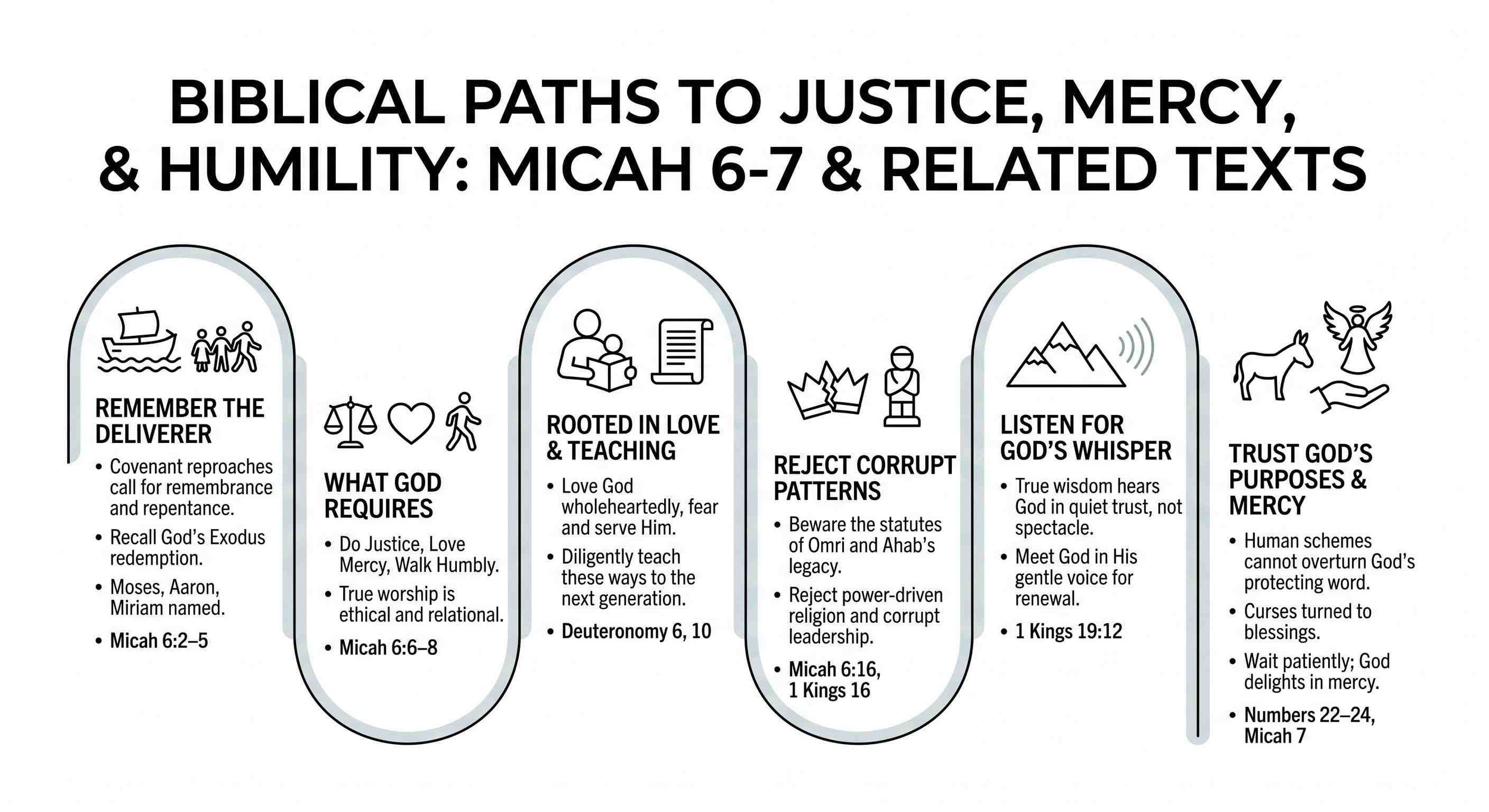
This is an AI Recap of the class.
Some things may be incorrect.
Short Summary of the Whole Class
On April 23, 2026, we traced a biblical thread from Micah 6–7 through Numbers, 1–2 Kings, Deuteronomy, and the Gospels. We reflected on God’s covenant complaint and Exodus deliverance (Micah 6), the warning of Omri/Ahab/Jezebel’s corrupt statutes, Balaam and Balak’s failed cursing scheme, and Elijah’s renewal in God’s gentle whisper. We connected Micah’s call—do justice, love mercy, walk humbly—to Deuteronomy’s love-and-teach foundation and Jesus’ words about allegiance and endurance amid familial and societal conflict (Matthew 10; Mark 13). We concluded that true wisdom remembers God the Deliverer, rejects power-driven corruption, listens for God’s quiet voice, and lives justice and mercy in faithful trust.
Walk-through Summary with Section-by-Section Notes
1) Micah’s “Reproaches” and God’s Complaint
Discussion:
We opened with Micah’s covenant lawsuit: “Hear, O you mountains, the Lord’s complaint” (Micah 6:2), evoking Good Friday-style “reproaches” (“O my people… what have I done to you?”).
God identifies Himself as the Deliverer who brought Israel out of Egypt, naming Moses, Aaron, and Miriam (Micah 6:4), and recalling Balak and Balaam (Micah 6:5).
Theme:
Remembering God’s faithful deliverance exposes our forgetfulness and calls us to return to covenant obedience.
Verses:
Micah 6:2–5.
Stories:
Exodus remembrance (Moses, Aaron, Miriam).
Short summary of this section:
God summons His people to remember the Exodus and His faithfulness, grounding repentance in the memory of deliverance.
2) What God Requires: Justice, Mercy, and Humility
Discussion:
We wrestled with “What’s enough for God?” and landed on Micah 6:8—do justice, love mercy, walk humbly—over performative religion.
We noted how Scripture itself demands justice and mercy, not mere ritual.
Theme:
True worship is ethical and relational; it shows up in how we treat others made in God’s image.
Verses:
Micah 6:6–8.
Stories:
Ethical living illustrations; contrast with empty ritual (no single narrative focus).
Short summary of this section:
God desires hearts and lives of justice, mercy, and humble walking with Him, not outward show.
3) Deuteronomy’s Foundation: Love God and Teach Diligently
Discussion:
We linked Micah’s call to Deuteronomy’s heart: fear, love, and serve the Lord (Deut 10:12), and the Shema’s call to teach children diligently (Deut 6:4–7).
Emphasis on shaping the next generation amid modern distractions.
Theme:
Wholehearted love for God and diligent discipleship at home form the backbone of faithful living.
Verses:
Deuteronomy 10:12; Deuteronomy 6:4–7.
Stories:
Family discipleship practices (conceptual, not narrative).
Short summary of this section:
From the beginning, God called His people to wholehearted love and to teach these ways diligently to the next generation.
4) Omri, Ahab, and Jezebel: Foundations of Decline
Discussion:
We examined how Omri’s political strategies led into Ahab and Jezebel’s Baal worship (1 Kings 16), illuminating Micah 6:16’s “statutes of Omri” and “works of Ahab’s house.”
Highlight: Ahab “did more evil than all before him” (1 Kings 16:30–33).
Theme:
Societal decline follows when leaders and people embrace idolatrous counsel and corrupt patterns.
Verses:
1 Kings 16:25–33; Micah 6:16.
Stories:
Ahab and Jezebel’s marriage alliance and the national turn to Baal.
Short summary of this section:
Micah condemns both corrupt leadership and complicit people, warning that shared compromise invites desolation.
5) Elijah’s Encounter with God’s Gentle Voice
Discussion:
We previewed Elijah’s conflict with Ahab and Jezebel and focused on his renewal: God was not in wind, earthquake, or fire but in a gentle whisper (1 Kings 19:12).
Application: Listen attentively for God’s quiet guidance amid turmoil.
Theme:
True wisdom hears God in quiet trust rather than in spectacle.
Verses:
1 Kings 19:12 (with context).
Stories:
Elijah’s flight, discouragement, and renewal at Horeb.
Short summary of this section:
Elijah’s story shows faithful resilience arises from meeting God in His gentle voice.
6) Balaam and Balak: Attempts to Curse God’s People
Discussion:
We revisited Numbers 22–24: Balak summons Balaam at Moab to curse Israel; the angel blocks Balaam; the talking donkey episode; Balaam can only speak what God gives—resulting in blessing, not curse.
Micah 6:5 recalls this event to underscore God’s protecting purposes.
Theme:
God’s word and purposes stand; He turns intended curses into blessing.
Verses:
Numbers 22–24 (esp. 22:21–35); Micah 6:5.
Stories:
Balak’s summons; Balaam’s donkey and angel; Balaam’s oracles of blessing.
Short summary of this section:
Human schemes cannot overturn God’s purposes; He protects His people and transforms curses into blessings.
7) Micah 7: Corruption, Lament, and Hope in Mercy
Discussion:
Micah 7:1–7 depicts societal breakdown—bribes, betrayal—even within households; counsel: trust God, not human alliances.
Micah 7:7–9: like Job, wait on the Lord, confess, and trust God to plead our case and bring light.
Micah 7:18–20: God delights in mercy, subdues iniquity, and casts sins into the sea.
Theme:
In pervasive injustice, the faithful posture is repentance, patience, and confident hope in God’s mercy and vindication.
Verses:
Micah 7:1–7; 7:7–9; 7:18–20; (also 7:13, 7:16 noted in discussion of consequences and humbled nations).
Stories:
Job’s posture (thematic reference).
Short summary of this section:
Micah moves from stark lament to radiant hope—God’s final word is mercy and restoration.
8) Jesus on Allegiance and Endurance: Echoes of Micah
Discussion:
Matthew 10:26–36: Jesus prepares disciples for public allegiance and division within families (echoing Micah 7:6), not as a call to violence but a sober cost of discipleship.
Mark 13:10–13: the gospel to all nations, Spirit-given words in trials, endurance to the end; connected with our anticipation of Mark 13:1–10’s challenge to temple-centered confidence.
Theme:
Discipleship may divide loyalties and invite opposition; rely on the Spirit and endure in faithful witness.
Verses:
Matthew 10:26–36; Mark 13:10–13; preview connection to Mark 13:1–10.
Stories:
Jesus sending the disciples; early Christian witness under pressure (conceptual).
Short summary of this section:
Jesus reframes power and peace: allegiance to Him brings conflict, but the Spirit sustains endurance and faithful testimony.
9) Application: Remember the Deliverer and Reject Corrupt Patterns
Discussion:
We tied Micah’s call—remember the Exodus and Balaam/Balak—to our context: reject the “statutes of Omri,” avoid baptizing power with religious language, and live justice, mercy, and humility.
Question: Are we building bigger temples—or building obedient hearts that remember and reflect God’s deliverance?
Theme:
Identity and allegiance—live as a people formed by the Deliverer’s mercy rather than by cultural or political idols.
Verses:
Micah 6:4–5; 6:16; Numbers 22–24; 1 Kings 16; 1 Kings 19:12; Micah 7 selections; Matthew 10; Mark 13.
Stories:
Exodus memory; Omri/Ahab decline; Elijah’s whisper; Balaam’s thwarted curse; disciples sent amid conflict.
Short summary of this section:
True wisdom is lived remembrance—reject corrupt counsels and embody God’s justice, mercy, and humble trust.
Medium-Length Summary of the Class
On April 23, 2026, we centered on Micah 6–7, where God summons creation to hear His complaint and calls His people to remember the Exodus. We linked Micah’s “reproaches” to the warning against the “statutes of Omri” and the corrupt legacy of Ahab and Jezebel (1 Kings 16). We saw Elijah’s renewal in God’s gentle whisper (1 Kings 19:12) as a model for quiet, attentive faith. Returning to Numbers 22–24, we recalled how Balaam could only bless what Balak sought to curse, underscoring God’s protecting word (Micah 6:5). Deuteronomy 6 and 10 anchored this in love for God and diligent teaching of the next generation. Reading Jesus’ words in Matthew 10 and Mark 13, we recognized that allegiance to Christ may divide families and invite persecution, yet the Spirit sustains enduring witness. Across these texts, the class emphasized that God the Deliverer defines His people, His mercy triumphs over sin (Micah 7:18–20), and His purposes outlast human schemes—calling us to reject corrupt patterns, listen for His gentle voice, and live justice, mercy, and humility.
Main Points
God’s covenant “reproaches” call us to remember His Exodus deliverance and repentant return (Micah 6:2–5).
What God requires is clear: do justice, love mercy, walk humbly (Micah 6:8).
Deuteronomy roots faith in wholehearted love for God and diligent teaching of children (Deut 6; 10).
The “statutes of Omri” and Ahab/Jezebel’s legacy warn against adopting corrupt counsel (Micah 6:16; 1 Kings 16).
Elijah’s renewal came through God’s gentle whisper—wisdom listens in quiet trust (1 Kings 19:12).
Balaam and Balak show that God protects His people and turns curses into blessing (Numbers 22–24; Micah 6:5).
Jesus prepares disciples for allegiance amid division and persecution; rely on the Spirit and endure (Matthew 10; Mark 13).
Application: Reject power-driven religion and live as a people shaped by God’s saving acts—justice, mercy, humility.
Bible Scriptures Mentioned
Micah 6:2–5; Micah 6:6–8; Micah 6:16
Micah 7:1–7; Micah 7:7–9; Micah 7:18–20 (with 7:13, 7:16 noted)
Numbers 22–24 (esp. 22:21–35)
1 Kings 16:25–33
1 Kings 19:12 (with context)
Deuteronomy 6:4–7
Deuteronomy 10:12
Matthew 10:26–36
Mark 13:10–13 (and preview of 13:1–10)
Stories Discussed
Exodus remembrance: God bringing Israel out of Egypt; leadership of Moses, Aaron, and Miriam.
Omri’s political legacy and Ahab/Jezebel’s turn to Baal worship (1 Kings 16).
Elijah’s encounter with God’s gentle whisper (1 Kings 19).
Balaam and Balak: the talking donkey, the angel’s intervention, and blessing over cursing (Numbers 22–24).
Jesus sending the disciples and teaching on allegiance, conflict, and endurance (Matthew 10; Mark 13).
Content creation date: 2026-04-23 14:43:13