Micah Chapter 2-3 Class 2 - Bible Study
Micah Intro and Chapter 2-3
This is our 2nd class on Micah
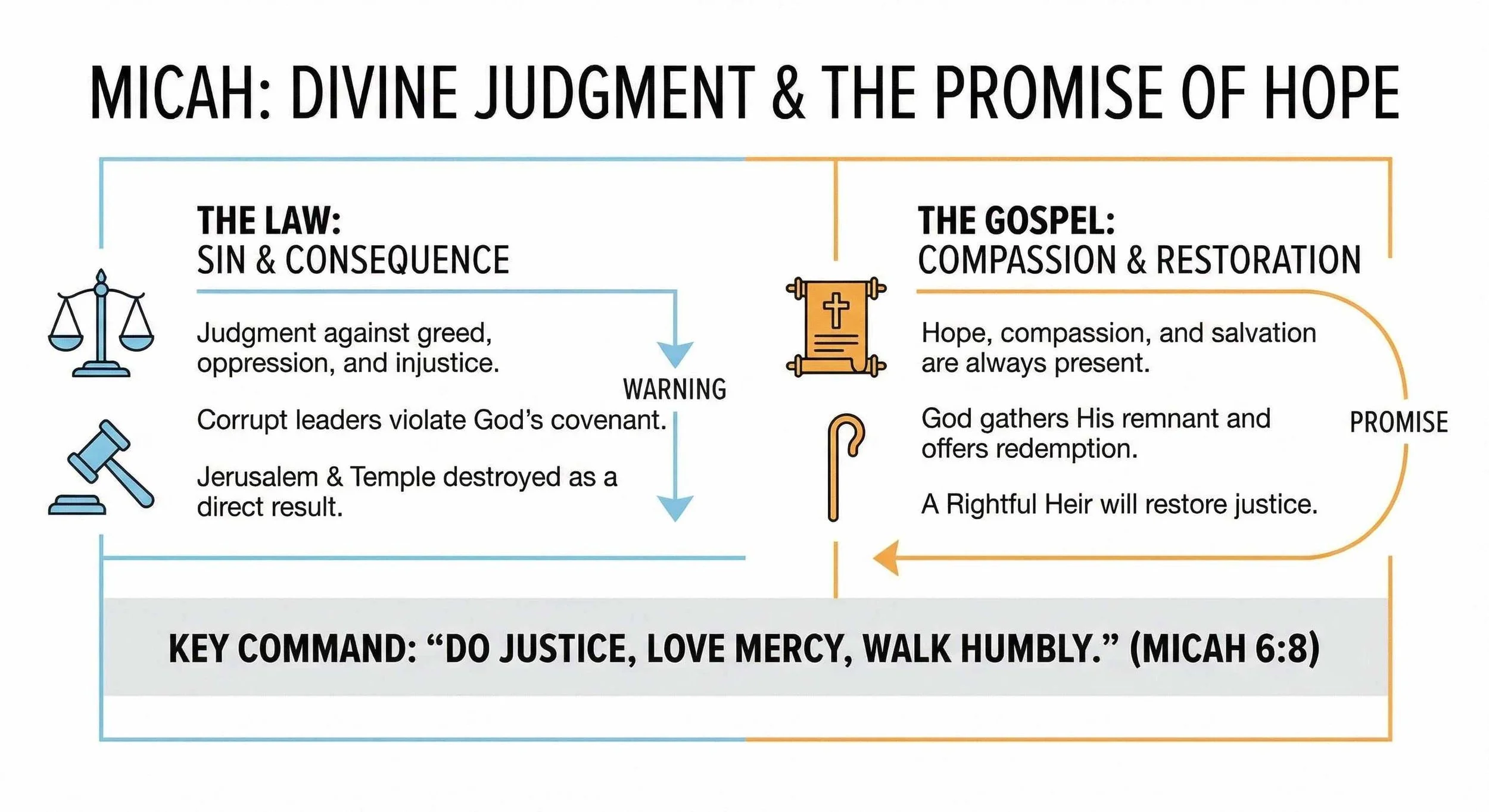
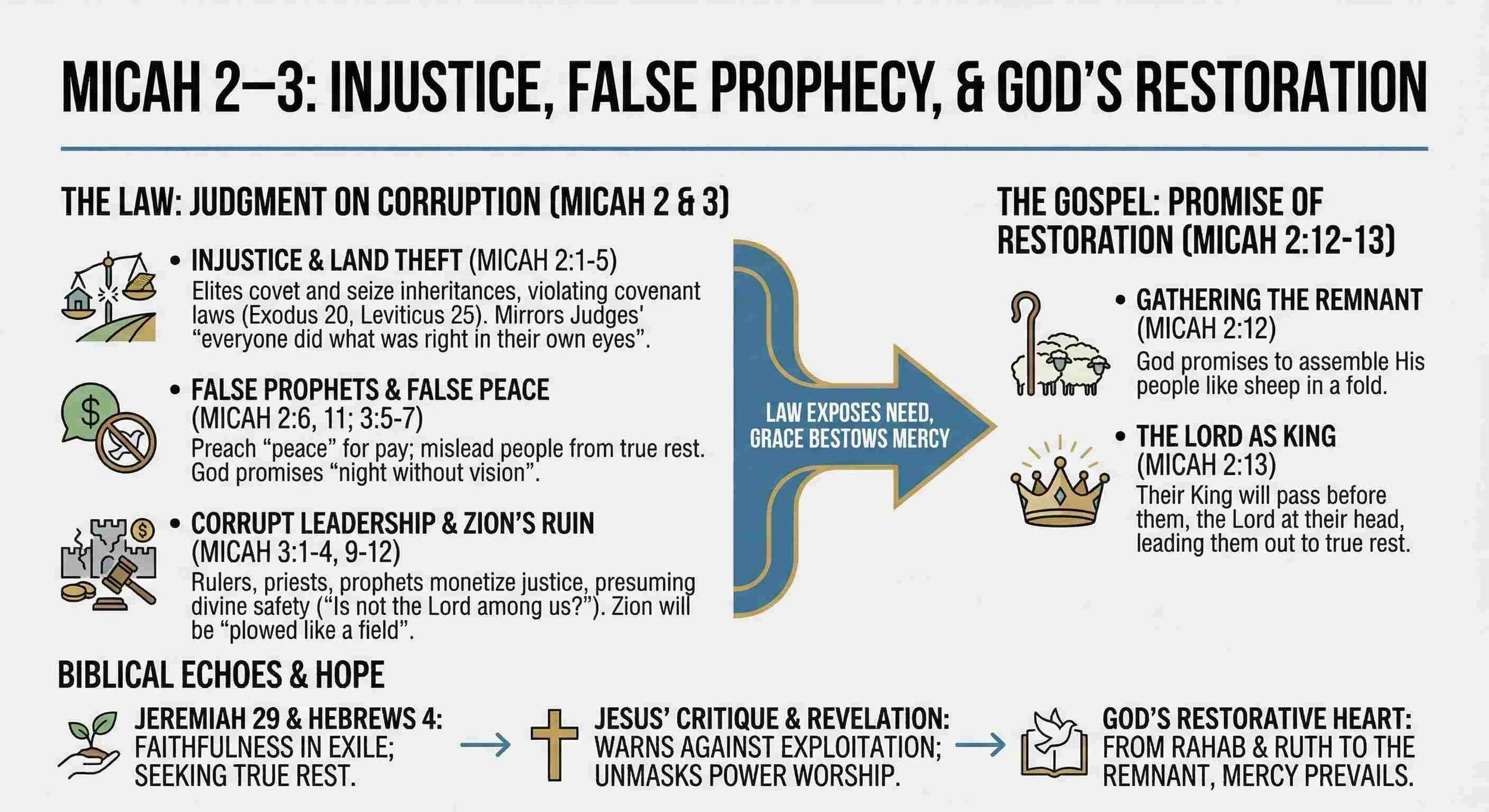
This is an AI Recap of the class.
Some things may be incorrect.
Short Summary of the Class
On Thursday, April 9, 2026, our group dove into chapters 2 and 3 of the book of Micah. We began by reading the text, which details God's pronouncement of "woe" upon the powerful in Israel who were oppressing the poor by seizing their land and inheritance, a direct violation of how God had established their society. We discussed how these actions broke several commandments and how this theme of "might makes right" was leading them to self-destruction. The discussion highlighted the contrast between the first eleven verses of chapter 2, filled with judgment, and the final two verses, which offer a glimpse of hope and restoration. We then moved into chapter 3, which continues the condemnation of Israel's corrupt leaders, priests, and prophets who exploit their positions for money while falsely claiming God's favor. We explored the stark imagery of their destruction and the recurring biblical theme of law and gospel, where the law reveals our sin and points to our need for the grace found in the gospel.
Detailed Class Summary
Review of Previous Micah Study and Prophetic Themes
We then transitioned to the Bible study portion by reviewing our last discussion on the minor prophets, specifically Micah. Two primary themes were revisited. The first was the structure of the prophetic messages, which often present a strong word of judgment followed by a promise of God's salvation. This pattern was compared to the "law and gospel" preaching model.
The second major theme was the consistent message across prophets calling Israel back to God’s core requirements: "to do justice, love mercy, and walk humbly with your God" (Micah 6:8). The prophets condemned Israel for becoming obsessed with power and wealth while neglecting the poor, a theme echoed in the New Testament book of Revelation. We also recalled the clever "prophetic wordplay" in Micah chapter 1, where the Hebrew names of cities reinforce the prophecy of judgment.
Section Summary: We reviewed how Micah and other minor prophets follow a "law-gospel" pattern of judgment then salvation. We also discussed their unified message condemning the pursuit of power over God's call to practice justice and mercy, and the literary device of prophetic wordplay.
Bible Verses: Micah 6:8, Micah 1:8-15
Bible Stories/Concepts: Parallels with the book of Revelation.
Section 1: Micah Chapter 2 - Judgment and the Consequences of Greed
Our class on April 9, 2026, began with a reading of Micah, chapter 2. The chapter opens with a "woe" to those who plot evil and, because of their power, violently seize fields and houses, oppressing their own people. We noted that this greed and theft were direct violations of God's commandments, specifically those against coveting and stealing. It was pointed out that this practice of seizing land went against the redemption plan God had established for Israelite inheritances, as illustrated in the book of Ruth with the story of the kinsman-redeemer.
The phrase "careful what you wish for" was used to describe the consequences foretold in verses 4 and 5. The very people who were seizing land would have their own heritage taken from them, with no one left to even "determine boundaries by lot in the assembly of the Lord." This pursuit of wealth was a form of self-destruction, echoing the theme from the book of Judges where "they did what was right in their own eyes." The discussion also touched on the false prophets mentioned in verse 11, who would tell the people what they wanted to hear—prophecies of "wine and drink"—rather than God's truth. This was compared to the false prophets in Jeremiah's time who promised peace while the people were being led into captivity. The chapter ends, however, with a shift in tone. After eleven verses of judgment, the final two verses promise that God will surely gather the "remnant of Israel" like a flock, with their King and the Lord leading them.
Summary of Section 1: We discussed how the wealthy in Israel were ignoring God's laws by violently taking land from the poor. This greed, encouraged by false prophets promising good times, was leading the nation toward its own destruction, a judgment from which God promised He would ultimately rescue a remnant of His people.
Bible Verses and Stories Mentioned:
Micah 2: The primary text for this section.
Book of Ruth: The story of Naomi, Ruth, and Boaz (the kinsman-redeemer) was mentioned to illustrate God's original plan for land inheritance.
Book of Judges: Referenced for its recurring theme of "they did what was right in their own eyes."
Jeremiah 29:11: Discussed in the context of false prophets promising peace and prosperity, noting that this verse was originally spoken to people already in exile.
Revelation 21: Mentioned in passing regarding a sermon on the "Eighth Day of Creation."
Section 2: Micah Chapter 3 - Corrupt Leadership and the Call for Justice
We then proceeded to read and discuss Micah, chapter 3. This chapter continues the strong condemnation, this time aimed directly at the "heads of Jacob and you rulers of the house of Israel." They are accused of hating good, loving evil, and metaphorically cannibalizing their own people. The prophets are again called out for chanting "peace" for profit while preparing "war against him who puts nothing into their mouths."
A key point of discussion was the theme of "might makes right." The leaders, priests, and prophets were all corrupt, judging for bribes, teaching for pay, and divining for money. Yet, in their hypocrisy, they would "lean on the Lord and say, 'Is not the Lord among us? No harm can come upon us.'" They used their status as God's chosen people as a license to sin. Micah's response is a devastating prophecy: because of their actions, "Zion shall be plowed like a field, Jerusalem shall become heaps of ruins." We also explored the poetic use of "Jacob" and "Israel" in the same verses, concluding it was likely for emphasis, to encompass the entire nation from its past to its present. The theme of "Law and Gospel" was brought up, explaining that the law (like Micah's harsh words) reveals our sin and demonstrates our desperate need for the gospel (God's grace).
Summary of Section 2: This section focused on the corruption of Israel's entire leadership structure—rulers, priests, and prophets—who exploited the people for financial gain while hypocritically claiming God's protection. Micah prophesies complete destruction for Jerusalem and the temple as a direct result of their twisting of justice and perversion of faith.
Bible Verses and Stories Mentioned:
Micah 3: The primary text for this section.
John 8:44: Referenced when discussing how the rulers "twist everything that is straight," connecting it to Jesus calling Satan the "father of lies."
2 Corinthians 1:3: Contrasted with the harsh judgment, highlighting God as the "Father of mercies and God of all comfort."
Story of Jonah: Jonah was presented as an example of a prophet who, unlike Micah, did not want God's mercy to extend to others and embodied the selfish attitude Micah preached against.
Story of Rahab and Ruth: Mentioned as examples of Gentiles included in Jesus' lineage, showing God's plan of redemption was always for all people.
Final Summary
In our Bible study on Thursday, April 9, 2026, we examined the powerful prophecies of Micah in chapters 2 and 3. Our discussion centered on God's indictment against the people of Israel, particularly its wealthy and powerful leaders, for their systemic injustice and greed. We observed how they violated God's commands by violently seizing land, oppressing the poor, and creating a society where "might makes right." This behavior was enabled by corrupt priests and false prophets who offered messages of peace and prosperity in exchange for money, lulling the people into a false sense of security.
We discussed how this path of doing "what was right in their own eyes" was leading them to self-destruction, a stark warning that what they were doing to others would be done to them. Micah prophesies that their inheritance would become desolation, with Jerusalem and the temple itself being turned into a heap of ruins. A significant part of our conversation highlighted the hypocrisy of the leaders who sinned while claiming, "Is not the Lord among us?" using their chosen status as an excuse for evil. We connected these themes to other scriptures, such as the stories of Ruth and Jonah, and the teachings of Jesus against the Pharisees. Despite the heavy judgment, we also noted the glimmers of hope and the "gospel" promise at the end of chapter 2, where God pledges to gather the remnant of His people and lead them as their King, reminding us that even in His righteous anger, God's ultimate plan is one of redemption.
Main Points
The wealthy and powerful in Israel were using their power to oppress the poor and seize their land, directly violating God's laws.
This societal greed was a form of self-destruction; the very ruin they brought on others would be visited upon them.
False prophets were complicit, telling the people what they wanted to hear ("peace," "wine and drink") for personal gain.
Israel's leaders—rulers, priests, and prophets—were corrupt, commercializing justice and religious teaching.
The leaders hypocritically believed they were immune from harm because they were God's people, using their faith as a license to sin.
Micah's prophecy foretells the complete destruction of Jerusalem and the temple as a consequence of their injustice.
Despite the overwhelming message of judgment ("the Law"), there is a promise of future restoration and salvation ("the Gospel").
Scriptures and Stories Mentioned
Bible Chapters:
Micah 2
Micah 3
Bible Verses:
Jeremiah 29:11
John 8:44
2 Corinthians 1:3
Revelation 21
Stories/Concepts:
The commandments against coveting and stealing
The kinsman-redeemer and land inheritance (Book of Ruth)
"They did what was right in their own eyes" (Book of Judges)
Jesus's condemnation of the Pharisees "devouring widows' homes"
The concept of Law and Gospel
The story of Jonah pouting over God's mercy to Nineveh
The inclusion of Gentiles (Rahab, Ruth) in the lineage of Jesus
Jesus as Prophet, Priest, and King
The Pax Romana ("Roman Peace") as a form of peace through coercion
Solomon's Temple